
The governor indicates further taxing cigarettes only helps to pay for the extra health costs associated with the addiction and could actually encourage smokers to quit. Kaine tied the tax on cigarette users to avoiding :even deeper cuts to the states lean Medicaid program." Adding 30 cents tax per pack (now at 30 cents per pack) would "bring tobacco products closer to paying for the costs that they create for Virginia taxpayers."
Virginia's present 30-cent tax is among the nation's lowest, ranking 47th nationally. Doubling it would move Virginia approximately into a tie for 37th place with Wyoming, seemingly inconsequential to a multinational tobacco giant. In 2004, Virginia's legislature approved a tenfold increase of its 2.5-cent cigarette tax, the nation's lowest at the time (raised to 30 cents in 2005).
Kaine continued, "The Centers for Disease Control and Prevention estimate that cigarette smoking causes over $400 million per year in Medicaid expenses for Virginia." His tax proposal would generate $167 million. "In other words, Virginians have to pay another $233 million a year in taxes just to support Medicaid costs related to smoking. I believe that the taxes on smoking should pay for the budget costs incurred because of smoking," Kaine said. "And it may, in fact, reduce our health care costs by encouraging some smokers to quit. That, in and of itself, would be a very good thing."
If approved, the new tax would bring the per-pack tax to 60 cents, which the governor said would put Virginia at about half the national average.
Virginia House Speaker William J. Howell and U.S. Rep. Eric Cantor (R-Richmond) came out agressively (sic) against a potential cigarette tax hike Tuesday, calling the increase “an assault on jobs.” Cantor felt the tax escalation (60 cents from 30 cents per pack) could negatively impact jobs at Richmond-based Philip Morris and its parent company, Altria.
Most counties and cities do not have their own cigarette tax rates because they are prohibited by state law, but there are major exceptions such as the cities and counties in Virginia.
References: Va. governor to propose 30-cent cigarette tax hike, CNNMoney.com, 12/16/2008; Yahoo! Buzz
Cantor steamed over proposed cigarette tax hike by Allison Brophy Champion, StarExponent.com, 12/17/2008; Howell rips Kaine tax hike (UPDATED AND BUMPED), The Right-Wing Liberal, 12/2008;
Read more...
Virginia Governor Kaine Proposes a 30 cent tax increase in cigarette tax..
States Need Quick Influx of Revenue – Think Tobacco Tax..

Rhode Island is facing some tough fiscal and economic times. Its current budget deficit of $357 million is among the largest in the nation (relative to total spending). The budget picture in South Carolina is grim. The State's Comptroller General said recently that corporate income tax collections are down 57 percent, sales tax collections are down by 18 percent, and individual income tax collections are down nearly 3 percent since July 2008. Kentucky Gov. Steve Beshear recently stated that internal economic estimates project a revenue shortfall of approximately $294 million in the General Fund in the fiscal year that ends June 30, 2009
Michigan is now facing its most critical financial crisis in decades. The Governor and the legislature are faced with a $3 billion shortfall in 2008. With tax revenues in a virtual free fall, Florida is staring down a budget gap of $3 billion and growing.
Right away legislators want to tackle state budget shortfalls by limiting social programs such as Medicaid funding threatening to leave the state’s most vulnerable populations without access to health services.
How about a tax on tobacco products?? - This is a “win-win” situation for all concerned. As pointed out by Lynn Greaves, VP of the Saskatchewan Coalition for Tobacco Reduction "Tobacco taxation has been the strongest tobacco reduction measure that exists in the world today."
Studies show that every 10 percent increase in the price of cigarettes reduces youth smoking by seven percent and overall cigarette consumption by about four percent.
Bringing the Florida state’s tobacco tax up by a dollar, now 4th lowest in nation, could generate about $1 billion in new net revenue, save nearly 100,000 Floridians from smoking-related deaths, help 123,600 adults quit smoking and prevent 209,000 youth from ever starting. Florida’s Medicaid program incurs an estimated $1.25 billion in costs due to smoking per year.
For the State of Michigan there will be a potential annual savings to Medicaid of $323 million if the smoking rate among Michigan adults was reduced five percentage points (from 21.9% to 16.9%). With a five percentage point reduction in smoking overall future state smoking-caused health care costs would decline by more than $2.5 billion. (Approximately 32.4% of the smoking related health care costs are paid by Medicaid.)
You can’t do wrong with an increase in the tobacco tax. The federal government has spoken: "Tobacco products are not safe and cannot be made safe and there is no medically established public health benefit associated with tobacco" as written by Michael Leavitt, Secretary of Health and Human Services in a letter to Joe Barton, R-Texas the senior Republican on the Energy and Commerce Committee.
The Governor of South Carolina can no longer refuse to support a tobacco tax increase (now has lowest tax in the nation at seven cents per pack) because, supposedly, a financial shortfall could occur because so many people would quit smoking. In this case, eventually the economy will return to normal generating enough tax revenue to restore normal levels.
As a result with an increase in the tobacco tax you get: the generation of more tax revenue, fewer kids considering tobacco use, adults breaking their addiction to tobacco, the cost of caring for people with tobacco related diseases would go down and since cigarette users are poorer as a group these individuals would have more money to care for their love ones. The greatest impact the higher tax will have is preventing our youngsters, our future leaders, from becoming addicted to nicotine. It’s a “win-win” situation for all.
References:
State Budget Troubles Worsen by Elizebeth McNichol and Iris J. Lav, Center on Budget and Policy Priorities.
South Carolina Governor More Concerned About Election Year 2012 Than Fiscal Year 2009? The Tax Justice Digest, 12/12/2008.
Kentucky Coping With Economy, Tom Hale, Associated Construction Publications, November 4, 2008.
Fix Michigan's Budget Mess Now, Michigan State AFL-CIO eActivist Network,
Cigarette tax hike can help state, Sarasota Herald Tribune, 12/12/2008.
Smoking Facts for the State of Michigan, Michigan Residents 2005.
Tobacco Tax Increase – What’s Wrong with South Carolina??
Bush administration opposes legislation to give FDA authority to regulate tobacco products..
Related news brief: Tax the hell out of all tobacco products until they disappear..; Kentucky considering increase in cigarette tax..;
Virginia Governor Kaine Proposes a 30 cent tax increase in cigarette tax..
Tobaccowatch.org
Read more...
Increasingly Teens Find Smoking A Dirty Habit

The survey also finds:
* Teen smoking rates dropped in 2008, now lower than the 1990s
* 12.6 percent of high school students had a cigarette in the last month compared to 13.6 last year
* 7 percent of eighth-graders are smoking, down from 21 percent in 1996
* 12 percent of 10-th graders are smoking , down from more than 30 percent in 1996
* 21 percent of eighth-graders said they had tried smoking, down from 49 percent in 1996
The survey found that 20 percent of high school seniors smoke, a decline from one-third in 1996.
What does this say about smoking? The study’s principal investigator, Lloyd Johnston, says that teens finally believe smoking is a “dirty habit” that can harm your health, despite the positive media images. “For years and years, the industry pitch was that smoking makes you sexy and attractive to the opposite sex. It turns out the absolute opposite is true. It projects a negative image, for both girls and boys.”
The problem is not of supply either. The survey finds that more than half of eighth-graders said they could obtain cigarettes easily. Declining rates of smoking are not just seen among teens. For the first time since the mid-1960s, the number of Americans who smoke cigarettes has fallen below 20 percent, according to the Centers for Disease Control and Prevention (CDC). In 2007, the prevalence of smoking fell to 19.8 percent, from 20.8 percent in 2006, according to a recent CDC Morbidity and Mortality Weekly Report (MMWR).
“While this is good news, deaths related to cigarette smoking are still on the rise,” Matthew McKenna, director of the CDC’s Office on Smoking and Health tells WebMD. Nearly one in five American adults smoke cigarettes and many former smokers are falling back to the habit again. “We believe the decline in proportion is threefold - a response to excise taxes that have made cigarettes more expensive, smoke-free laws and the availability of cessation medications,” McKenna says.
Reference: Increasingly Teens Find Smoking A Dirty Habit, by Jane Akre, InjuryBoard.com, December 16, 2008.
Read more...
NY High Court Upholds Dismissal Of Cigarette Liability Claim..
December 17, 2008 - The New York (NY) Court of Appeals, upholding the reversal of a $20.5 million verdict, Monday, 12/15/2008 ruled that the estate of a smoker who died of lung cancer could not assert a negligent product design claim against two cigarette makers based on the availability of a safer "light" cigarette.
Writing for a 6-1 majority, Judge Robert S. Smith concluded that the smoker, Norma Rose, who died during the pendency of the appeal, had failed to prove an "essential element" of her products liability claim -- that light cigarettes, which have low tar and nicotine levels, have the same "utility" as regular cigarettes.
The only utility of a cigarette, Smith wrote, "is to gratify smokers" and Rose's lawyers "made no attempt to prove that smokers find light cigarettes as satisfying as regular cigarettes -- indeed it is virtually uncontested that they do not." To have ruled that the availability of light cigarettes rendered regular cigarettes defective in design, he noted, "would amount to a judicial ban" on their sale.
Rose's lawyers had argued at trial that a jury could find that light cigarettes were safer than regular cigarettes, the court said. "It is not necessary in every product liability case that the plaintiff show the safer product is as acceptable to consumers as the one the defendant sold; but such a showing is necessary where, as here, satisfying the consumer is the only function the product has," the court found.
In April 2008 an Manhattan appellate court reversed a 73-year-old lung cancer victim's $3.4 million compensatory damage award against two industry giants and threw out $17.1 million in punitive damages against Philip Morris USA. (Tobacco Companies Win Upset of Damages Award, Noeleen G. Walder, New York Law Journal, April 11, 2008
The jury verdict returned in 2005 was divided into $3.4 million for compensatory damages and $17.1 million for punitive damages.
On Monday, the US Supreme Court ruled that consumers in Maine could sue the Altria Group’s Philip Morris USA under state unfair-trade laws for its advertising of ‘light’ cigarettes.
Reference: NY High Court Upholds Dismissal Of Cigarette Liability Claim by Chad Bray Of DOW JONES NEWSWIRES, 12/16/2008; N.Y. High Court Upholds Reversal of $20.5 Million Tobacco Verdict, Daniel Wise, New York Law Journal, December 17, 2008.
Read more...

NY Governor signs bill to attempt to curb illegal sale of tax-free cigarettes to non-Indian purchasers..
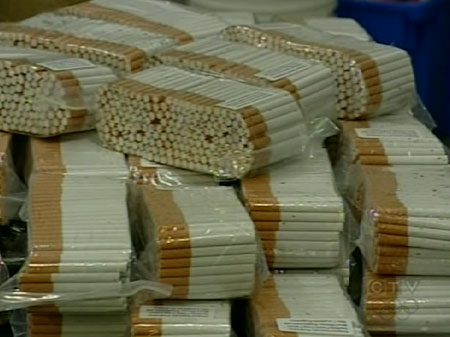
Under Article 20 of the New York State Tax Law, cigarettes sold by Indian retailers to non-Indians must be taxed. The bill signed by Governor Paterson today will prohibit cigarette manufacturers from selling unstamped cigarettes to stamping agents who have not provided them with a certification, under penalty of perjury, that the cigarettes will not be resold in violation of Article 20. Agents must provide the Tax Department with any certification they give to a manufacturer.
To the extent that the tax is undermined, our efforts to fight smoking are also undermined.”
“This law has not been adequately applied for far too long giving non-Indians easy access to tax-free cigarettes both on the reservations and over the internet,” said Governor Paterson. Although cigarettes sold by agents to retailers for re-sale to non-Indian purchasers must bear tax stamps, the State has, for many years, adopted a policy of non-enforcement, and unstamped cigarettes continue to be sold by agents to Indian retailers who sell them to non-Indians at discount prices.
The New York State Department of Taxation will have 60 days to issue a certification form and prepare to receive the certifications that will be submitted. Governor Paterson signed bill A11258A/ S 8146-B at a ceremony in Utica.
The Assembly held off sending the bill to Paterson, who hoped that he’d be able to negotiate a deal with the Seneca Indian tribe. However, the negotiations did not yield an agreement. Paterson has said before that he believes this issue will end up in court, and said at a public leaders’ meeting in November, when pressed by Republicans to sign the bill, that the state may not see revenue for some time.
Reference: Paterson signs indian cigarette law by Irene Jay Liu, timesunion.com, 12/15/2008.
Read more...


To Provide Public Awareness
Purpose
About Us
Contact Us
2008 HIGHLIGHTS
TOPIX PAPERS - 2008 & 2009..