March 2, 2011 - Tobacco Products Scientific Advisory Committee (TPSAC) draft report released on March 1st - menthol tobacco products may not increase smokers' risk of disease more than other cigarettes.
According to the report, released late Monday, March 1st there is insufficient evidence to show that menthol increases smoke inhalation, exposure to nicotine or disease risk. Analysts say the results are in line with expectations and echo what panel members had said in prior public meetings.
The draft report did say that menthol may mask the harshness of smoking and could be more attractive to young smokers.
"While the headlines read quite positively thus far pertaining to the release of these chapters, we believe this is quite one-sided," Stifel Nicolaus analysts wrote in a client note. "We cannot call these chapters a net positive for U.S. tobacco stocks," the firm said, as the section on youth initiation and smoking cessation was rather harsh.
Last week, Lorillard and Reynolds American sued to stop the FDA from drawing on the panel's recommendations, alleging conflicts of interest by several of the advisory group's members. (http://snus-news.blogspot.com/2011/02/rj-reynolds-tobacco-colorillard-tobacco.html)
The tobacco advisory panel will meet Wednesday, March 2nd to further discuss the potential public health risks of menthol products and will issue a final report to the FDA by March 23. The agency isn't required to follow the committee's recommendations.
TPSAC - Menthol Report: What to Expect??
References: FDA Panel:Menthol Doesn't Raise Smoker Risk, Concerns Remain by Melissa Korn, Published March 01, 2011 | Dow Jones Newswires; Menthol: 'Evidence Is Insufficient'
Menthol not shown to raise health risks of smoking, says draft of FDA TPSAC report, Convenience Store / Petroleum (CSP) Daily Newsw, 3/2/2011.
Read more...
FDA TPSAC - Draft Report - Menthol May NOT Raise Smoker's Risk..


Tobacco Merchants Association annual meeting and conference May 22-24, 2011..
March 1, 2011 - The Tobacco Merchants Association will host its 96th annual meeting and conference on May 22-24, 2011 at the Kingsmill Resort and Spa in Williamsburg,Virginia,USA.
The conference, titled "Evidence-based Science and Regulation of the Tobacco Industry," will kick off Sunday, May 22 with a series of pre-conference Food and Drug Administration industry workshops. Monday's program will open with top securities analysts detailing the current competitive position of the industry, followed by a discussion of the regulatory environment.
Other topics industry leaders will address during the conference are menthol use, illicit trade and e-cigarettes. There will also be two sessions on adapting to regulatory change, one addressing leaf varieties and the other pesticide use and the FDA.
Dr. Lawrence Deyton, director of the FDA's Center for Tobacco Products, will be on hand to address the conference attendees. In addition, confirmed speakers include analysts Matthew Grainger from Morgan Stanley and Nik Modi from UBS; Jeff Cohen, ATF attorney for St. Regis; and Dr. Michael Siegel, Boston University School of Public Health.
Reference: Tobacco Merchants to Focus on Science, Regulations, CS NEWS Tobacco Retailing, 2/25/2011.
Read more...

Australia - illicit cigarette trade increase since federal tax inrease in April 2010..
Background:
April 29, 2010 - Tobacco tax increase - April 29, 2010 - the 25 percent increase was announced by then Prime Minister Kevin Rudd and put into force overnight on the same day (adding about $2.16 to a pack of 30 cigarettes). According to Maurice Swanson, tobacco control spokesperson for the Heart Foundation, the tobacco tax had not been increased in real terms for a decade. There are now even calls to further increase the tobacco tax. (Australia - tobacco tax increase results in more people quitting..
Australia - tobacco tax increase now in force, next comes plain tobacco packaging..
Directly related news brief:
Australia - tobacco tax increase results in more people quitting..
"The big concern is illicit trade," New York-based Louis Camilleri, chairman and chief executive of Philip Morris International, said. "Since the tax increase last summer [April], illicit trade has increased by 25 per cent in Australia."
The alleged rise in cigarette smuggling poses a direct threat to the government's revenue base, with the Australian Taxation Office collecting nearly $6 billion a year in tobacco excise and duties. Budget papers have forecast that last April's decision to hit smokers with an immediate tax rise of 25 per cent would deliver an extra $5 billion in tax revenue over five years. Those extra taxes were earmarked to support the National Health and Hospitals Network Fund.
It is believed a grouping of US and British tobacco companies, with operations in Australia, is set to release as early as today an independent report that will show a clear link between the decision to increase tobacco taxes in April and a rise in smuggling and counterfeiting by criminals.
Tobacco companies also claim that plain packaging will make it easier for counterfeiters to pass their packets as legal product. Plain packaging legislation is expected before Parliament this year and to come into affect on January 1, 2012.Question: (PMI - q4 2010 business results..)
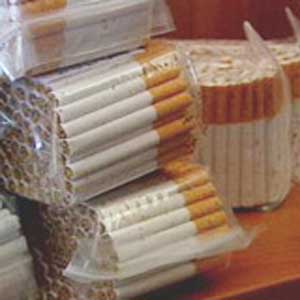
Data published by the Australian Customs and Border Protection Service does show an increase in tobacco smuggling in 2009-10, a year that includes two months of the stiff rise in cigarette taxes. Detection of illicit tobacco totalled 310,707 kilograms last financial year, nearly double the 175,405 kilograms detected in 2008-09. More than 68.72 million cigarettes were detected, up from 50.177 million the year before.
And then lastly, could you update us on the status of plain packaging in Australia? And then also your view on the plain packaging discussions underway in the UK and European Union?
Louie Camilleri
Yes. It appears that the Australian government remains intent on pursuing legislation calling for plain packaging. We’ll see what happens. My guess is we’ll know a lot more by this summer, but there certainly seems to be a strong intent to pursue it. It sort of defies logic, because I don’t think that it will affect consumption levels in any way.
Furthermore, the big concern is illicit trade, which since the tax increase last summer illicit trade has increased by 25% in Australia. So, I’m hopeful that the government is looking at that very closely, because plain packaging will certainly not address that issue and will not address smoking incidence or smoking prevalence.
The U.K., I said that, they would study it, but that they would have to have clear unequivocal evidence that it would in fact address smoking prevalence or incidence and that they would have to look at very carefully. Legal ramifications of such a measure with regard to constitutional issues as well as IP issues also related to trade issues in the trade agreements and the intellectual property protection that comes with those trade agreements, so, the UK is looking at it very sensibly.
In the EU, DG SANCO, the Health Commission as it were, has started a revision of the tobacco product directive, and is looking at host slew of measures. That’s probably a three-year to five-year process. But as I said, I think plain packaging doesn’t make any sense and we’ll fight plain packaging in every way possible.
EU - proposing a full-scale ban on branded cigarettes..
Tim Wilson, director of the Institute of Public Affairs' free trade unit, said higher taxes would encourage criminal behaviour. "The more prices rise the greater there's a temptation for organised crimes to supply the market and for consumers to buy out of the black market, and in the process taxes to pay for the health consequences go out the window," he said.
Even the government's own adviser, Intellectual Property Australia, has warned against plain packaging's risk to increase counterfeit tobacco products entering Australia. "The government likes to argue they're leading the world by introducing plain packaging, but they seem oblivious to the serious legal risks from stripping trademarks when the UK, Canadian, New Zealand, Lithuanian and mid-1990s Australian government have rejected plain packaging on intellectual property grounds."
Fiona Sharkie, executive director of Quit Victoria, said a rise in illicit trade was expected when the tax was increased, but this would pale in comparison against the revenue raised. She said earlier figures on illicit trade in a report commissioned by the tobacco companies were strongly criticised and disputed at the time.
Reference: Illicit smokes up 25% since tax rise : tobacco boss, Eli Greenblat, The Sydney Morning Herald, 3/1/2011.
Read more...

Uganda must get these people to enforce the law - public smokers could get 2 months in jail..
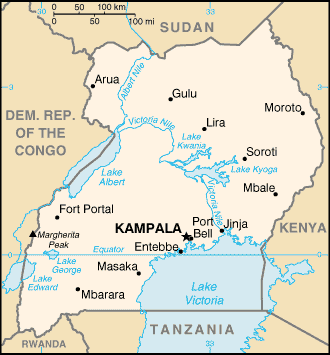

The ban followed the December 2002 declaration by the High Court that smoking in public places was a violation of non-smokers’ rights to life and to a clean and healthy environment.
The regulations have, however, not been enforced and there have been no reported arrests or prosecutions in relation to the control of public smoking.

The two organisations (Uganda National Tobacco Control Association and The Environmental Action Network) are now engaging the ministry of health to table the Bill before Parliament. But Gilbert Muyambi, the secretary general of the Uganda National Tobacco Control Association, said they may sponsor it as a private members bill if the ministry is hesitant.
Back in August 2004, Gen. Kahinda Otafiire, then Water, Lands and Environment minister, just after signing the law banning smoking in public told police: " “Now that the law is here, if you find someone or people smoking in public places, just arrest them." But little has changed in 4-years, Ugandans continue to puff away wherever they please following failure by the responsible government agencies to implement the directive. (Uganda - smoking ban NOT enforced..)
Primary health care state minister James Kakooza is optimistic that the ministry will support the Bill to protect human health, regardless of how much money is raised by taxing tobacco products. He said this was the position they intended to present before the Cabinet.
The draft Bill suggests that no person shall smoke a tobacco product while in an enclosed public place, workplace, or within five metres of the doorways of such places. It also empowers owners, occupiers and operators of public places to evict smokers from their premises.
The Bill also seeks to prohibit retail sale of tobacco products in certain places and imposes a similar penalty on persons who contravene this section. Such places include any place accessible to the general public for collective use, regardless of ownership or right of access.
Persons who knowingly or unknowingly sell cigarettes to minors will also face prosecution. “The products will also include objects like sweets, snacks, cigarette lighters or toys that resemble a tobacco product or which in any way are likely to appeal to a person under the age of eighteen years” Muyambi noted.
According to the World Health Organisation, tobacco kills 4.9 million people per year. It is estimated that by 2030, 10 million people will die each year from tobacco-related illnesses, 70% of these in developing countries like Uganda.
Reference: Public smokers could get 2 months in jail by Sylvia Nankya, NewVision.co.ug, 2/27/2011.
Related news briefs:
African COMESA countries against WHO's attempt to ban ingredients used in blended tobacco..;
Tobacco companies frustrate Africa's fight against smoking..;
Africa - the increase in tobacco use must be prevented..;
Uganda - growing tobacco at the expense of growing subsistence crops..;
Uganda - overview of the tobacco industry tactics..;
Uganda stronger warnings on cigarette packs within 6-months..;
Uganda - smoking ban NOT enforced..;
British American Tobacco (BAT) - 100 years in Africa... Read more...
Jamaica - tackle smoking and save lives and money..

In addition to the expansion of tobacco production, the Government is also in breach of its obligations under the FCTC as it relates to the passing of tobacco control legislation. (Gov't should not promote use of tobacco, Jamaica Observer, 3/9/201)
In contravention of this treaty, the Government through the Ministry of Education and the Child Development Agency has been collaborating with the tobacco company in the promotion of youth anti tobacco campaigns.
So last week, the new Tory-led coalition government surprised some of its supporters and introduced a ban on point-of-sale display of cigarettes in shops. It is also consulting on plain paper packs to make cigarettes as unappealing as possible. When governments take action it can move public opinion and force even conservative successor administrations to take a progressive line.
We took tough action because smoking kills. Half of the people currently smoking in Jamaica will die from a tobacco-related disease. But precisely because European countries have been so effective in tobacco control, "Big Tobacco" companies are now turning to countries like Jamaica. They believe that smaller and poorer countries will be less likely to put up a fight. But we know that the more Jamaicans smoke, and the earlier they start, the more likely they are to die prematurely.
Jamaica's people are its biggest asset. So public health should be a key concern of any Jamaican government. And government policies that bring down levels of smoking actually save the tax-payer money in the long run. Less smoking means fewer people needing expensive treatment for cancer.
In the short run, tobacco companies have money to spend and it is easy for lobbyists to dismiss health concerns. We in Britain faced some of these same arguments. But let us hope that Jamaica has the courage to pursue policies that will bring down levels of smoking. The health of the nation will benefit and children yet unborn will be grateful.
References: Tackle smoking and save lives and money, Dianne Abbott (www.dianeabbott.org.uk) is the British Labour Party's shadow public health minister, jamaicaobserver.com, 3/13/2011; OPEN LETTER TO THE PRIME MINISTER OF JAMAICA AND THE PEOPLE OF JAMAICA, The Jamaica Coalition for Tobacco Control, 12/28/2011.
Read more...


To Provide Public Awareness
Purpose
About Us
Contact Us
2008 HIGHLIGHTS
TOPIX PAPERS - 2008 & 2009..