Circuit Judge Kathleen Trandahl agreed with arguments presented on behalf of four businessmen who led the petition drive last spring to put the ban on the November 2010 ballot. (The four businessmen who sponsored the petition drive are Mike Trucano of Deadwood, Don Rose and Pete Thompson of Sioux Falls and Mark O'Neill of Henry.)
The cancer society is attempting to show that the ban passed by the Legislature is necessary for the preservation of public health and therefore can't be subject to referendum under a provision of the South Dakota Constitution. “It is undisputed that the South Dakota Legislature passed HB 1240 without an emergency clause and did not declare HB 1240 to be necessary for the immediate preservation of the public health,” Judge Trandahl said in her order released Monday.
The judge plans to hear the cancer society's arguments on the public-health issue and the petition sponsors' rebuttals on Nov. 12.
Her decision on whether the ban can be referred will determine in turn whether a trial should proceed on the validity of hundreds of signatures on the referral petitions. The trial would then start later that same day.
The ban would prohibit smoking in bars, casinos and restaurants with alcohol licenses. Secretary of State Chris Nelson ruled that the petitions lacked sufficient signatures. His latest affidavit in the case shows the petitions had 16,715 valid signatures, 61 short of the legal minimum. Nelson found 8,685 signatures invalid.
The cancer society and its South Dakota director of government affairs, Jennifer Stalley, pushed for the Legislature's passage of the ban. The secretary of state originally ruled after a standard spot check that they had sufficient signatures. Stalley challenged that ruling and persuaded Nelson to reverse himself.
The businessmen then filed a lawsuit seeking a court order directing Nelson to put the referendum on the 2010 ballot.
Reference: Second-hand smoke testimony banned from fight by BOB MERCER, American News Correspondent - AberdeenNews.com, 11/3/2009.
South Dakota State Smoking Ban - Developments - related news briefs:
South Dakota - statewide smoking ban trial date moved to mid-November.;
South Dakota - trial delayed in fight to enforce smoking ban..;
South Dakota - new judge appointed in the smoking ban dispute..
South Dakota - ACS wants smoking ban passed by legislature to begin ASAP..
South Dakota - opponents of smoking ban gain a delay..;
South Dakota - petition rejected - state smoking ban to take effect..;
South Dakota - Secretary of State's Office still counting disputed signatures on the smoking ban petitions..;
South Dakota - anti-smoking leaders challenge petition..;
South Dakota - smoking ban to start July 1, 2009 may be delayed..;
South Dakota - opponents try to stop extended smoking ban..;
South Dakota - extends smoking ban effective July 1, 2009...
Read more...
South Dakota - smoking ban, judge won't let ACS call witnesses - as trial nears..
RAI to webcast investor presentations, November 16th..
November 3, 2009 - Reynolds American Inc (RAI) is due to webcast presentations the company will make to the investment community from 09.00 hours Eastern Time on November 16.
During the webcast, members of the company’s management team will discuss Reynolds American’s performance and plans. The webcast will be available online on a listen-only basis at www.ReynoldsAmerican.com, where registration is now available.
Reference: Reynolds American to webcast Investor Day presentations Nov. 16, Reynolds American Inc, 11/2/2009.
Read more...

Pakistan - National Conference on Tobacco Control, October 28th..

Health experts believe that tobacco consumption is increasing among youth of Pakistan especially in schools, colleges and universities. There are over 30 million smokers in Pakistan of which 37% are male while 9% female and about 1,200 youngsters take up smoking every day. In Pakistan, the annual per capita consumption of cigarettes is recorded as 391 cigarettes per adult per year. Tobacco is the cause of at least 85% cases of lung cancer, cancer of mouth, throat, kidney, bladder and stroke, besides chronic bronchitis and emphysema. Equally alarming is the fact that thousands of people, who never smoked, become victims of second hand smoke (passive, involuntary, ets, shs, environmental tobacco smoke, sidestream).
“Markets like Pakistan are fair grounds for tobacco sales of big tobacco companies because of huge young and illiterate population, loose price controls, permission of sale of open or small packs of cigarettes, ignorance about toxic constituents and emissions of cigarettes and diverse health impacts; last but not the least due to lacunas (defects or gaps) in ‘Prohibition of Smoking and Protection of Non-Smokers Health Ordinance 2002’,” said Head of Community Medicine at Islamabad Medical & Dental College Professor Dr Muhammad Ashraf Chaudhry.
Pakistan signed and ratified the multi-sector and multidimensional Framework Convention on Tobacco Control (FCTC) on May 18, 2004 and November 3, 2004 respectively. Under provisions of FCTC, the country is required to bring its laws and policies in line with the global convention.
When asked, Dr Ashraf said that both sale by and to the minors is extremely rampant in the country and perhaps could not be controlled until the point of sales are licensed and such licences could be revoked in case of violation of the law.
He said that according to Section 7 of the Ordinance, although tobacco advertisement is ban on electronic and print media, but tobacco companies have found new ways to go around the partial restriction on tobacco advertisement. “Person to person sale techniques are being used, huge billboards have been installed on prominent places and markets and highways all over the country, catchy poster are pasted in large numbers and points of sale advertisements have increased manifold. Smoking by actors in television dramas and films is also rampant. Amendment in the law is required for comprehensive ban on tobacco advertisement.”
He said that there is a dire need for necessary amendments in the law that would enable the police to spontaneously issue tickets on the spot to violators of the Prohibition of Smoking and Protection of Non-Smokers Health Ordinance 2002. “Moreover, District Health Officers, Food Inspectors, Drug Inspectors of health department must also be empowered to fine on the spot.”
To a query, he said that along with legal approach, public education programmes should also be run by Ministry of Health in collaboration with Education Ministry in educational institutions and should also try to get information about the harms of tobacco included in the syllabus. Large scale public education campaign is required to make public aware of the salient features of the Anti-Smoking Ordinance 2002, he said.
More on tobacco in Pakistan..
References: Removal of lacunas in Anti-Smoking Ordinance urged, Muhammad Qasim, The News, 11/2/2009;
National tobacco control moot on October 28, Business Recorder, 10/24/2009.
Pakistan - related news brief:
Pakistan - pictorial health warnings on cigarette packs and cartons soon..;
Pakistan - More, on rollback of the Statutory Regulatory Order on Designated Smoking Areas..;
Smuggled Cigarettes Give Boost To Pakistani Militants..;
Pakistan - strong tobacco control measures..;
Pakistan - Government must withdraw Statutory Regulatory Order..;
Bloomberg Grant: Tobacco Reforms in Pakistan...
Read more...
Japan - new government administration considering raising cigarette taxes..
November 2, 2009 - Back in August 2009 voters in Japan ousted the conservative Liberal Democratic Party, ending fifty-five years of nearly uninterrupted rule. The populist Democratic Party of Japan captured a record 308 of the 480 seats in the lower house of parliament. This was the first transfer of power from one party to another in postwar Japan. (Japanese Voters Oust Conservative Party, DemocracyNow.org, 8/31/2009)
Now the new administration is considering raising cigarette taxes to European levels to help pay for an ambitious domestic spending plan, in a potential threat to partially state-owned Japan Tobacco Inc.
"Tobacco poses health problems. It may be necessary to raise it [the tobacco tax] to the levels in Europe," said Akira Nagatsuma, minister of health, labor and welfare.
The health ministry already has asked the government's tax panel to increase the tobacco tax as part of fiscal 2010 tax reforms. An increase of 10 yen per cigarette – 10 times the amount of previous increases – is currently being debated.
Cigarettes in Japan are among the cheapest of any developed nation, with a box of Marlboro Lights costing a mere 320 yen (3.54 USD), compared with around 600 yen (6.64 USD) to 800 yen (8.86 USD) in the European Union (EU).
For the Japanese government, a cigarette tax increase is a tricky proposition. While it has an incentive to reduce smoking to curb national health-care expenses, it also owns a 50% stake in Japan tobacco. The government also could hurt tax revenue if consumption drops sharply.
"We believe the current excise tax is already at a high level," a Japan Tobacco spokesman said. "This is based on the fact that in the past, excise increases have shown that there hasn't been a corresponding increase in revenue, because sales volumes have declined."
Japan Tobacco, which sells the Mild Seven, Camel and Salem brands, has a 65 percent market share in Japan.
For decades, Japan has resisted imposing big tax increases on cigarettes, going against the global trend. As a result, in an era where smoking rates have plunged in the developed world due to health concerns and cost, nearly 40 percent of all men in Japan still light up, according to Japan Tobacco. Smokers still puff away in restaurants and bars in Tokyo, unlike most states in the U.S. and EU countries, which have imposed indoor smoking bans.
The new Japanese government, led by the Democratic Party of Japan, is mulling new spending programs that are estimated to cost as much as 16.8 trillion yen annually when they are fully implemented in the fiscal year beginning 2013. It is debating where the money will come from, given the fact that Japan's government liabilities -- debts and other obligations -- could approach 190% of its gross domestic product this year. The DPJ has already axed raising a broader consumption tax for four years.
"Raising cigarette taxes is not politically controversial," said the JT spokesman. "We are an easy target when the government is in short supply of revenue."
After the government raised cigarette taxes by one yen per cigarette in July 2006, sales volume at JT declined by 14.5 billion cigarettes to 174.9 billion in 2007, according to the company. But the company offset the sales decline by raising prices on some of its top-tier brands, such as Mild Seven, by 10 yen per pack.
Analysts say that the marginal revenue benefit for the government by doubling cigarette taxes would be marginal. "This type of tax hike is not common -- if the government doubled the taxes on cigarettes, it appears that cigarette volumes would decline by about 40%, resulting in 440 billion yen in additional tax revenues per year," said Toby Williams, analyst at Macquarie in Tokyo. "If JT is able to raise prices, it would be positive for the company."
Government officials are also using a possible tax hike to dissuade people from smoking. Prime Minister Yukio Hatoyama told reporters on Friday that a hike in the tobacco tax is "possible" considering the adverse effects of smoking on public health.
The Japan Tobacco spokesman said "smoking is the choice of an informed adult – we provide the information of the health risks associated with smoking and that is their decision, rather than the state dictating their pattern of consumption."
The previous Japanese government and the ruling parties decided on Thursday, December 11, 2008 to shelve a plan to raise the tobacco tax, one of the key elements of tax reform for fiscal 2009.
Reference: Japan Considers Higher Tobacco Taxes by MARIKO SANCHANTA (mariko.sanchanta@wsj.com), The Wall Street Journal, 11/2/2009.
Japan - some related news briefs:
Japan - plaintiffs have slim chance of winning against big tobacco..;
Japan - convenience store sales fell in June 2009..;
Japan - tobacco control people upset with smoker-only cafes..;
Japan - Tokyo smoking cafes, people with children, those under 20 NOT allowed..;
Japan - Kanagawa - bans smoking in public places starting April 2010..;
Japan shelves tobacco tax hike for 2009..;
Japan - Ruling party plans tobacco tax hike in 2009..;
Japan Tobacco Starts Petition To Fight Tax Increase..;
How to get most smokers to quit?? - Keep On Raising The Price..;
Japanese lawmakers want to triple cigarette prices..;
Japanese tobacco giants focus on point-of-sales cigarette purchases..;
Japan - photos can be used to fool the age-verification cameras on some vending machines..;
Vending Machines - Japanese protecting their children from becoming life-long nicotine addicts...
Read more...

Scotland - self-reporting of smoking by pregnant women underestimates true number of pregnant smokers.. ..
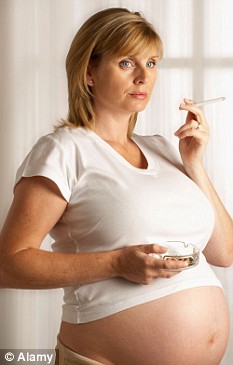
It is well known that self reported smoking during pregnancy is an inaccurate way to identify smokers. Yet it is still used widely by antenatal clinics to determine the smoking status of pregnant women and to refer them to smoking cessation services. The Scottish Government also relies on self-reported smoking figures to set targets and measure the success of smoking cessation services.
To address this issue, a team of researchers from Scotland assessed whether self-reported smoking during pregnancy is an accurate way of setting targets and identifying pregnant smokers in order to offer them smoking cessation services.
The study involved a random sample (3475) of pregnant women from the West of Scotland and compared their self-reported smoking status at maternity booking with results of blood cotinine testing (to detect recent nicotine exposure) to estimate the number of undetected smokers. In total, 24.1% (839) of pregnant women reported being smokers compared to the cotinine-validated estimate of 30.1% (1046).
Therefore, approximately a fifth (207/1046) of cotinine-validated smokers were not detected by self-report and were not offered smoking cessation services, which translates to 2400 pregnant women a year.
Importantly, the use of self-reporting in Scotland results in twice as many pregnant smokers from more deprived areas going undetected each year compared with pregnant smokers from more affluent areas. The authors estimate that the true smoking prevalence for pregnant women in Scotland, after adjusting for area deprivation, maternal age and self-reported smoking is 28%, higher than the 23% based on self report data.
The researchers call for more accurate methods of identifying pregnant smokers, so that accurate data is used to inform policy and provide appropriate patient care.
PAPER: Reliability of self reported smoking status by pregnant women for estimating smoking prevalence: a retrospective, cross sectional study, Deborah Shipton, David M Tappin, Thenmalar Vadiveloo, Jennifer A Crossley, David A Aitken, Jim Chalmers, BMJ 2009;339:b4347, ABSTRACT...
Reliance on self reporting to identify pregnant smokers significantly underestimates the number of pregnant smokers in Scotland and results in a failure to detect over 2400 smokers each year who are therefore not offered smoking cessation services.
Reference: Around One In Five Pregnant Smokers Go Undetected Each Year, Medical News Today, 10/30/2009.
Some related news briefs - Scotland:
Scotland - tobacco firms claim proposed display ban is unnecessary..;
"Glasgow effect" - prevalence of cigarette smoking impact on poor health..;
Scotland - tobacco industry will try to stop attempts to curb sales to young people..;
Scotland - cigarette vending machines removal..;
Scottish politicans most have the courage to protect the health of their constituents..;
Scotland - small businesses given extra 2-years to remove tobacco displays..;
Northern Ireland - assembly approves ban on display of tobacco items..;
Scotland to ban cigarette displays and outlaw cigarette vending machines..;
Bar workers who smoke also benefit from smoking ban..;
17 countries in the world ban indoor smoking - ENFORCEMENT..;
England, Wales to ban tobacco displays in shops..;
Definite Health Benefits of Smoking Bans..;
Northern Ireland raising age for sale of tobacco from 16 to 18 joining the other three United Kingdom (UK) countries..;
Scotland proposes to implement more measures to discourage tobacco use including the banning of tobacco displays..;
Raise Age to 21 to Purchase Tobacco Products...
Read more...


To Provide Public Awareness
Purpose
About Us
Contact Us
2008 HIGHLIGHTS
TOPIX PAPERS - 2008 & 2009..