
The Government's National Preventative Health Taskforce has called for a tax rise that would add $6.50 to the cost of a pack of 30 cigarettes in the May budget. (Australia - cut smoking by one-third economy would be one billion dollars better.., Australia - Comments on the National Preventative Health Taskforce's Proposal..)
Health Minister Nicola Roxon is pushing for Cabinet endorsement of a recommendation from the National Preventative Health Taskforce to lift the price of a 30-pack of cigarettes from $13.50 to $20.
It would be the first rise in the tax rate on tobacco in more than a decade and would bring Australia into line with the rest of the world. Australia has the third lowest tobacco tax rate in the developed world at 68 percent. Most other countries charge tax rates of between 75 and 80 percent.
But up to 3 million smokers would be hit if the price of a pack of 30 cigarettes rose from around $13.50 to $20 per pack over a three-year period under the preventative health taskforce model. The taskforce reckons such a hefty hike would reduce the number of smokers by a million within a decade. This could help the Government save some of the $31 billion that smoking costs the community each year.
A Newspoll found 88 percent of Australians backed such a tax rise provided the money raised was spent on health.
The premiers will gather for the Council of Australian Governments meeting in Canberra (capital of the nation of Australia in the Australian Capital Territory (ACT)) on Monday, April 19th.
References: **VIDEO** Packet of cigarettes could cost $20 a packet under proposed Rudd tax, Elissa Doherty, Sue Dunlevy, Herald Sun, 4/14/2010; Smokers may pay $20 for pack of cigarettes as Rudd seeks to pay for health reforms, xboxworld.com.au, 4/14/2010; Smokes $20 a pack under tax revamp ANDREW PROBYN, SHANE WRIGHT and ANDREW TILLETT CANBERRA, The West Australian, 4/15/2010.
Read more...
Australia - federal government considering a hike in tobacco tax..


Tobacco companies to buy less tobacco this year..

Though the companies, including Altria Group Inc., won't give details, they confirm that they will buy less because of a continuing slide in cigarette sales. "It's just what's happening with the market," said R. Hart Hudson, a grower and warehouseman in South Hill. Some growers and grower associations estimate the drop in sales of flue-cured leaf -- the main ingredient in cigarettes -- will be about 10 percent this year.
"It's really all over. Some growers are being dropped completely. Others aren't getting any cutbacks at all. There are numerous cases of growers being cut 20 percent," said D. Stanley Duffer, marketing specialist with the state agriculture department.
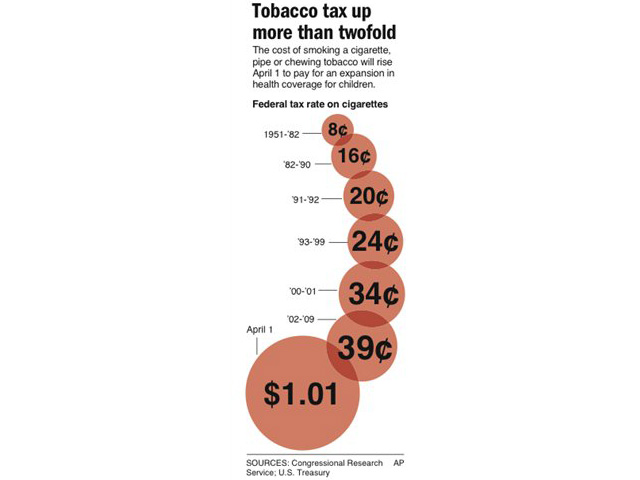
Last year, when the federal government boosted excise taxes by 62 cents a pack, cigarette sales tumbled by 8 percent, or twice as much as they had been through the decade, a review of federal tax data showed. That tax increase came faster and sooner than cigarette-makers expected, and left them with higher inventories of unused leaf than usual, Duffer said.
The U.S. Department of Agriculture estimates that growers cut back planting flue-cured tobacco this year by about 7 percent. In Southside Virginia, the cutback is more than 9 percent, to 16,000 acres, the USDA said. "I think contracted pounds are down more than 7 percent," said Blake Brown, a North Carolina State University agricultural economist specializing in tobacco.
"Farmers will plant some acreage above what they contracted to ensure they meet their contract obligations even if the weather is not favorable."
Duffer thinks more flue-cured growers than usual may be planting on speculation -- without a contract, on the hope they'll find some kind of buyer in the end.
Plantings of burley tobacco, the stronger-tasting, smaller-leaf variety that gives American-style cigarettes much of their sharper flavor, should drop by about 4 percent, the USDA data show. But Virginia, though one of the smallest producers of this variety, will see a 5 percent increase.
In some cases, cigarette-makers aren't renewing contracts, particularly in Georgia, hard hit by disease in recent years, said Kirk Wayne, president of Tobacco Associates, a growers' group. That state will see a 29 percent drop in flue-cured tobacco acreage this year, USDA reports.
He said the decline is linked to the drop in cigarette sales, adding that he's seen no sign U.S. manufacturers are shifting to buy more imported leaf.
"The weaker dollar has helped exports and held down imports, but declining demand in other developed country markets like the European Union (EU) has more than offset the positive effect of the dollar," said Brown, at N.C. State
"Contracted amounts in Brazil, the chief competitor of U.S. flue-cured, are also down."
Changing smoker habits helped some growers, however. Overall, planting of cigar tobacco will rise 33 percent, to 5,570 acres. None of this tobacco is grown in Virginia.
Planting of the main grade used in moist snuff, fire-cured tobacco, is down about 3 percent, to 15,650 acres, USDA reported.
Virginia's 650-acre total is unchanged from 2009.
Moist snuff is one of the fastest-growing kinds of tobacco products these days.
Reference: Tobacco firms to buy less leaf this year by David Ress, Richmond Times-Dispatch, 4/13/2010.
Read more...
Minnesota - anti-tobacco advocates going after dissolvables, e-cigarettes..


A bill from Democratic Sen. Scott Dibble of Minneapolis would prohibit retailers from selling the products to minors. They also couldn't display the products next to candy or gum, and "little cigars" would be classified as cigarettes and regulated more stringently. Dibble's bill gets its first hearing Thursday, April 15th.
Take a look and see if you agree with us that these products must be removed from the market. C-Store Update - Camel Dissolvable Tobacco Sampler and etc..
Reference: MN anti-smoking forces target tobacco orbs, strips, By (Copyright 2010 by The Associated Press. All Rights Reserved.),KARE11.com, 4/14/2010.
Read more...

Wales set to ban the display of tobacco products..
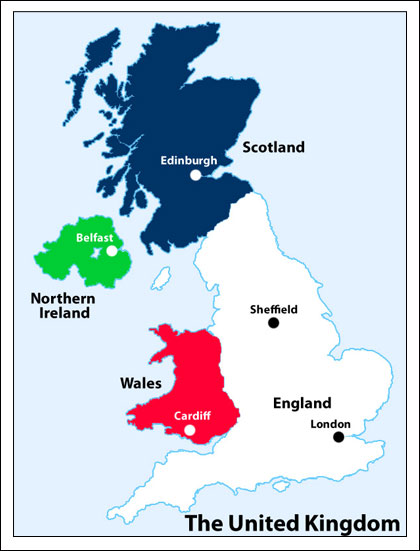
Subject to the outcome of a three-month consultation, which ends on 6 July 2010, the Assembly Government aims to introduce the regulations in line with other UK countries. It is expected that the ban on vending machines will come into force in October 2011, along with the display requirements for small stores such as corner shops. For larger businesses, as defined in the regulations, the regulations are expected to take effect from October 2013.
United Kingdom - Packaging people - tobacco display ban - Counterfeit cigarettes could thrive..
Under the proposed regulations, specialist tobacconists will still be able to display tobacco products within their shop, provided that displays cannot be seen from outside the shop . Restrictions will also be placed on the size of price lists for tobacco products in shops.
The move aims to protect children and young people from the dangers of smoking, as research shows that the display of tobacco products can encourage young people to try smoking.
Within the regulations, provisions have been made to ensure that shops and other businesses can continue to serve their customers. These provisions include allowing shopkeepers to still be able to serve their customers and restock their shelves without breaking the new law, as well as using price lists so they can trade efficiently, but not so that they become advertisements.

Reference: Wales to ban display of tobacco, News Wales, 4/13/2010.
Read more...

Lorillard Inc. CEO Martin L. Orlowsky made 36 percent less in 2009 than on 2008

The maker of Newport, Kent, True and Maverick cigarettes saw its profit grow 7 percent in fiscal 2009 to $948 million. Its revenue excluding excise taxes grew 5.6 percent to $3.69 billion.
Like the nation’s other major tobacco companies, Lorillard, which is based in Greensboro, N.C., raised cigarette prices to make up for sales drops blamed on the economy and a 62-cent-per-pack federal tax increase that began in April.
Compared with 2008 — when Orlowsky’s pay package was worth $15.3 million — he received no bonus but he did get a cash incentive of $3.9 million, more than quadruple what he got in 2008. His 2008 bonus of $10.8 million was related to Lorillard’s spinoff from Loews Corp.
In 2009, Orlowsky’s base salary was $1.2 million, a 45 percent decrease from the $2.2 million he got in 2008. Most of the remainder of Orlowsky’s 2009 compensation came from stock options and awards valued at $4.6 million, up from about $687,000 in 2008.
Orlowsky, who has led Lorillard since January 1999, got other compensation worth $109,401 in 2009, including $77,792 in dividend payments, $21,810 in cash for unused medical and other benefits and a $9,800 matching contribution to a retirement plan.
Lorillard - president and CEO Orlowsky to be replaced after December 31, 2010..
The Associated Press formula is designed to isolate the value the company’s board placed on the executive’s total compensation package during the last fiscal year. It includes salary, bonus, performance-related bonuses, perks, above-market returns on deferred compensation and the estimated value of stock options and awards granted during the year. The calculations don’t include changes in the present value of pension benefits, making the AP total different in most cases from the total reported by companies to the Securities and Exchange Commission.
Lorillard’s annual shareholders meeting is May 20.
Reference: Lorillard’s Orlowsky made $9.8M in ‘09 by Michael Felberbaum, Associated Press (AP), 4/13/2010.
Read more...




To Provide Public Awareness
Purpose
About Us
Contact Us
2008 HIGHLIGHTS
TOPIX PAPERS - 2008 & 2009..