Tak nak! - Say NO..
"With ministry support, the Malacca government embarked on a Smoke-Free Malacca Initiative where smoking inside buildings within designated areas of the city are disallowed," she said, adding that more smoke-free areas would be expanded.
"Support and co-operation from media personnel, community leaders and members of the public are required to ensure the sustained success of the anti-tobacco move to protect public health."
Rosnah said the recent increases in tobacco tax and cigarette price hike are among measures to discourage smoking.
"Most of the new and strengthened anti-smoking actions by the government in the future would be those obligated and recommended by the World Health Organisation's Framework Convention on Tobacco Control (WHO FCTC) that is an international treaty to which Malaysia is a party to since 2005."
"Many international research and local scientific studies by our ministry and academic groups have found the Tak Nak Merokok (Anti-Smoking)Campaign and cigarette price hikes have brought about significant impact to curb smoking, especially among children, youths and the poor."
VIDEO - Ministry of Health - Tak Nak Merokok Campaign (Anti-Smoking Campaign)
Rosnah said the World Bank Report 1999 said a 10 per cent increase in cigarette price would lead to four to eight per cent reduction in demand.
"Our ministry's own evaluation of the three waves of the Tak Nak Merokok campaign showed the nationwide level of message penetration, awareness, knowledge, positive change in attitude and change in behaviour among Malaysians, be it smokers, non-smokers and youths, is very high," she said.
"The third National Health and Morbidity Survey (NHMS3) by the ministry in 2006 also showed a drop in smoking prevalence. Hence, the actions by the government, especially the ministry all these years, have not been wasted."
On July 28, The Malay Mail reported the number of smokers fell by three per cent in the 10-year period between 1996 and 2006, according to the NHMS3. While the percentage might be small, Rosnah said achieving significant change in population behaviour, from smoking to quitting, would require fairly long periods as there were multiple internal and external factors to determine such prospects.
She said the final impact would take decades as there was a lag period of 20 to 30 years between tobacco use and health burdens.
According to the Tak Nak Merokok media campaign impact studies, 75 per cent of smokers exposed to it took action by engaging help from "Quit Smoking Services" and contacted the ministry's infoline, compared with only 31.6 per cent of the overall respondents.
The ministry confirmed there are now four million Malaysians addicted to smoking.
Reference: Smoke-free zones to be expanded by NADIRAH H. RODZI, mmail.com.my, 10/26/2010.
Read more...
Malacca, Malaysia - smoke free zones to be expanded..
Alberta, Canada - lawsuit against big tobacco should be filed within a year..


Background: Our news brief dated November 24, 2009 indicated that Alberta had joined Ontario, British Columbia (B.C.), Quebec and New Brunswick as provinces that have passed similar legislation allowing them to sue tobacco companies for health-care costs associated with tobacco-related diseases..At this time Les Hagen, executive director of Action on Smoking and Health, applauded the move, adding: "The Alberta government now has a tremendous opportunity to help offset the rising costs of health care while holding the tobacco industry accountable for its actions." Hagen also encouraged the government to launch a lawsuit as soon as possible.
Alberta joins some other provinces in suing tobacco companies..
Redford: "We are confident this action is the right thing to do. Some of the most costly illnesses to treat, such as cancer and heart disease, are caused by smoking," Redford told MLAs (Members of the Legislative Assembly) during the first day of the legislature's fall session. "The litigation we plan to commence will seek to share this burden with the manufacturers of this product." Redford said she hasn't determined the value of Alberta's claim, saying only that it would be "a substantial amount of money."
But Hagen noted Ontario's lawsuit, filed last year, is seeking $50 billion from tobacco companies -- roughly the amount that province estimates it has spent on providing health care to smokers since the 1950s. "Based on that, proportionally Alberta's statement of claim should be at least $10 billion," he said. He suggested any settlement or judgment should include not just a monetary award, but also harsher restrictions on how tobacco products are sold and marketed.
Redford said Alberta's lawsuit should be filed within a year, but it's unclear how long the case could take or whether it will even see a courtroom. British Columbia, after nearly a decade of legal wrangling, is set to proceed with a trial next year. Some experts believe a successful outcome for the province in that case could force the tobacco industry to the settlement table with other provinces.
British Columbia, after nearly a decade of legal wrangling, is set to proceed with a trial next year. Some experts believe a successful outcome for the province in that case could force the tobacco industry to the settlement table with other provinces.
Redford: "We believe it's important for Alberta to begin this process now so that we're able to file our statement of claim and work collectively and jointly with other provinces to set the litigation strategy."
Reference: Billions at stake in Alta. tobacco lawsuit Province seeks to recover health-care costs by Keith Gerein, Edmonton Journal, 10/26/2010
Read more...
Germany - tobacco tax to increase incrementally over next 5-years..
Germany - coat-of-arms..
The tax on cigarettes, rolling and pipe tobacco would be levied from 2011 and make up for falling tobacco tax revenue as Germans smoke less, opt for cheaper brands or turn to smuggled products, the Finance Ministry said today in an e-mailed statement.
Merkel’s coalition, seeking to shrink the budget deficit with about 80 billion euros of cuts and revenue-raising measures, agreed late yesterday to water down planned cuts to energy subsidies for companies with the difference in part to be made up with the tobacco-tax increase. That prompted opposition criticism Merkel is shifting the tax burden from companies to taxpayers.
The tobacco-tax increase will take place incrementally from 2011 to prevent smokers from rushing to cheaper brands, the Finance Ministry said. It will also raise the levy on less-taxed products faster to avoid price distortions. A pack of 19 cigarettes will be taxed 4-8 cents more per year, while a 40 gram (1.4 ounces) pack of loose tobacco will be levied 12-14 cents a year.
“This is completely the wrong direction to take, both economically and ecologically,” Alexander Bonde, the opposition Greens’ budget spokesman in parliament, said on MDR Info. “The government has given up its plans under lobby pressure.”
Finance Minister Wolfgang Schaeuble had planned to recoup 1.5 billion euros annually from cutting subsidies for energy-intensive companies such as the chemicals industry, prompting the BDI industry lobby to warn that as many as 870,000 jobs were at risk. Schaeuble will instead raise about 500 million euros from the energy tax next year, Bild newspaper reported today. Germany’s VCI chemical-industry association welcomed the government decision as a return to “economic sanity,” according to an e-mailed statement.
1.00 EUR = 1.37840 USD
Reference: Germany to Raise Taxes on Tobacco, Cut Energy Subsidies Less Than Planned by Patrick Donahue (pdonahue1@bloomberg.net), Bloomberg.com, 10/25/2010.
Some Germany related news briefs:
Oktoberfest 2010 in Munich, Germany smokefree in 2011..;
Bavaria, Germany - Oktoberfest to be smokefree but not this year..;
Study - the more teens see cigarette ads, the greater the risk of taking a puff..;
Germany - Bavaria referendum on smoking in cafés and beer halls on July 4, 2010..;
Germany - losing billions as smokers find cheaper places to buy cigarettes..;
Germany - smokers smoking less but it's costing more..;
Bavarians force referendum on smoking ban next year..;
Bavaria - court rules, looser implementation of smoking ban constitutional..;
Germany - beer sales are down smoking ban maybe partial blame..;
Bavaria - state's parliament loosened regulation on smoking ban..;
WHO Report on the Global Tobacco Epidemic 2008..;
German sales rise in Germany amid moves to impose smoking ban..
Read more...

Russia - govt talks the talk but can't walk the walk..

The Next Generation - Russsia - 73 percent of boys and 65 percent of girls smoke...
Now we find that government deputies have come up with the revised draft of a new anti-smoking law that is seen as less radical than its predecessor. Despite a public inclination towards drastic measures against smoking in public places, the deputies decided that it is still too early to introduce a ban on cigarette sales at kiosks or on smoking in restaurants and bars.
Although the new draft requires kiosks to receive a special license for selling tobacco, the sales will still be permitted for another two years. After that, deputies promise, the total ban will be entered into force. Owners of bars and restaurants will then be obliged to seat their smoking customers in a separate room – or provide the smoking area with extra ventilation facilities. This also has to be done within two years.
The ban on smoking in schools, indoor sports facilities, elevators and public transport will become effective in six months after the law is adopted.
The previous version of the draft, drawn in August, was much less compromising. It could totally ban kiosks and small shops from selling tobacco products.
By doing so, deputies hoped to transfer the tobacco market into the hands of large food networks. At the moment, more than 75 percent of cigarettes are sold by kiosks. However, tobacco companies managed to force officials into softening the legislation.
“The tobacco industry is very creative,” Darya Khalturina, co-head of the Anti-Tobacco Coalition, told RT. “It used the National Trade Association, which organized letter-writing campaigns from 3,000 workers of kiosks. They wrote to the authorities that their kiosks would have no business because of this bill. Some officials were too attentive to these appeals.”
Reference: VIDEO - Russia to sweeten anti-smoking pill, Prime Time (RT) Russia, 10/25/2010
Russia related news briefs:
Russia - KT&G Corp. completes construction of plant..;
Russia - launches anti-smoking program, maybe they're serious this time..;
Russia - electronic cigarettes to be banned..;
Russia - strong plans to reduce the burden of tobacco use - will it come true??;
Russia - finance minister urges citizens to smoke and drink more to lift tax revenues..;
Russia - BATR has an alternative instead of banning cigarette sales from kiosks or by street vendors..;
Russia - health warnings on cigarette packs..;
Russsia - 73 percent of boys and 65 percent of girls smoke..;
Russia - Finance Ministry skeptical about raising taxes on tobacco..;
Russia - tax on tobacco may be quadrupled..;
Russia - tobacco epidemic with no solution in site..;
Russia - public health official discusses tobacco control..;
Russia - making it more difficult for servicemen to smoke..;
Russia - draft tobacco law being considered by Duma..;
Russia among top-10 smoking nations..;
Russian lawmakers discuss smoking ban for restaurants and bars..;
Russia passes new restrictions on tobacco..;
British American Tobacco (BAT) Misleading Russian Consumers..;
Russian State Duma (Parliament) ratified the framework convention of the World Health Organization (WHO) on tobacco control...
Read more...

Malaysia - public are strongly advised not to purchase any e-cigarettee..
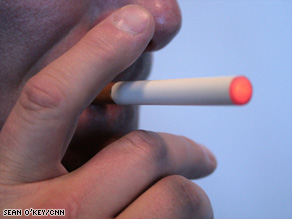
"There is concern this nicotine delivery to the human lung might result in stronger toxicological, physiological and addictive effects, and this must be addressed in scientific studies.
"ENDS are not nicotine replacement therapy to assist smokers quit tobacco. Instead, ENDS might be used to perpetuate smoking by sustaining nicotine dependence in environments where smoking is prohibited."
Rosnah added that nicotine is listed as a Group C Poison within the Poisons Act 1952 (Act 366), where it can only be sold or supplied by an authorised licensed individual under the provisions of Section 22. In Malaysia, Nicotine is listed under the Ministry of Health's Poison List under Group C. All preparation with nicotine is considered a poison unless exempt under the poison list. Nicotine in tobacco is exempted. Therefore nicotine in Electronic Cigarettes is a poison under the Poison List. "All products containing poisons listed in Group C must first be registered with the MOH Drug Control Authority before it can be marketed. None of the e-cigarette nicotine products in the market has been registered.
"The public are strongly advised not to purchase any e-cigarette, which is very costly. The product on sale now is not legal and more importantly, there is a major lack of certainty with regards to its safety and effectiveness."
Rosnah added that the MOH Pharmaceutical Services are planning legal action to curb sales of e-cigarettes.
“The electronic cigarette is not a proven nicotine replacement therapy,” said Dr Ala Alwan, Assistant Director-General of WHO’s Noncommunicable Diseases and Mental Health Cluster. “WHO has no scientific evidence to confirm the product’s safety and efficacy. Its marketers should immediately remove from their web sites and other informational materials any suggestion that WHO considers it to be a safe and effective smoking cessation aid.”
Electronic cigarettes are banned in: ● Australia, ● Brazil, ● Canada, ● Denmark,
● Finland,, ● Israel, ● Italy, ● Mexico, ● New Zealand, ● Norway, ● Panama,
● Singapore, ● Taiwan, ● United Kingdom
Reference: E-cigarette is 'just as bad' Health Ministry preaches caution on so-called alternative, ROHANI MASWARI, MMail.com.MY, 10/18/2010.
Read more...


To Provide Public Awareness
Purpose
About Us
Contact Us
2008 HIGHLIGHTS
TOPIX PAPERS - 2008 & 2009..