
First Marlboro, Now Camel; Reynolds Taking Camel Dip Off Shelves.. On Wednesday, October 27th Reynolds announced to the trade that Camel Dip would be discontinued in 11 of the 12 states the brand was launched into. (More on Camel Dip - a premium moist snuff..; ; RAI CEO comments on the launch of Camel Dip and Camel SNUS market..; Reynolds American to launch Camel Dip in June 2009..)
Comment on Camel Dip from RAI q3 2010 earnings report.. Camel Dip, the company’s newest premium introduction, remained relatively stable in the third quarter. American Snuff continues to evaluate opportunities to strengthen Camel Dip’s marketplace performance.
The product will remain stocked in Arizona. The company says it will be shifting its focus back towards Grizzly. The chart that can be found in the Reference below shows Camel’s LTM growth trends on a sequential basis (i.e. growth of units in 3Q 10 LTM vs. 2Q 10 LTM). The product was growing strongly through the pipeline fill phase (launched in 3Q 2009), but growth severely decelerated in the most recent period to 10%.
This is another Lesson/Indicator For Lorillard’s Smokeless Plans.. First Marlboro and now Camel have seen difficulties launching an MST brand using a cigarette equity. We believe these experiences should serve as an indicator that Lorillard will likely not pursue an entry into the MST market with a cigarette brand (ie Maverick or Newport). And if there’s anyone who should be aware of this, it’s current Lorillard CEO Murray Kessler (former CEO of UST).
Comments found in news brief: April 13, 2008 - Altria's growth depends on the Marlboro name..
Nik Modi, a UBS tobacco analyst has stated, "The Marlboro brand name is not as transferable as many originally believed." Modi points out that test of Marlboro moist smokeless tobacco in Atlanta is slowly slipping down hill. Their original entry Taboka failed and has been removed and Marlboro SNUS hasn't done much better.
We're reminded by the Chief Operating Officer of UST, Murray Kessler that "Nine out of 10 smokers that try smokeless still reject the product." Kesser continues, "Clearly Marlboro is a great cigarette brand. That said, history clearly shows that it is difficult to extend brands from one one category to another."
References: Camel Dip - It’s Hard To Put Cigarettes in a Tin, UBS Investment Research Picture of the Week Vol. 42, Nik Modi, UBS Tobacco Analyst, 10/29/2010; Camel Dip Dynamics Reynolds American refocusing product, pulling back in all states but Arizona by Greg Lindenberg, CSP Daily News, 11/1/2010.
Read more...
Camel Dip - to be discontinued in most states..
Lorillard - Newport - non-menthol may be a hit this time..

 October 29, 2010 - As Lorillard Tobacco Co. prepares to launch Newport Non-Menthol cigarettes in early November, retailers seem ready for the new offering. According to "rough-math" research from UBS Securities LLC, the new cigarette could take as much as a 0.5% share of the total cigarette category (close to 5% of total Newport volumes) over the next 12 months.
 "Factoring in an introductory, off-invoice discount of $1.65/pack (putting its effective wholesale price in line with Maverick), we estimate Newport Non-Menthol could generate about $100 million over the next 12 months," Nik Modi, an analyst with UBS, New York, wrote in a research note yesterday.
Although this is not Lorillard's first attempt at a non-menthol version of Newport, recent U.S. Food & Drug Administration (IFDA) scrutiny of menthol could make this launch "more meaningful," according to the report. The previous efforts were test marketed about 10 years ago, but a broader national launch wasn't pursued, the report states.
When Lorillard first announced the new non-menthol cigarette in August, the company said that it believes the new product will further strengthen its competitive position and its Newport brand family with the national introduction. It described the cigarette as a premium product with broad competitive consumer appeal that delivers the high-quality tobacco taste that adult smokers expect from Newport. (Lorillard to launch non-menthol variety of Newport in November 2010..)
"We are excited to leverage Newport, one of the most-recognized names in the cigarette industry," said Martin Orlowsky, chairman, president and chief executive officer at the time. "With the introduction of Newport Non-Menthol, Lorillard will be afforded greater opportunity to compete in the largest segment of the U.S. cigarette market, as the non-menthol category represents approximately 70% of total industry volume."
In other analysis from the UBS report, Modi said it is unlikely that Lorillard will foray into the moist smokeless tobacco (MST) category--despite now having Murray Kessler, former CEO of MST-maker UST Inc., at the helm. Explaining that launching a new MST product is "incredibly difficult," the report says Kessler understands the competitiveness of the category "better than anyone, which is why we ultimately do not believe Lorillard will launch its own MST product." (Kessler has been disappointed in the performance of snus products..)
Lorillard, Inc. is the third largest manufacturer of cigarettes in the United States saw its net profit surge by 16.6% to $274m, while revenue rose by 12.6% to $1.07bn in the third quarter of 2010. The company said cigarette volumes were up by 5.8% to more than 10 billion cigarettes while #1 Philip Morris USA had a decline in volume of 2.4 percent and #2 Reynolds American had a decline in volume of 2.6 percent. Sales of Lorillard's lower-priced brands such as Maverick jumped 30.9% for the quarter. (Lorillard - highlights q3 2010 earnings report..)
Reference: Big Impact for Newport Non-Menthol?
Analyst predicts new Lorillard cigarette could generate about $100 million in first year by Linda Abu-Shalback Zid, CSP (Convenience Store/Petroleum) Daily News, 10/29/2010.
Read more...
England - pregnant women in north almost nine times more likely to smoke..
Click on either image to enlarge..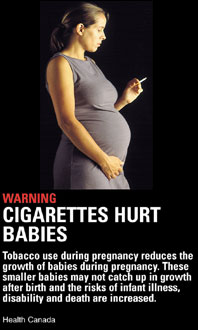

Overall, nearly 15% or women who gave birth across England in the same period said they smoked during pregnancy.
While overall deaths from smoking-related diseases across England had fallen, "the significant proportion of women who reported smoking in pregnancy is a sign of our need to redouble our preventative efforts in primary and maternity care," London Health Observatory director Dr Bobbie Jacobson said. She called on local authorities and partnerships between the NHS and general practitioners to address the problem.
The APHO survey found there were 207 smoking related deaths per 100,000 people aged 35 and over in England during 2006-08. This was down from 216 deaths per 100,000 in 2004-06.
Smoking related deaths from lung cancer were highest in Middlesbrough, with the illness claiming 71 victims per 100,000 in 2006-08. This compared to 19 per 100,000 smokers dying from lung cancer in Guildford in the same period.
"There is clearly a mix of good and bad news," Dr Jacobson said. "The overall picture of falling death rates is encouraging and shows what can be achieved over time through clear plans to tackle the harm from smoking." But, she added "the north/south inequalities remain a stark reminder that the biggest burden of smoking-related ill health still falls on our poorest communities."
The survey was commissioned by the Department of Health, on behalf of APHO.
Reference: Northern women 'more likely to smoke while pregnant', London Evening Standard, 10/27/2010.
A few related news briefs:
Smoking during pregnancy and postnatal environment - socioeconomic inequalities..;
England - program to pay pregnant women not to smoke seems hopeful..;
U.K. women paid for stopping smoking when pregnant...
Read more...

New York State - federal judge, temporary restraining order extended until November 12, 2010..

The State Attorney General's Office -- headed by gubernatorial candidate Andrew M. Cuomo -- does not agree.
Wallace commented in federal court after the latest in a series of legal arguments on the taxation issue before U.S. District Judge Richard J. Arcara. Lawyers for the Unkechauge and St. Regis Mohawk tribes want the judge to block state officials from collecting taxes on cigarette sales to non-Indians. Several other Indian tribes, including the Seneca Nation, have similar cases pending in federal courts in Buffalo and Utica.
A temporary restraining order, which prohibits the state from taxing cigarette sales by businesses in the Unkechauge and St. Regis Mohawk tribes, was supposed to expire this Friday, but Arcara extended it until Nov. 12, 2010.
James F. Simermeyer, an attorney for the Unkechauges, asked the judge to send the case to a court-appointed mediator to see if an agreement can be negotiated, but the State Attorney General's Office opposed the request. "It's our view that this dispute is ill-suited to mediation," said Andrew D. Bing, a state lawyer. "Mediation has no reasonable chance to be productive."
The state has already prevailed on several important points in its Seneca Nation case before Arcara, and that would make it more difficult for mediation to be successful, Bing told the judge.
Arcara said he will consider the mediation request.
Bing estimated that the debt-ridden state could collect $500,000 a day if it is allowed to tax sales from Indian-owned businesses to non-Indians. He said the state strongly disagrees with tribal attorneys who claim the tax collections would destroy the right of tribes to govern themselves.
The state says it wants to collect $4.35 a pack from the Indian businesses, the same amount it now collects from non-Indian businesses such as convenience stores, drugstores and grocery stores.
Wallace said his tribe, which has fewer than 1,000 members, has "eliminated poverty" and sent many young people to college on full scholarships because of the Unkechauges' cigarette economy. "In our part of the state, this [taxation] law is going to send people to Pennsylvania or New Jersey to buy cigarettes," Wallace said. "New Jersey and Pennsylvania [business owners] will get rich."
According to Bing, the state believes that, if tribal cigarette sales are taxed, more New York State smokers will flock to convenience stores and other businesses that sell taxed cigarettes.
Reference: Mediation suggested to settle tax battle by Dan Herbeck, The Buffalo News, 10/26/2010.
Some related news briefs:
New York State - two federal judges continue to prevent the collection of taxes on cigarettes sold by Indians..;
New York State - federal judge, worried about the violence that may result extends indefinitely ban on state taxation of cigarette sales by Indians..;
New York State - tribal lawsuits may be merged within federal court..;
U.S. Supreme Court - rejects appeal from Indian merchant who wanted an Idaho Supreme Court ruling overturned..;
New York State - now the Oneida Indian Nation gets restraining order from federal judge.;
New York State - state court clears way for state to collect cigarette tax - on to federal court..;
New York State - U.S. District Judge extends order blocking state from collecting taxes, hearing Sept 14th..;
New York State - cigarette tax collection from Native American sales pushed off until 5-judge panel decides..;
New York State - Seneca Nation and other Indian Tribes get injunction from federal judge delaying tax collection on cigarettes..;
New York State - Governor Patterson will not tax cigarettes sold among Native Americans..;
New York - Senecas asking for Bloomberg to resign over remarks he made..;
New York State - Seneca Indian Nation files sued to block enforcement of a plan to collect cigarette taxes..;
Read more...

British American Tobacco (BAT) - 2010 - 1st 9-months..

British American Tobacco said Wednesday, October 27th that it sold 1 percent fewer cigarettes in the first nine months of the year compared to a year ago, but revenue rose thanks to favorable currency movements and the acquisition in August 2009 of PT Bentoel in Indonesia.
Although total volume fell, sales of its top brands — four Global Drive Brands – Dunhill, Kent, Lucky Strike and Pall Mall were up 8 percent. Volume sales of the company’s four Global Drive Brands grew by about eight per cent, an increase that was flattered by increased consumer purchases in Japan ahead of a significant excise driven price increase.
Organic volumes were about three per cent lower than they were last year as a result of market size declines and an increase in illicit trade in some markets. Volumes were also impacted by the loss of sales in Pakistan after the floods. (Organic growth is growth that comes from a company's existing businesses, as opposed to growth ... Inorganic growth · Mergers and acquisitions.)
Asia-Pacific volumes, at 141 billion, were up by 5.2 per cent; Americas volumes were down by 0.9 per cent to 110 billion; Western Europe volumes were down by 8.2 per cent to 90 billion; Eastern Europe volumes were down by 2.1 per cent to 93 billion; and Africa and Middle East volumes were down by 3.1 per cent to 92 billion.
The company reported that trading conditions continued to be challenging, with industry volumes markedly lower in a number of markets including Romania, Turkey, Pakistan, Germany and South Africa. In some markets, it said, there was down-trading to illicit products as a result of pressure on consumers’ disposable income, exacerbated by high excise increases. This particularly affected the low price segment.
Dunhill volumes were up by about 21 per cent, mainly as a result of brand migrations in Brazil and South Africa; Kent and Lucky Strike volumes each grew by about two per cent; and Pall Mall’s volumes increased by about seven per cent.
BAT reported that it had increased its overall market share across its top 40 markets.
“The challenging economic conditions, excise driven price increases and high unemployment have led to some softening of our volumes,” said chief executive, Paul Adams. “The recession’s impact on consumers is still with us and shows no signs of abating. “Despite this, we have increased market share in our largest markets, grown the Global Drive Brands and achieved good growth in revenue.
“We are on track for another year of good earnings growth.”
Reference: BAT says trading conditions still challenging, Tobacco Reporter, 10/27/2010
Read more...


To Provide Public Awareness
Purpose
About Us
Contact Us
2008 HIGHLIGHTS
TOPIX PAPERS - 2008 & 2009..