February 14, 2009 - As the economy struggles to find its footing, consumers are becoming increasingly frugal. Tobacco smokers as they face this building fiscal pressure, even the most brand conscious are more likely to seek out budget-friendly alternatives, such as price-value cigarette products. To avoid this migration to cheaper brands companies like Philip Morris and R.J Reynolds are discounting their premium cigarettes.
Marlboro 72s also have a 2-pack special price. The idea behind 72s was to appeal to customers who, due to indoor smoking bans, want to dash outside for a quick nicotine hit but don't always finish a full-size cigarette. These cigarettes are shrunk down by about a half inch - 7.2cm long and shorter than the standard 8.5cm cigarette.
Back on September 10, 2008 we reported that R.J. Reynolds Tobacco Company (RJR) subsidiary of Reynolds American, Inc. would be scaling back marketing and promotional support for its Kool menthol brand cigarettes. As a result, RJR has moved Kool from a "growth" brand to a "support" With this change, R.J. Reynolds has two growth brands, Camel and Pall Mall. (Lower Trademark Value of Reynolds' Kool cigarette brand..) Judy Hong, a Goldman Sachs Group Inc. tobacco analyst: Newport, the top-selling U.S. menthol cigarette, increased its share of smokers after Winston-Salem, N.C.-based Reynolds American Inc. reduced marketing of Kool, a rival brand. Demand for Newport spurred an 8.2% increase in Lorillard shipments to 9.43 billion cigarettes. First RJR stopped the support of Salem and now it's Kool - both menthol cigarettes have a very interesting history.
Notice the images below - the R.J. Reynolds salesperson hides the shelf containing Kool cigarettes behind a sign advertising Pall Mall.
Previous c-store update..
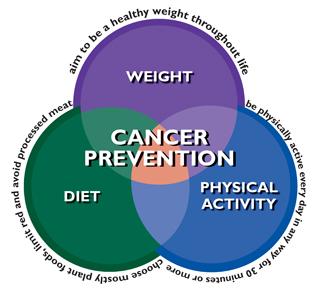
American Institute of Cancer Research
Click on any image to enlarge..
Read more...
C-store update: premium cigarette specials, Pall Mall/Kool.



Hong Kong - temporary smoking ban exemption ends July 1, 2009..
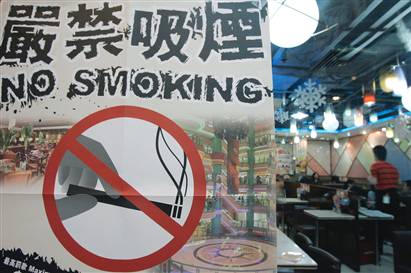
Background: The initial smoking ban, that was effective on January 1, 2007 prohibited lighting up in restaurants, workplaces, schools, karaoke lounges and public areas. Even smoking outdoors, at public beaches, swimming pools, sports grounds, museums and most areas in public parks is forbidden. Any smokers caught breaking the new law will be subject to a maximum penalty of HK$5,000 (US $644). Venues were not liable to any penalty. (Hong Kong wakes up to smoking ban new law prohibits lighting up inside and outside most public places, msnbc - 1/2/2007)
A new fixed penalty system for smoking offences will launch in the coming months, under which all offenders who smoke illegally must pay a $1,500 fine within 21 days. The smoking ban will also be expanded to public transport interchanges.
To help cut tobacco dependence the Government has adopted a combination of measures, including legislation, taxation, publicity, education, enforcement and smoking-cessation services.
Reference: Tobacco control to remain after smoke ban, news.gov.hk, 2/12/2009.
Related news briefs: Honk Kong - smoking increase raise tobacco duties??; Hong Kong - after smoking ban cigarette consumption up 14 percent..; Hong Kong - public smoking ban - smoking rooms??; Shanghai Tobacco's Golden Deer Cigarettes - Hong Kong...
Click on image to enlarge.., Paul Yeung/Reuters..
Read more...

Second-hand smoke linked to dementia..

Previous research has highlighted the increased risk of dementia to active smokers.
PAPER: Exposure to secondhand smoke and cognitive impairment in non-smokers: national cross sectional study with cotinine measurement, David J Llewellyn, Iain A Lang, Kenneth M Langa, Felix Naughton, Fiona E Matthews, : BMJ 2009;338:b462, ABSTRACT..
The research, carried out by Dr David Llewellyn and his colleagues at Cambridge University, measured levels of cotinine — a by-product of nicotine — in saliva samples of nearly 5,000 non-smoking adults over the age of 50, to ascertain levels of exposure to second-hand smoke. Conducting a range of neuro-psychological tests, they were able to assess aspects of brain function including verbal memory and fluency, and numerical calculations. These results were added together to provide a global score for cognitive function. Those whose scores were in the lowest 10% were identified as suffering from cognitive impairment.
Based on the results, Dr Llewellyn and his team concluded exposure to second-hand smoke may be linked to an increased chance of developing dementia and other cognitive impairments. There are believed to be a number of explanations for this, |including the fact that passive smoking increases the risk of heart disease and stroke — both of which are known to increase the likelihood of neurological problems like dementia. Dr Llewellyn: “Our results suggest that inhaling other people's smoke may damage the brain, impair cognitive functions such as memory, and make dementia more likely.
“Given that passive smoking is also linked to other serious health problems such as heart disease and stroke, smokers should avoid lighting up near non-smokers.”
Altria's comment on second-hand smoke: Bill Phelps Spokesman for Altria Group Inc: "We think that people should be able to avoid being around second-hand smoke, especially in places they must go, such as government buildings and public transportation. But he added that "business owners, particularly those who own restaurants and bars, should be able determine smoking policy for their own businesses."
A few related news briefs: Bar workers who smoke also benefit from smoking ban..; Smoking bans lower heart attacks..; Secondhand (environmental,involuntary, passive) Smoke: Blood Vessel Damage Within Minutes.. and let's not forget about third hand smoke..Children are especially vulnerable to thirdhand smoke...
Reference:
Second-hand smoke linked to dementia, study reveals, Belfast Telegrapgh, 2/13/2009.
Click on enlarge to enlarge.. Image from blog of Wesley Smith..
Read more...
Financial Incentives for Smoking Cessation..

Even though just 15 percent of those offered money ended up quitting for the long term, those success rates are still far higher than what's normally seen in smoking-cessation efforts. "Only about 2 to 3 percent of smokers quit each year," said Thomas Glynn, director of cancer science and trends and international cancer control for the American Cancer Society.
PAPER: Kevin G. Volpp, M.D., Ph.D., Andrea B. Troxel, Sc.D., Mark V. Pauly, Ph.D., Henry A. Glick, Ph.D., Andrea Puig, B.A., David A. Asch, M.D., M.B.A., Robert Galvin, M.D., M.B.A., Jingsan Zhu, M.B.A., Fei Wan, M.S., Jill DeGuzman, B.S., Elizabeth Corbett, M.L.S., Janet Weiner, M.P.H., and Janet Audrain-McGovern, Ph.D., A Randomized, Controlled Trial of Financial Incentives for Smoking Cessation, New England Journal Medicine, volume 360:699-709, Number 7, Feb. 12, 2009ABSTRACT...
Read more...
Nasal snuff another harm reduction product..

Toque (pronounced took) one brand of nasal snuff comes in 16 flavors of the tobacco powder including toast & marmalade, toffee, grapefruit, cherry, blueberry, raspberry, peppermint, espresso, whiskey & honey and peanut butter. Besides the powder form this snuff comes in mini-bullets with most of the same flavors.
How can we possibly keep our children from trying out all these new products?? IT's IMPOSSIBLE. They'll give it a try selecting their favorite flavor that masks the taste of the tobacco, the kid comes back for another and another because they just love the flavor. Only problem after using this stuff for a few times - our kids our future leaders soon will be addicted to nicotine for their whole life. So the child you've tried so hard to make the very best becomes a nicotine addict never able to reach his/her full potential. There are many adverse effects that occur with nicotine but one of the major ones is that it interferes with adolescent brain development.
Reynolds has defended the new dissolvable tobacco in part by saying the products come in child-resistant packs. IS THIS ENOUGH?? - WE'RE NOT TALKING ABOUT TWO YEAR OLD KIDS..
Most smokers start using cigarettes in their teens--with these so-called harm reduction products they could start before the age of ten. The makers of Toque indicate that about 50 percent of their customers are aged between 18 and 25 years old.
Tobacco harm reduction proponents think these products are a good option, not considering our primary focus - our kids. Oregon's state epidemiologist is concerned that the test marketing of dissolvables in Portland will be marketed to children. Dr. Brad Rodu's response.. This is nonsense. First, R.J. Reynolds signed the 1998 master settlement with 46 states (including Oregon), agreeing not to "take any action, directly or indirectly, to target youth. R.J. Reynolds signed the 1998 master settlement with 46 states (including Oregon), agreeing not to "take any action, directly or indirectly, to target youth." Another proponent, when we asked Mr. Godshall how can we limit the distribution of moist snuff pouches (Snus) so they don't get in mouths (or nostrils) of kids. He responded: The 1992 Synar Amendment, and laws in every state (and many local jurisdictions) sharply reduced tobacco sales to youth, and the 1998 Master Settlement Agreement sharply reduced cigarette and smokeless tobacco advertising and promotions that had previously targeted youth. Meanwhile, tax hikes on cigarettes and other tobacco products have further reduced youth consumption of those tobacco products.
It has been proven that these solutions are not sufficient.
Reference: Snuff sales puff up as credit crunch and smoking ban take hold, ASH Daily News for 15 October 2008.>
All tobacco products with no exceptions are highly addictive and dangerous to health; as the World Health Organization tells us "Tobacco is Deadly in Any Form or Disguise."
Read more...


To Provide Public Awareness
Purpose
About Us
Contact Us
2008 HIGHLIGHTS
TOPIX PAPERS - 2008 & 2009..