RAI - highlights q3 2010 earnings report..


October 22, 2010 - Susan M. Ivey - Chairman, President and CEO of Reynolds American, President of RAI. Ivey, 51, said she would retire as chairwoman on October 31, 2010 then as chief executive, president and member of the board of directors on February 28, 2011.

Increases in adjusted earnings and margins were driven by gains in our operating company's powerful key brands, all of which posted record consumer uptake market share in the third quarter. Reynolds' market share was unchanged at 28.2 percent compared with a year ago.

Ivey noted that the expansion of R.J. Reynolds' field trade-marketing organization to serve American Snuff, through a services agreement has been largely completed. This change gives both companies greater speed to market, provides stronger support for the retail trade, and gives the company's brand a strong retail presence, and will significantly benefit American Snuff brand.

Reynolds American - consolidating smoking plants, expanding smokeless plants..

R.J. Reynolds - cigarette growth brands:
Camel and Pall Mall, the lower-cost cigarette option, represent 55 percent of Reynolds' 20.1 billion in cigarette volume during the quarter. Overall volume, however, was down 2.5 percent from a year ago. Reynolds said that higher prices and increased sales of Camel and Pall Mall helped offset lower cigarette-shipment volumes. Although Camel remains the brand face of Reynolds, Pall Mall continued its notable climb. Camel's market share was 8 percent, compared with 7.7 percent a year ago. By comparison, Pall Mall's market share was 7.8 percent, compared with 5 percent a year ago. Pall Mall is the nation's fourth largest and fastest growing major cigarette brand.

For the first nine months, R.J. Reynolds’ cigarette shipment volume was down 5.1 percent, but down only 2.2 percent excluding private-label brands. By comparison, industry volume declined 3.5 percent from the prior-year period.

Pulse promotions used in marketing Pall Mall, i.e., lower the price for a short period and the raise it. They see around a 50% retention rate after the price is raised.

“Camel’s menthol styles, which utilize R.J. Reynolds’ capsule technology, are contributing to Camel’s strong performance,” Delen (Chairman, President and CEO, R.J. Reynolds Tobacco) said. “These styles offer adult smokers fresh menthol flavor when they choose, and are appealing to competitive menthol smokers.” Camel Crush also enhanced the brand’s share performance in the menthol segment. Using the same capsule technology, this style offers adult smokers the choice of regular or menthol with each cigarette. Including Camel Crush, Camel’s third-quarter menthol market share increased 0.5 percentage points to 1.9 percent.

Smokeless tobacco, American Snuff and R.J.Reynolds (Camel Snus, Camel Dissolvables)..

American Snuff continued to show gains in total moist-snuff shipment volume, increasing 1.2 percent in the third quarter from the prior-year quarter, and gaining 5.0 percent in the first nine months from the prior-year period. American Snuff’s total moist-snuff share of shipments of 29.2 percent was down 0.7 percentage points in the third quarter.

Levels of competitive promotional shipments and changes in the largest competitor’s returned-goods reporting continued to distort industry moist-snuff shipments. Industry shipments were up 8.6 percent in the third quarter.

Grizzly, the company’s flagship brand, increased third-quarter shipment volume by 2.3 percent in the third quarter. “As we anticipated, the upgrade to the Grizzly family’s packaging and addition of embossed metal lids in April has helped the brand return to growth.

Grizzly's market share shrank 0.3 percentage points to 25.3 percent as Altria raised its marketing of Copenhagen during the quarter. However, Grizzly's shipment volume rose 1.8 percent to 82.5 million cans.

Grizzly continued to capture share in the rapidly growing pouch segment, which represents almost 9 percent of total moist-snuff category sales. Grizzly accounted for 23.6 percent of all pouch sales in the third quarter, and has the No. 1 wintergreen pouch style in the marketplace.

American Snuff’s premium brand, Kodiak, remained relatively stable in the third quarter, with share of shipments of 3.6 percent, down 0.3 percentage points from the prior-year quarter. Kodiak’s volume was down 5.2 percent in the third quarter, but for the first nine months it was in line with the prior-year period.

Camel Dip, the company’s newest premium introduction, remained relatively stable in the third quarter. American Snuff continues to evaluate opportunities to strengthen Camel Dip’s marketplace performance.

“Camel SNUS, the brand’s first modern smoke-free product, is holding steady on a volume basis even with lower promotional levels,” Delen said. “Two new styles — Robust and Winterchill — were introduced in the third quarter, and they are attracting additional interest.” Packed in larger pouches, the new styles offer adult tobacco consumers a richer, more full bodied tobacco taste, as well as smoke-free, spit-free convenience. All four Camel SNUS styles are being sold in select stores nationwide.

R.J. Reynolds continues to gain valuable consumer insights on Camel’s new line of
innovative dissolvable tobacco products — Orbs, Sticks and Strips. These insights will help the company as it continues to refine its dissolvable product offerings.

RAI’s Santa Fe Natural Tobacco Company subsidiary continued to deliver excellent results in the third quarter, with its Natural American Spirit brand again driving gains in earnings and volume, with record market share. Santa Fe hit a record market share, marching towards the one share point area. And we see double-digit volume and double-digit earnings growth at Santa Fe. And so, despite the economy this uniquely positioned super-premium all natural product is continuing its growth trend.

References: Earnings Call Transcript; Reynolds posts profit, Source: Winston-Salem Journal, by Richard Craver, Winston-Salem Journal, N.C., 10/22/2010.
Read more...

PMI - q3 2010 highlights..


October 22, 2010 - Philip Morris International Inc. (PMI) is engaged in the manufacture and sale of cigarettes and other tobacco products through its subsidiaries and affiliates. The Company's products are sold in approximately 160 countries. PMI's portfolio comprises both international and local brands. Its portfolio comprises both international and local brands, which include Marlboro, Merit, Parliament, Virginia Slims, L&M, Chesterfield, Bond Street, Lark, Muratti, Next, Philip Morris and Red & White. The Company divides its markets into four geographic regions: The European Union (EU); The Eastern Europe, Middle East and Africa (EEMA); The Asia Region, and The Latin America and Canada Region.


Hermann Waldemer, Chief Financial Officer. As anticipated, our third quarter results were adversely impacted by various timing issues, in particular relating to Japan. More than half our organic volume decline in the quarter was attributable to the payback for the previously disclosed 3.4 billion unit build up of stocks at our distributor in Japan during the second quarter this year. (Japan - smokers stocking up on cigarettes before October 1st tax hike..) The lower sales to Japan also drove an unfavorable geographic mix in the quarter. We do however remain very competitive in this important market, where Marlboro is growing shares behind innovative line extensions, such as Marlboro Black Menthol and Marlboro Ice Blast, which reached a combined market share of 2% in the quarter.

We continue to face a difficult environment in both Greece and Turkey, resulting from the significant tax increases that occurred earlier this year. Industry volume in these markets was down by 8% and 6% respectively in the third quarter, and the widening of price gaps has led to consumer down-trading and an unfavorable product mix.

In the quarter, PMI’s cigarette shipment volume of 229.2 billion units was up by 4.5%. In the EU, cigarette shipment volume decreased by 4.6%, predominantly due to lower total markets. In EEMA (Eastern Europe, Middle East & Africa)
cigarette shipment volume declined by 3.3%, primarily due to: Turkey, reflecting the continuing unfavorable impact of a significant excise tax increase in January 2010; and Ukraine, reflecting the unfavorable impact of inventory movements and tax-driven price increases in January and July, 2010; partly offset by increases in
Russia and North Africa, mainly in Algeria.

In Asia, PMI’s cigarette shipment volume increased by 28.8%, primarily reflecting growth in Indonesia, Korea and Pakistan, as well as the favorable impact of the PMFTC Inc. business combination in the Philippines of 16.2 billion units. This was partially offset by the timing of shipments in Japan, reflecting the payback of the distributor inventory build-up in the second quarter of 2010 in anticipation of increased trade and consumer purchases ahead of the October 1, 2010, tax increase.

In Latin America & Canada, cigarette shipment volume decreased by 1.7%, due mainly to unfavorable trade inventory movements in Colombia following the tax-driven price increase in July and a decline in the tax-paid market. On an organic basis, which excludes acquisitions, PMI’s cigarette shipment volume was down by
2.9% in the quarter and by 1.6% year-to-date.

Total cigarette shipments of Marlboro of 75.9 billion units were down by 1.2% in the quarter, or by a moderate 0.8% on a year-to-date basis, due primarily to a decrease in the EU, mainly reflecting: a share decline in Germany, lower share in Greece, driven by excise tax and VAT-driven price increases, and unfavorable distributor inventory movements in Italy; a slight decrease in EEMA of 0.2%, primarily due to Turkey, partially offset by robust growth in North Africa; an essentially flat performance in Asia, led by growth in Korea and the Philippines, offset by Japan; and growth in Latin America and Canada of 0.8%, driven by Argentina, Colombia and Mexico.

Total cigarette shipments of L&M of 22.9 billion units were down by 2.0%, with shipment growth in the EU, primarily in Greece, and Asia, more than offset by EEMA, primarily due to declines in Russia, Turkey
and Ukraine. Due mainly to double-digit declines in shipments in Spain and Ukraine, partially offset by growth in Germany, Poland and Russia, total cigarette shipments of Chesterfield of 9.3 billion units declined by 1.4%. Total cigarette shipments of Parliament of 9.1 billion units were down by 5.0%, due primarily to declines in Japan and Turkey, partially offset by growth in Korea and Russia.

Total cigarette shipments of Lark of 6.7 billion units decreased by 10.2%, due primarily to declines in Japan, partially offset by growth in Turkey.

Total cigarette shipments of Bond Street of 11.6 billion units increased by 2.5%, driven by doubledigit growth in Russia, partly offset by Turkey and Ukraine.

Total shipment volume of other tobacco products (OTP), in cigarette equivalent units, grew by 64.0%, benefitting from the acquisition of Swedish Match South Africa (Proprietary) Limited. Excluding acquisitions, shipment volume of OTP was down by 0.9%, primarily due to lower volume in Poland, reflecting the impact of the excise tax alignment of pipe tobacco to roll-your-own in the first quarter of 2009.

Total shipment volume for cigarettes and OTP was up by 5.5%, or down by 2.8% excluding acquisitions. On a year-to-date basis, total shipment volume for cigarettes and OTP was up by 5.4% and down by 1.7% excluding acquisitions.

PMI’s market share performance in the quarter was stable, or registered growth, in a number of markets, including Argentina, Belgium, Egypt, France, Greece, Japan, Korea, Mexico, the Netherlands, the Philippines, Poland, Russia, Singapore, Spain, Switzerland and Ukraine.

Reference: PHILIP MORRIS INTERNATIONAL INC. (PMI) REPORTS 2010 THIRD-QUARTER RESULTS; INCREASES 2010 EPS GUIDANCE; Philip Morris Management Discusses Q3 2010 Results - Earnings Call Transcript transcript;
Philip Morris Management Discusses Q3 2010 Results - Earnings Call Transcript - Q&A. questions and answers
Read more...

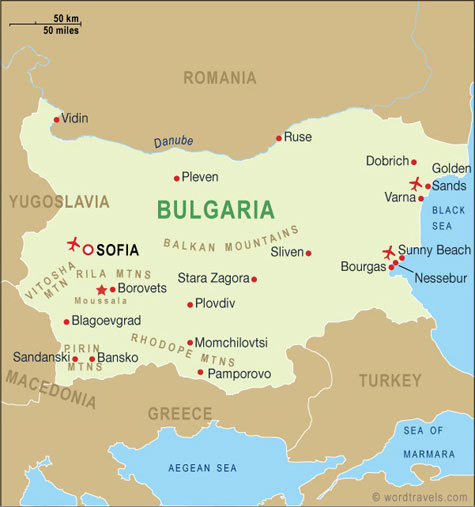
Bulgaria - smoking rate down, knowledge of dangers of tobacco use gaining..


Click to enlarge..
October 22, 2010 - The smoking rate in Bulgaria, which has been traditionally high compared to other European countries, has decreased by 5 percentage points, according to a study. The report, commissioned by the Ministry of Health and released Thursday, shows that 56% of Bulgarians aged 15-65 have not smoked during the last month, which is with 5 percentage points than what was registered last year.

The study concentrated on the level of information Bulgarian citizens have on various health hazards. 77% of people interviewed stated that they feel well informed about the risks of smoking. More than 60% of Bulgarians have stated that they are ready to observe the ban on smoking at public places and work offices.

Bulgaria has one of the highest smokers rates in the EU at some 39% of people declaring themselves daily smokers, topped only by Greece at 42%.

Other interesting information from the report includes the fact that some 14% of Bulgarians aged 15-65 have tried some form of drug at least once, most frequently marijuana, hashish, amphetamines and ecstasy.

Reference: Bulgarians Smoke Less than Before - Study, Novinite.com (Sofia News Agency), 10/21/2010.

Bulgaria - related news briefs:
Bulgaria - another tobacco tax increase in the draft 2011 budget..;
Bulgaria - confusion over which public smoking ban is in force..;
Bulgaria - WHO upset with Bulgaria's weakened smoking ban..;
Bulgaria - weakened smoking ban, just added minors can't be in disco clubs after 10pm..;
Bulgaria - final vote delayed on weakened smoking ban..;
Bulgaria - weakened smoking ban, second reading..;
Bulgaria - commission tightens smoking ban a little..;
Bulgaria - Bulgartabac buyer may be chosen by end of year..;
Bulgaria - prime minister not happy with giving tobacco growers subsidies..;
Bulgaria - to loosen smoking ban to start June 1, 2010..;
Bulgaria - finance minister comments may be good news for tobacco farmers..;
Bulgaria - parliament debates proposal to water down smoking ban..;
Bulgaria - majority of all Bulgarians - 78% are against the smoking ban delay..;
Bulgaria - every increase in excise duty on cigarettes consumption goes down..;
Bulgaria - grace period over, increase in tobacco tax starts Thursday, April 1, 2010..;
Bulgaria - Italian authorities arrest 2-Bulgarians smuggling cigarettes..;
Bulgaria - tractor trailer loaded with contraband cigarettes seized in Ancona, Italy..;
Bulgaria - cigarette consumption down, cigarette tax collection up, seeking funds for technology to intercept contraband goods..;
Bulgaria - justifying why smoking ban won't go into effect on June 1, 2010..;
Bulgaria - Citigroup chosen as consultant for sale of Bulgartabac..;
Bulgaria - ruling party may delay smoking ban until 2011..;
Bulgaria - Finance Minister Djankov, "Less Smoking Is Good for Economy..";
Bulgaria - govt to weaken full smoking ban to be effective June 1, 2010..;
Bulgaria - do producers support contraband cigarettes??;
Bulgaria - sale of Bulgartabac coming - selection of a consultant..;
Greek Farmers Renew Bulgaria Border Blockade..;
Bulgaria - leadership of tobacco fund to be replaced..;
Bulgaria - illegal trade in cigarettes will reach 40% of total trade in 2010..;
Bulgaria - limits on personal imports of tobacco products from outside the EU..;
Bulgaria - European Commission authorizes payment to tobacco producers for 2009 crop..;
Bulgaria -two cigarette smuggling attempts busted on Serbian border..;
Bulgaria - price of cigarettes increases..;
Bulgaria - Bulgartabac stays in the economy ministry, sold by middle of 2010, starting price 100,000,000 euro..;
Bulgaria - tobacco producers propose Bulgartabac transfer..;
Bulgaria - government, tobacco growers reach subsidy agreement..;
Bulgaria - start of steps leading to the privatization of the state-owned cigarette monopoly Bulgartabac..;
Bulgaria - police hold smoking protest over lack of bonuses..;
Bulgaria - police busts major cigarette contraband ring..;
Bulgaria - Bulgartabac Holding” will be privatized in 2010..;
Bulgaria - MPs Impose Hefty Fines on Cigarette Sales Violators..;
Bulgartabac Chief - cigarette tax increase as of January 1, 2010..;
Bulgaria Bulgartabac Holding Sells 23% of Shares to Mutual Funds..;
Bulgaria - more than 70% of smokers want to quit..;
Bulgaria - cigarette taxes going up each year except 2011..;
Bulgaria - chair of the economic committee in parliament disapproves of planned raise in excise duties on cigarettes..;
Bulgaria and others - smoking ban, increased cigarette taxes, smuggling..;
Bulgaria - Cigarette excise duties will be increased next year..;
Bulgaria - cigarette contraband, government loses BGN 920M yearly..;
Bulgaria - one third of the tobacco products sold are illicit..;
Bulgaria - new government to speed-up Bulgartabac sale..;
Bulgaria - Fake Victory Light cigarettes..;
Bulgaria's tobacco monopoly may be up for sale..;
Bulgarian lawmakers vote to ban smoking in all publc places from June 2010..; Bulgarian tobacco company Sofia-BT exports increase by 541 percent..;
Does Russia own Bulgaria's tobacco monopoly, Bulgartabac..;
EU percent of adults smokers -highest Greece 1 , Bulgaria 2.. - lowest Slovenia..;
Bulgaria - 1 in 3 youths smoke / half of pregnant women smoke..;
PMI training Bulgarian custom officers to stop cigarette smuggling..;
Philip Morris International (PMI) was truly happy they had been back in the Bulgarian cigarette market for a year and had already had 6.8% of market..;
WHO FCTC Protocol to Prevent Illicit Trade in Tobacco Products Won't Be Completed Until End of 2010..;
WHO Report on the Global Tobacco Epidemic 2008..;
Bulgaria Enters 2009 with Cigarette Prices Hike...
Bulgaria is marking Tuesday, November 10, 2009, the 20th year since the internal coup at the Bulgaria;

Read more...

Western Australia - resources for enforcement of tobacco control measures needed..

October 22, 2010 - Western Australia (WA) tough anti-smoking laws are failing to be enforced by councils (local government associations) amid growing concerns about the cost and drain on resources.

We have a tremendous amount respect for the Government of Western Australia for putting in place strong tobacco control measures to protect the health of their citizens, especially their children. Besides educating people on the importance of the new measures a procedure must be in place for enforcement. (Congratulations Western Australia (WA) - September 22, 2010 stricter anti-smoking laws in effect..)

Background: Laws passed by the state government last year, which come into effect on September 22, 2010 have tightened restrictions in WA. Bans include: tobacco product displays in retail premises (with exemption for specialist tobacco retailers); smoking in outdoor eating areas (with some exemptions; smoking in cars with children under 17 years present; smoking near children's playground equipment; smoking between the flags at the beach; forcing staff to work in designated smoking areas.

Western Australia - strict anti-smoking laws come into effect on September, 22, 2010..
Under the rules, which came into force a month ago today, councils are responsible for enforcing the ban on smoking in restaurant and cafe alfresco areas, near playground equipment and between the flags at beaches. The ban on smoking in cars carrying children under 17 is monitored only by police, who pass on details of offenders to the Health Department to determine and issue penalties.

This week, the City of Melville (Local Government Area in the southern suburbs of the Western Australian capital city of Perth) joined a growing chorus of councils highlighting the impost [imposted as a result of] of the laws on resources, with councillors voting to write to local MPs (members of parliament) highlighting the cost implications and lobbying for any funding it deemed necessary.

The council, in the Alfred Cove electorate of MP Janet Woollard, who fashioned the laws, has said that depending on the level of compliance, it might have to spend $100,000 a year on an extra ranger and car. New signs at its 139 playgrounds would cost an estimated $30,000. The council has not fined anyone since the laws came into effect. It relies on voluntary compliance but will respond to complaints.

A survey of Stirling, Wanneroo, Joondalup, Swan, Rockingham and Fremantle councils also found none had issued fines. "While the new bans make sense from a health perspective, the city does not have the capacity to employ additional staff for the sole purpose of patrolling and enforcing the new smoking laws," Fremantle health and building services co-ordinator Matthew Piggott said.

A Health Department spokeswoman said it would provide advice and help to councils on a case-by-case basis. She said the laws were an extension of long-standing smoking restrictions, which have required minimal council resources to ensure compliance.

Dr Woollard said enforcement was always intended to be through self-regulation and education and she believed councils could enforce the laws using existing resources. Shadow health minister Roger Cook said the lack of preparation was now showing in the councils' sentiment and funding calls should be met.

Reference: Smoking ban 'too costly' for council, BEATRICE THOMAS, thewest.com.au, 10/22/2010.

Western Australia related news briefs:
Congratulations Western Australia (WA) - September 22, 2010 stricter anti-smoking laws in effect..;
Western Australia - September 22, 2010 stricter anti-smoking laws in effect..;
Western Australia - even in outdoor, well-ventilated areas, second-hand smoke presented a health risk..;
Western Australia - strict anti-smoking laws come into effect on September, 22, 2010..;
Smoking during pregnancy - potentially negative effect on reproductive health in the next generation..;
Australia - social cost of smoking $31 billion to economy..;
Western Australia - kids no longer interested in smoking..;
Western Australia - added sweetners make cigarettes easier to tolerate..;
Western Australia - major tobacco companies were worried about tobacco controls...
Read more...

PAPER: Harm reduction cigarettes can be more harmful; than conventional brands..


October 22, 2010 - To reduce the toxicity of cigarette smoke, tobacco companies have introduced "harm reduction cigarettes," often marketed as safer than conventional brands. But stem cell scientists at the University of California, Riverside have found that even sidestream smoke (which burns off the tip of a cigarette) from harm reduction cigarettes impairs growth of human embryonic stem cells more than sidestream smoke from a conventional brand.

PAPER: Comparison of the Toxicity of Smoke from Conventional and Harm Reduction Cigarettes Using Human Embryonic Stem Cells, Sabrina Lin, Shawn Fonteno, Jo-Hao Weng and Prue Talbot (talbot@ucr.edu), Toxicological Sciences 118(1): 202-212, 2010. ABSTRACT..

"Harm reduction products are not necessarily safer than their conventional counterparts," said Prue Talbot, the director of UC Riverside's Stem Cell Center and the research team leader. "Our analyses show there is significant toxicity in harm reduction products, and our data show that reduction of carcinogens in harm reduction mainstream smoke does not necessarily reduce the toxicity of unfiltered sidestream smoke."

"Embryonic stem cells provide the best model currently available for evaluating the effects of environmental toxicants on prenatal stages of development, which are usually the most sensitive to chemical stress," said Talbot, a professor of cell biology and neuroscience.

Her group also found that sidestream smoke was consistently more potent to the embryonic stem cells than mainstream smoke, regardless of whether the cigarette brand was harm reduction or conventional. "This information should be valuable to potential users of harm reduction cigarettes and should be taken into account when establishing policies regarding the sale, advertising, and use of harm reduction products," Talbot said.

Talbot's research team examined the following harm-reduction cigarette brands: Marlboro Lights, Advance Premium Lights, and Quest. The team used Marlboro Red cigarettes to represent conventional brands.

Tobacco smoke is comprised of both mainstream smoke and sidestream smoke. The latter is the major component of secondhand smoke, also called environmental tobacco smoke, and is inhaled by passive smokers (involuntary smoking>.

Harm reduction cigarettes are made using complex filters or by genetically altering tobacco plants to reduce nicotine concentration.

Reference: Harm reduction cigarettes can be more harmful than conventional brands, researchers report Prue Talbot's lab at UC Riverside studied the effect of cigarette smoke on human embryonic stem cells, EurekAlert, 10/20/2010.

Read more...