

New Zealand - cigarette display ban passes first reading..

Click to enlarge..


December 13, 2010 - Cigarette displays in shops will be banned under a bill which passed its first reading in Parliament last night, December 10th. It was strongly supported on a vote of 108 to three and has been sent to the health select committee for public submissions.

In New Zealand, the bill passes through the following stages:
1. First reading: MPs debate and vote on the bill. If a bill is approved, it passes on to the committee stage.
2. Select committee stage: The bill is considered by a Select Committee, which scrutinises the bill in detail and hears public submissions on the matter. The Committee may recommend amendments to the bill.
3. Second reading: The general principles of the bill are debated, and a vote is held. If the bill is approved, it is put before a Committee of the House.
4. Committee of the House: The bill is debated and voted on, clause by clause, by the whole House sitting as a committee.
5. Third reading: Summarising arguments are made, and a final vote is taken. If the bill is approved, it is passed to the Governor-General for Royal Assent. New Zealand has no upper house, and so no approval is necessary.
Act of Parliament

Background:
October 27, 2009 - New Zealand - study, tobacco displays leads to increase in youth smoking..;
August 24, 2009 - ASH New Zealand starts fresh push for ban tobacco displays..;
February 25, 2009 - New Zealand - government may NOT support tobacco display bans..;
September 30, 2008 - New Zealand More Evidence Needed to Ban Tobacco and Cigarette Displays..;
July 4, 2008 - More evidence - tobacco displays increase the risk of teens smoking..;
April 15, 2008 - Tobacco displays are on their way out in an increasing number of countries...
The ban on displays will come into force six months after the bill becomes law and there will be a two-year transition period so that shops can be modified. The bill also allows infringement notices to be issued when tobacco is sold to people under 18, with a maximum fine of $400. Prosecution through the courts will still be used for serious or repeat offences, with a maximum fine of $2000. The bill says prosecutions have been cumbersome and costly, and the infringement notice will be effective against first time offenders.

MPs (Members of Parliament) who spoke during the first reading debate praised the Government for bringing in the bill, which is under the name of Associate Health Minister Tariana Turia.

Some Labour MPs said they doubted National would have introduced it without pressure from the Maori Party. All the parties in Parliament supported the bill although ACT (political party) cast a split vote with two MPs in favour and three opposed. (November 4, 2010 - New Zealand - Māori Affairs Committee Report released - November 2010..

Reference: Cigarette display ban bill passes first reading, New Zealand Press Association (NZPA), 12/11/2010.
Read more...

Study: 99% of Children Living in Apartments May Be Exposed to Secondhand Smoke..

December 13, 2010 - Children living in apartments are exposed to secondhand smoke (shs, involuntary smoking, passive smoking, environmental tobacco smoke, ets, sidestream smoke) even when no one smokes inside their own unit. This study, released online today by the journal Pediatrics, strongly suggests that housing type contributes to children's exposure to tobacco smoke, despite the best intentions of parents.

Previous news brief:
May 3, 2010 - Children - apartments - parents do not smoke but still exposed to secondhand smoke..

The U.S. surgeon general has said that there is no safe level of exposure to tobacco smoke. Children exposed to secondhand tobacco smoke are at greater risk for a variety of illnesses, such as respiratory infections, asthma and sudden infant death syndrome. (Office of the Surgeon General: There is No Risk-Free Level of Exposure to Secondhand Smoke..)

This new study from the University of Rochester Medical Center, MassGeneral Hospital for Children and the American Academy of Pediatrics' Julius B. Richmond Center for Excellence is the first to show significant evidence of increased tobacco smoke exposure in the blood of children who live in multi-unit housing. It will appear in the January 2011 issue of Pediatrics.

In this study, researchers measured blood levels of cotinine, a chemical commonly used to test for tobacco exposure. Overall, using the most sensitive cutoff for tobacco smoke exposure, more than 84 percent of children in multi-unit housing had been exposed to tobacco smoke, compared to almost 80 percent of children living in attached houses and 70 percent of children in detached houses. At every cutoff level of cotinine, children living in apartments had higher rates of exposure.

"Parents try so hard to protect their children from dangers, such as tobacco smoke. It's surprising to see these results and realize that too many parents have no control over whether their children are exposed to secondhand smoke in their own homes," said Karen Wilson, MD, MPH, an assistant professor of Pediatrics at the University of Rochester Medical Center's Golisano Children's Hospital and lead author of the paper.

Controlling for other factors such as poverty and age, children living in apartments had an increase in cotinine of 45 percent over those living in detached houses. While some of the tobacco exposure may have come from family members who only smoke outside, but carry in tobacco residue on their clothes, study authors suggest this is unlikely to explain all of the difference since there are many more exposed children than adult smokers. Instead they conclude tobacco smoke may have seeped through walls or shared ventilation systems. Earlier studies have shown that tobacco smoke contaminates non-smoking units of multi-unit dwellings.

References: Study: 99% of Children Living in Apartments May Be Exposed to Secondhand Smoke by Alice Park, Healthland.Time.com, 12/13/2010; Apartment-dwelling children in nonsmoking units still exposed, PhysOrg.com, 12/13/2010; Apartment-Dwelling Children in Nonsmoking Units Still Exposed New data support movement towards smoke-free multi-unit housing, University of Rochester School of Medicine Newsroom, 12/13/2010.
Read more...

Hong Kong - latest survey - proportion of smokers in younger age group dropped by 10%..

December 12, 2010 - The proportion of smokers in the younger age groups in the 2009/10 survey dropped by about 10% compared with the 2007/08 survey, according to the latest statistical data from the Census and Statistics Department (C&SD). This drop is more apparent among young males than among young females.
A spokesman for the Food and Health Bureau said the results suggested that the Government's tobacco control measures were effective.


C&SD published yesterday (December 10) the results of its survey on the health of Hong Kong people in the Household Survey Report No. 45. The survey collected data on health-related topics, including the smoking patterns of Hong Kong people.

The survey was conducted from November 2009 to February 2010. The results showed that of the 5,842,400 persons aged 15 and over in Hong Kong, some 758,100 persons (13%) had a smoking habit at the time of enumeration, of whom about 698,700 persons (12%) had a daily smoking habit. The corresponding proportion of smokers from the results of the previous survey conducted from December 2007 to March 2008 were 13.1% and 11.8% respectively. Taking sampling variation into consideration, the overall proportion of smokers found in the 2009/10 survey was more or less the same as in the 2007/08 survey.

Analysing the results from the two surveys by age group, the percentage of daily cigarette smokers in the younger age groups of 15 to 19 and 20 to 29 had decreased from 2.4% and 12.2% to 1.8% and 11.0%, representing a drop of some 25% and 10% respectively. The drop in the proportion of smokers is more apparent among young males than among young females.

The average daily consumption of cigarettes among daily smokers dropped slightly from 13.9 sticks in the last survey to 13.7 sticks in the latest survey. There was a more notable drop in the average daily consumption of cigarettes among heavy smokers (those with daily consumption of more than 20 sticks), from an average of 33.9 sticks per day to 28.5 sticks.

Reference: Hong Kong: Smoking prevalence drops among young people, StockMarketsReview.com, 12/11/2010.

Hong Kong related news briefs:
Hong Kong - as of December 1st smoking ban extended to 131 bus terminals..;
Study - many benefits including improvement in your sex life when you quit tobacco..;
Hong Kong - from August 1, incoming passengers allowed to import a maximum of 19 cigarettes, one cigar or 25 g of cut tobacco..;
Hong Kong - ways to beat the smoking ban..;
Hong Kong - smokers defy smoking ban, no penalty for owners of
venues..
;
China - can they learn tobacco control from Hong Kong??;
Hong Kong - 50% increase in tax on tobacco products approved..;
Hong Kong - cigarettes too cheap, tax only 61 and 66 percent of retail price..;
Hong Kong study - further proof, women have a harder time quitting cigarettes..;
Hong Kong - as of November 1st no tobacco advertising at newsstands - now display boxes..;
Member states of WHO's Western Pacific region agree to new tobacco control action plan..;
Hong Kong - Is the fixed-penalty fine for smoking offenses effective?;
Hong Kong - more unions are starting to enforce extended smoking ban..
Hong Kong - unions refuse to hand out penalty tickets for smoking..
Hong Kong - tobacco smokers may be prone to developing life-threatening complications from swine flu..;
Hong Kong - total smoking ban in full force no exceptions..
Hong Kong - total smoking ban in effect - Wednesday, July 1, 2009..;
Hong Kong - smoking statistics..;
Hong Kong - movie poster woman smoking - NOT ALLOWED..;
Hong Kong - bar owners an employees march to protest smoking ban starting July 1, 2009..;
Hong Kong - attempt to delay July 1, 2009 smoking ban fails..;
Hong Kong - cigarette smuggling soars after tax increase..;
Hong Kong - Tax on cigarettes pushed up by 50 percent..;
Honk Kong - smoking increase raise tobacco duties??;
Hong Kong - temporary smoking ban exemption ends July 1, 2009..;
Hong Kong - after smoking ban cigarette consumption up 14 percent..;
Hong Kong - public smoking ban - smoking rooms??;
Shanghai Tobacco's Golden Deer Cigarettes - Hong Kong..;
More on Philip Morris International of the Future...
Read more...

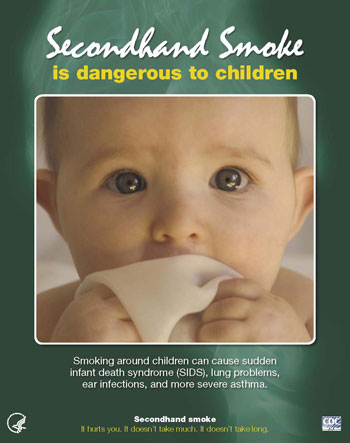
More tobacco smoke children breath in, the more likely they were to develop a serious infection..

Click to enlarge..
December 12, 2010 - Epidemiologic studies have observed an association between secondhand smoke (SHS, passive smoking, second hand smoke, involuntary smoking, sidestream smoke) exposure and pediatric invasive bacterial disease (IBD) but the evidence has not been systematically reviewed.

Chien-Chang Lee of the Harvard School of Public Health in Boston reviewed other studies to find a clear dose relationship -- the more tobacco smoke children breathed in, the more likely they were to develop a serious infection.

PAPER: Association of Secondhand Smoke Exposure with Pediatric Invasive Bacterial Disease and Bacterial Carriage: A Systematic Review and Meta-analysis, Chien-Chang Lee1,2, Nicole A. Middaugh1, Stephen R. C. Howie3, Majid Ezzati4, published in the Public Library of Science journal PLoS Medicine, Abstract, Full Text, Editors' Summary..

Study found that children exposed to second-hand smoke were twice as likely to get serious infections called invasive meningococcal disease than children not exposed.
Children who breathed in smoke were also more likely to carry other bacteria such a Streptococcus pneumoniae, they found.

Chien-Chang Lee: When considered together with evidence from direct smoking and biological mechanisms, our systematic review and meta-analysis indicates that SHS exposure may be associated with invasive meningococcal disease. The epidemiologic evidence is currently insufficient to show an association between SHS and invasive Hib disease or pneumococcal disease. Because the burden of IBD is highest in developing countries where SHS is increasing, there is a need for high-quality studies to confirm these results, and for interventions to reduce exposure of children to SHS.

from Editor's Summary: Children are particularly vulnerable to the effects of SHS exposure (also known as passive smoking) because they are still developing physically. In addition, children have little control over their indoor environment and thus can be heavily exposed to SHS. Exposure to SHS increases the risk of ear infections, asthma, respiratory symptoms (coughing, sneezing, and breathlessness), and lung infections such as pneumonia and bronchitis in young children and the risk of sudden infant death syndrome during the first year of life.

Reference: in part Maggie Fox, Health and Science Editor Reuters, 12/7/2010..
Read more...

Massachusetts - if states cover tobacco cessation treatment cost will smokers quit??

December 12, 2010 - When Massachusetts started paying for stop-smoking treatments, for low-income smokers not only kicked the habit but also had fewer heart attacks, researchers reported on Tuesday, December 7th in the first study to show a clear payoff from investing in smoking prevention efforts.

Background:
November 19, 2009 - Lower income Massachusetts smokers have dramatically abandoned their habit amid a major state campaign that vigorously promotes and pays for tobacco addiction treatment. (Massachusettes - lower income smokers giving up their nicotine addiction..);

December 18, 2009 - Successful Massachusetts tobacco cessation program gets national attention..;

July 14, 2010 - Boston, MA. - gets federal stimulus funding for obesity and tobacco prevention projects...
Thomas Land and colleagues at the Massachusetts Tobacco Cessation and Prevention Program, as well as the Harvard Medical School, looked at hospital records for the study.

PAPER: A Longitudinal Study of Medicaid Coverage for Tobacco Dependence Treatments in Massachusetts and Associated Decreases in Hospitalizations for Cardiovascular Disease, Thomas Land, Nancy A. Rigotti, Douglas E. Levy, Mark Paskowsky, Donna Warner, Jo-Ann Kwass, LeAnn Wetherell, Lois Keithly, published in the Public Library of Science journal PLoS Medicine, ABSTRACT, FULL TEXT and Editors' Summary..

The results suggest states can save money from investing in efforts to cut smoking -- found the yearly rate of hospital admissions for heart attacks fell by 46 percent for Medicaid clients and 49 percent fewer of them were hospitalized for clogged arteries.

"The dramatic decline in heart attack hospitalizations for smokers who used the benefit is stunning and demonstrates the effectiveness of tobacco treatment coverage that includes behavioral counseling and medicines approved by the Food and Drug Administration," American Heart Association CEO Nancy Brown, who was not involved in the research, said in a statement.

Reference: When the state paid, people stopped smoking: study by Maggie Fox, Health and Science Editor, Editing by Vicki Allen, Reuters, 12/7/2010.

Massachusetts - some related news briefs:
Massachusetts Hospital Association - as of January 1, 2011 will no longer hire users of tobacco products..;
Cambridge, MA city counsel studying proposal to ban smoking in public parks..;
Boston Area - tobacco signs more plentiful in city's poorer areas..
Lorillard claims not liable in a 2004 lawsuit by a former black Newport smoker..;
Boston, Massachusetts - next, ban smoking in all public housing..;
Boston, MA. - gets federal stimulus funding for obesity and tobacco prevention projects..;
Massachusetts - senate votes to license 3-totally no-smoking casinos..;
Massachusetts - City of Everett to ban tobacco sales in pharmacies..;
Massachusetts - may force retailers to display graphic warning signs of perils of tobacco..;
Massachusetts - jury rejects condo owner's lawsuit that realtor did not inform that neighbor smoked..;
Massachusetts - YOUTH - cigars and smokeless tobacco use surpasses cigarettes..;
Successful Massachusetts tobacco cessation program gets national attention..;
Massachusettes - lower income smokers giving up their nicotine addiction..;
Massachusettes - smoker loses job and then loses in federal court..;
Massachusetts - smokeless tobacco purchasers settle class action suit..;
Boston's ban on blunt wraps stands..;
Boston - NO Tobacco Products Sold - Pharmacies/College Campuses..;
Massachusetts cigarette tax jumps $1 per pack..;
Massachusetts (MA) Likely to Increase Tobacco tax..;
Massachusettes - Smoking ban drop in fatal heart attacks..;
Read more...