 September 13, 2008 - The U.S. House of Representatives on Wednesday, 9/10/2008 passed the Prevent All Cigarette Trafficking Act (PACT) (379-12) to give law enforcement new tools to crack down on smugglers of tobacco and curb illicit tobacco sales over the Internet. The bill makes it a felony for selling tobacco in violation of any state tax law. The legislation will also effectively end Internet tobacco smuggling by stopping shipments of cigarettes through the U.S. Postal Service. FedEx, UPS, and DHL have already agreed not to mail tobacco.
By some estimates, New York state loses $1 billion from tobacco smuggling, said Congressman Anthony Weiner (D-NY) the sponsor of the PACT Act. According to a recent Government Office of Accountability (GAO) report, Hezbollah profited $1.5 million from the sale of illegal tobacco from 1996-2000.
The bill included the provisions from Congressman John McHughs's (R-NY) "Do Not Mail Tobacco Bill." We must get the United States Postal Service (USPS) out of the tobacco delivery business.. and Protect Our Children - Make it illegal to use the U.S. Postal Service to deliver any form of tobacco product...
PACT now goes to the Senate for consideration.
Click here for details on this legislation..
References: House Passes Bill to Crack Down on Black Market Tobacco - PACT stops shipments of cigarettes through U.S. Postal Service, CSP Daily News, 9/12/2008 and McHugh “Do Not Mail Tobacco” Provisions Included in Legislation that Passes House - Provisions Would Stop Minors from Getting Cigarettes via U.S. Mail, The McHugh Report, 9/11/2008.
Read more...
U.S. House Passes Bill to Prevent Tobacco Delivery By Mail..
Congressional Democrats have scrapped plans for another vote on expansion of the SCHIP..
 September 12, 2008 - Congressional Democrats have scrapped plans for another vote on expansion of the State Children’s Health Insurance Program (SCHIP), thus sparing Republicans from a politically difficult vote just weeks before elections this fall. Before the summer recess, Democrats had vowed repeatedly to force another vote on the popular program. But Democrats say they have shifted course, after concluding that President Bush would not sign their legislation and that they could not override his likely veto.
The legislation would expand SCHIP by $35 billion over the next five years, paid for by a 61-cent-per-pack federal excise tax (FET) tax increase on cigarettes and increases in the federal tax rates on other tobacco products.
Mr. Bush vetoed two earlier versions of the legislation, which he denounced as a dangerous step toward “government-run health care for every American,” and the House sustained those vetoes. (Bush vetoes 2nd bill expanding the State Children's Health Insurance Program (SCHIP)... and Bush's SCHIP veto stands..)
Some more related news briefs: AWMA urges grassroots effort to defeat FDA tobacco regulation and SCHIP.., U.S. House fails to override SCHIP expansion veto.. and Revised State Children's Health Insurance (S-CHIP) Bill...
Reference: Facing Veto, Democrats Drop Plan for Vote on Child Bill by ROBERT PEAR, 9/7/2008.
Read more...
Revved Up - a new energy-infused smokeless tobacco product..
 September 12, 2008 - Revved Up Inc. has introduced what it said is the first smokeless tobacco product infused with energy supplements. The plan is to introduce the product to convenience store executives in October 2008 at the National Association of Convenience Stores (NACS) tradeshow in Chicago. Doran said their firm also is negotiating with suppliers who provide tobacco products to military exchange outlets. The product is described an adaptation of the homemade caffeine and smokeless tobacco combo many Marines know well. The dip will come in two varieties, straight and wintergreen.
Reference: Energy Goes Smokeless Marine entrepreneurs rolling out energy-infused smokeless tobacco product, CSP News, 9/12/2008.
Read more...
Maine - illegal to smoke in cars while children present..
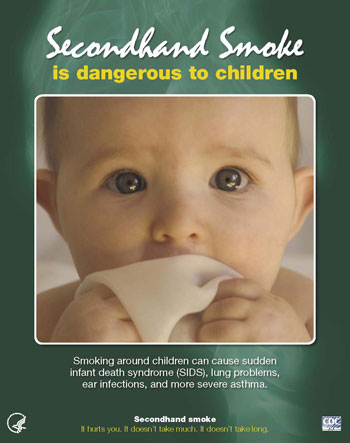 September 12, 2008 - The State of Maine on Monday, September 1, 2008 made it illegal to smoke in a car while children are present. Maine's law authorizes police to hand out only warnings until Sept. 1, 2009, but after that violators can get $50 fines. In March 2008 the Maine House of Representatives voted by a 2-1 margin when riding with children under age 16. The cutoff age for the bill was lowered from 18 to 16 to garner enough legislative support for passage in the House. Bill to ban smoking in cars with children enacted in the State of Maine.. Bangor, Maine is believed to be the first city to outlaw smoking in cars with children.
Rep. Brian Duprey, R-Hampden, said he ordinarily would oppose legislation he sees as government interference in people's privacy. But Duprey, who runs a child care business, said he was moved to act after seeing tots arrive at his facilities smelling of tobacco and often sick. The developing lungs of young children are severely affected by exposure to secondhand smoke, the EPA says. Children receiving high doses of secondhand smoke like found in cars, run the greatest risk of damaging health effects. Vehicles Most Dangerous Space for Second-Hand Smoke Levels..
Banning smoking when children are in the car is a no-brainer - even Philip Morris agrees. David Sutton, a spokesman for Philip Morris USA said the company believes the public "should be guided by the conclusions of public health officials regarding the health effects of secondhand smoke" and "particular care should be exercised where children are concerned."
Reference: Car-smoking law kicks in, SunJournal.com, 9/1/2008.
California, Arkansas and Louisiana have passed similar laws (California became the 3rd state. Arkansas now bans smoking in cars with children age 6 and younger, while Louisiana has limited the ban when children 13 and younger are in the vehicle.), as have Puerto Rico. Arkansas claims to be the first jurisdiction in the world to ban smoking in vehicles carrying kids.
Canada: - enacted or proposed: Ontario, Nova Scotia, New Brunswick, British Columbia, Yukon and Okotoks, Alberta.
Australia - enacted or proposed: South Australia, Tasmania, New South Wales and Victoria.
SUMMARY: Laws Banning Smoking in Vehicles Carrying Children – International Overview
Canadian Cancer Society, August 19, 2008.
Read more...
CDC reports in just 5-years tobacco caused 2.4 Million cases of cancer..
 September 11, 2008 - Some 2.4 million Americans were diagnosed with tobacco-related cancer from 1999 to 2004, according to a massive new report from the Centers for Disease Control (CDC). Almost half of those diagnosed suffered from lung and bronchial cancer, according to the CDC report.
The report, Surveillance for Cancers Associated with Tobacco Use --- United States, 1999—2004, represents the most comprehensive study of its kind ever conducted, covering all types of tobacco-related cancers for more than 90 percent of the U.S. population.
"The data in this report provides additional, strong evidence of the serious harm related to tobacco," said Sherri Stewart, Ph.D., lead author of the study in a press release. "We've long known tobacco was associated with lung and laryngeal cancer, but this study gives us even greater clarity. The rates for these two cancers were highest in areas with the highest prevalence of tobacco use."
Those areas, according to the CDC, are mainly in the South, with Kentucky showing the highest rate of lung caner in both men and women. Kentucky also reported the highest percentage of smokers in the nation at 28.6 percent. The lowest smoking rates were found in the Western states of Utah (10.4%), California (18.5%) and Montana (18.5%).
Reference: Surveillance for Cancers Associated with Tobacco Use --- United States, 1999--2004,Sherri L. Stewart, PhD et al., MMWR (Morbidity & Mortality Weekly Reports) Surveillance Summaries, September 5, 2008 / 57(SS08);1-33.
Read more...


To Provide Public Awareness
Purpose
About Us
Contact Us
2008 HIGHLIGHTS
TOPIX PAPERS - 2008 & 2009..