Healthy Lifestyle.. November 20, 2009 - Opinion & analysis: Russian Information Agency Novosti (RIA Novosti) interviews Andrey Dyomin, President of Russian Public Health Association, on international No Smoking Day.
Question: November 19 is international No Smoking Day. Has any progress been made over the past twelve months with regard to the no-smoking policy? What’s new in this area?
Answer: We have been implementing the WHO Framework Convention on Tobacco Control. Also, in Russia, there has been an important shift in the public discussion of smoking, as officials as well as the general public wish to know more about tobacco producers: who they are, what they want and what goals they have.
Russia’s Public Chamber has published a report that emphasized the need to monitor tobacco producers, insisting on their transparent operation and on tobacco industry denormalization.
This is an important shift from the earlier focus on smoking as a social phenomenon without considering the manufacturer’s role in the tobacco epidemic.
Smoking’s hazards to human health have been in the public focus since the 1970s. Later smoking was highlighted as a major risk factor, then it was tied to demographic problems. The idea of blaming the producers as those who make huge profits on smoking emerged only recently – Russians have now realized that the only side benefiting from smoking is the foreign tobacco industry, as 95% of tobacco production in Russia is controlled by foreign companies.
Q: But why is this so? What are the reasons?
A: The reason is that foreign tobacco companies have strategically taken advantage of two major crises in modern Russian history – the collapse of the Soviet Union and the 1998 default. They reinforced their positions in Russia during those periods. More than half (66%) of the foreign investment in Russia’s tobacco industry went to St. Petersburg, the Leningrad Region and Moscow. These three areas account for 80% of the profits from tobacco sales.
Q: Can you cite any statistics on how many smokers there are in Russia? Is their number growing or decreasing?
A: About smoking in Russia, I can give you the following figures. According to various reliable estimates, smoking is seriously affecting the demographic situation in Russia: 350,000-400,000 people die annually from smoking related disorders. According to WHO data, 72% of men are smokers, 30% of women, and 50% of children and teenagers. This year, a small downward trend is possible. But this does not mean that the problem has been resolved or that our efforts have been successful.
I would say the Public Chamber’s new focus on the impact of smoking on the country’s demographics is a positive step.
Q: Why is the number of smokers decreasing in other countries, and more people support a healthy lifestyle?
A: This is directly linked to the resistance put up by tobacco producers, who lobby their own interests. In Russia, for example, tobacco excise taxes are one-seventeenth of European or American rates. This is why our country is seen as a threat to many adjacent countries, because of cheap cigarette smuggling.
Another reason is advertising. Foreign companies spend $1 billion a year to advertise their products in Russia, while the social advertising budget is only $20 million. These figures are not comparable.
Q: Can you suggest a solution?
A: I think the only policy which could check tobacco industry growth is Russia is nationalizing the industry. It should also be subject to tight public supervision. The excise tax should be raised and tobacco advertising restricted.
Another useful policy would be to discredit the tobacco business as a career. As of today, many young people consider employment in this industry a good career opportunity. Salaries at tobacco companies are high – for example, a PR vice president at a large company can make 500,000 rubles ($17,500) a month.
In fact, many government officials are aware of the problem. But tobacco companies scare them with social unrest if people cannot buy their cigarettes.
Personally, I think the best idea is to nationalize the industry, and put it under the Healthcare Ministry’s control, the way it is done in Finland. As long as tobacco producers call the tune, we cannot do much to remedy the situation.
Reference: Russian public health official discusses tobacco control, RIA NOVOSTI, 11/19/2009.
Related news briefs:
Russia - making it more difficult for servicemen to smoke..;
Russia - draft tobacco law being considered by Duma..;
Russia among top-10 smoking nations..;
Russian lawmakers discuss smoking ban for restaurants and bars..;
Russia passes new restrictions on tobacco..;
British American Tobacco (BAT) Misleading Russian Consumers..;
Russian State Duma (Parliament) ratified the framework convention of the World Health Organization (WHO) on tobacco control...
Read more...
Russia - public health official discusses tobacco control..
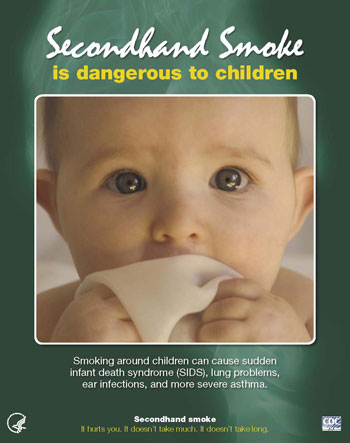
In process: Toddlers and obese children suffer more than other youth when exposed to secondhand smoke..
November 20, 2009 -
Abstract 1650: Second Hand Smoke Exposure and Cardiovascular Dysfunction in Children
Judith Groner; Hong Huang; Bing Han; Bethany Hashiguchi; John Bauer; Circulation. 2009;120:S539 (Am Heart Assoc Scientific Sessions November 14-18,2009, ABSTRACT..
Secondhand smoke, shs, environmental tobacco smoke, ETS, passive smoking, involuntary smoking, sidestream smoke
Read more...
Florida - jury awards $300 million in ex-smoker's suit..
 November 20, 2009 - MIAMI -- A South Florida jury on Thursday, November 19th ordered Philip Morris USA to pay $300 million to a former smoker, agreeing that the tobacco company's negligence was the cause of her emphysema.
The award for Cindy Naugle, 61, is the largest to date among thousands of lawsuits filed in the state against tobacco companies The case is one of 8,000 lawsuits filed against tobacco companies by Florida smokers and their families.
"Cindy admitted her fault to the jury," her attorney, Robert W. Kelley, said in a statement. "But Philip Morris refused to accept any responsibility for her emphysema, even though she was an addicted customer for 25 years."
The award amounts to $56 million in compensatory and $244 million in punitive damages against Richmond, Virginia-based Philip Morris USA, a unit of Altria Group Inc. The company said it will seek further review of the verdict by the Broward County jury.
"From the beginning, this case was marked by a fundamentally unfair and unconstitutional trial plan that allowed the jury to rely on findings by a prior jury that have no connection to the plaintiff," said Murray Garnick, senior vice president for Altria client services and associate general counsel, said in a statement.
Attorneys for Naugle, the sister of a former Fort Lauderdale mayor, said it's the largest Florida tobacco verdict to date.
"The jury saw her condition," Todd Falzone, who also represented Naugle, said in a statement. "We think that they felt it. She needed to rest for five minutes to catch her breath after making the 7 step walk to the witness stand."
Naugle started smoking in 1968 when she was 20 because she thought they "made her look older." After several attempts to quit, she stopped smoking in 1993 with the aid of a nicotine patch. She requires 24-hour oxygen and must travel in a wheelchair because walking leaves her exhausted, her attorneys said. Falzone said Naugle spends every minute "as if she were drowning."
The smokers' lawsuits have been working their way through Florida courts since the state Supreme Court in 2006 voided a $145 billion class-action jury award against tobacco companies. The court said each smoker's case had to be decided individually, but let stand that jury's findings that tobacco companies knowingly sold dangerous products and hid risks from the public.
"Large verdicts encourage other large verdicts," said Richard A. Daynard, professor of law at Northeastern University and chairman of the Tobacco Products Liability Project. "I think Philip Morris has finally met its match in Florida. This gives jurors permission to fully compensate plaintiffs for all the harm they suffered and to express their moral outrage at the industry's behavior."
The original Florida lawsuit was filed in 1994 by a Miami Beach pediatrician, Dr. Howard Engle, who had smoked for decades and couldn't quit. The class of smokers was estimated at up to 700,000 when the giant $145 billion award was issued in 2000. (Dr. Howard A. Engle, the veteran pediatrician who lent his name to a landmark class action suit against Big Tobacco, dies..
Related: Philip Morris USA sees decline in health lawsuits..
Reference: Fla. jury awards $300 million in ex-smoker's suit by CHRISTINE ARMARIO, Associated Press Writer, 11/19/2009.
Other Florida cases:
92-year-old wins $1.9 million tobacco judgment over wife’s death..;
Broward County Florida jury awards widow of smoker $1.5 million..;
R.J. Reynolds to appeal plaintiff's award of $30 million..;
R.J. Reynolds loses Florida court trial - widow gets $30 million..;
Racial slur causes mistrial in Florida tobacco case..;
Cigarette Makers Face Thousands of New Florida Lawsuits..;
Read more...
Bulgaria - more than 70% of smokers want to quit...

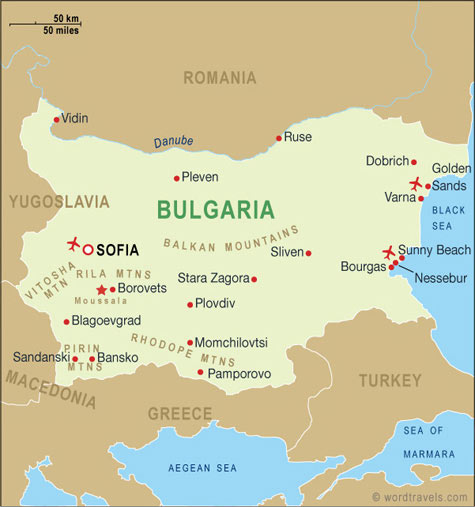
November 20, 2009 - More than 70 percent of smokers in Bulgaria wanted to give up smoking, Yulia Medichkova of the Greenwild Foundation was quoted by Bulgarian news agency (BTA) as saying on November 19 2009.
“The Culture to Breathe” campaign - educates people on the harmful effect of smoking on people and in particular on children and grown-ups. The project also informs on possibilities for undertaking of therapy and treatment to quit smoking.
Medichkova presented the results of a one-year campaign entitled The Culture of Breathing. Over 50 percent of Bulgarians approved of increased restrictions on smoking that will be introduced by mid-2010. Bulgaria ranks third in the world in terms of number of smokers, after Japan and Greece, Medichkova said.
What was more worrying, according to another survey released by the Health Ministry on November 17 2009, was that every second pregnant woman in Bulgaria smoked during pregnancy. Smoking during pregnancy was considered extremely damaging to unborn babies' health, as the baby risks being born with a lower weight and higher risk of disease.
According to the survey, 52.4 per cent of men in Bulgaria smoked, compared to 38.1 per cent of women.
Reference: Seventy per cent of Bulgarian smokers wanted to quit, survey says by The Sofia Echo staff, 11/19/2009.
Bulgaria related news briefs:
Bulgaria - cigarette taxes going up each year except 2011..;
Bulgaria - chair of the economic committee in parliament disapproves of planned raise in excise duties on cigarettes..;
Bulgaria and others - smoking ban, increased cigarette taxes, smuggling..;
Bulgaria - Cigarette excise duties will be increased next year..;
Bulgaria - cigarette contraband, government loses BGN 920M yearly..;
Bulgaria - one third of the tobacco products sold are illicit..;
Bulgaria - new government to speed-up Bulgartabac sale..;
Bulgaria - Fake Victory Light cigarettes..;
Bulgaria's tobacco monopoly may be up for sale..;
Bulgarian lawmakers vote to ban smoking in all publc places from June 2010..; Bulgarian tobacco company Sofia-BT exports increase by 541 percent..;
Does Russia own Bulgaria's tobacco monopoly, Bulgartabac..;
EU percent of adults smokers -highest Greece 1 , Bulgaria 2.. - lowest Slovenia..;
Bulgaria - 1 in 3 youths smoke / half of pregnant women smoke..;
PMI training Bulgarian custom officers to stop cigarette smuggling..;
Philip Morris International (PMI) was truly happy they had been back in the Bulgarian cigarette market for a year and had already had 6.8% of market..;
WHO FCTC Protocol to Prevent Illicit Trade in Tobacco Products Won't Be Completed Until End of 2010..;
WHO Report on the Global Tobacco Epidemic 2008..;
Bulgaria Enters 2009 with Cigarette Prices Hike...
Bulgaria is marking Tuesday, November 10, 2009, the 20th year since the internal coup at the Bulgarian Communist Party which led to the crumbling of the communist regime.
Read more...
Philip Morris USA filed lawsuits against ten retailers selling counterfeit Marlboros..

 November 20, 2009 RICHMOND, VA (November 19, 2009) - Philip Morris USA (PM USA) filed lawsuits against ten retailers selling counterfeit versions of the company’s Marlboro® brand cigarettes in New York and New Jersey.
“The New York metropolitan area continues to be a lucrative market for counterfeit and contraband cigarette smugglers,” said Joe Murillo, vice president and associate general counsel, Altria Client Services, speaking on behalf of PM USA. “High excise taxes, coupled with New York state’s lack of effective tax enforcement, only makes the problem worse,” added Murillo.
“These lawsuits are the latest in a series of filings by Philip Morris USA aimed at combating the sale of counterfeit cigarettes in New York and New Jersey,” said Murillo. Since May 2009, Philip Morris has filed lawsuits against 27 retail locations in New York and New Jersey for selling counterfeit Marlboro® brand cigarettes.
NYC Area - more counterfeit Marlboro cigarettes seized..;
PM USA found more counterfeit Marlboro cigarettes in the NYC area.., Philip Morris USA sues over counterfeit Marlboros...
In addition to violating many trademark laws, counterfeit cigarettes are almost always sold without the appropriate federal and state excise tax. The counterfeit cigarettes purchased from the retailers named in today’s suits bore no tax stamp or a counterfeit tax stamp. As a result, the applicable excise taxes were not paid.
“The sale of untaxed cigarettes harms legitimate wholesale and retail businesses and costs New York and New Jersey needed tax revenues that could be used to support essential public services,” added Murillo.
“Currently, the New York legislature is debating solutions to address the state’s current fiscal crisis, including the enforcement of existing cigarette tax laws,” Murillo explained. “Estimates vary, but New York could be collecting hundreds of millions of tax dollars on cigarettes sold to non-tribal members through Native American reservation outlets. Effective tax collection could also help stabilize the legitimate cigarette distribution channel in New York, which is increasingly under attack from counterfeit and contraband cigarette smuggling,” said Murillo.
Reference: Philip Morris USA Sues Retailers to Stop Counterfeit Cigarette Sales, PhilipMorrisUSA, an Altria Company, 11/19/2009.
Read more...
South Dakota - American Cancer Society won't appeal judges decision..

 November 20, 2009 - Circuit Judge Kathleen Trandahl ruled Friday afternoon, November 13th there are sufficient valid signatures on petitions to refer the ban on smoking to a statewide vote next year. (Trandahl found that opponents of the ban had collected 2,244 more signatures than they needed to force a public vote.) Now officials for the American Cancer Society in South Dakota say they won't appeal a court decision that will now send a smoking ban in South Dakota bars, restaurants, casinos and other businesses to the vote of the people in 2010.
The announcement by the Society's government relations director Jennifer Stally came on the 34th annual American Cancer Society Great American Smoke Out Day. Stalley said in a news release that the Cancer Society "will begin in earnest our statewide effort to support the smoke free law on the November 2010 ballot and ensure that no one has to choose between their health and their job in our great state."
Circut Court Judge Kathleen Trandahl ruled on Nov. 13 that opponents of the ban had collected enough signatures to put the issue on the 2010 ballot. Trandahl found that opponents of the ban had collected 2,244 more signatures than they needed to force a public vote.
Bar and casino owners collected the signatures calling for a public vote. After the American Cancer Society challenged some of the signatures, Secretary of State Chris Nelson ruled that many of the signatures were invalid. See related news briefs below.. Ban backers then appealed Nelson's ruling, sending the matter to circuit court.
Reference: Cancer Society says it won't appeal smoking ban appeal decision by journal staff, Rapid City Journal, 11/19/2009.
SD
South Dakota State Smoking Ban - Developments - related news briefs:
South Dakota - smoking ban passed by legislature still must go to a statewide vote..;
South Dakota (SD) - judge smoking ban legally eligible for statewide public vote..;
South Dakota - smoking ban, judge won't let ACS call witnesses - as trial nears..;
South Dakota - statewide smoking ban trial date moved to mid-November.;
South Dakota - trial delayed in fight to enforce smoking ban..;
South Dakota - new judge appointed in the smoking ban dispute..
South Dakota - ACS wants smoking ban passed by legislature to begin ASAP..
South Dakota - opponents of smoking ban gain a delay..;
South Dakota - petition rejected - state smoking ban to take effect..;
South Dakota - Secretary of State's Office still counting disputed signatures on the smoking ban petitions..;
South Dakota - anti-smoking leaders challenge petition..;
South Dakota - smoking ban to start July 1, 2009 may be delayed..;
South Dakota - opponents try to stop extended smoking ban..;
South Dakota - extends smoking ban effective July 1, 2009...
Read more...
New Zealand - University of Auckland to go smokefree - 1st university in country..

November 20, 2009 - The University of Auckland will become the country's first smoke-free university next year. (This university is the largest and has the most comprehensive range of courses offered in New Zealand.)
From January 1, 2010 smoking will be banned on all Auckland University campuses and outdoor spaces, including places previously designated as smoking areas. In a revision of its smoke-free policy, the university decided the old policy was not combating risks to non-smokers from passive smoking.
Staff and students were asked for their views on three options - maintaining the status quo, banning smoking within 10m of buildings and facilities or total prohibition. Seventy-five per cent of those who responded supported total prohibition, 13 per cent favoured the status quo and 11 per cent wanted a 10m rule.
About 5000 people a year die in New Zealand from smoking-related illnesse - population as 2008 - 4,268,600.
The new policy aims to eliminate the effects of passive smoking and create a healthier and cleaner environment for staff and students.
Auckland University Student Association vice-president Joe McCrory said the association voted two out of three in favour of the ban. He said the reaction from students has been mixed. Those on medical campuses were largely in favour of the change, but student smokers were not happy at being forced on to the street to indulge. The ban will also affect students living in university accommodation as these areas will become smoke-free. Also included in the ban are the outdoor areas of student cafes and bars.
Mr McCrory said news of the ban had been placed on the student website Cecil and there would be a campaign directed at new students during next year's orientation period.  Action on Smoking and Health (ASH) smoke-free health promotion team leader Grant Hocking said the university had a real problem with smoke getting into lecture theatres through the air conditioning systems. Hocking: the ban was fantastic. "Life-long learning should be smoke-free."
Reference: University's smoke-free plan first in country by Kara Segedin, NZHerald.co.nz, 11/20/2009.
New Zealand related news briefs:
New Zealand - smoking ban in bars results in less smoking at home..;
New Zealand - study, tobacco displays leads to increase in youth smoking..;
New Zealand - graphic warnings cigarette maker selects less offensive images..;
New Zealand - Maori committee to investigate smoking..;
New Zealand - Tairawhiti Board wants tobacco sold only on prescription..;
New Zealand - health researchers calling on government to ban importation of tobacco..;
New Zealand - 1st trial ever of e-cigarettes..;
New Zealand - BAT reducing prices discouraging people from quitting..;
New Zealand - stop smoking campaigns NOT working..;
BAT awarded worst corporation in New Zealand..;
New Zealand - government may NOT support tobacco display bans..;
New Zealand More Evidence Needed to Ban Tobacco and Cigarette Displays..;
More evidence - tobacco displays increase the risk of teens smoking..;
Horror photos go on New Zealand cigarette packs..;
Country to Eliminate Smoking - The South Pacific nation of Niue;
Ireland to ban tobacco displays..;
Smokefree NZ within 10 years..;
By law, oral snuff cannot (but nasal snuff is allowed) be sold in New Zealand and can be imported only for personal use..
Read more...
U.S. - Senate Judiciary Committee Approves PACT ACT..


November 20, 2009 - Senate Judiciary Committee Approves Internet Tobacco Bill. The PACT (Prevent All Cigarette Trafficking) Act closes gaps in current federal laws regulating ‘remote’ or ‘delivery’ sales of cigarettes and smokeless tobacco products. The U.S. Senate Judiciary Committee unanimously approved legislation yesterday that will help combat online cigarette sales and prevent youth access to tobacco products.
Prohibits the United States Postal Service from delivering tobacco products.. UPS, FedEX and DHL have signed agreements with state attorneys general that they will not deliver tobacco products — but not the Postal Service - so far. (Protect Our Children - Make it illegal to use the U.S. Postal Service to deliver any form of tobacco product..)
See companion news brief: U.S. - Senate Committee scheduled to vote on PACT..
The Prevent All Cigarette Trafficking (PACT) Act closes gaps in current federal laws regulating “remote” or “delivery” sales of cigarettes and smokeless tobacco products. The bill enhances penalties for violations and provides law enforcement with new tools to combat the innovative methods being used by cigarette traffickers to distribute their products.
“Tobacco smuggling has developed into a popular, and highly profitable, means of generating revenue for criminal and terrorist organizations,” said Sen. Herb Kohl (D-WI), noting that cigarette trafficking, including the illegal sale of tobacco products over the Internet, costs states billions of dollars in lost tax revenue each year.
“More people are selling cigarettes illegally, and they are getting better at it. As these cases become more difficult to crack, we owe it to law enforcement officials to do our part to lend a helping hand,” Kohl said.
The PACT Act will:
* Strengthen the reporting requirements for interstate cigarette sellers.
* Increase the criminal penalty from a misdemeanor to a felony and create a substantial civil penalty for violations, including violations of the reporting requirements and state tobacco tax laws.
* Grant federal and state law enforcement officials more powers to investigate and prosecute violators.
* Prohibit the United States Postal Service from delivering tobacco products
On May 21, 2009, the House of Representatives passed companion legislation by an overwhelming majority of 397 to 11, and the Senate Judiciary Committee unanimously approved Kohl’s PACT Act in May 2007.
NACS, as part of the Coalition to Stop Contraband Tobacco, urged Senate passage of the PACT Act this week on Capitol Hill.
“At the very time when states have undertaken extraordinary efforts to restrict minors’ access to cigarettes and continue to increase cigarette excise taxes, the Internet still offers minors a virtually risk-free and attractively priced means to easily obtain them,” said Hank Armour, NACS president and CEO. “The PACT Act addresses long-standing concerns that law-abiding neighborhood convenience stores have with respect to tax evasion and underage sales.”
Reference: Senate Judiciary Committee Approves Internet Tobacco Bill, NACS Online, 11/20/2009.
Some PACT related news briefs:
U.S. - Senate Committee scheduled to vote on PACT..;
Web-Based Companies must stop selling flavored cigarettes..;
Internet, Flavors everywhere - snuff being marketed to kids as hip, cool and healthy..;
U.S. customs officials bar imports bearing the Philip Morris USA trademark..;
Let's Get It Passed - Prevent All Tobacco Trafficking Act of 2009..;
U.S - PACT legislation passed by House..;
U.S. - PACT Legislation to be considered by House this month..;
We must get the United States Postal Service (USPS) out of the tobacco delivery business..;
PACT Legislation now in the U.S. Senate Judiciary Committee..;
U.S. House Passes Bill to Prevent Tobacco Delivery By Mail..;
We must get the United States Postal Service (USPS) out of the tobacco delivery business..
Protect Our Children - Make it illegal to use the U.S. Postal Service to deliver any form of tobacco product...
Read more...
FDA Center for Tobacco Products scheduled a web-based training session..
 November 19, 2009 - The Center for Tobacco Products has scheduled a web-based training session on use of the eSubmitter program to electronically submit establishment registration and product listing information (see here). Submission of that information by December 31 is required under FDCA section 905. Those who are interested in participating are directed to provide their Company name and contact information to eSubmitter@fda.hhs.gov by noon on Wednesday, November 18. FDA advises that, in the absence of sufficient interest, the training may be cancelled.
Reefrence: Center for Tobacco Products to offer training on eSubmitter, by David B. Clissold and Ricardo Carvajal, FDA Law Blog, 11/16/2009.
Read more...
U.S. - Senate Judiciary Committee scheduled to vote on PACT..
November 19, 2009 - PACT (Prevent All Cigarette Trafficking (PACT) Act.. The illegal sale of tobacco products through the Internet leads to tax evasion and tobacco use by young people, members of Congress and merchants said Tuesday, November 17th. The Coalition to Stop Contraband Tobacco urged the Senate to pass a bill that would address the issue. The bill is scheduled for a vote Thursday, November 19th by the Senate Judiciary Committee.
PASS THIS LAW.. - In the U.S. Senator Herb Kohl is sponsoring a bill which would clamp down on illegal tobacco sales. H.R. 1676, the Prevent All Cigarette Trafficking Act (the PACT Act) of 2009, was passed 397-11 by the House of Representatives on Thursday, 5/21/2009. This legislation is extremely important, it will effectively end Internet and telephone tobacco smuggling by stopping shipments of cigarettes and smokeless tobacco through the U.S. Postal Service. FedEx, UPS, and DHL have already agreed not to mail tobacco. (Let's Get It Passed - Prevent All Tobacco Trafficking Act of 2009..)
"Each day we delay its passage, terrorists and criminals raise more money, states lose significant amounts of tax revenue, and kids have easy access to tobacco products sold over the Internet," said Sen. Herb Kohl, D-Wis., who sponsored the Prevent All Cigarette Trafficking (PACT) Act.
The PACT Act, which would amend the 1949 Jenkins Act, increases penalties for violations, requires shipping records to ensure that taxes are paid and requires sellers to obtain age and identification verification from buyers. The Jenkins Act required sellers who ship tobacco products to report sales to state or local tobacco tax administrators.
All of the speakers said that tobacco products sold at online discount stores do not include state taxes, which eliminates competition with legal products that include the sometimes hefty taxes. According to the Justice Department, $5 billion of tax revenue is lost at the local, state and federal level every year.
"This is not just individual people who are trying to save a few bucks on a pack of cigarettes, although that's what it ultimately comes down to. These are international organizations that are taking the black-market price," said Rep. Anthony Wiener, D-N.Y., who sponsored the House version of the bill that passed in May. "While this is a dollars and cents calculation in many ways, this is also a basic understanding of how we respect the rule of law."
Kohl said international criminal and terrorist organizations profit from the smuggling and sale of counterfeit cigarettes. The money is raised in the U.S. and funneled back to the groups, he said.
Jon Burkland, incoming chairman of the American Wholesale Marketers Association, said that the illegal sale of tobacco products hurts those who sell them legally. "From the distributor perspective, every illegal sale made on the Internet translates into a loss of a legal sale made by a law-abiding retailer or distributor," Burkland said. "It levels the playing field for hard-working, family-owned businesses by ensuring that everyone pays the proper taxes."
In New York, where the cigarette tax is $2.75 a pack, hundreds of thousands of smokers regularly buy cigarettes on the black market or online, said James Calvin, president of the New York Association of Convenience Stores. He said people turn to illegal means of buying cigarettes because of the steady increase of the state's cigarette tax. "So pervasive is this problem, that today, more than half of the cigarettes consumed by New Yorkers are purchased without the payment of any state or local tax whatsoever," Calvin said. "It cripples tax-collecting stores by depriving us of legitimate sales."
The wholesalers group conducted a study in 2005 to see if people could purchase cigarettes online and pay the state the taxes they owed. Despite a 2005 agreement among the U.S. Bureau of Alcohol, Tobacco, Firearms and Explosives, state attorneys general and major credit card companies to ban all transactions with Internet cigarette vendors, the association found it was easy to buy cigarettes without taxes and required little or no age verification. They said it was difficult to figure out how to pay the taxes. When the group conducted a follow-up study in 2009, it found that little had changed.
"My 16-year old daughter has a debit card, I'm lucky that she doesn't smoke, but she can go online and buy these kinds of things," said Ronald Hampton, executive director of the National Black Police Association. Hampton, who is retired from the Washington's Metropolitan Police Department, said he has seen an increase in young people smoking cigarettes. He said the PACT Act would make it easier for law enforcement to combat contraband tobacco.
Matthew Myers, president of the Campaign for Tobacco Free Kids, said illegal Internet sales of tobacco leads to an increase in the number of people who die from tobacco use. "It is a farce, It's a joke to think that the current requirements are capable of cutting off tobacco sales," he said.
Reference: Coalition Pressures Senate to Pass Cigarette Anti-trafficking Bill, by Cindy Von Quednow, infoZine, 11/19/2009.
Some PACT related news briefs:
Web-Based Companies must stop selling flavored cigarettes..;
Internet, Flavors everywhere - snuff being marketed to kids as hip, cool and healthy..;
U.S. customs officials bar imports bearing the Philip Morris USA trademark..;
Let's Get It Passed - Prevent All Tobacco Trafficking Act of 2009..;
U.S - PACT legislation passed by House..;
U.S. - PACT Legislation to be considered by House this month..;
We must get the United States Postal Service (USPS) out of the tobacco delivery business..;
PACT Legislation now in the U.S. Senate Judiciary Committee..;
U.S. House Passes Bill to Prevent Tobacco Delivery By Mail..;
We must get the United States Postal Service (USPS) out of the tobacco delivery business..
Protect Our Children - Make it illegal to use the U.S. Postal Service to deliver any form of tobacco product...
Read more...
Malaysia - ban on cigarette sponsorship for sports will not be withdrawn..
 November 19, 2009 - KUALA LUMPUR, The ban on cigarette sponsorship for sports activities, especially football, will not be withdrawn by the government, deputy minister of Youth and Sports Datuk Razali Ibrahim told the Dewan Rakyat Thursday, November 19th. (Dewan Rakyat or House of Representatives is the lower house of the Parliament of Malaysia. All bills must usually be passed by both the Dewan Rakyat and the Dewan Negara (the Senate), before they are given Royal Assent by the Yang di-Pertuan Agong (Monarch). Members of the Dewan Rakyat are often referred to as Members of Parliament or MPs. Like the Dewan Negara, the Dewan Rakyat meets at the Malaysian Houses of Parliament in Kuala Lumpur (Dewan Rakyat).
Razali said there will be no change in the government's commitment to support the World Health Organisation's (WHO) global ban on cigarette companies sponsoring any kind of sports activities under the Framework Convention on Tobacco Control (FCTC).
He said Malaysia had signed the FCTC agreement on September 23, 2003 and became a member on September 16, 2005 and in line with the FCTC requirement, introduced a ruling to enforce laws under Regulations of Tobacco Products, effective August 14, 2004.
"However, an exception was given to football (till end 2004) and for motorsports (till 2006) to enable the sports to fulfill their contractual agreements and to look for alternative sponsorship. "The two sports were given time to restructure their sponsorship deals so that it will not disrupt their plans. As such, the government has no plans to reverse the decision," said Razali when answering a question from Datuk Abd Rahman Dahlan (BN-Kota Belud) at the Dewan Rakyat here today.
Abdul Rahman had wanted to know if the government has any intention of withdrawing the ban on cigarette sponsorship because the standard of sports in the country had dropped drastically due to lack of funds.
Razali added that though the standard of football had dropped, it was not fair to label all other sports in the same category as a number of Malaysian athletes are ranked among the top 10 in the world.
"We have athletes who are ranked among the top 10 in 9 sports," he said. Malaysian squash queen Datuk Nicol David is the women's world number one while Datuk Lee Chong Wei is the men's singles world number one in badminton.
Reference: Ban On Cigarette Sponsorship For Sports To Stay by Bernama - Malaysian National News Agency, 11/19/2009.
Malaysia - related news briefs:
Malaysia - cigarette-shaped sweets packaged like cigarettes;
Malaysia - Penang consumer group ban cheap cigarettes and increase price on premium..;
Malaysia - Kelantin State Government may not promote staff who smoke..;
Malaysia - excise duty increased on tobacco - another increase could be coming this month..;
Malaysia - smoking limits your quality of life..;
Malaysia - smoking civil servants in Penang to receive free nicotine treatment..;
Malaysia - illicit cigarettes, BAT wants government to slow excise duty increases..;
Peninsular Malaysia - one of three cigarette packs is either contraband or fake..;
Komtar, Penang, Malaysia smoking ban strictly enforced..;
Malaysia student forced to smoke 40 cigarettes in two hours..
Malaysia - PSD and Cuepacs are at odds over the no-smoking rule at government departments and agencies..;
Malaysia: Are tobacco control measures working? - WHO thinks so...;
Malaysia - slowdown in cigarette consumption..;
Malaysia - January 1, 2009 pictorial cigarette warnings..;
Malaysia to hike cigarette prices..;
Malaysia - 25% of all cigarettes sales are illegal...Peninsular Malaysia - one of three cigarette packs is either contraband or fake..;
Komtar, Penang, Malaysia smoking ban strictly enforced..;
Malaysia student forced to smoke 40 cigarettes in two hours..
Malaysia - PSD and Cuepacs are at odds over the no-smoking rule at government departments and agencies..;
Malaysia: Are tobacco control measures working? - WHO thinks so...;
Malaysia - slowdown in cigarette consumption..;
Malaysia - January 1, 2009 pictorial cigarette warnings..;
Malaysia to hike cigarette prices..;
Malaysia - 25% of all cigarettes sales are illegal...
Read more...



Outdoor smoking areas - still lots of second-hand smoke present..
 November 19, 2009 - Indoor smoking bans have forced smokers at bars and restaurants onto outdoor patios, but a new University of Georgia study in collaboration with the Centers for Disease Control and Prevention suggests that these outdoor smoking areas might be creating a new health hazard. The study, thought to be the first to assess levels of a nicotine byproduct known as cotinine in nonsmokers exposed to second-hand (secondhand, SHS, environmental tobacco smoke, ETS, sidestream, involuntary, passive) outdoors, found levels up to 162 percent greater than in the control group.
PAPER: Assessment of Exposure to Secondhand Smoke at Outdoor Bars and Family Restaurants in Athens, Georgia, Using Salivary Cotinine, J. C. Hall, J. T. Bernert, D. B. Hall, G. St. Helen, L. H. Kudon, and L. P. Naeher, J Occup Environ Hyg. 2009 Nov;6(11):698-704, ABSTRACT..
"Indoor smoking bans have helped to create more of these outdoor environments where people are exposed to secondhand smoke," said study co-author Luke Naeher, associate professor in the UGA College of Public Health. "We know from our previous study that there are measurable airborne levels of secondhand smoke in these environments, and we know from this study that we can measure internal exposure.
"Secondhand smoke contains several known carcinogens and the current thinking is that there is no safe level of exposure," he added. "So the levels that we are seeing are a potential public health issue." Athens-Clarke County, Ga., enacted an indoor smoking ban in 2005, providing Naeher and his colleagues and ideal environment for their study. The team recruited 20 non-smoking adults and placed them in one of three environments: outside bars, outside restaurants and, for the control group, outside the UGA main library. Immediately before and after the six-hour study period, the volunteers gave a saliva sample that was tested for levels of cotinine, a byproduct of nicotine and a commonly used marker of tobacco exposure.
The team found an average increase in cotinine of 162 percent for the volunteers stationed at outdoor seating and standing areas at bars, a 102 percent increase for those outside of restaurants and a 16 percent increase for the control group near the library.
Naeher acknowledges that an exposure of six-hours is greater than what an average patron would experience but said that employees can be exposed for even longer periods. "Anyone who works in that environment —waitresses, waiters or bouncers —may be there for up to six hours or longer," Naeher said. "Across the country, a large number of people are occupationally exposed to second-hand smoke in this way."
Studies that measured health outcomes following indoor smoking bans have credited the bans with lowering rates of heart attacks and respiratory illness, but Naeher said that the health impacts of outdoor second-hand smoke are still unknown.
In Naeher's study, cotinine levels in the volunteers at the bar setting saw their levels increase from an average pre-exposure level of 0.069 ng/ml (nanograms per milliliter) to an average post-exposure level of 0.182 ng/ml. The maximum value observed, however, was 0.959 ng/ml. To put that number into context, a widely cited study has determined that an average cotinine level of 0.4 ng/ml increases lung cancer deaths by 1 for every 1,000 people and increases heart disease deaths by 1 for every 100 people.
Still, the researchers caution that it's too early to draw policy conclusions from their findings. Cotinine is a marker of exposure to tobacco, Naeher said, but is not a carcinogen. The team is currently planning a study that would measure levels of a molecule known as NNAL, which is a marker of tobacco exposure and a known carcinogen, in people exposed to second-hand smoke outdoors.
"Our study suggests that there is reason to be concerned about second-hand smoke levels outdoors," said study co-author Gideon St. Helen, who is pursuing his Ph.D. through the university's Interdisciplinary Toxicology Program, "and our findings are an incentive for us to do further studies to see what the effects of those levels are."
Reference: Study raises concerns about outdoor second-hand smoke, Contact: Sam Fahmy (sfahmy@uga.edu), EurekAlert.org, 11/18/2009.
Read more...
Great American Smokeout - Thursday, November 19, 2009..


November is Lung Cancer Awareness Month..

Read more...
Camel SNUS - two new flavors now a total of four..
Click to enlarge: November 18, 2009 - In the Reynolds American second quarter 2009 it was mentioned that new Camel SNUS flavors were planned. Two new styles of CAMEL Snus were suppose to be launched in the third quarter of 2009. This did not happen. Now we learn (Reynolds American Investor Day Presentations, 11/16/2009) that the two new styles - WINTERCHILL and ROBUST - will be introduced in the military this month.
Background: In the summer of 2006, Camel introduced, refrigerated Camel SNUS, into two test market cities – Portland, Oregon and Austin, Texas. 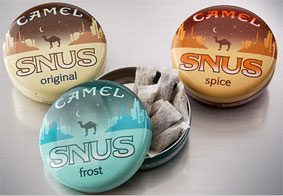 This product came in three varieties: ORIGINAL, FROST and SPICE. Camel Snus was touted as "another tobacco pleasure" for adults, that can be used "anytime, anywhere. Camel Snus was manufactured in Sweden in conjunction with British American Tobacco, Inc. (BAT) and kept refrigerated until the tin is sold. Then it was made in the Reynolds plant in Winston-Salem. and now by Conwood, a decision of Reynolds American. The making of Camel snus has always been under the control of R.J. Reynolds Tobacco separate from all Conwood products.
In June 2007 market test of Camel SNUS was expanded to eight cities and then in May 2008 the market test was expanded again from eight to 17 metropolitan area. Soon after Reynolds announced that Camel SNUS was rolled out nationally early in 2009.
April 2008 R.J. Reynolds lowered the number of pouches per container from 20 to 15 pouches Further initiatives by R.J. Reynolds Tobacco Co. (RJR).. At about this same time Reynolds dropped ORIGINAL and SPICE flavors, kept FROST and added MELLOW. (A users comment on the FROST flavor: When opening the FROST I had no idea what to expect. The tin gave off a certain minty aroma that made me want to dive in. I was not displeased after using it, but it was very unique. It tasted more like a candy than a tobacco product, in fact it was delicious. I would compare the taste to a vanilla-mint piece of gum. (ReviewSTream.com)) Now Reynolds has again reduced the number pouches from 15 to 12-pouches per can and labeled the can "Special Trial Offer" and reduced the price per can to $1.99 (in North Carolina).
Tobacco - FDA - 'characterizing flavor': U.S. - flavored cigarettes ban looms, how do you define 'characterizing flavor'.. The U.S. Food & Drug Administration (FDA) has issued a letter regarding sales of flavored cigarettes becoming illegal on Tuesday, September 22, 2009, providing the industry with more specific direction. Effective September 22, 2009, cigarettes that contain certain characterizing flavors are considered adulterated under the Federal Food, Drug, and Cosmetic Act (FFDCA or the Act), as amended by the Family Smoking Prevention and Tobacco Control Act (FSPTCA).
David Howard, a spokesman for R.J. Reynolds Tobacco Co. - "We do not believe any of the cigarettes that we manufacture have a characterizing flavor that is banned by this provision." (For our children ban all flavored tobacco products..)
As stated above the tobacco regulations specify cigarettes that contain certain characterizing flavors are considered adulterated and are prohibited. "Characterizing flavor" can be defined as a distinguishable taste or aroma that is imparted to tobacco or tobacco smoke either prior to or during consumption.
Reynolds realizing OTPs (other tobacco products) may be next to have all flavored products declared illegal have altered the description for their dissolvable tobacco products on their website Under "How dissolvable tobacco is made?" This tobacco is combined with binders and non-characterizing flavoring, that complement the tobacco's natural taste.
Each tobacco product must be thoroughly analyzed by the FDA Product Center to determine what "Characterizing flavor(s)" are present. For example, a users experience with Camel SNUS FROST flavor: It tasted more like a candy than a tobacco product, in fact it was delicious. I would compare the taste to a vanilla-mint piece of gum. - see above.
Read more...


Massachusettes - lower income smokers giving up their nicotine addiction..
 November 18, 2009 - Lower income Massachusetts smokers have dramatically abandoned their habit amid a major state campaign that vigorously promotes and pays for tobacco addiction treatment, according to a report scheduled to be released this morning.
Smoking rates among the poor plummeted 26 percent in the first two years of the ongoing state program, a striking result that is already drawing national attention to the effort. Officials targeted a population that historically had the highest smoking rates in Massachusetts.
The study, issued by the Department of Public Health, found early indications that the tobacco cessation efforts - aimed at patients enrolled in the state’s medical insurance for the poor,  MassHealth - are reaping immediate health benefits.
Once patients began receiving counseling and medications to help snuff out their habits, they made fewer trips to emergency rooms because of wheezing bouts of asthma, and there was a trend toward fewer life-threatening heart attacks.
The stop-smoking initiative, which covers virtually all the costs of cessation counseling and drugs, was ordered by the Legislature as part of the landmark health care overhaul in 2006 with a dual purpose: saving lives and money. National health leaders plan to point to the Massachusetts experiment to bolster efforts to expand tobacco cessation services as part of federal health care legislation.
For years, low-income smokers have been among the most persistent smokers - and the most difficult to reach with campaigns to quit. That was attributable in no small part to the cost of nicotine replacement drugs and even pricier prescription drugs that douse the brain’s insatiable craving for the addictive chemical in cigarettes. As a result, smoking rates among the poor had hovered close to 40 percent since the late 1990s - nearly 2 1/2 times the statewide rate for adults, which stands at 16.1 percent.
So the Legislature mandated that the costs of cessation should be covered by MassHealth. And they embraced the double-barreled approach championed by tobacco control specialists, which combines counseling and medication. The drugs include patches, gum, and other nicotine substitutes along with drugs designed to thwart nicotine’s addictive effects.
Co-pays for drugs and counseling were all but eliminated, with patients charged no more than $3. The state spent $10.9 million on tobacco cessation for MassHealth patients from July 2006 through June 2008. (More recent figures are not available because health insurance claims are still being processed, a state spokeswoman said.)
“But it’s not enough to have a benefit," said Lois Keithly, director of the Massachusetts Tobacco Cessation and Prevention Program. “It has to be promoted." The state took to the airwaves and the road, flooding food banks and medical clinics with more than 100,000 fliers touting the campaign. The expectation, based on the experience of other states and health plans, was that 5 to 10 percent of MassHealth patients who smoked might seek help in the first couple of years, Keithly said. Instead, from July 2006 to May of this year, about 75,000 patients had used the services - two of every five MassHealth smokers.
Dr. Nancy Rigotti, director of the Tobacco Research and Treatment Center at Massachusetts General Hospital, “We wondered if this population would be interested in cessation," said “It turns out they were interested - they just couldn’t afford it."
Click to enlarge: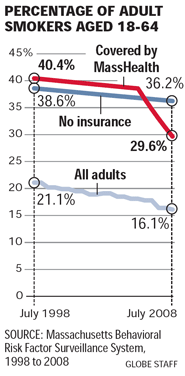 By the summer of 2008 - the latest data available - smoking rates among adults 18 to 64 on MassHealth had for the first time descended below 30 percent.
Knowing it was possible, albeit unlikely, that other forces might be influencing the rapid decline, state tobacco control specialists compared smoking rates of MassHealth patients with another cadre of adults prone to tobacco use - those who have no insurance and no coverage for cessation.
Even as smoking rates plunged among adults on MassHealth, to 29.6 percent, they remained largely unchanged - at more than 36 percent - among patients without insurance.
Four independent tobacco control specialists asked by the Globe to review the state’s report said they found it persuasive, although they cautioned that declines in certain smoking-related health conditions need more evaluation and should not be regarded as definitive.
State researchers culled the medical records of about 13,000 MassHealth patients who received tobacco cessation drugs as part of the campaign, hunting for trends related to asthma and heart disease, two conditions inextricably linked to smoking.
The researchers found that in the year before patients started taking tobacco-control medication, 22.7 out of every 1,000 visited an emergency department because of asthma. A year later, that figure dropped to 18.7 per 1,000, a reduction that reached statistical significance.
Serious heart attacks declined, too, from 3.2 per 1,000 MassHealth patients to 2 per 1,000, a trend that, while encouraging, needs further confirmation. Although the study being released today does not assess whether the stop-smoking campaign reduced health care costs overall, the findings led some advocates to call on the state to make all health plans - public and private - provide cessation programs with low co-pays and deductibles.
“I think the numbers will show that would be worth doing,’’ said Valerie Bassett, executive director of the Massachusetts Public Health Association, which represents public health specialists. “Especially when we’re looking at cost savings, it’s one of the easiest ones to realize.’’
Reference: With aid, Mass. poor cut smoking State coverage for cessation programs hailed by Stephen Smith (stsmith@globe.com), The Boston Globe, 11/18/2009; Patrick Administration Announces Positive Results from MassHealth Smoking Cessation Benefit Unprecedented drop seen in heart attacks, asthma, and birth complications, Massachusetts Health and Human Services, 11/18/2009.
Read more...
Africa - can a tobacco-related cancer epidemic be prevented..

 November 18, 2009 - Dr Twalib Ngoma, president of the African Organisation for Research and Training in Cancer (AORTIC), says that Africa is on the brink of a smoking epidemic. "Africa is in the area of the pre-epidemic and so we should prevent the epidemic. We should not wait until there is an epidemic and then work on it. We should prevent the epidemic."
Tobacco-related cancer was one of the key topics discussed at a recent international cancer conference in Tanzania.
Among those attending is Dr. Thomas Glynn, Director of International Cancer Control for the American Cancer Society and acting head of the Global Smokefree Partnership. Glynn: "This is really the first time in the history of public health that we have the opportunity to prevent an epidemic…. There's no doubt tobacco is on the rise here, but it's the one continent where we are ahead of the ball at this point. Africa - conference on the burden of cancer, Tanzania, Africa, November 11-14, 2009)
One of the reports presented there warns that African nations are set to undergo the highest increase in the rate of tobacco use among developing countries. The report, released jointly by the American Cancer Society and the Global Smokefree Partnership, says that more than half of African countries will double tobacco use within 12 years if current trends continue. But the authors say that there is still time to do something about it.
Preventing the epidemic'.. "For the first time in history, we have the tools in hand to prevent a pandemic," says Dr Otis W Brawley, chief medical officer of the American Cancer Society. "Smoke-free public places are one example of a low-cost and extremely effective intervention that must be implemented now to protect health."
As well as Kenya, Niger also recently introduced a smoking ban in public places. Egyptian residents walk under hanged cardboard cigarettes during a 'No Smoking Day' in Cairo. Egypt is unlikely to introduce a smoking ban in public places
Mauritius also recently passed a law that the American Cancer Society says is close to meeting the Framework Convention on Tobacco Control (FCTC) standards, ranking the laws among the most robust anti-smoking measures in the world.
But the report says that many other countries have not taken any action. For some countries, introducing a smoking ban would face too much popular opposition.
While in Egypt a fatwa, or Islamic ruling, gives wives the right to divorce their smoking husbands if the smoke affects their health, there are no laws about smoking in public places yet. Since around half of the population indulge in cigarettes or water-pipes, such a measure would prove extremely unpopular.
'They lobby and lobby' to legislation on tobacco, it is difficult to enforce those laws. "We have legislation in Tanzania... but enforcement of that legislation is not easy. Tobacco companies are all too powerful.
It says the companies try to convince African governments that tobacco is important to economic activity and that raising taxes on cigarettes and implementing smoke-free laws will result in revenue and job-losses.
The organisation says that in Kenya, for example, the tobacco industry has issued a legal challenge to a strong smoke-free law passed by the parliament. And in Zambia, they say that British American Tobacco has helped to dilute proposals for a smoke-free law.
But British American Tobacco say that this accusation does not reflect reality. They say that while they were consulted on the draft bill in Zambia last year, the bill has never been finalised. They add that they support tobacco regulations in the countries they do business in as they recognise that tobacco consumption poses real risks to health. Their policy on public place smoking is that they support the creation of smoke-free areas but that a ban on all indoor smoking in work and public places goes too far.
Raising Prices.. If a consumer is addicted to tobacco, then it is possible to put prices up and they will go without lunch says Adam Spielman, Tobacco industry analyst for Citigroup. Spielman also blames advertisers who he says are hooking in Africa's younger generations. "Tobacco companies are targeting poor, developing countries in Africa. If you drive from the airports to most towns you will see a lot of billboards promoting tobacco, saying that if you smoke you are going to be successful."
The American Cancer Society agrees, saying that the tobacco industry in Africa tries to hold back legislation.
So just how important is the African market to tobacco companies? Spielman says that the African market forms around 10% or less of the profits of the biggest companies, but that this area is growing.Africa heading for 'smoking epidemic' by Helena Merriman, BBC News, 11/17/2009.
Read more...
Kyrgyzstan - may ban tobacco advertisements in the mass media..
Coat-of-Arms, Click to enlarge:
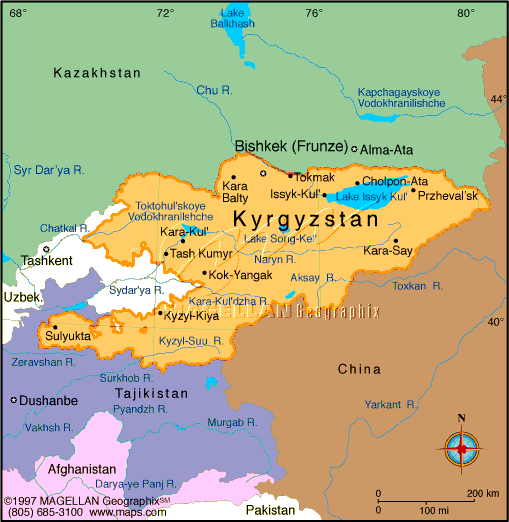 November 18, 2009 - The Kyrgyz Republic (official name, population (July 2008) 5,356,869) parliamentary committee on social policy has approved the government's proposal to fully ban tobacco advertisements in the mass media, the parliament press service told Interfax.
Smoking Prevalence: Adults (18-65) Male - 60 percent, Females 15.6 percent; Youth (9-17) Males 24 percent, Females 20 percent.
Kyrgyz Health Minister Marat Mambetov told the committee that "a full ban on all forms of advertising in the mass media reduces the social attractiveness of smoking and reduces the consumption of tobacco products, especially among young people."
Research done in other countries shows that "cigarette consumption dropped by on average 25% after tobacco advertisements were banned," the minister said. Appropriate changes to the law On Advertising will be made in the nearest future, the minister said.
In the meantime, tobacco advertisements are one of the main sources of revenues for the mass media in Kyrgyzstan.
Reference: Tobacco Advertisements Could be Banned in Kyrgyzstan, Interfax - China Tobacco Online, 11/18/2009.
Kyrgyzstan has ratified (May 25, 2006) 2004) the
WHO Framework Convention on Tobacco Control (FCTC) Treaty.

Read more...
UK - NHS Trust - smoking your body takes a beating film..
 November 17, 2009 - The NHS Trust (A National Health Service trust provides services on behalf of the National Health Service (NHS) in England and NHS Wales) had recruited the photographer Rankin to assist with the hard-hitting anti-smoking film, which was being used as part of a multimedia campaign launched in September. Rankin had co-directed the film with Chris Cottam, which shows a smoker suffering an assault from an invisible assailant as he walks down the street. (NHS - anti-smoking multimedia campaign starts..)
Freedom2Choose lodged a complaint against the material and upon consideration, the NHS Trust has agreed to remove it from all venues within the next two weeks.
VIDEO: Fight back. Quit now - take a look a promotion..
Phil Johnson, pub and club liaison officer of Freedom2Choose states, “I am thrilled about this decision as I have had several pub and club clientele contacting me and informing me that they had been abused as result of this material.”
Freedom2Choose will actively campaign against the abuse and hatred that individuals continue to suffer as a result of modern anti-smoking techniques.
Reference: NHS Trust Removes Latest Anti-smoking Propaganda
Birmingham East and North Primary Care Trust are to remove all references of their latest anti-smoking campaign, ‘Fight back. Quit now.’, PRLOG.org, 11/12/2009.
United Kingdom
Read more...
New Zealand - smoking ban in bars results in less smoking at home..
Click to enlarge: November 17, 2009 - A ban on smoking in bars and pubs has prompted many New Zealanders to stop smoking at home, Ministry of Health research shows.
Next month will mark six years since the passing of smoke-free legislation that bans smoking in indoor work environments such as clubs, casinos, bars and restaurants. The ban became in force in December 2004 and New Zealand became the third country in the world after Ireland and Norway to ban smoking in pubs and restaurants. The legislation extends a 1990 ban on smoking in offices, shops and public buildings to pubs, clubs, restaurants, casinos and school grounds. (New Zealand introduces new smoking ban; rte.ie/news, 12/10/2004) A ministry expert on tobacco, Dr Ashley Bloomfield, says one of the positive spin-offs of the law has been that the number of smoke-free homes has dramatically increased. He attributes the trend to a change in attitude – "People started thinking, `I can't smoke in the pub so I won't smoke in my home'."
Bloomfield says the law's main objective – to reduce workers' exposure to second-hand smoke – has been achieved.
A report evaluating the law's effectiveness and impact across various sectors shows exposure to second-hand smoke in the home decreased from 20% in 2003 to 9% in 2006. And the cultural shift, which has seen smoking become less socially acceptable, has seen smoking rates fall year on year.
Ministry of Health research shows there was an initial spike in supermarket liquor sales after the change in smoking laws, and a moderate drop in retail sales for bars and pubs, but this was not sustained.
"We already had a ban on smoking in office spaces so we were extending that to blue collar facilities like bars and restaurants. There was a bit of difference between Maori and non-Maori exposure in the workplace. We got rid of these quite stark inequalities."
The 2006 figures showed the number of workers exposed to smoke fell to 8% from 20%. Importantly, the numbers of non-smoking young people continues to rise, with half of teens aged 15-19 years now saying they have never even tried a puff of a cigarette compared to 39% in 2006.
Bloomfield said: "The social environment and the social context has changed... "When this legislation was passed there was 50% public support for extending the smoke-free ban into the bars. Support went from under 50% to 82% within two years. Even two-thirds of smokers supported that full ban. The interesting thing is how quickly the public appreciate [being] smoke-free."
Reference: Pub ban stubs out smoking at home by LEIGH VAN DER STOEP, Sunday Star Times - STUFF.co.nz, 11/15/2009.
New Zealand related news briefs:
New Zealand - study, tobacco displays leads to increase in youth smoking..;
New Zealand - graphic warnings cigarette maker selects less offensive images..;
New Zealand - Maori committee to investigate smoking..;
New Zealand - Tairawhiti Board wants tobacco sold only on prescription..;
New Zealand - health researchers calling on government to ban importation of tobacco..;
New Zealand - 1st trial ever of e-cigarettes..;
New Zealand - BAT reducing prices discouraging people from quitting..;
New Zealand - stop smoking campaigns NOT working..;
BAT awarded worst corporation in New Zealand..;
New Zealand - government may NOT support tobacco display bans..;
New Zealand More Evidence Needed to Ban Tobacco and Cigarette Displays..;
More evidence - tobacco displays increase the risk of teens smoking..;
Horror photos go on New Zealand cigarette packs..;
Country to Eliminate Smoking - The South Pacific nation of Niue;
Ireland to ban tobacco displays..;
Smokefree NZ within 10 years..;
By law, oral snuff cannot (but nasal snuff is allowed) be sold in New Zealand and can be imported only for personal use..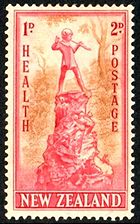
Read more...
Canada, Ontario and Quebec - illegal cigarettes greater than 40% of consumption..
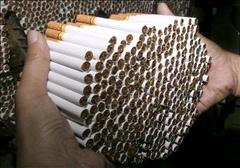 November 17, 2009 - One in two cigarettes smoked in Ontario is illegal (illicit, smuggling, black market), robbing provincial and federal coffers of more than $2 billion a year and raising concerns about children gaining easy access to tobacco. A study for the Canadian Tobacco Manufacturers' Council found that illegal cigarette purchases in Ontario have climbed to 48.6 per cent, followed by Quebec with 40.1 per cent. Canada-MAP..
In a separate investigation last month, the National Coalition Against Contraband Tobacco collected by hand 19,770 cigarette butts near 110 high schools, and discovered 30 per cent were illegal. Because each legal cigarette has a distinctive marking on the filter, investigators are able to pinpoint hot spots for untaxed and unregulated smokes.
Ontario and Quebec represent about 95 per cent of illegal tobacco sales in Canada, and about 33 per cent of cigarettes sold in Canada are contraband, according to the manufacturers' council study.
Government officials and anti-smoking activists are alarmed because the cheap and easily available cigarettes will enable more children and teens to pick up the habit.
The Canadian Cancer Society is watching the situation closely. Rob Cunningham, a senior policy analyst at the Canadian Cancer Society, said widespread access to cheap cigarettes is undermining the effectiveness of tobacco control legislation and programs. "Higher prices are the most effective means of discouraging smoking, especially among teenagers, who are more price sensitive than adults," said Cunningham. "We would be seeing smoking rates go down much faster if we could get contraband under control."
Health advocates warn the historic decline in the number of smokers is starting to slow due to the availability of cheap cigarettes. Last year, about 18 per cent of Canadians aged 15 years and older were smokers. The previous three years it was 19 per cent.
Cunningham: "Ontario and Quebec have the lowest tobacco taxes in Canada, but the highest rates of contraband. (Federal tobacco taxes have not increased since 2002 and the main reason is contraband concern.) So contraband is not caused by taxes, it is caused by the proximity to the sources of supply." The major source of that supply is the Akwesasne native reserve that straddles Ontario, Quebec and the State of New York. Ten cigarette manufacturing plants on the U.S. side pump out billions of cigarettes annually.
VIDEO - Fighting Cigarette Smugglers..
"We know that perhaps 95 per cent of the contraband in Canada originates in illegal operations located on four First Nations reserves, the most important of which by far is the U.S. side of Akwesasne near Cornwall, Ont. There is also Kahnawake near Montreal, Tyendinaga near Belleville, and Six Nations near Brantford," said Cunningham.
Because of the international border issues and sensitivities surrounding First Nations, the Ontario government concedes that fighting contraband tobacco is "huge" and "complex."
Federal Public Safety Minister Peter Van Loan, whose government has been criticized for inaction, insists Ottawa is taking the matter seriously. "Obviously, contraband tobacco is a major concern," said Van Loan, noting it is worrying for reasons beyond just public health. "This is related to organized crime in a significant way," he said, touting the Conservative government's anti-contraband strategy, which includes beefed-up policing. "It's interesting to note that this year I think seizures are up dramatically, both in dollar terms and in quantities, so that plan is working," said Van Loan.
Some of the money earned from the sale of black market smokes is fueling firearm and drug smuggling efforts by organized criminal groups assists Gary Grant, a former Toronto cop, who heads of the National Coalition Against Contraband Tobacco.
The RCMP (Royal Canadian Mounted Police), assisted by the Ontario Provincial Police, is trying to stamp out the illegal cigarette trade. But the Mounties complain that while they are doing their best to round up the smugglers, the courts go far too easy on them. RCMP Sgt. Michael Harvey said fines of $50,000 to $100,000 are assessed, but the courts allow them to pay $10 to $50 a month. And, even then, the scofflaws don't bother.
The Canadian Coalition for Action on Tobacco has recommended ways Ottawa can tackle the problem:
* Work with the U.S. to shut down the illegal, unlicensed factories on the American side of Akwesasne.
* Prohibit the supply of raw materials including raw leaf tobacco, cigarette packaging, filters and rolling paper, to anyone without a valid tobacco manufacturer's licence.
* Promote with First Nations the benefits of having a native tobacco tax equal to the provincial one.
* Increase penalties substantially to deter would-be smugglers and manufacturers.
References: $2 billion in tax revenue up in smoke Industry estimates find as many as half the cigarettes sold in Ontario are illegal, the Toronto Star.com, 11/15/2009; RCMP plays cat-and-mouse with cigarette smugglers It's Mounties vs. tobacco runners along the St. Lawrence River near Cornwall. A lot more than cheap smokes may be at stake, the Toronto Star.com, 11/14/2009; Black-market smokes bankroll mobsters Proceeds fuel firearms and drug smuggling by KEVIN CONNOR, CNNEW.canoe.ca - Sun Media, 11/15/2009.
Canada - cigarette smuggling related briefs:
NCACT welcomes Quebec government's tabling of bill to fight contraband tobacco..;
Quebec - push to stop trade in illicit cigarettes..;
Canada Ontario/Quebec - make it illegal for minors to possess tobacco products..;
Canada - nearly one in five packs of cigarettes smoked by Canadian teen smokers are contraband products..;
Canadian Tobacco Use Monitoring Survey - 2008..;
Ontario, Canada - illegal cigarettes are everywhere..;
Canada - half of smokers have tried to quit..;
Canada - illegal cigarette trade - Imperial Tobacco President Kemball comments..;
Canada - Imperial Tobacco Head - Illegal Cigarettes..;
Imperial Tobacco - Canada Head - Canada growing crisis of illicit tobacco sales..; Imperial Canada - stop illegal tobacco sales rather than raisng tax on tobacco..; Canada - will higher tobacco prices lead to increase in illicit cigarettes..;
Canada - to launch an advertising campaign on the problem of tobacco smuggling..;
Nova Scotia - buying smuggled tobacco you encourage organized crime..; Ontario Businessmen - want government to crack down on illegal cigarettes..;
Imperial Tobacco Canada - slow illegal cigarettes/sue tobacco companies..;
As tobacco prices rise - increase in illegal cigarette trafficing..; Canada - Obama visit - help STOP cigarette smuggling from U.S..;
Canada economic recession losing billions in unpaid tobacco taxes..;
Canada - Police arrest 46 in tobacco crackdown..;
Imperial Tobacco Survey - Canadian Illegal Tobacco Trade..;
Canada - Introduction of Tobacco Stamp to combat contraband...
Read more...


Malawi - children - green tobacco sickness (nicotine poisoning)..

 November 17, 2009 - The world’s seventh largest producer of tobacco, Malawi earned just $162m (£97m) from this cash crop in 2007. The tiny nation is the supplier of 10% of all Burley tobacco, the premium leaf used in most of Britain’s leading cigarette brands.
We have reported tobacco pickers in Malawi are exposed to "extremely high levels of nicotine poisoning." Little government attention is devoted to the environmental damage caused by tobacco. Because nicotine is regarded as harmful to both humans and the environment, the US Environmental Protection Agency has designated waste tobacco as toxic. Such waste is classified as “toxic and hazardous” by European Union regulations when its nicotine content exceeds 0.05%.
Downstream from the tobacco processing plants that dominate the outskirts of Lilongwe, the Malawian capital, rivers run yellow and green from industrial outflow. Even more alarming, however, is that in a community already plagued by Aids, cholera, malnutrition and one of the highest infant mortality rates in the world, toxic tobacco waste is being dumped by contractors in open landfill sites where hundreds of children are picking through the remnants. The children try to sell the waste for fertiliser or for use in cheap black-market cigarettes bound for Zimbabwe. But they pay a heavy price by risking their health.
The report claimed that children forced to work as tobacco pickers are exposed to nicotine levels equivalent to smoking 50 cigarettes a day. Child labourers as young as five, it alleged, are suffering severe health problems from a daily absorption of up to 54 milligrams of nicotine through their skin.
Those interviewed for its report spoke of common symptoms of so-called green tobacco sickness, or nicotine poisoning, including severe headaches, abdominal pain, muscle weakness, coughing and breathlessness.
Few benefits from the tobacco industry filter down to Malawi’s poor tobacco farmers.
Reference: Tobacco poison surrounds child workers, Dan McDougall, TimesOnline.co.uk, 11/15/2009.
Malawi - related news briefs:
Malawi - deports leaf tobacco merchants for paying low prices..;
Malawi - kids working in tobacco production..
Malawi tobacco estate workers have not benefitted..;
Malawi - how can this country survive without tobacco??;
BAT using illegal tactics to get African youths to start smoking..;
British American Tobacco (BAT) - 100 years in Africa...
(farming, children, child)
Read more...


To Provide Public Awareness
Purpose
About Us
Contact Us
2008 HIGHLIGHTS
TOPIX PAPERS - 2008 & 2009..