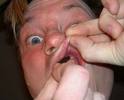
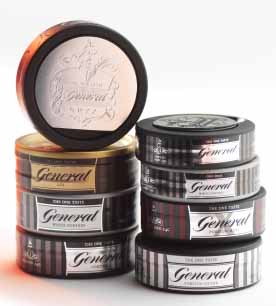
 April 7, 2009 - Swedish Match (SM) began test sales of Swedish snus in the US in early 2007 and, since then, just over 100 stores in 13 states have been selling Swedish snus, primarily the brand General. Swedish snus is a new product category for US consumers. The test launch was performed on a small scale and considerable work remains to be done before the product category can be established long term. For that reason, the Division does not want to make excessive conclusions based on the results, despite positive signs. SM has chosen to conduct the test sales via our network of stores that carry premium cigars. (Camilla Kuylenstierna, Strategic Brand Manager at Swedish Match North Europe and acting Senior Project Leader for Swedish snus at the North America Division, Swedish Match, 3/5/2008)
RICHMOND, VA--(Marketwire - April 6, 2009) - The original Swedish Snus by Swedish Match North America just launched a bold new website. General Snus is a premium, smoke-free tobacco product that can be enjoyed discreetly anytime, anywhere.
Invented by the Swedes over 200 years ago, Snus is an effective alternative to more traditional smoked tobacco.
General, the worldwide leader, is carefully crafted with select tobaccos from a recipe that has been nurtured since 1832. Available in a variety of portions and flavors, General Snus lasts up to two hours compared to many American competitors that last only 20 minutes. So if you are interesting in learning more about this modern, smoke-free product, check out www.generalsnus.com.
By logging onto www.generalsnus.com you will also gain access to history and fun facts, free samples and a video highlighting how General Snus offers fewer adverse effects when compared to cigarette smoking.
Want to really see what the buzz is about? http://www.youtube.com/watch?v=OIDNgn-Iw9E
Related story: Snus Is on the Loose! Swedish Snuff Beats Bloomberg Tobacco Ban by Joe Pompeo, The New Observer, 7/29/2008.
Reference: The Original Swedish Snus by Swedish Match North America Launches Brand New Website, Swedish Match, 4/6/2009.
Read more...
Swedish Match launches snus brand General website..
Syrian - spends $600 million each year on tobacco despite ban..
 April 7, 2009 - Smokers in Syria burn up about 600 million dollars on tobacco and cigarettes each year, despite a ban on advertising and smoking in public, according to statistics published on Monday. "Smokers annually spend about 26 billion Syrian pounds (600 million dollars)," the state news agency SANA said, quoting a report by an official Syrian tobacco institution.
"Each smoker spends about eight percent of his income to buy 3.6 kilogrammes (about eight pounds) of tobacco," it said. The number of smokers in the Middle Eastern country has gone up by 15 percent, it said without elaborating, despite government attempts to counter the trend.
SANA said up to 60 percent of men and 24 percent of women still light up in Syria, which has a population approaching 20 million and where hookah (water pipe, sheesha, shisha, narghile) are becoming increasingly popular.
A law came into force in 2006 banning smoking in public places and on public transport, and a year ago Syria introduced a ban on tobacco sales to those under the age of 19.
The authorities have already instituted controversial antismoking steps. Smoking is now banned in all government buildings and the price of Syrian-made tobacco - the cheapest cigarettes on the market - was raised by 10 per cent this month. Smoking in a taxi is, in theory, punishable by a fine of 500 Syrian pounds (Dh36, 10.55USD). Although smoking is now prohibited in government buildings, it is not uncommon to see staff - even senior officials - lighting up in their offices. A taxi driver without a packet of cigarettes is a rare sight.
Syria was also one of the first Arab states to set up a national cancer register to track the effects of smoking, as recommended by the World Health Organisation (WHO).
Reference: Syrian Spends $600 Million on Tobacco Each Year Despite Ban, Source-AFP, Medindia.com, 4/7/2009.
WHO Framework Convention on Tobacco Control (FCTC) Treaty.
Read more...
New South Wales won't use "separation" anti-tobacco ad..

April 7, 2007 New South Wales health officials have decided against using a controversial anti-smoking advertisement launched by Quit Victoria last November 2008 - ad has polarised parents and commentators.
The "Separation" TV commercial features a young boy crying after he loses his mother in a crowd. Quit Victoria anti-smoking ad draws controversy..
The voice-over then delivers the message to parents: How upset would your child be if they lost you forever to a smoking-related death?
New South Wales has introduced -sweeping anti-tobacco measures..
Extra - New South Wales is Australias most populated state with over 6.2 million inhabitants. Queensland celebrates 150 years of independence from New South Wales on 10 December 2009.
Reference: 'Separation' anti-smoking ad deemed too distressing, Daily Telegraph, 4/7/2009.
Read more...
EU - planning a new study aimed at developing better graphic images..
 April 7, 2009 - The European Commission is planning a new study aimed at developing better graphic images to warn of the damaging effects of tobacco, in a bid to encourage more European Union countries to put the pictures on cigarette packets.
Haravgi-Nina Papadoulaki, spokeswoman for the EC’s commissioner for health and consumer protection, Philippe Brunet, said that, although the commission developed a library of pictorial health warnings in 2005, only three European Union member states have started putting the images on cigarette packets: the United Kingdom, Belgium (Belgium was the first European Union member state to publish warning photos on cigarette packets), and Latvia.
The commission has already asked researchers to submit proposals for the new study, which would include developing a new library of colour photographs, images, and text warnings about the negative consequences for health of tobacco consumption, said Ms Papadoulaki. The images and texts are intended to encourage smokers to quit and to deter young people from starting to smoke
The European Commission is planning a new study aimed at developing better graphic images to warn of the damaging effects of tobacco, in a bid to encourage more European Union countries to put the pictures on cigarette packets.
To make the new combined warnings effective throughout Europe, they will be tested in all 27 member states among smokers, potential smokers, and former smokers, she said.
The Role of Pictorial Health Warnings in Europe's Tobacco Control Policy by
Markos Kyprianou, European Commissioner for Health, The Power of Communications Against Tobacco, Bibliothèque Solvay, Brussels, 31 January 2007..
Countries which have picture based cigarette health warnings from .
.
References: European Commission will look at which pictures work best to help smokers quit, blogsofbainbridge.typepad.com, 4/6/2009; European Commission will look at which pictures work best to help smokers quit, Ned Stafford, BMJ 2009;338:b1351, 4/1/2009.
Read more...


British Columbia puts into effect smoking ban in cars when kids are present..
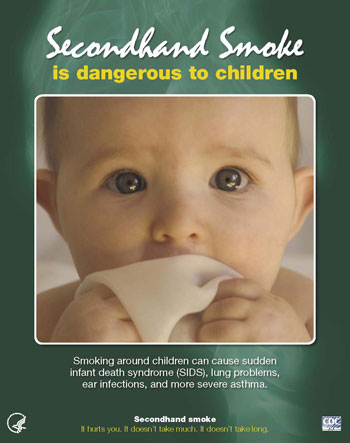 April 7, 2009 - On April 7, 2009 World Health Day the Canadian Province of British Columbia (BC, B.C.) put into force legislation aimed at protecting children (kids, under 16) from second-hand smoke in vehicles (cars, automobiles) by attaching a $109 fine to any offences.
Earlier news release: British Columbia moves to ban smoking in cars with children
Offenders who fail to pay the fine could have driver's licence and insurance requests turned away. Police will have the right to stop any vehicle they suspect to be in violation of the new rules.
The new rule pairs with existing laws that prevent people from smoking in the province's health facilities and indoor public areas. Tobacco use is also banned on school grounds and retailers are restricted in the way they display and promote tobacco.
Mary Polak, B.C.'s Healthy Living and Sport minister: "Any level of second-hand smoke has harmful effects on a child's health, so it's important that we protect vulnerable children who are confined in a vehicle. By making vehicles smoke-free for children under 16, we can help them get the best and healthiest start in life."
B.C.'s legislation follows similar rules in Ontario, Nova Scotia and Yukon.
New tobacco laws passed by the BC Legislature in 2007 were put in effect on March 31, 2008. These new laws were introduced to protect employees and the public from the harmful effects of secondhand smoke, and to limit the display and promotion of tobacco products to youth.
Reference: New B.C. law to ban smoking in cars with kids., Canwest News Service, 3/18/2009.


Read more...
Camel Orbs news from Columbus, OH test site..
 April 6, 2009 - A week ago Saturday, March 28th on the way to talk at the Ohio School Nurses Association Conference, I stopped to pick up a package of Orbs at a BP to show the nurses since I'd left my samples at the office. I bought a Dr. Pepper and asked for them, and then was only charged for the soda.
When I left, I looked at the pack and noticed that they are now giving them away for free to anyone who buys any of RJR's cigarettes. (See the attached pictures of the packaging.) And, obviously, to someone who buys just a Dr. Pepper, too.
They also include a little leaflet that shows you how to open the pack. It is hard to get open, so I assume they were getting complaints and started to insert that in response. I will have to take a picture of it and send it to you.

Read more...
We must get the United States Postal Service (USPS) out of the tobacco delivery business..
 April 6, 2009 - Representative Anthony Weiner and State Senator Jeff Klein released a report Sunday, April 5, showing that New York City is losing up to $150 million a year in tax revenue due to online cigarette sales.
H.R.1676 - Prevent All Cigarette Trafficking Act of 2009,
Sponsor Rep. Anthony Weiner [D, NY-9]. To prevent tobacco smuggling, to ensure the collection of all tobacco taxes, and for other purposes. The legislation will effectively end Internet tobacco smuggling by stopping shipments of cigarettes through the U.S. Postal Service. FedEx, UPS, and DHL have already agreed not to mail tobacco.
On April 1, taxes for cigarettes were raised, and are now about $4.50 per pack, bringing the price up to about $10 for a pack of cigarettes in New York City. Weiner said that the rise of taxes is causing an increase in incentives to avoid the taxes as well.
Senator Klein said that he’s found, over the years, that young people are able to purchase cigarettes over the Internet as long as they verify, by checking a box, that they are over 18 years of age.
“The way we use our cigarette taxes, in the state of New York, is to provide health benefits,” he said. “We are actually able to insure $1.5 billion New Yorkers through an insurance program for the poor through cigarette taxes.”
Weiner announced that the legislation they were trying to pass would ban the United States Postal Service from shipping cigarettes. FedEx, UPS, and DHL have already agreed not to mail tobacco, but Weiner says that the USPS has said they’d prefer to see this as a federal law before complying.
Reference: NYC Losing $150 Million Yearly From Online Cigarette Sales by Catherine Yang, Epoch Times Staff, 3/5/2009.
Related news brief: PACT Legislation now in the U.S. Senate Judiciary Committee..; U.S. House Passes Bill to Prevent Tobacco Delivery By Mail..; We must get the United States Postal Service (USPS) out of the tobacco delivery business.. and Protect Our Children - Make it illegal to use the U.S. Postal Service to deliver any form of tobacco product...
Read more...
Court spares small Dutch cafe over smoking ban..
 April 6, 2009 - A Dutch court on Friday, 4/3/2009 rejected a bid by prosecutors to punish a small cafe for defying the smoking ban, arguing it was too small to be subject to the country's tough restrictions. The Netherlands (Holland, Dutch) ban on smoking in public places starts July 1, 2008.
Prosecutors said they intend to appeal the acquittal.
The Victoria cafe, in Breda, near the Belgian border, escaped prosecution demands for a 1,200-euro (1,600-dollar) fine and closure for a month, after the court decided the prosecution was unjustified. The cafe, run by its owner with no other employees, and others like it were suffering disproportionately from the smoking ban.
Several thousand small bars and cafes in the Netherlands united in late 2008 to flaunt the smoking ban and create a joint legal defense fund, arguing that they lacked the floorspace and money to erect separate smoking-only areas. In its ruling, the court said it was likely that smokers would go to the bigger cafes that could afford separate smoking areas, which could lead to a big drop income for the smaller venues.
Sixty-two percent of Dutch cafes saw a drop in business in October and November 2008, compared with a year earlier, on account of the smoking ban, according to a study by the Dutch health ministry.
In February, the owners of a cafe with no employees in the northern Dutch town of Groningen was fined 1,200 euros (1,600-dollar) in the first-ever trial involving the smoking ban in the Netherlands.
Reference: Court spares small Dutch cafe over smoking ban, Physorg.com, 4/3/2009.
Related news briefs: Netherlands - 1st court case for flouting smoking ban..; Netherlands - ban on smoking in bars and restaurants NOT enforced..; Netherlands - ban on smoking in bars and restaurants NOT enforced..; Netherlands the smoking ban must be enforced - Ab Klink, Health Minister...; Congratulations are in order: Netherlands, Romania & Alberta...
Read more...

Poor children are exposed to more secondhand smoke than their wealthier counterparts.
April 5, 2009 - Children exposed to secondhand smoke (ETS, environmental tobacco smoke, passive smoking, sidestream smoke, involuntary smoking) are more likely to develop respiratory infections, earaches and severe asthma. In addition, studies have linked exposure to secondhand smoke to hyperactivity disorder and behavioral problems.
Researchers collected data on families who participated in the Medical Expenditure Panel Survey conducted from 2000 to 2004. They found that slightly more than a third of the children lived in homes with at least one adult smoker. But about 49 percent of children from lower-income households lived with someone who smoked, compared with 21 percent of kids from wealthier families, and poorer children were more apt to live with more than one smoker as well.
Among the approximately 5 million children who did not live with their parents, about 53 percent lived with a grandparent who smoked, and 46 percent lived with another relative who smoked, whereas 33 percent of children who lived with their parents co-existed with an adult smoker.
Considering just children who lived with someone who smoked, the smoker was the child's mother 59 percent of the time, and 57 percent of the children lived in homes where two people smoked. In contrast, 17 percent of the children whose mother did not smoke lived with other adult smokers, the researchers noted.
Family Composition and Children's Exposure to Adult Smokers in Their Homes
Katherine King, MSc, MPhila, Melissa Martynenko, MPH, Melissa H. Bergman, MD, Ying-Hua Liu, MD, MPA, Jonathan P. Winickoff, MD, MPH and Michael Weitzman, MDPEDIATRICS Vol. 123 No. 4 April 2009, pp. e559-e564
ABSTRACT
Reference: http://healthday.com/Article.asp?AID=625474">Poor Kids Exposed to More Secondhand Smoke
Wealthier households are less apt to include adult smokers, study finds by Steven Reinberg, Health Day, 4/3/2009.
Read more...
Quit Victoria anti-smoking ad draws controversy..
 April 5, 2009 - Fiona Sharkie, executive director of Quit Victoria, the child in the ad known by his first name, Alexander, is shown standing alone in a train station while separated from his mother. The mother in the ad, identified as Annette, is Alexander’s real-life mom.
When he loses sight of his mother, his look of puzzlement turns into abject fear as tears roll down his face. A voice-over then says, “This is how your child feels after losing you for a minute. Just imagine if they lost you for life.”


Reference: Child in ad shed real tears, producer admits Anti-smoking agency says his anxiety only lasted a few seconds by Mike Celizic, TODAYShow.com contributor, 4/3/2009.
Read more...
Smoking mothers can impair a baby's ability to respond to external stimuli may increase risk of SIDS..
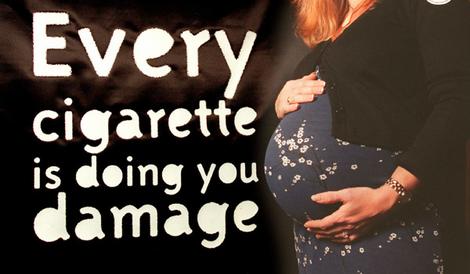 April 4, 2009 - Monash University (in Melbourne, Australia) researchers have shown that babies born to a mother who smokes are more likely to be slower to wake or respond to stimulation - and this may explain their increased risk of Sudden Infant Death Syndrome (SIDS).
Scientific director of the Ritchie Centre for Baby Health Research Associate Professor Rosemary Horne and PhD student Heidi Richardson compared babies of mothers who smoked both during the pregnancy and after the baby was born, with babies who lived in a smoke-free environment.
The study involved 12 healthy, full-term infants born to mothers who smoked an average of 15 cigarettes per day. Their arousal responses during daytime sleep were monitored and compared with that of healthy infants who were born to non-smoking mothers.
The study was performed on each child on three occasions: at two to four weeks, two to three months and five to six months. Arousals were induced without compromising the infants' natural sleep cycles by delivering a pulsatile air-jet for five seconds at the infants' nostrils through a hand-held cannula.
"Those babies whose mothers smoked did not have as many arousals overall and the progression of the arousal response through the brain was also impaired. Mothers who smoked while pregnant and continued to smoke afterward significantly increased their baby's chances of succumbing to SIDS," Professor Horne said.
Professor Horne said the study suggested that maternal smoking can impair a baby's ability to respond to external stimuli, which may explain their increased risk of SIDS.
Although the exact cause of SIDS is unknown, research suggests that an impairment of the arousal process from sleep in response to a life-threatening situation is involved. Autopsies of SIDS victims have revealed brainstem abnormalities in key areas that are required for arousal and cardio respiratory control.
Reference: Pregnancy and tobacco a 'smoking gun' for baby: Study", Ritchie Centre for Baby Health, Monash University, Melbourne, Australia, 4/3/2009.
Some related news briefs:
Pregnant women who quit smoking before the 15th week reduce risk of premature birth and small babies..;
England - pregnant women getting paid to stop smoking..;
U.K. women paid for stopping smoking when pregnant...
Read more...
North Carolina tobacco companies and growers oppose possible tax increase..
 April 4, 2009 - Tobacco companies and growers bought full page ads in several newspapers across North Carolina today, April 3, 2009 to help boost opposition to a possible increase in the state cigarette tax.
The newly formed N.C. Taxpayers Alliance emphasizes the estimated 50,000 jobs in the state linked to tobacco production and warns that higher taxes will harm the industry. Gov. Beverly Perdue has proposed a $1-per-pack increase, though the Senate is expected to reduce that number.
"It will hurt farm workers and tobacco factory workers," the ad says, "It will hurt convenience stores and their workers." The ads encourage readers to call their local legislators and encourage them to oppose a tax increase. The advertisements appeared in newspapers in Wilmington, Rocky Mount, Goldsboro, Wilson, Greenville, Burlington, Gastonia and Boone.
The members of the alliance are tobacco companies: Reynolds American, Lorillard, Universal Leaf and Swedish Match, along with the N.C. Tobacco Growers Association and the Cigar Association of America.
We Salute Senators Julia Boseman and R.C. Soles for Standing Up for Our Jobs and Our Economy, North Carolina Taxpayers Alliance.
Related news briefs: Reynolds American - NC Governor's tobacco tax increase - Outrageous..; NC Governor calls for an increase in the tobacco tax..; North Carolina - may consider raising taxes on alcohol and cigarettes..
Reference: Legal cigarette advertising submitted by Mark Johnson, The News&Observer, 4/3/2009.
Read more...
South Carolina - can we expect a tobacco tax increase this year??
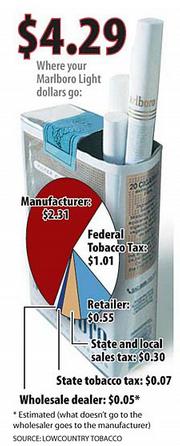
 April 4, 2009 - At 7 cents, South Carolina's cigarette tax is the lowest in the nation. The Legislature has debated raising the cigarette tax for a decade, but this year's bill drew broader support in the House because it directed the income more toward private-based health insurance rather than toward the state-run health system.
Where the money goes when you buy a pack of cigarettes in South Carolina as of April 1, 2009..
South Carolina's House approved a 50-cent per pack cigarette tax increase Thursday, April 4th with plans to use the extra money to provide health insurance for low-income workers. House members voted by a veto-proof 97-22 to raise the state's tobacco tax from 7 cents to 57 cents on a pack of cigarettes, which is expected to generate $147 million for health care. Of the $147 million in new income, about $139 million would create a fund to cover 75 percent of a health care policy for those making up to about $21,600 a year. The maximum credit would be $3,000. Small businesses with 25 or fewer low-income workers would get a 67 percent credit on insurance premiums for each worker. That would have the same limit.
The vote came after an hour of debate in which House members beat back several proposed amendments, some of which would have lowered the tax increase from 50 cents to 30 cents. State Rep. Chip Limehouse, R-Charleston, said if anything, he would have supported a bigger jump. "I would have liked to see a dollar (per pack increase)," he said, "but just on the heels of the federal hike, it was hard to get that." (Smokers' tax hike ignites passion Some mad enough to quit, some just mad; others take it all in stride by Robert Behre, The Charleston Post and Courier, 4/2/2009.)
Limehouse was referring to the new federal tobacco tax that took effect Wednesday, April 1st increasing that tax from 39 cents to $1.01 per pack, pushing the cost of most packs of smokes beyond the $4 mark. (Besides federal tax increase - several states want to do the same..)
This version was backed by the House leadership, including Speaker Bobby Harrell, R-Charleston, who helped derail a different version last year following Gov. Mark Sanford's veto. State Rep. Leon Stavrinakis, D-Charleston, said he is fine with the new version, which he expects to survive a near-certain veto from Sanford.
A routine third reading today will send it to the Senate, which also passed a version of the tax last year.
Forty-four states and the District of Columbia have raised their tobacco taxes since 2002, and even at 57 cents per pack, South Carolina's new levy would remain well below the $1.21 per pack national average.
Reference: House OKs cigarette-tax increase by Robert Behre, The Charleston Post and Courier, 4/3/2009.
Related news briefs: South Carolina a magnet for cigarette black market..; South Carolina - legislators eager to pass cigarette tax increase - the odds are against them??; South Carolina to spend NO money on tobacco prevention..; South Carolina (SC) will NOT devote any resources to anti-smoking programs..; In 2008 will the politicians do what's right for the State of South Carolina??; South Carolina - Tobacco Tax Increase Killed - State House Fails to Override Governor's Veto.. and Tobacco Tax Increase – What’s Wrong with South Carolina??
Read more...
FDA tobacco regulation or a lock in Altria's dominant position in the market..
 April 3, 2009 - Yesterday the U.S. House of Representatives passed H.R. 1256, the Family Smoking Prevention & Tobacco Control Act giving the U.S. Food & Drug Administration (FDA) power to regulate tobacco. Mr. Waxman and his Senate counterpart, Edward Kennedy, Democrat Mass., have promoted legislation giving the F.D.A. regulatory powers over tobacco products since the Supreme Court in 2000 ruled that the agency did not have that authority.
At present the FDA has the authority to regulate sunscreen, our prescriptions, a box of macaroni and cheese or even a tube of lipstick – but not any tobacco product. The
Waxman bill provides authority for the FDA to regulate tobacco with many limitations.
Correspondence New England Journal of Medicine: Volume 359:2070-2071, November 6, 2008, Number 19 Joel L. Nitzkin, M.D., M.P.H. American Association of Public Health Physicians. To the Editor: In 1998, Mark Berlind, chief legislative counsel of Philip Morris, drafted specifications for regulation of tobacco products by the Food and Drug Administration (FDA) that would ensure the continuing profitability of the Marlboro brand, provide a shield against litigation, and protect cigarettes from competition from less-toxic, smokeless tobacco products. The current Family Smoking Prevention and Tobacco Control Act (H.R. 1108/S. 625) discussed by Brandt in his Perspective article (July 31 issue) was negotiated between Matthew Myers of the Campaign for Tobacco-Free Kids (TFK) and Mr. Berlind for purposes of securing an FDA bill with full support from our nation's largest cigarette maker. The text conforms to Mr. Berlind's 1998 specifications.
The bill has been dubbed by Fortune Magazine the "Altria Earnings Protection Act." We worry that the legislation will be flawed because the biggest player (with over half of the tobacco market) in the tobacco industry has been directly involved in writing the bill that regulates their industry. The true motivation behind the FDA tobacco regulation bill may be a big company’s desire to kill off its smaller competitors. "In short, it will lock in Altria's dominant position in the market."
As Senator Michael B. Enzi (R-WY) has pointed out, "Poison peddlers shouldn’t get to decide how we as responsible legislators fight the war against their deadly products."
Stanton A. Glantz, the founder and director of the Center for Tobacco Control Research and Education at the University of California, San Francisco, and a professor of cardiology: “Going into partnership with them or cutting deals with them, there’s not a single case anytime anywhere in the world where that’s worked.”
“Philip Morris is supporting it for their own reasons,” said Mr. Waxman, a sponsor of the legislation. “This is a good bill and a strong bill,” he said. “I don’t think we’ve made any concessions that we’d want to change.” Chairman Henry A. Waxman of the Energy and Commerce Committee must stay very busy with lots of legislation various stages of development on his plate. As pointed out by Dr. Nitzkin despite the optimistic wording of the summaries used to attract endorsement and sponsors, this bill is so distorted in favor of Altria–Philip Morris that, if passed in its current form, it will do more harm than good in terms of future levels of teen smoking and future rates of tobacco-related illness and death. It can protect cigarettes or it can protect the public's health. It cannot do both.
Philip Morris which for years disputed research that found smoking was addictive and contributed to many health problems turned a blind eye when health-advocacy non-profit agencies stated that “Philip Morris shows contempt for women and their health by putting a pink gloss on Virginia Slims that causes lung cancer and heart disease, two of the leading killers of women.” In October 2008, Breast Cancer Awareness Month, Philip Morris started marketing Virginia Slims with a slender "purse pack" in the same color of soft pink associated with the cancer campaign. Even TFK who partnered with Altria to write the tobacco regulation bill condemned Philip Morris for targeting women and girls.
Mike Szymanczyk now the CEO of Altria, Inc., the parent of Philip Morris Tobacco USA, brags to investors that they are directly involved in this legislation (Remarks, Investor Presentation, 3/11/2008)
Philip Morris is already preparing to circumvent the bill, once passed, by--for instance--seeking a trademark change for "Marlboro Snus Spice" to a more generic but still evocative trademarks such as "Marlboro Snus Snug Gold." Citi bank tells shareholders that if the FDA begins to regulate the tobacco industry, it would make little difference; many concessions have been granted to get tobacco companies to buy into this legislation weakening the bill even further. UST Inc. (now owned by Altria Group, Inc, the parent of Philip Morris), the biggest U.S. maker of smokeless tobacco products and the North American unit of Swedish Match AB which also sells smokeless tobacco announced they would support the bill. The bill was amended to give smokeless companies the ability to give away free samples to adults under limited circumstances which hadn't been allowed in earlier versions of the bill.
Regulation of the tobacco industry is absolutely necessary but let's do it RIGHT this time with less input from tobacco companies. Matthew L. Myers of TFK has even said, “The election of Barack Obama changes everything.”
Reference: Philip Morris’s Support Casts Shadow Over a Bill to Limit Tobacco by DUFF WILSON, The New York Times, 3/31/2009.
Archive of Supporting Documentation: U.S. House committee approves FDA tobacco regulation bill..; U.S. House considers legislation for FDA to regulate tobacco..; FDA regulation the other shoe to drop..; U.S. House committee approves FDA tobacco regulation bill..; U.S. House considers legislation for FDA to regulate tobacco..; U.S. House Committee on Energy and Commerce - legislation to regulate tobacco..; Campaign for Tobacco-Free Kids - Need for FDA Regulation of Tobacco..; February 2009 - legislation FDA to regulate tobacco..; FDA Regulation Likely for Tobacco - Let's Do It RIGHT..; President--Elect Barack Obama and Tobacco..; Revise Senate's Version FDA Tobacco Regulation Bill..; FDA tobacco regulation - bill distorted in current form..; AWMA urges grassroots effort to defeat FDA tobacco regulation and SCHIP.."; More - Lorillard-Newport - FDA proposed tobacco regulation..; FDA Tobacco Regulation Bill Overwhelmingly Passed U.S. House..; House to Vote on FDA Regulation of Tobacco..; Bush administration opposes legislation to give FDA authority to regulate tobacco products...; With U.S. FDA tobacco regulations on the horizon Altria already preparing to circumvent the law..; Public health experts are questioning why menthol flavoring in cigarettes, received special protection as Congress tries to regulate tobacco..; Lorillard Tobacco opposes US FDA bill to regulate tobacco..; FDA regulation moves a step closer..; On Tuesday April 1, 1970 President Richard Nixon signed a measure banning cigarette advertising on radio and television, to take effect in January 1,..; FDA regulatory control tobacco bill is voted forward..; Reject Proposed Legislation That Would Add Responsibility For Tobacco Regulation to the FDA..; FDA Head: 'No' to Tobacco Cigarettes too "inherently dangerous" to regulate; would "undermine mission."; Federal tobacco regulation backed...; On July 18, 2007, the U.S. Senate Health, Education, Labor and Pensions Committee postponed a vote on the bill - which would for the first time allow...
Read more...
UST is now operating under the name U.S. Smokeless Tobacco Co...
 April 3, 2009 - Smokeless tobacco company UST Inc., the nation's largest maker of smokeless tobacco, has finished moving its operations from Connecticut to Richmond, Virginia where its new parent company, Altria Group Inc., is based.
Altria bought the maker of the Copenhagen and Skoal smokeless tobacco brands in January in a deal valued at $10.4 billion, plus the assumption of $1.3 billion in debt.
Altria's portfolio of businesses, now includes cigarettes, cigars, moist snuff and wines. It controls about 50 percent share of the tobacco industry and offers leading brands in each segment. Michael E. Szymanczyk, Chairman and Chief Executive Officer of Altria, "with the acquisition of UST, Altria has been transformed into the premier tobacco company in the United States. “Our tobacco operating companies have four powerful brands, Marlboro, Copenhagen, Skoal and Black & Mild, which are leaders in the largest and most profitable domestic tobacco categories. Sales of smokeless tobacco have grown about 7 percent annually in recent years, and about 6.2 million Americans now use the products. Tobacco companies are aggressively pursuing smokeless tobacco as sales of cigarettes decline 3 percent to 4 percent each year.
Daniel Butler, president of U.S. Smokeless Tobacco Company: "While we are very pleased with the success of our strategy to drive category growth in moist smokeless tobacco, we've been less than pleased with our ability to hold our share of the category," Daniel Butler, president of U.S. Smokeless Tobacco Company, said.
Butler said UST cut wholesale prices of its premium products about 20 percent this week to grab more market share and bring its prices closer to those of competitors. From February 1, 2009 through March 28, 2009 - the price of Skoal and Copenhagen was reduced one-dollar. After this promotion 68 cents was subtracted from the original price of these products. For the $1.00-off promotion Philip Morris USA (PM) field sales force took charge. It seems the only task left over for the UST field force is to give credit for expired cans of snuff. These sales people wonder if Altria will reduce the size of the sales force like they did after the acquisition of John Middleton - Black&Mild Cigars. Murray Kessler, former UST's president and chief operating officer is now Vice Chair, Altria Group, Inc.. - TobaccoWatch.org
References: Tobacco maker UST moves to Altria's Virginia HQ
Smokeless tobacco company UST completes move to Altria's Virginia headquarters by Michael Felberbaum, AP Business Writer, 4/1/2009; UST is now operating under the name U.S. Smokeless Tobacco Co., Staff Writers, Richmond Times=-Dispatch, 4/1/2009.
(Name change no longer UST, Inc. the Altria subsidiary is called United States Smokeless Tobacco Company (USST)).
Read more...
New York - more incidence of illicit cigarette traffiking..
 April 2, 2009 - Bureau of Alcohol, Tobacco, Firearms and Explosives (ATF) New York office today, April 1, 2009 announced the arrests of two individuals who purchased untaxed cigarettes from ATF while also selling ATF counterfeit New York State/City Tax Stamps.
Illicit (illegal, contraband) cigarette smuggling defeats the purpose of anti-tobacco programs such as the continuous increase in tobacco taxes to make it too costly for kids to even consider smoking. Kids, who shouldn't be smoking at all, are having no trouble getting their hands on illegal cigarettes that cost pennies.
During the nine month investigation, Guang Ming Wang purchased a total of 31,980 cartons of untaxed cigarettes for $846,000 and also sold ATF 103,950 counterfeit NY State/City tax stamps for $4,000. After the undercover sales of cigarettes, both Wang's were observed by agents unloading the contraband at two locations, 144-05 29th Road and 135-06 62nd Ave. in Queens.
The cartons sold to Wang contained a total of 319,800 individual cigarette packs, which at a price of $10 per pack had a retail street value of more than $3.1 million dollars in New York City. The counterfeit New York tax stamps are worth $4.25 each, bringing their street value to over $440,000. It is estimated that the defendants conspired to deprive New York State and City of at least $1.8 million dollars in tax revenue through their actions.
The defendants are initially being charged with conspiracy to violate the Contraband Cigarette Trafficking Act and could face up to 5 years in prison on these charges. Additional charges are expected to be filed by the United States Attorney for the Eastern District of New York whose office will be prosecuting the case.
In another New York case federal authorities have accused a former New York City police officer of shipping untaxed cigarettes from New York to Michigan, leading Michigan to lose out on more than $600,000 in cigarette excise tax. (Former New York City police officer charged with trafficking in contraband cigarettes, Associated Press, 3/16/2009)
Reference: ATF Arrests Million Dollar Cigarette Smugglers in Queens --CIGARETTES HAD A STREET VALUE OF OVER $3 MILLION by: PR Newswire, 4/1/2009.
Read more...
New federal tobacco tax should save Tennessee $1.1 billion..
 April 2, 2009 - New federal tax on tobacco products that went into effect Wednesday, April 1, 2009 is expected to save the state $1.1 billion in health care costs and save $241 million for TennCare. Smoking declines will save the state $1.1 billion in associated health care costs and $241 million for TennCare, the state’s Medicaid program.
The federal excise tax on cigarettes rose yesterday from $0.39 to $1.01 per pack. Taxes on chewing tobacco rose from $0.195 cents per pound to $0.50.
Additional funds raised will benefit the State Children’s Health Insurance Program, which provides insurance for children and their families if they make too much for government assistance but not enough to afford health care coverage.
Officials from the Tennessee Department of Health (TDOH)claim the new taxes will help 30,200 Tennessee quit using tobacco products, which will produce myriad ancillary benefits. TDOH claims the move will save 23,100 smokers in the state from smoking-related deaths.
The new tax is expected to help more than 1 million quit nationally and produce $44.5 billion in health care savings, including $7.5 billion for national Medicaid
programs.
Reference: New tobacco tax should save Tennessee $1.1 billion, Memphis Business Journal, 4/2/2009.
Read more...
U.S. House Passes Bill Giving FDA Power to Regulate Tobacco..
 April 2, 2009 - The U.S. House of Representatives today overwhelmingly passed (approved, passage) landmark legislation giving the U.S. Food & Drug Administration (FDA) power to regulate tobacco, reported Dow Jones. The voted passed 298-112.
The bill faces an uphill battle in the Senate, where lawmakers from tobacco-producing states oppose the legislation. The bill doesn't give the FDA power to ban existing tobacco products but gives the agency power to restrict sales on safety grounds. The FDA also would be able to stop companies from touting their brands as "low tar" and "mild" and other areas of the agency.
Rep. Henry Waxman (D.-Calif.) said money from the FDA's general fund will be used for only the first six months until the industry fees are adequate to fund the program. Money borrowed from the general fund will be paid back by the user fees, Waxman said.
The House, in a separate 284 to 142 vote, defeated an alternative offered by Rep. Steve Buyer (R-Ind.) to establish a new tobacco regulation center outside the FDA but within the Department of Health & Human Services, said Dow Jones. (U.S. House alternative bill to regulate tobacco rejected..)
STATEMENT OF SENATOR EDWARD M. KENNEDY ON THE HOUSE PASSAGE OF BILL TO GIVE THE FDA REGULATION OF TOBACCO PRODUCTS..
Reference: House Passes Bill Giving FDA Power to Regulate Tobacco, CSP (Convenience Store/Petroleum) Daily News, 4/2/2009.
Read more...
Among Americans, Smoking Decreases as Income Increases..
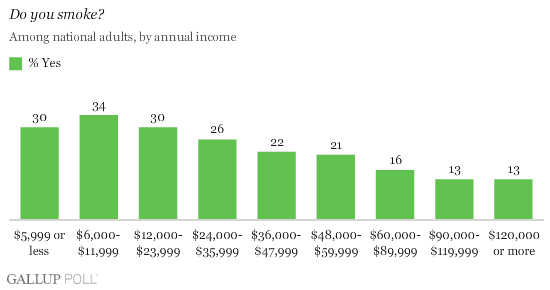
 April 2, 2009 - the Gallup-Healthways Well-Being Index - based on interviews with more than 75,000 individuals across the United States provides a closer examination of the relationship between household income and smoking behavior.
Nationwide, the index reveals that 21% of Americans say they smoke. As the accompanying graph illustrates, the likelihood of smoking generally increases as annual incomes decrease. One exception to this pattern occurs among those making less than $6,000 per year, an income bracket often skewed because many in that bracket are students. Among those making $6,000 to $11,999 per year, 34% say they smoke, while only 13% in the top two income brackets (those with incomes of at least $90,000 per year) say the same -- a 21 percentage-point gap.
The Well-Being Index also confirms distinctions in U.S. smoking rates relating to gender and race. Among respondents, 23% of men and 19% of women say they smoke. Blacks are the most likely to smoke (23%) and Asians are least likely to smoke (12%). Hispanics and whites fall in between, at 17% and 20%, respectively.
Interestingly, smoking rates in the United States are similar to those around the world. Across 118 different countries Gallup surveyed in 2006 and 2007, a median percentage of 22% said they smoked the day before the survey.
Reference: Among Americans, Smoking Decreases as Income Increases Gradual pattern is consistent across eight earnings brackets by Rob Goszkowski, GALLUP, 3/21/2008.
Read more...
Legal Consortium files amicus (friend of the court) brief in first impression tobacco-free pharmacy case..

April 2, 2009 - William Mitchell’s Tobacco Control Legal Consortium and its California affiliate, the Tobacco Assistance Legal Center, filed an amicus brief at the Ninth Circuit Court of Appeals on March 24 defending San Francisco’s pioneering ban on pharmacy sales of tobacco products against a First Amendment challenge by Philip Morris. This will be the first appellate decision on the validity of pharmacy sales bans of tobacco products and likely will set precedent for the country.
The San Francisco ordinance has survived an initial round of challenges after both Philip Morris and Walgreens requested injunctions to stop enforcement of the ban on selling tobacco products in pharmacies. Both challenges were rejected and the law went into effect Oct. 1, stripping tobacco products from the city’s approximately 60 drug stores. Philip Morris, the nation’s largest tobacco company, immediately appealed the order. The appeal before the Ninth Circuit could take months to resolve.
The Legal Consortium’s brief was written by Linda Lye, an experienced appellate attorney at Altshuler Berzon in San Francisco, and was joined by 19 parties, including national medical, public health, and pharmaceutical organizations.
The brief argues that the consensus of the public health community is that tobacco products should not be sold in pharmacies and that doing so conflicts with pharmacists’ code of ethics. It points out that the tobacco control movement has focused on changing social and cultural attitudes toward tobacco, including restricting the availability of tobacco, and that prohibiting pharmacies to sell tobacco is one reasonable step to achieve the ultimate goal of reducing and eliminating tobacco use.
Read the Tobacco Control Legal Consortium’s amicus brief in Philip Morris USA, Inc. v. City and County of San Francisco et al.
Related news briefs: Philip Morris appeals tobacco ban at San Francisco pharmacies; Federal Judge Denies Bid To Stop San Francisco Pharmacy Tobacco Ban..; Philip Morris USA request stop in San Francisco's ban on tobacco sales by pharmacies..; San Francisco - cigarette sales rise sharply in c-stores..; San Francisco files brief to oppose bid by PM USA to block the banning of tobacco sales in pharmacies..; Philip Morris challenges San Francisco pharmacy tobacco ban..; Walgreen: San Francisco’s Tobacco Ban Is Unfair..; San Francisco - All Tobacco Products Banned in All Pharmacies..; San Francisco critical vote - bar tobacco sales pharmacies.. and SAN FRANCISCO Ban on tobacco at drug stores sought...
Read more...
EU percent of adults smokers -highest Greece 1 , Bulgaria 2.. - lowest Slovenia..
 April 2, 2009 - European statistical service Eurobarometer has reported that Bulgaria ranks second highest in the EU for the percentage of adult smokers. The poll carried out between December 13 and 17, 2008 found that 39% of Bulgaria's adult population smoke regularly or occasionally, BTA reported. Students from Bulgaria smoke more than most other European countries..
Over 26,500 randomly-selected citizens aged 15 years and over were interviewed for the poll in the 27 EU Member States and in Norway.
The ranking list is headed by Greece, where smokers represent 42% of the adult population. Slovenia with 22% and Sweden with 26% of smokers are at the bottom of the list. A total of three out of 10 Europeans aged over 15 are smokers, Eurobarometer data also showed. About 46% of EU citizens have never smoked.
Reference: Bulgaria Second in EU Adult Smoking Survey, Sofia News Agency (novinite.com), 4/1/2009.
Related news briefs: Bulgaria - 1 in 3 youths smoke / half of pregnant women smoke.., PMI training Bulgarian custom officers to stop cigarette smuggling..; Philip Morris International (PMI) was truly happy they had been back in the Bulgarian cigarette market for a year and had already had 6.8% of market..; WHO FCTC Protocol to Prevent Illicit Trade in Tobacco Products Won't Be Completed Until End of 2010..; WHO Report on the Global Tobacco Epidemic 2008..; Bulgaria Enters 2009 with Cigarette Prices Hike...
Read more...

U.S. earning for big three cigarettes makers may be down in 1st quarter 2009..
April 2, 2009 - Citi Investment Research analyst Adam Spielman has trimmed his first-quarter earnings estimates for cigarette companies.
In March major cigarette makers raised prices, partly to offset any drop in profit once the per-pack tax climbs from 39 cents to $1.01. Tobacco wholesalers and retailers are trying to limit their inventory temporarily. (With the April 1st tax increase wholesalers and retailers will have to pay for what they own on that day. This "floor" tax requires them to pay 62 cents for each pack of cigarettes they own that day, and this is on top of higher prices cigarette manufacturers are charging.
Spielman expects this lower inventory to cause first-quarter volumes to fall by as much as 15 percent, but reiterated that the inventory destocking is only temporary.
"The volume that is 'missing' from the first quarter will reappear in the second quarter, so we have lifted our second-quarter numbers," Spielman wrote in a client note. We are not expecting to get a clean quarter until the third quarter of 2009.
Spielman lowered his expectations for Altria Group Inc., Reynolds American Inc., and Lorillard Inc., saying that the inventory destocking may limit any gains to the stock price in the near-term.
Stifel Nicolaus & Co. analyst Christopher Growe trimmed his first-quarter earnings estimate for Altria by 8 cents to 39 cents to account for the lower inventory. Shares of Lorillard slipped 58 cents to $64, shares of Altria Group declined 41 cents, or 2.4 percent, to $16.80, and shares of Reynolds lost 95 cents, or 2.5 percent, to $36.77.
Reference: Sector Snap: Analyst trims tobacco estimatesAssociated Press - Forbes.com, 3/27/209.
Read more...
Excessive profiteering by big tobacco companies..
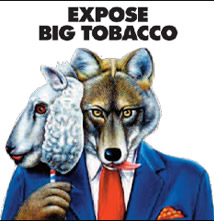 April 2, 209 - The Council of Independent Tobacco Manufacturers of America (CITMA) has condemned major US manufacturers for increasing cigarette prices ahead of the April 1 hike in the US’ federal excise tobacco taxes.
Philip Morris claimed that the price increase was necessary to address floor stock taxes brought about by the Federal Excise Tax (State Children's Health Insurance Program - SCHIP) legislation passed in February 2009,’ CITMA said in a press note issued by PRNewswire. ‘In fact, Philip Morris's price rise was three weeks ahead of the SCHIP tax increase.’ (Floor stock taxes - on Wednesday, April 1, 2009 when the tax takes effect, the wholesalers and retailers had to pay for what they own on that day. This "floor" tax requires them to pay 62 cents for each pack of cigarettes they own that day, and this is on top of higher prices cigarette manufacturers are charging.)
Kevin Altman, a CITMA representative: "This is just big companies using their market power to drive up their profits at the expense of adult consumers."
This pricing pattern is consistent with the behavior of the major tobacco
companies related to the cigarette Master Settlement Agreement (MSA). After that Agreement was signed in 1999 by the states and the major companies, in lock step, those companies raised prices to new highs. Profits at the major companies increased substantially and reached record levels, and all at the expense of consumers.
This most recent excessive price hike has provided substantial profits to
Philip Morris at the expense of consumers. "By adding an extra $6.17 under the
pretense it was wholly related to the increased tax to support health care, Philip Morris and the other large tobacco companies, continue to undermine the confidence of adult consumers. This latest hike only helps promote a negative perception of the big companies leveraging the market dominance that was created for them as a result of the cigarette MSA," stated Altman.
Related news brief: C-store chain upset that tobacco manufacturers raise prices early..
Reference: SCHIP Tax Increases Spurs Profiteering by Philip Morris and Other Big Tobacco Companies.., SOURCE Council of Independent Tobacco Manufacturers of America, Reuters, 4/1/2009.
Read more...
In Process - North Carolina House poised to pass smoking ban..
April 2, 2009 - The house voted Wednesday April 1, 2009 to outlaw smoking in most workplaces and restaurants in North Carolina. The bill, which requires final House approval before moving to the state Senate. Most bars would be exempted.
Reference: N.C. House poised to pass smoking ban by Benjamin Niolet - News & Observer Staff Writer, 4/2/2009.
Read more...
Florida Senate panel backs tobacco tax hike..
 April 2, 2009 - A Senate committee ended a nearly 15-year stalemate on tax proposals in Florida Tuesday, unanimously voting to raise the cigarette tax $1 per pack and increase the tax on cigars and smokeless tobacco $1 per ounce.
Reference: Florida Senate panel backs cigarette tax hike
The Senate overcame its no-tax anxiety and gave preliminary approval to a $1 hike in state cigarette tax., BY MARY ELLEN KLAS
Miami Herald/Times Tallahassee Bureau, 4/1/2009.
Related news brief: Florida tobacco tax hike gets 1st critical vote today.., Tobacco Free Florida Week - 2/27/2009 - 3/7/2009.., Florida's $2.3 billion deficit - increase tax on cigarettes???; States Need Quick Influx of Revenue – Think Tobacco Tax..; Times are Tough Save Money Quit Smoking...
Read more...
New York City - cigarettes more than $10- a- pack..
 April 1, 2009 - If this doesn't make you quit, nothing will. With a new 62 cent federal tax on cigarettes added this week with the passage of the State Children's Health Insurance Program law, the new price of a pack of cigarettes will soar past $10 in Manhattan.
The NYC price is the highest in the nation and more than twice the national average.
And don't forget to add the retail mark-ups, which could drive the price of your favorite smokes even higher.
The latest tax hike has left smokers fuming. Hakima Ougribe currently spends $10.95 on a pack of Marlboro Milds on the Upper West Side. She can now expect to pay well over $11 for a pack -- that's more than 55 cents a smoke. Restaurant owner Frank Rossi said he would give up his Newports as of today. "How does the government get away with it?" Rossi, a smoker of 15 years, said. Michael Southward, 24, of Hell's Kitchen said he could no longer afford to smoke.
The New York Health and Hospitals Corp. said the price rise would push the cost of cigarettes to more than $250 a month for pack-a-day smokers. Up to 20,000 New Yorkers are expected to quit after today's price rise. "Now is the time to quit," city Health Commissioner Dr. Thomas Frieden said. "Smoking is hurting your health and your wallet. "For many New Yorkers looking to save money during these tough times . . . You will feel better, your families will be safer and you will save thousands of dollars."
Reference: New York City - LATEST TAX PUSHES LOWEST CIG COST PAST $10 by DAVID HASTIE, New York Post, April 1, 2009.
Click on image to enlarge..
Read more...
Bangladeshi government will increase taxes on tobacco products..
 April 1, 2009 - The increase will be part of the next fiscal budget (July 2009-June 2010), its news agency BSS quoted a senior official as saying. During a meeting with a local research organization Unnayan Samannay (Development Coordination) recently, Chairman of the Bangladesh's National Board of Revenue (NBR) Abdul Mazid said the purpose of increasing tax on cigarettes and tobacco products is not to boost revenue but to protect public health. Mazid said imposition of higher tax would help downsize usuage of tobacco items in the country.
The NBR chairman further said, "We have to increase taxes on the tobacco products each year, as Bangladesh signed a United Nations agreement against tobacco. Under the rules, the country has already restricted advertisement, promotion and sponsorship of tobacco products and smoking of cigarettes in public places and made warning on cigarette packets mandatory.
Bangladesh is the first signatory of the WHO Framework Convention on Tobacco Control (FCTC) and 20th ratifier in the world, Following this the government of Bangladesh enacted the Bangladesh Tobacco Control Act 2005.
Nearly two-thirds of the world's smokers live in 10 countries: China, which accounts for nearly 30 percent, India with about 10 percent, Indonesia, Russia, the United States, Japan, Brazil, Bangladesh, Germany and Turkey.
Reference:Bangladesh to increase tax on cigarettes, other tobacco products, BSS News Agency, 3/30/2009.
Related news brief: Marlboro to be Marketed in Bangladesh - One of the Poorest and Densely Populated Countries in the World..
WHO Global InfoBase - Bangladesh..
Read more...
C-store chain upset that tobacco makers raise prices early..
April 1, 2009 - Sheetz upset cigarette maufacturers raised prices before the official start of the federal tax increase. (Sheetz has 350 convenience store locations throughout Pennsylvania, Virginia, Maryland, West Virginia, Ohio and North Carolina,
Sheetz: "The cigarette manufacturers think they're pulling an April Fools' trick on their customers. "Consumers were expecting an increase April 1, but the tobacco companies actually raised the prices as early as March 11, which forced us to raise our retail prices. Now, they're just pocketing that extra money. Add to that the fact that in the past few weeks, they've also raised their own prices, and so now they're taking in an extra seven bucks per carton. In my book, that's more than an April Fools' trick; that's just wrong."
Reference: Sheetz's Tobacco Promise
Pa. chain "calls out" cigarette companies on price hikes are FET increase kicks in, CSP (Convenience Store/Petroleum) Daily, 4/1/2009.
Read more...
Kentucky - state cigarette tax increase as of April 1 , 2009..
 April 1, 2009 - Today Kentucky's cigarette tax doubles from 30 cents to 60 cents per pack. Just four years ago, Kentucky's tobacco tax was only three cents - the lowest in the nation. In addition, the federal tax on cigarettes today rises from 62-cents per pack to $1.01.
Kentucky is the nation's largest producer of burley tobacco and dark fire- and air-cured tobaccos. Only North Carolina surpasses Kentucky in tobacco production.
Kentucky is the most tobacco-dependent state in the United States. Although North Carolina grows more tobacco than Kentucky, tobacco accounts for a larger percentage of Kentucky's agricultural income. (Overview of Kentucky's Tobacco Economy by Will Snell and Stephan Goetz, AEC-83)
Related news brief:Kentucky raises taxes on cigarettes..
Read more...
Greater chance of child having autism if their mothers smoked ..
 April 1, 2009 - The study based on surveys that asked a variety of questions related to the indoor environment. Of the study's 4,779 children between the ages of 6 and 8, 72 had autism, including 60 boys. The researchers found four environmental factors associated with autism: vinyl flooring, the mother's smoking, family economic problems and condensation on windows, which indicates poor ventilation.
Children in the study also were twice as likely to have autism if their mothers smoked cigarettes. The autistic children also were more likely to have asthma.
Because their research was not designed to focus on autism, the researchers recommend further study of larger numbers of children to see whether the link can be confirmed. Several scientists who did not participate in the study cautioned that it has too many limitations to draw conclusions, but they suggested that new studies be designed to look for a connection between autism and indoor air pollutants.
Reference: Scientists Find 'Baffling' Link between Autism and Vinyl Flooring by Marla Cone and Environmental Health News, Scientific American, 3/31/2009.
Read more...


To Provide Public Awareness
Purpose
About Us
Contact Us
2008 HIGHLIGHTS
TOPIX PAPERS - 2008 & 2009..