 October 7, 2009 - FDA held listening sessions for tobacco stakeholders in September. Thomas Briant, executive director of the National Association of Tobacco Outlets Inc. (NATO), Minneapolis, attended both of the sessions (one for manufacturers and the other for retailers, importers and distributors), as well as a media briefing.
While many attendees were pleased to know their concerns would be heard, they also were less than satisfied by the lack of answers. Some people were disturbed by the fact that the FDA didn't respond to commentary during the sessions, said Norm Sharp, president of the Cigar Association of America Inc., Washington. He described his own reaction as "not satisfied, but not dissatisfied."
One of the major concerns discussed was the ban on color advertising on tobacco products in retail stores. Another major concern was whether the flavored-cigarette ban includes flavored little cigars. The FDA had issued a letter to the industry September 14 that said the standard applies to "all tobacco products that meet the definition of a 'cigarette' in section 900(3) of the Act even if they are not labeled as 'cigarettes' or are labeled as cigars of some other product." Briant, however, told CSP Daily News, "Our understanding of the law is that flavored cigar products are not banned at this time, but the FDA has not provided clear guidance to clarify the issue..
Briant: "I think they truly do not understand the tobacco industry or the different tobacco products sold to consumers, and without a good underlying knowledge of these products and why they are different from one another, the FDA does not yet know how to apply the new law," he said.
The FDA also did extend a deadline for public comments from September to December. "The comment period was extended for a variety of reasons," said FDA spokesperson Kathleen Quinn. Briant: While the comments won't change the law, Briant said, "If the FDA staff takes the time to review all those comments, I think they will become educated about tobacco products and make more reasonable decisions on how to implement the law; however, that presupposes they're going to read these thousands and thousands of pages of comments." Also on deck: "Menthol will come in front of our tobacco scientific advisory committee for review," according to Quinn.
One of the concerns Briant cited about the reading of the comments was the lack of staffing at the FDA's Tobacco Products Center.
Enforcement, according to a transcript of the media briefing, provided by Briant, Catherine Lorraine, a lawyer on FDA staff, said, "I think we will be working with our enforcement team to find the most effective ways of identifying violations of this act, and we will be bringing appropriate enforcement actions when we do document violations." The FDA has also set up a toll-free number and website for the public to report violations.
According an frequently asked questions (FAQ) document, the FDA has a busy docket ahead, including:
* By January 2010, tobacco manufacturers and importers will submit information to FDA about ingredients and additives in tobacco products.
* By April 2010, FDA will reissue the 1996 regulation aimed at reducing young people's access to tobacco products and curbing the appeal of tobacco to the young.
* By July 2010, tobacco manufacturers may no longer use the terms "light," "low," and "mild" on tobacco products without an FDA order in effect.
* By July 2010, warning labels for smokeless tobacco products will be revised and strengthened.
* By October 2012, warning labels for cigarettes will be revised and strengthened.
The FDA plans to update the Frequently Asked Questions (FAQ) as questions come in to the agency..
See reference to read the complete article..
Reference: FDA Gets an Earful "Listening sessions" on tobacco regulation leave retailers with unanswered questions by Linda Abu-Shalback Zid, CSP Daily News, 10/6/2009.
Center for Tobacco Products related news briefs:
FDA Center for Tobacco Products - draft document issued..;
FDA deflects challenge from Reynolds, Lorillard, others..
FDA - began collecting fees from nations tobacco companies..;
FDA - first steps in the role of tobacco regulation..
U.S. - flavored cigarettes illegal after Wednesday, September 22, 2009..;
FDA Moves Forward on Implementation of Tobacco Law..;
Dr. Lawrence Deyton to head FDA's Tobacco Center..;
U.S.- creating the FDA's Center for Tobacco Products..
U.S. FDA posts job for new tobacco czar..;
President Obama signs bill for FDA to regulate tobacco...
Read more...
FDA listening sessions for tobacco stakeholders..
San Francisco - Michael Jordan caught smoking on public golf course..
 October 7, 2009 - San Francisco is asking basketball superstar Michael Jordan to snuff out the cigars, after he was caught on the front page of The Chronicle's Sporting Green breaking the city's ban on smoking on public golf courses.
The Presidents Cup golf tournament is being held at San Francisco.
City officials sprang into action after seeing the full-color photo Tuesday of the NBA Hall of Famer enjoying a good cigar while teeing off at Harding Park's 14th hole during a Presidents Cup practice round.
In an interview with PGATour.com, Jordan was asked how many cigars he planned to smoke during this week's tournament. "Well," Jordan replied, "that depends, because I heard this is a public place, so they limit what you can smoke. I'm not even supposed to be smoking, but this was a practice round and no one said anything." If he is permitted to smoke, Jordan said, "I would say (it's) a three-cigar round. I would try to keep it at a minimum of three."
And what is the city's response? "You mean about Spare the Air Jordan?" said Recreation and Park General Manager Phil Ginsburg.
"I've already sent off an e-mail to the PGA Tour director," Ginsburg said. "It was sort of a gentle nudge reminding them that smoking is illegal and that we would appreciate their support."
Initially, public golf courses were exempt from the city's many smoking bans. However, in 2006, after much debate, the Board of Supervisors narrowly voted to apply the same rules to golf courses as other parks - including the possibility of a $100 fine for violators. "But don't expect me to ask him for it," said city attorney's spokesman Matt Dorsey.
Reference: Michael Jordan caught smoking, Phillip Matier, Andrew Ross, San Francisco Chronicle, 10/7/2009.
San Francisco related news briefs:
San Francisco - cigarettes cost a little more starting today, October 1, 2009..;
San Francisco can enforce its ban on tobacco sales in drugstores..;
San Francisco - fight about selling tobacco products in drugstores has flared up..
San Francisco - Judge threw out a Walgreens attempt to stop the ban of tobacco sales in pharmacies..;
Philip Morris appeals tobacco ban at San Francisco pharmacies;
Federal Judge Denies Bid To Stop San Francisco Pharmacy Tobacco Ban..;
Philip Morris USA request stop in San Francisco's ban on tobacco sales by pharmacies..;
San Francisco - cigarette sales rise sharply in c-stores..;
San Francisco files brief to oppose bid by PM USA to block the banning of tobacco sales in pharmacies..;
Philip Morris challenges San Francisco pharmacy tobacco ban..;
Walgreen: San Francisco’s Tobacco Ban Is Unfair..;
San Francisco - All Tobacco Products Banned in All Pharmacies..;
San Francisco critical vote - bar tobacco sales pharmacies..;
SAN FRANCISCO Ban on tobacco at drug stores sought...
Read more...
Nat Sherman Co. letter clarifying company's cigarette brands comply with the FDA regulations..
 October 7, 2009 - NEW YORK -- The Nat Sherman Co. has issued a letter clarifying which of the company's cigarette brands comply with the new U.S. Food & Drug Administration (FDA) regulations, according to the National Association of Tobacco Outlets (NATO), which published a copy of the letter in its most recent E-News Bulletin.
The letter said:
"Regarding the FDA ban on characterizing flavors which went into effect on September 22, 2009.... The law bans both the manufacturing and sale of all flavored cigarettes (except for regular and menthol brands). This includes our Clove and Mint brand styles, but does not affect any of our other brands. In the last few weeks, we have been actively removing our Clove and Mint brands from the market place as many states have begun delisting them from their approved directories.
Consistent with our obligations as a responsible manufacturer, we have discontinued our 'A Touch of Cloves' and all our Mint brands styles. Concerning our 'Mint' brands, while many competitors use a synthetic menthol flavoring to treat the tobacco in their products, we have always remained true to our heritage as a manufacturer of only all-natural 100% additive-free cigarettes. Since menthol is derived from nature's own mint plant, our menthol-flavored cigarettes have always contained pure menthol crystals in our filters to impart a natural menthol flavor. And to differentiate our menthol products, we adopted the descriptor 'Mint.' Now, however, we have revised our packaging for these brands and changed the descriptor to 'Menthol.' Other than this slight name change, you can be assured the quality and enjoyment you and your adult customers have come to expect from these brands will continue to remain the same. Please note that both the UPC and product code will remain unchanged."
Click to read the full letter with a list of brands.
New York City-based Nat Sherman's all-natural brands of luxury cigarettes can be found in all 50 states and in more than 40 countries. It makes cigarettes, cigars and pipe tobaccos and tobacco accessories.
Reference: Nat Sherman Issues Letter on Flavors
Clarifies which of its cigarette brands comply with new FDA regulation, Convenience Store / Petroleum (CSP) Daily News, 10/5/2009.
Related news briefs: Altadis USA to sell Nat Sherman premium cigars..
Read more...
South Dakota - statewide smoking ban trial date moved to mid-November..
 October 7, 2009 - South Dakota's statewide smoking ban has now made its way to a courtroom. Both sides of the issue gathered Tuesday in Hughes County where they heard from a judge for the first time.
The statewide smoking ban has been a red hot issue since state lawmakers passed the law seven months ago. One of the decisions made Tuesday by the judge is that the American Cancer Society can join the case. The organization argues that the smoking ban should be in effect now and not put to a vote because of the immediate health benefits.
"I think it is important we get back to that threshold issue of, did the legislature intend this to go into effect? Should this go into effect because of the public health preservation?" Jennifer Stalley of the American Cancer Society said.
Both sides also worked out how many petition signatures the smoking ban opponents are short of in order to refer the issue to a public vote. Larry Mann now says his cause is just 54 signatures short, and he's confident the court could review and approve enough to send the issue to the ballot box.
“We think so. Obviously, our opponents don't. But it's one of those complicated issues not knowing how a judge will rule," Mann said.
The trial date has now been moved back to mid-November, and after Tuesday's motions hearing, both sides are still confident the law is on their side. (The judge also reset the trial for Nov. 12-13, three weeks later than it had been previously scheduled. She also put off further arguments on motions until the first morning of the trial.)
"We're prepared to make a strong case that we've got a lot of signatures that ought to be included in that count," Mann said.
"I think we're confident South Dakota will eventually become smoke free. We just are working to make that happen sooner rather than later," Stalley said.
If the smoking ban does go up for a public vote, it would likely happen in November of 2010.
Reference: Cancer Society Joins Smoking Ban Battle, Keloland.com, 10/6/2009; Group will be part of smoking ban court case in November by Bob Mercer, American News Correspondent, 10/7/2009.
Developments - related news briefs:
South Dakota - trial delayed in fight to enforce smoking ban..;
South Dakota - new judge appointed in the smoking ban dispute..
South Dakota - ACS wants smoking ban passed by legislature to begin ASAP..
South Dakota - opponents of smoking ban gain a delay..;
South Dakota - petition rejected - state smoking ban to take effect..;
South Dakota - Secretary of State's Office still counting disputed signatures on the smoking ban petitions..;
South Dakota - anti-smoking leaders challenge petition..;
South Dakota - smoking ban to start July 1, 2009 may be delayed..;
South Dakota - opponents try to stop extended smoking ban..;
South Dakota - extends smoking ban effective July 1, 2009...
Read more...
U.S. Institute of Medicine: Report - Secondhand-Smoke Exposure and Cardiovascular Effects: Making Sense of the Evidence..
 October 7, 2009 - Secondhand-Smoke Exposure and Cardiovascular Effects: Making Sense of the Evidence, a new report from the Institute of Medicine, provides a comprehensive evaluation of studies exploring the impacts of smoking bans in the United States and abroad and the relationship between secondhand smoke and heart disease. Based on this review, the report offers conclusions about the effectiveness of smoke-free policies. The report will be released with a one-hour public briefing.
Details:
11 a.m. to noon EDT Thursday, Oct. 15, Room 201 of the National Academies Keck Center, 500 Fifth St., N.W., Washington, D.C. Those who cannot attend may participate by conference call.
Advance copies of the report will be available to reporters only beginning at 9 a.m. Wednesday, Oct. 14. The report is embargoed until 11 a.m. EDT on Oct. 15. Reporters: To receive a copy of the report and to register to attend the briefing or to receive the call-in information, contact the Office of News and Public Information, tel. 202-334-2138, or e-mail news@nas.edu.
Reference: NEWS - from the National Academies.., 10/7/2009.
Read more...
Altria to Host Webcast of q3 2009 results on October 21st..
 October 7, 2009 - Altria Group, Inc. (Altria) (NYSE: MO) will host a live audio webcast on Wednesday, October 21, 2009 at 9:00 a.m. Eastern Time to discuss 2009 third-quarter business results. The business results will be issued by means of a press release at approximately 7:00 a.m. Eastern Time the same day. The webcast can be accessed at www.altria.com.
During the webcast, Mr. Michael E. Szymanczyk, Chairman and Chief Executive Officer, and Mr. David R. Beran, Executive Vice President and Chief Financial Officer, will discuss the company's 2009 third-quarter business results and answer questions from the investment community and news media.
The webcast will be in a listen-only mode. Pre-event registration is necessary; directions are posted at www.altria.com. An archived copy of the webcast will be available until 5:00 p.m. Eastern Time on Thursday, November 19, 2009, at www.altria.com.
SOURCE: Altria Group, Inc.
Investor Relations
Altria Client Services
804-484-8222
Read more...
Social networking sites marketing tobacco products to youngsters..
 October 7, 2009 - Tobacco companies are using legal loopholes to market products on social networking sites including Facebook and MySpace targeting young smokers.
Advertising restrictions on cigarette giants are forcing companies to become savvier in the way they reach consumers.
Fan clubs and unofficial product pages endorsing Marlboro, Benson and Hedges and Lucky Strike are now appearing on social networks, and have the ability to redirect users to the product's website, The Daily Telegraph reports. Cancer Council Australia has called on the Federal Government to intervene and ensure the sites are pulled down.
Tobacco companies have denied officially setting up Facebook and Myspace pages. But experts said it was difficult controlling the stealth internet advertising with regulation a global problem. "It needs to be brought to the Government's attention because they have been very good at restricting tobacco advertising," Professor Ian Olver from the Cancer Council said. "Now we have this whole new media that can be used and needs to be looked at because it can get a huge number of people, particularly young people."
Marlboro has 5058 followers on Facebook while Benson and Hedges also uses the social
networking site. Welcome to the official Facebook Page of ***Marlboro Black Menthol... University of Sydney researcher Becky Freeman has been studying the proliferation of tobacco companies using the internet as a marketing tool. "One of the most innovative marketing strategies was by the Camel brand, which engaged the online community to help design a new packet," she said.
Reference: Tobacco companies using social networking to target young by Kate Sikora, The Daily Telegraph, 10/7/2009.
Related news briefs:
FACEBOOK - Tobacco products being promoted..;
BAT Marketing Tobacco Products Using Text Messaging...
***Marlboro Black Menthol was launched last August 2008 in Japan, where it has become our most successful new launch ever in this important market. It has achieved a 1.0% share of market and has enabled the Marlboro brand family to resume its growth, reaching a 10.4% market share in the first quarter of this year. Given the success of Marlboro Black Menthol in Japan, it was launched during the first quarter in Hong Kong and Indonesia. (PMI - 2009 Annual Meeting of Stockholders, May 5, 2009..)
Read more...

Nicotine Vaccine - funding for Phase 3 clinical trial..
 October 7, 2009 - A $10-million grant to Nabi Pharmaceuticals of Rockville, Md., from the National Institute on Drug Abuse will fund a Phase 3 clinical trial of a new vaccine designed to prevent relapses among smokers -- the final step before the vaccine can be approved for general use. It is the first large trial of an anti-smoking vaccine.
The vaccine, called NicVax (Nicotine Conjugate Vaccine), stimulates the production of antibodies that bind to nicotine in the bloodstream. The bound nicotine molecules are too large to enter the brain, thereby subverting the rewarding effects of the drug. Preliminary studies have shown that smokers who achieved the highest level of nicotine antibodies had higher rates of quitting smoking and longer durations of abstinence than those given placebos. The vaccine was also well tolerated, with few side effects.
Some evidence suggests that the antibodies may persist for only six to 12 months, but that may be long enough to allow smokers to get through the extremely difficult first months of withdrawal.
Smoking is the largest cause of preventable deaths in the United States, with more than 400,000 deaths directly linked to it each year.
More information..
Reference: Stimulus money will fund nicotine vaccine trial, Thomas H. Maugh II, Los Angeles Times, 9/30/2009.
Read more...
Smoking during pregnancy and postnatal environment - socioeconomic inequalities..
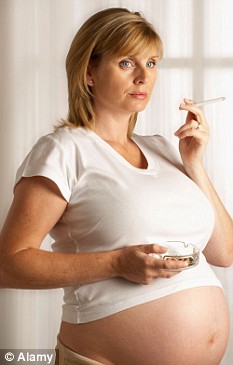 October 6, 2009 - New research published in BMJ reports that addressing the problem of smoking during pregnancy may help to reduce the socioeconomic inequalities in stillbirths and infant deaths by as much as 30 to 40 percent.
Without a doubt smoking during pregnancy has been associated with stillbirth. In addition, infant deaths and smoking rates during pregnancy vary strikingly with socioeconomic position. In order to find out more, a team of researchers began the task of measuring the effects of smoking during pregnancy and on the social inequalities gap in stillbirths and infant deaths.
They assessed the records of 529,317 live singleton births and 2,699 stillbirths delivered at 24 to 44 weeks' gestation in Scotland from 1994 to 2003. Information on smoking during the pregnancy was gathered. A deprivation score was designated using postcode data from the 2001 population census.
PAPER: Contribution of smoking during pregnancy to inequalities in stillbirth and infant death in Scotland 1994-2003: retrospective population based study using hospital maternity records, Ron Gray, clinical epidemiologist1, Sandra R Bonellie, lecturer in statistics, James Chalmers, consultant in public health medicine, Ian Greer, dean, Stephen Jarvis, emeritus professor, Jennifer J Kurinczuk, reader in perinatal epidemiology, Claire Williams, statistician, BMJ 2009;339:b3754, ABSTRACT.., Full Text...
Findings showed that the most underprivileged mothers tended to be younger. They were more likely to smoke and to give birth to preterm or low birth weight babies. In the same way, the least deprived mothers were more likely to be older, non-smokers, and less likely to give birth to preterm or low birth weight babies.
The stillbirth rate increased from 3.8 per 1,000 in the least deprived group to 5.9 per 1,000 in the most deprived group. The rate of infant deaths increased from 3.2 per 1,000 in the least deprived group to 5.4 per 1,000 in the most deprived group.
In the most deprived category, stillbirths were 56 percent more likely and infant deaths were 72 percent more likely, compared with the least deprived category.
Smoking during pregnancy accounted for 38 percent of the inequality in stillbirths and 31 percent of the inequality in infant deaths. Women in the most deprived group were three times more likely to smoke during pregnancy than were those in the least deprived group.
In closing, the authors propose tackling (convince to stop) smoking during pregnancy and also reducing infants' exposure to tobacco smoke in the postnatal environment. This will help reduce stillbirths and infant deaths in general, as well as to reduce the socioeconomic inequalities in stillbirths and infant deaths possibly by as much as 30 to 40 percent.
Nevertheless, they underline that taking action on smoking on its own is doubtfully sufficient. There is a need for other measures to improve the social circumstances, social support, and health of mothers and infants.
Reference: Stillbirths And Infant Deaths Related To Smoking During Pregnancy And Socioeconomic Inequalities by Stephanie Brunner, Medical News Today, 10/2/2009.
Some pregnancy related news briefs:
Maternal Smoking - important risk factor in the development of psychotic experiences in their children..;
England - program to pay pregnant women not to smoke seems hopeful..;
Pregnant women who quit smoking before the 15th week reduce risk of premature birth and small babies..;
Pregnant women exposed to passive smoke greater chance of child will have respiratory distress..;
Cigarette Smoking During Pregnancy Alters Maternal and Fetal Thyroid Function..;
Read more...
Wales - Smoking 'costs NHS £1m (1.6m USD) each day'..

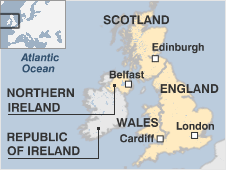
October 5, 2009 - Every year 6,000 people die in Wales as a result of smoking. New figures indicate that smoking is costing the National Health Service (NHS) in Wales more than £7m (11.128m USD) every week. (The United Kingdom is made up of England, Wales, Scotland and Northern Ireland).
A report commissioned by  Ash Wales and
  British Heart Foundation Cymru reveals that smoking related diseases cost NHS Wales an estimated £386m in 2007/08. (The native (Welsh) name for the country is Cymru, which most likely meant "compatriots" in Old Welsh.)
Smoking accounts for around 22% of adult hospital admission costs, over £235m (345.3m USD) every year, the research said. The assembly government said tackling smoking was a priority and attitudes were changing towards smoking.
The report, being presented at an international tobacco control conference in Cardiff by Prof Ceri J Phillips of Swansea University, said £43m (63.2m USD) was also spent on GP consultations. It said that nearly a quarter of the adult population in Wales are smokers and most of these started smoking as children.
With 6,000 people in Wales dying each year as a result of smoking, the report said many more would continue to die each year, or suffer chronic long-term illnesses, if these levels were sustained.
Tanya Buchanan, of Ash Wales, said: "What this report doesn't include is the huge cost to the economy of Wales, for example more than £23m (33.8m USD) from lost productivity through smoking related sickness absences and £6m (8.8m USD) from smoking related fires.
THE REPORT'S MAIN FINDINGS
Smoking cost NHS Wales an estimated £386m in 2007/08; equivalent to £129 per head and 7% of total healthcare expenditure in Wales.
£235.6m spent on hospital admissions (22% of total)
£43.1m spent on GP consultations (13%)
£21.5m spent on outpatient attendances (6%)
£6.2m spent on practice nurse consultations (12%)
£79.3m spent on prescriptions (14%)
Source: Ash Wales and British Heart Foundation Cymru
"Not to mention the emotional cost of family members seeing their loved ones suffer daily from smoking related illnesses."
Ms Buchanan said that the report should not be used to demonise smokers but to prompt a move towards a more proactive health service, promoting and protecting people's health throughout their lives. "We urge the Welsh Assembly Government to act now and implement a comprehensive, and fully funded, tobacco control strategy for Wales, in line with other parts of the UK," she said.
Delyth Lloyd, public affairs manager for British Heart Foundation Cymru, added: "The findings of this report should be of real concern to all who are involved in public health policy and decision making in Wales."
A Welsh Assembly Government spokesman said it had made tackling smoking a priority and there were encouraging signs that attitudes towards smoking in Wales were changing. "Research we have commissioned shows that the smoking ban, introduced in April 2007, has had a significant impact on smoking habits, with people reporting that they're smoking less and thinking more about quitting," said the spokesman.
Schemes such as Smokebugs and Assist, which aim to prevent young people trying tobacco, were also starting to pay off, he said.
"The number of 15 to 16-year-old boys smoking has dropped from 21% in 1998 to 12% in 2006, while smoking among girls in that age group has fallen from 29% in 1998 to 23% in 2006."
Reference: Smoking 'costs NHS £1m each day', BBC, 10/5/2009.
Click on image of the Wales Coat of Arms to enlarge..
Read more...
New Jersey assemblywoman wants to limit electronic (e) cigarettes..
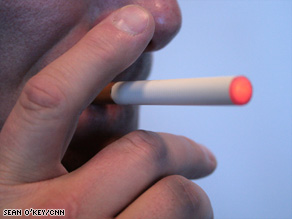 October 6, 2009 - New Jersey State Assemblywoman Connie Wagner (D-Bergen) says she wants to limit electronic cigarettes like the real thing.
State Assemblywoman Connie Wagner (D-Begen) said she is concerned that e-cigarettes are being marketed to children because they offer flavors like chocolate, banana and strawberry.
The Democrat from Paramus intends to introduce a bill in the Legislature subjecting them to the same restrictions as pipes and regular cigarettes.
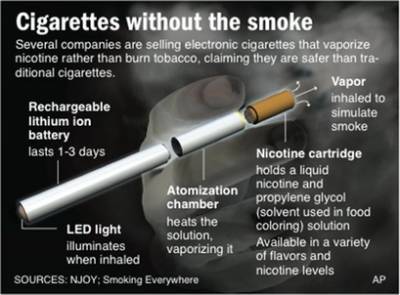
E-cigarettes look like the real thing but don't contain tobacco. They employ a metal tube with a battery that heats up a nicotine solution. Users breathe in the resulting vapor.
Wagner's bill would prohibit their use in public places and workplaces.
The FDA “has already declared that electronic cigarettes are subject to FDA approval as a drug or medical device, much like nicotine patches, gum and inhalers — and therefore they are illegal until they are cleared,” and has stated that electronic cigarettes are “unapproved new drugs and/or misbranded drugs or devices,” and appear “to be a combination drug-device product that requires pre-approval, registration and listing with FDA.” ("Smoking Everywhere", an electronic cigarettes retailer sued..)
Reference: N.J. assemblywoman seeks sale restrictions for e-cigarettes, by The Associated Press, 10/6/2009.
Read more...
Australia - heavy tobacco use killing Aborigines..

 October 6, 2009 - Smoking is a "scourge" that is killing thousands of indigenous Australians every year, Aboriginal and Torres Strait Islander Social Justice Commissioner Tom Calma says. (The term "Aboriginal" has traditionally been applied to indigenous inhabitants (original inhabitants of the Australian continent and nearby islands),of mainland Australia, Tasmania, and some of the other adjacent islands.)
Dr David Thomas from the Darwin-based Menzies School of Health Research has stated smoking is the single biggest factor responsible for the gap between the health of Indigenous and non-Indigenous people.
He's called on governments across the country to fund programs aimed at cutting Aboriginal smoking rates. Currently, around 50 percent of indigenous people smoke, compared with just 19 percent of all Australians.
Mr Calma, who'll address an Oceania tobacco control conference in Darwin on Wednesday, says smoking kills one in five indigenous people. Calma: "Indigenous people are more than one-and-a-half times more likely to die from lung cancer than non-indigenous people. Similarly, the much higher death rates from heart disease and other chronic diseases in the indigenous community are in a large part attributable to smoking."
Governments and policy makers should "implement a comprehensive, longer-term national Aboriginal and Torres Strait Islander tobacco control strategy that brings together the various programs and research to drastically reduce smoking rates as soon as possible", Mr Calma said.
The commissioner says he believes mainstream anti-smoking programs need to be made more accessible to indigenous people and tailored to their needs.
The Heart Foundation on Tuesday unveiled its plan to curb smoking among Aboriginal Australians. It's called for specialist tobacco workers to be sent into indigenous communities. The foundation's tobacco spokesman, Maurice Swanson, said much of the difference in life expectancy between indigenous and non-indigenous Australians was due to high rates of cardiovascular and other diseases caused by tobacco.
Mr Calma says smoking is one of the most important health issues facing indigenous people. "If we are to beat this scourge, indigenous people themselves must start to own this issue as a major problem within communities."
A statistical overview of Aboriginal and Torres Strait Islander peoples in Australia..
Reference: Smoking killing Aborigines, says Calma,
Australian Associated Press (AAP), 10/5/2009.
Related news brief: Australia-Northern Territory Medical expert against health care workers that smoke...
Click on images to enlarge, right image Aboriginal and Torres Strait Islander Social Justice Commissioner Tom Calma..
Read more...

Canadian bill to ban flavored tobacco products worries Kentucky burley growers..
 October 6, 2009 - An hour and a half after hearing testimony, a Canadian Senate panel in Ottawa last week approved an anti-smoking bill that Kentucky burley tobacco growers fear may be bad for their business.
The bill, known as the Bill C-32 - Cracking Down on Tobacco Marketing Aimed at Youth Act, passed the Senate Social Affairs, Science and Technology Committee on a voice vote and without amendments. It now awaits final action in the Canadian Senate.
Canada’s major health organizations are calling on the Senate of Canada to give priority to the passage of bill. The legislation would stop tobacco companies from using fruit, candy and other flavourings in cigarettes and cigarillos and would ban tobacco ads in publications that can be viewed by youth. C-32 was introduced in the House of Commons by Minister of Health Leona Aglukkaq to implement a commitment made by Prime Minister Stephen Harper. (Canada - federal government introduces legislation to ban flavored tobacco products...
Burley growers are worried that the bill will end the export of American burley to Canada.
We reported on June 17, 2009 that Kentucky tobacco growers contend the Canadian legislation has been written so broadly it could also bar American-blend cigarettes that include burley tobacco. (Canada - Bill C-32 to amend Tobacco Products Control Act..)
Burley is one of three kinds of tobacco mixed together with additives for blended tobacco. Some Kentucky lawmakers, led by Rep. Ed Whitfield, R-1st District, have written to American and Canadian officials that because the pending bill in the Canadian Parliament prohibits many of the additives used in blended tobacco, the measure effectively bans burley.
With 85 percent of U.S. burley exported, the implications of the Canadian action and possible similar actions by other nations are enormous, the Kentuckians warned.
But the Canadian Senate panel did not change any provisions of the bill, despite warnings that the legislation could close the Rothmans, Benson & Hedges cigarette plant in Quebec, where blended tobacco is used.
Debra Steger, an international trade law expert with Rothmans, said that the blended cigarettes in question don’t have a flavored taste like chocolate or fruit — the real target of the legislation. Canada should focus on banning cigarettes that have flavors, not on additives, she said.
But Cynthia Callard, executive director of Physicians for a Smoke-Free Canada, told the Senate committee that the regulations should treat all tobacco products equally and not single out American-style blended cigarettes for special regulation.
An official with Health Canada, the federal government department that deals with health laws, said the new anti-smoking bill would not affect the blended cigarettes that are made in Quebec and then exported.
Reference: Canadian bill worries Kentucky tobacco growers, James R. Carroll (jcarroll@courier-journal.com), Louisville Courier-Journal, 10/3/2009.
Related news briefs: Canadian Tobacco Use Monitoring Survey - 2008..; Canadian House of Commons passes bill to prevent production of mini-cigars or cigarillos..; Canada - Bill C-32 to amend Tobacco Products Control Act..; Canada - federal government introduces legislation to ban flavored tobacco products..; Canada - little cigar/cigarillos smoking declined from 2007 - 2008..; Canadian Cancer Society calls for federal ban on flavored cigars..; Ontario to outlaw candy flavored cigars..; Ontario poised to ban flavored cigarillos..; Canada: a bill introduced to snuff out drive to recruit young smokers..; Still sucking our youngsters in...
Read more...
Cuba - slashes tobacco land, demand for cigars down..
 October 6, 2009 - Cash-short Cuba is slashing the amount of land devoted to growing its famous tobacco by more than 30 percent as the global recession and worldwide spread of smoking bans bite into sales of the country's prized cigars.
Demand for Cuba's cigars fell 3 percent in 2008 and earlier was reported down 15 percent in 2009 because of the recession and the smoking bans adopted in a growing number of places as a public health measure.
Cuba's National Statistics Office, in a report posted on its web page (www.one.cu), said land to be planted with tobacco for next year's crop had dropped to 49,000 acres, down from 70,000 acres, which was in turn less than 2008.
It said the coming crop was expected to be 22,500 tons, down from a planned 26,800 tons. The office blamed the drop on "financial restrictions that made it impossible to count on the necessary resources."
Cuba's prized cigar brands, including Cohiba, Montecristo, Trinidad and Partagas, dominate the world's premium market with 70 percent of sales.
That jealously guarded market share excludes the United States, however, where Cuba's cigars are banned under the 47-year-old U.S. trade embargo against the communist-led island.
A representative of the exclusive distributor of Cuban cigars, Habanos S.A., a joint venture between Cuba and British tobacco giant Imperial Tobacco Group Plc, said the company had no comment on the statistics office report.
Some 200,000 private farmers and their families depend on growing and curing the precious leaf under contract with the government, and tens of thousands of workers earn their living hand rolling the crop into the famous "Habanos" or "Puros" for export.
Tobacco seedlings are currently being readied for planting from November through January, with harvesting of the quick growing leaf beginning 45 days later. After that a year-long process of drying and curing begins.
Cuba's dozens of cigar rolling factories have operated at well below capacity this year.
Reference: Cuba slashes tobacco acreage amid flagging demand by Marc Frank (Editing by Tom Brown and Padraic Cassidy), Reuters, 10/5/2009.
Related news briefs: Cuba Seeks World Heritage Designation for Cigar-Factory Readers..;
Tampa, FL - Hav-A-Tampa Cigar plant will close at the end of August..;
Habanos - after hurricanes can survive using tobacco reserves..;
Imperial Tobacco Group to Enhance Joint Venture Altadis Had With Habanos Cigars..;
Cuban cigar sales rose 7 percent to $402 million in 2007..;
Altadis (Alliance Tobacco Distributors) born from the merger of Spain's Tabacalera and France's Seita SA (F.STA) state tobacco monopolies...
Read more...
Malaysia - excise duty increased on tobacco - another increase could be coming this month..
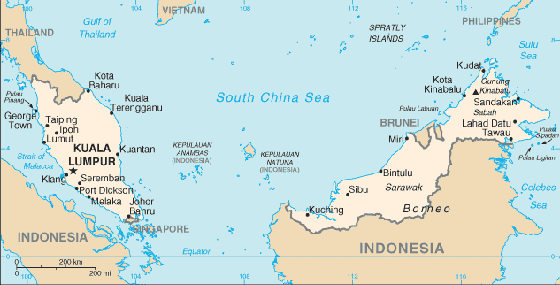
 October 6, 2009 - PETALING JAYA: The Government has increased the excise duty on tobacco by 1 sen, or 5.6% per stick, effective last Thursday, though there is no official announcement by the Finance Ministry or Customs Department. (Malaysian ringgit (the Malaysian dollar) is the currency of Malaysia - it is divided into 100 sen. 1 ringlet = 0.2924 USD) (Petaling Jaya commonly called "PJ" by locals) is a Malaysian city originally developed as a satellite township for Kuala Lumpur.) Map of Malaysia..
The 1 sen per stick duty hike will raise the excise duty per stick to 19 sen. The move caught the industry by surprise as there had been no indication of a tax increase before Budget 2010, which is to be tabled on Oct 23.
Analysts are now expecting cigarette prices to be raised by 1 sen to 2 sen per stick sometime this week. Most industry players are still expecting an increase in taxes for tobacco come Oct 23 as the Government seeks to reduce its deficit.
Terence Wong ... ‘This is the third time the Government has increased excise duty outside the budget period.’ The three main tobacco players in Malaysia are British American Tobacco Malaysia Bhd (BAT), JT International Bhd (JTI) and Philip Morris (M) Sdn Bhd.
BAT commands some 70% of the legal cigarette market. When contacted, JTI declined comment. As at press time, its cigarette prices have yet to be raised. BAT, however said it would be raising cigarette prices by 20 sen to 30 sen, effective yesterday.
“Although this is the third time the Government has raised tobacco excise duty outside the budget period, the timing caught us by surprise as we had expected an upward revision to be made only during the Budget 2010 announcement,” said CIMB Research head Terence Wong.
Wong is bracing for another tobacco duty hike this month. Thus, he expects a further 1 sen to 2 sen per stick increase in the upcoming budget, which will bring total excise duty hike for the year to 2 sen to 3 sen per stick.
ECM Libra too felt that a duty hike at this juncture, although unconfirmed, was rather surprising as the tabling of Budget 2010 was only weeks away.
“The small hike suggests that the Government will likely impose another duty hike when Budget 2010 is announced, as it is well known that the Government needs tax revenues to shore up a widening deficit as a result of the fiscal stimulus packages,” it said.
The research house too opined [to state as an opinion] that the Government may impose another duty hike of between 1 sen and 3 sen per stick, thus bringing total duty hike to between 2 sen and 4 sen per stick. In the past few years, the Government has typically raised the excise duty by 3 sen per stick each round.
In the meantime, tobacco players are expected to respond by adjusting their pricing to protect profits. Tobacco players have historically tempered the negative impact of lower industry demand on profits via higher selling prices.
They have traditionally raised prices higher than the quantum of the duty hike to give room for promotional activities needed to cushion the volume drop.
ECM Libra does not expect earnings of tobacco companies to be adversely impacted, unless the quantum of duty hike is beyond its expectations.
Wong forecast a 10% contraction in total industry volume (TIV) from 15.4 billion sticks in 2008 to about 13.8 billion sticks this year. TIV in the first half of 2009 shrank by close to 12% compared with a year ago.
The tobacco sector remained a defensive play and was unlikely to track the market’s upside. “Strong cashflows and attractive yields should provide downside support for these stocks,” Wong said.
References: Government raises excise duty on tobacco by 1 sen, or 5.6% per stick effective Oct 1 - Tobacco industry caught by surprise by YEOW POOI LING and TEE LIN SAY, the Star, 10/6/2009.
Malaysia - related news briefs:
Malaysia - smoking limits your quality of life..;
Malaysia - smoking civil servants in Penang to receive free nicotine treatment..;
Malaysia - illicit cigarettes, BAT wants government to slow excise duty increases..;
Peninsular Malaysia - one of three cigarette packs is either contraband or fake..;
Komtar, Penang, Malaysia smoking ban strictly enforced..;
Malaysia student forced to smoke 40 cigarettes in two hours..
Malaysia - PSD and Cuepacs are at odds over the no-smoking rule at government departments and agencies..;
Malaysia: Are tobacco control measures working? - WHO thinks so...;
Malaysia - slowdown in cigarette consumption..;
Malaysia - January 1, 2009 pictorial cigarette warnings..;
Malaysia to hike cigarette prices..;
Malaysia - 25% of all cigarettes sales are illegal...Peninsular Malaysia - one of three cigarette packs is either contraband or fake..;
Komtar, Penang, Malaysia smoking ban strictly enforced..;
Malaysia student forced to smoke 40 cigarettes in two hours..
Malaysia - PSD and Cuepacs are at odds over the no-smoking rule at government departments and agencies..;
Malaysia: Are tobacco control measures working? - WHO thinks so...;
Malaysia - slowdown in cigarette consumption..;
Malaysia - January 1, 2009 pictorial cigarette warnings..;
Malaysia to hike cigarette prices..;
Malaysia - 25% of all cigarettes sales are illegal...
Read more...
Ontario Campaign for Action on Tobacco (OCAT) - news release..

October 6, 2009 - Ontario Campaign for Action on Tobacco (OCAT) September 23, 32009 News Release..
Read more...
Quebec - intends to sue cigarette makers to recoup health costs..
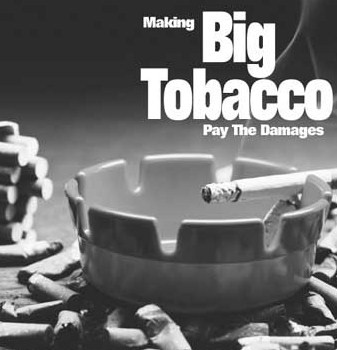 October 6, 2009 - MONTREAL — Quebec Health Minister Yves Bolduc says the province intends to sue cigarette manufacturers to recoup health costs related to smoking. The basis of the suit is that cigarette makers did not adequately warn people about the effects that smoking would have on their health.
Bolduc says the cigarette companies had an ample number of studies attesting to the dangers of smoking. Smoking costs the health system hundreds of millions of dollars every year.
The minister did not put a dollar figure on the suit, although he said the amount would be in the billions. The case is now being studied by the justice minister and there is no indication when it would be filed with a court.
The government passed a law in June allowing such a lawsuit, following similar efforts in Ontario, British Columbia and New Brunswick.
Quebec would become the fourth of Canada’s 10 provinces to sue the country’s tobacco manufacturers, which are units of foreign tobacco makers, including Philip Morris International Inc, British American Tobacco and Japan Tobacco Inc.
References: Quebec health minister says province to sue cigarette makers for health costs, The Canadian Press, 10/5/2009; Quebec plans suit vs. tobacco companies, Reuters, 9/30/2009.
Read more...
Bulgaria and others - smoking ban, increased cigarette taxes, smuggling..
 October 5, 2009 - Bulgaria, which has the second-highest rate of smoking in the European Union, is said to be set to make smokers cough up about 30 percent more for cigarettes in 2010 – bringing forward by a year increased excises to EU levels in a move designed to help state coffers through increased revenue and decreased health costs. (Bulgaria - Cigarette excise duties will be increased next year..)
Finance Minister Simeon Dyankov has confirmed that excises on tobacco products will go up, although with the 2010 Budget not yet finalised, there is no official confirmation yet of the precise price hikes.
Media reports of the planned move brought an outcry from tobacco interests who said that it would worsen Bulgaria’s already considerable cigarette smuggling problem and drive the country’s tobacco products giant Bulgartabak to bankruptcy.
Bulgartabak told Bulgarian daily Dnevnik that the reported plan to increase the excise of cigarettes to 76 euro a 1000 pieces was a surprise because "until a few days ago we were discussing an excise duty of 64 euro".
Bulgaria has a chequered [checkered] history with moving against smoking. A 2005 limitation of smoking in public places such as restaurants and cafes has proved largely ineffectual, and there is public skepticism about plans to impose an outright ban on puffing in public places in June 2010.
If the reported excise increase takes effect, the price of Victory Light, one of the most popular brands, would increase from 3.40 leva (2.55 USD) a packet to 4.50 leva (3.37 USD), while Marlboro would go from 3.90 leva (2.92 USD) to five leva (3.75 USD).
While smoking bans in Bulgaria have been largely ignored (even on Government premises – the handover of Cabinet offices in July 2009 saw one set of incoming and outgoing Cabinet ministers sharing a smoke in front of television cameras) previous price increases have seen sales drop. With pay in Bulgaria low by EU standards, the smokers’ market is price-sensitive.
Soon after reports of the planned excise increase, one television station in Bulgaria illustrated to smokers how much money they were burning up every year through their habit.
The year 2009 has seen several moves against smoking in Central and Eastern Europe, and not only in EU countries – where European Health Commissioner Androulla Vassilou has called for uniform laws against smoking in public places and workplaces throughout the 27-member bloc.
In July 2009, Greece banned smoking indoors in all public or private areas used as workplaces, including buses and taxis, and the same month, Turkey – not an EU member – caused an outcry when in the same month it imposed a comprehensive ban on smoking in bars, restaurants and cafes.
A few months earlier, non-EU-member Norway outlawed public displays of tobacco products, while in Switzerland, where smoking legislation is dealt with at canton level, a September referendum led Geneva to reimpose a ban on smoking in public places.
Bulgaria’s northern neighbour and fellow EU member Romania has taken the route of increased excises – twice in 2009 – on the way to matching EU levels in 2010. Lithuania also has twice raised excises in 2009, pushing cigarette prices up by close to 50 per cent in a year
A sole reversal of the trend was in Croatia, which made headlines around the world by backing down in September on an earlier outright ban, amending the rule to allow smoking in a fifth of the area of a restaurant or cafe. (Croatia - backs down (loosens) smoking ban..)
One EU state that has bucked the trend so far is the Czech Republic, where it is up to restaurants and pubs to use their own discretion whether to declare themselves smoking or non-smoking. (Czech Republic - pubs and restaurants allow smoking or Do NOT allow smoking..)
In several parts of Europe, mainstream manufacturers of tobacco are facing problems. In Latvia, British American Tobacco shut down its Riga production plant at the end of September, blaming increased excises that had pushed business to the black market – an echo of the line taken by the industry in Bulgaria. However, reports said that the plant had been hard-hit by a reduction in demand for its products for export.
Reference: Burning moneyThe Sofia Echo, 10/2/2009.
Bulgaria related news briefs:
Bulgaria - Cigarette excise duties will be increased next year..;
Bulgaria - cigarette contraband, government loses BGN 920M yearly..;
Bulgaria - one third of the tobacco products sold are illicit..;
Bulgaria - new government to speed-up Bulgartabac sale..;
Bulgaria - Fake Victory Light cigarettes..;
Bulgaria's tobacco monopoly may be up for sale..;
Bulgarian lawmakers vote to ban smoking in all publc places from June 2010..; Bulgarian tobacco company Sofia-BT exports increase by 541 percent..;
Does Russia own Bulgaria's tobacco monopoly, Bulgartabac..;
EU percent of adults smokers -highest Greece 1 , Bulgaria 2.. - lowest Slovenia..;
Bulgaria - 1 in 3 youths smoke / half of pregnant women smoke..;
PMI training Bulgarian custom officers to stop cigarette smuggling..;
Philip Morris International (PMI) was truly happy they had been back in the Bulgarian cigarette market for a year and had already had 6.8% of market..;
WHO FCTC Protocol to Prevent Illicit Trade in Tobacco Products Won't Be Completed Until End of 2010..;
WHO Report on the Global Tobacco Epidemic 2008..;
Bulgaria Enters 2009 with Cigarette Prices Hike...
Read more...
Ireland - Philip Morris and retailer to file lawsuit to challenge tobacco display ban..
Possible..
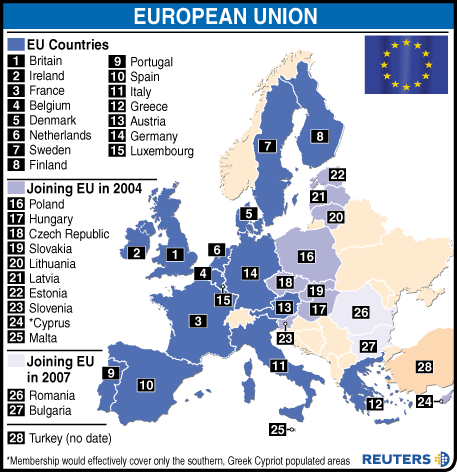
 October 5, 2009 - Philip Morris Limited (PML), Philip Morris Products S.A. (PMPSA) and Maurice Timony, an independent retailer from Donegal, have announced that they will file a joint lawsuit seeking to overturn the ban on display of tobacco products at retail stores in Ireland.
On July 1, 2009 anti-smoker legislation implemented was introduced on the advertising and display of tobacco products in retail shops. At the same time, under new provisions of the Public Health (Tobacco) Acts 2002 and 2004, tobacco retailers will have to sign up to a retail register and tighter controls will be imposed on the location and operation of tobacco vending machines. (Ireland - Office of Tobacco Control 2008 annual report - Positive..)The lawsuit will be filed before the High Court in Dublin on October 6, 2009.
Ireland - tobacco vendors must register by October 1, 2009..
Plaintiffs will be challenging the tobacco display ban on the grounds that it
severely restricts their ability to provide trade and services thus violating
Irish constitutional law and EU law. The tobacco display ban came into effect in
Ireland on July 1, 2009. Outside Ireland, a display ban exists in Iceland as
well as some provinces of Canada.
"We know from our experience in Iceland that a total ban on tobacco display does
not work, is costly to implement and ineffective at reducing smoking levels,"
said Anne Edwards, spokesperson for PML. "We support strict tobacco regulation,
but this legislation just serves to hand the tobacco business over to smugglers
and counterfeiters. Ireland already has one of the worst illegal cigarette
problems in the EU, and this ban is making it worse. No one likes to litigate,
but we have unfortunately arrived at a point where we see no alternative. By
taking this action, we ask the Irish government, `what type of industry do you
want?` One that is legitimate, and supports effective regulation, or one that is
run by criminal gangs selling cheap, illegal cigarettes on street corners?`"
Commenting on his decision to challenge the ban, Mr. Maurice Timony, (Timony News is a retail outlet and licensed tobacconist in Donegal, Ireland owned by Maurice Timony) said, "I am a licensed retailer who pays a license fee to the government to sell tobacco products. Currently, the country is swamped in legislation that is making life very difficult for compliant retailers like me. The ban on display of cigarettes is just one example of a piece of over regulation that has not been well thought through and has negatively affected my business. As a compliant, law-abiding retailer I have a responsibility to my employees to make sure that I can continue to employ them going forward. Simply put, `enough is enough.` The display ban threatens my business and I have therefore decided to take a stand against it."
The plaintiffs are not seeking changes to the law prohibiting smoking in public
places or that prohibit tobacco advertising. The goal of the lawsuit is to allow
licensed tobacconists and retailers to display tobacco products in their stores.
Today, Philip Morris International (PMI) is launching a website,
www.productdisplayban.com in order to provide factual information on the prohibition of the display of tobacco products at point of sale and describe its effects on public health, adult smokers, retailers, tobacco manufacturers and enforcement agencies.
Display ban in Ireland: The ban on the display of tobacco products at the point of sale entered into force on July 1, 2009. The ban means that no tobacco products can be displayed in shops and therefore cannot be seen by customers.
Illicit trade in Ireland: A 2008 survey commissioned by Philip Morris showed that 29.3% of cigarettes found in Ireland were non-domestic, the highest level in the EU.
Experience from Canada: In 2008 it is estimated about 13 billion illegal cigarettes were sold in Canada causing a loss to governments of over $2 billion in tax revenues. As in other countries illegal cigarettes do not comply with local legislation and are sold cheaply to adults and children alike. Illegal tobacco sales support organized crime networks and their presence in the market causes legitimate retailers to lose business. Source: A national study for the Canadian Tobacco Manufacturers` Council conducted by GfK.
Experience from Iceland: A study conducted at the request of Philip Morris International by LECG, a leading finance and economic consultancy, shows that the point of sale display ban in Iceland has had no statistically significant effect on reducing smoking prevalence.
Reference: Philip Morris Limited and Independent Retailer Announce Joint Lawsuit Challenging Irish Tobacco Display Ban, Reuters, 10/5/2009.
Some Ireland related news briefs:
Ireland - Prof Clancy not enough spent on prevention..;
Ireland - tobacco vendors must register by October 1, 2009..;
Children - exposed to cigarette smoke in cars have greater chance of respiratory distress..;
Ireland - tobacco companies not helping small retailers - display ban..;
Tobacco control initiatives starting Wednesday, July 1, 2009..;
Ireland - Office of Tobacco Control 2008 annual report - Positive..;
Ireland - modest penalty for cigarette smuggling..;
Ireland - to amend tobacco legislation to to include pictoral warnings..;
Ireland - as of July 1, 2009 no advertising or display of tobacco products will be permitted in retail outlets..;
Ireland - cigarette tax abandoned over smuggling fears..;
Ireland - may raise tax on cigarettes as part of emergency budget..;
Ireland - ban smoking in cars when kids are present..;
Ireland - further provisions of the Public Health (Tobacco) Acts 2002 and 2004 are to be commenced on 1 July 2009.;
Ireland - 80% of smokers want a ban on tobacco advertising in shops to stop youngsters starting the habit..;
Ireland to ban tobacco displays..;
Ireland - reduction in admissions for acute coronary syndrome...
Read more...
For our children ban all flavored tobacco products..

October 5, 2009 - Our children are the future, as a result our highest priority has to be to keep children from beginning to use tobacco products. As an initial step the Food and Drug Administration (FDA) banned the sale of candy-, fruit- and clove-flavored cigarettes on September 22, 2009 - three months after the President Barack Obama signed into law the Family Smoking Prevention and Tobacco Control Act.
FDA commissioner Margaret A. Hamburg: “These flavored cigarettes are a gateway for many children and young adults to become regular smokers.” The Washington Post said FDA officials hope the ban will “cut down on the number of children and young adults who pick up the smoking habit.” Lawrence Deyton, director of the FDA’s Center for Tobacco, said, “Children are three times as likely as adults to smoke a flavored cigarette.” An assistant secretary for health, Howard Koh, called tobacco addiction a “public health catastrophe,” and Koh put the cigarette industry on notice that this is just the beginning of a “new chapter in public health efforts at tobacco control.”
This time we must be honest with each other. As pointed out by Derrick Jackson - big tobacco really did not mind taking these flavored cigarettes of the market. These cigarettes were not even one percent of the market. Menthol, the most popular flavored cigarette and the one preferred by the majority of black smokers, was allowed to stay on the market. The three biggest U.S. tobacco companies say they do not produce any flavored cigarettes other than menthol varieties. "We do not believe any of the cigarettes that we manufacture have a characterizing flavor that is banned by this provision," David Howard, a spokesman for R.J. Reynolds Tobacco Co., the second-largest producer, said. Philip Morris USA, the maker of the top-selling Marlboro brand, sells no cigarettes covered by the ban, said David Sylvia, an Altria spokesman. Nor does third-biggest Lorillard Inc., said Hannah Sloane, a company spokeswoman.
Click to enlarge:
 Terry F. Pechacek, associate director for science in the Office on Smoking and Health at the U.S. Centers for Disease Control and Prevention: “We are continuing to find that Marlboro, Newport and Camel brands, among the most heavily advertised brands, continue to be overwhelmingly the preferred brands of cigarettes smoked by middle school and high-school students.”
Menthol, by masking the harsh taste of tobacco, makes cigarettes easier to get started with. Jack Reid (1993) from Lorillard (at the 47th Tobacco Chemist's Research Conference) stated that the use of mentholated products was initially promoted to offer an alternative to the heavy, harsh-tasting, hot and many times unpleasant experience of some non-mentholated cigarettes. The "cool sensation" experienced at low concentrations of menthol have been exploited by the tobacco industry touting menthol cigarettes as "refreshing," "cool" and possessing an aura of "springtime."
A Harvard study from the School of Public Health claims that the tobacco industry in recent years has manipulated menthol levels in cigarettes to hook youngsters and maintain loyalty among smoking adults. (Menthol Dose Manipulated, Study Says by Stephanie Saul, The New York Times, 7/17/2008)
Despite the decline of overall cigarette sales, the sale of menthol cigarettes has been stable in recent years. Menthol cigarettes currently make up about 30 percent of the $87 billion US cigarette market. Menthol market share..
Under the bill to regulate tobacco, the FDA must study the medical effects and marketing of menthol and its impact on blacks, Hispanics and other groups and report within 18 months. In theory, the FDA could then move to ban menthol cigarettes but some anti-smoking activists are skeptical the agency will do so. Marty Orlowsky, Lorillard's Director, Chairman, President and Chief Executive Officer stated that study results will be announced sometime toward the end of 2010 (Barclays Capital Back-To-School Consumer Conference, Sept. 10, 2009). Newport, gives Lorillard 94% of its revenue, 92% of its volumes, 34% share of all menthol cigarette sales in the US, as well as an overall domestic tobacco market share of 10%.
If we agree our children are our future, and we want to protect them from a life of tobacco addictions then mentholated tobacco products have to go. In fact - all flavored tobacco products should be removed.
Reference: Let’s ban all flavors of cigarettes by Derrick Z. Jackson, Boston Globe, 9/26/2009; Companies Use Menthol To Attract Young Smokers, RedOrbit, 7/17/2008; FDA bans flavored cigarettes by Catherine Larkin and Chris Burritt, Bloomberg News - The Philadelphia Inquirer, 9/24/2009, A history of mentholated cigarettes "This Spud's For You," Highlights of Current Rsearch on Tobacco and Tobacco Chemistry, JR Reid, Recent Advances in Tobacco Science 19: 71-84, 1993; Ashes to Ashes - America's Hundred-Year Cigarette War the Public Health and Unbalanced Triumph of Philip Morris, R. Kluger, Alfred A. Knopf, New York, 1996.
Read more...

Bavaria - court rules, looser implementation of smoking ban constitutional..
 October 4, 2009 - Back on July we reported that smokers in Bavaria rejoiced on Wednesday, July 15th as the state’s parliament loosened the regulations on a smoking ban instituted 18 months before. On January 1, 2008 the eight German states marked the new year by introducing smoking bans in public places including restaurants and bars. (Bavaria - state's parliament loosened regulation on smoking ban..)
Germany’s high court in Karlsruhe on Thursday, October 1st ruled that Bavaria’s looser implementation of its smoking ban is constitutional. The Federal Constitutional Court’s decision stated that changes to the state's ban, based on an appeal by a restaurant owner, can legally remain in place.
A state parliamentary decision went into effect on August 1, changing the general ban to allow smokers in pubs smaller than 75 square metres, in addition to restaurants and beer tents that create smoking sections in side rooms. Children are not allowed in smoking areas. The state Health Ministry will now also allow smoking at establishments that can insure limited second-hand smoke with special ventilations systems.
Smoking in public areas is still strictly forbidden, according to the court.
The legislation has been roundly criticised by anti-smoking advocates, but many voters in the state were in favour of dropping the ban. A loophole in the ban created a wave of members-only smoking clubs, but the new law no longer allows these.
While smoking was banned in bars and restaurants in most German states starting January 1, 2008, the restrictions have been widely flouted. For example, many bars in Berlin set ashtrays on the tables after dark. And legal exceptions in many states have also weakened the smoking ban.
Six months after the ban began, courts ruled against the restrictions in Berlin and Baden-Württemberg, allowing smoking in bars smaller than 75 square metres (807 square feet) where no food is served.
Many German smokers also responded by starting grassroots groups and petitions to roll back the ban.
Reference: High court upholds Bavaria's porous smoking ban, The Local, 10/1/2009.
Related news brief: Germany - beer sales are down smoking ban maybe partial blame..; Bavaria - state's parliament loosened regulation on smoking ban..; WHO Report on the Global Tobacco Epidemic 2008..; German sales rise in Germany amid moves to impose smoking ban..
Read more...
Finland - government proposing ban on smoking when kids present and other tobacco control measures..
 October 4, 2009 - We reported on September 21st the Finnish regional daily Etelä-Suomen Sanomat quoted its sources as saying Tuesday, September 15th that the government would propose banning smoking in cars carrying children, adding a bill would be handed to Parliament within a fortnight [14 days]. (Finland may ban smoking in cars carrying children..)
Now on Thursday, October 1st (approximately a fortnight) the Finnish government unveiled a bill to ban smoking in cars carrying children as well as in places frequented by children. The government proposed a number of amendments in the Act on Measures to Restrict Tobacco Smoking, including penalties for selling or giving tobacco to children and a ban on the import and possession of tobacco by children.
Provided Parliament passes the bill into law, retailers will have two years to stop displaying tobacco products, with restrictions in the number of smoking hotel rooms, also after a two-year transition period. Tobacco vending machines would be banned within four years.
The changes would enter into force next spring.
Reference: Finland to ban smoking in cars carrying children, Helsinki Times, 10/10/2009
Finland related news briefs:
Finland may ban smoking in cars carrying children..;
Finland - Court of Appeals Hears Cigarette Liability Case, Decision Spring 2010..;
Finland banning shops from displaying cigarettes..;
Finland - proposal to ban tobacco display, total ban on SNUS..;
European Health Commissioner reprimands Astrid Thors for snus liberation campaign..;
Aland Islands Dispute Over Sale of SNUS On Board Ships Threatens Finland's Ratification of the EU's Treaty of Lisbon (The Reform Treaty)..;
Finnish Ferry Goes Swedish Over Snus Ban.. and
EU Takes Finland to Court Again For NOT Banning the Use of Oral Tobacco..
Read more...
US - National Breast Cancer Awareness Month, what will Philip Morris do this time..
 October 4, 2009 - October is National Breast Cancer Awareness Month. Last year to demonstrate they're good corporate citizens Philip Morris started marketing Virginia Slims with a slender "purse pack" in the same color of soft pink associated with the cancer campaign. Even Campaign for Tobacco-Free Kids who partnered with Altria (parent of Philip Morris Tobacco, Inc.) to write the tobacco regulation bill condemned Philip Morris for targeting women and girls.
Anti-smoking organizations (American Cancer Society Action Network, the American Heart Association, the American Lung Association, the American Medical Association and the Campaign for Tobacco-Free Kids) registered their protests over Philip Morris USA’s plans to introduce a new Virginia Slims cigarette product with heightened appeal for young women. (STOP launch of PM's Virginia Slim "Super Slim" cigarettes:..)
What do they have planned for this time??
Here's one: B1G1Free - Black&Mild Cigars.. Altria's Middleton Black & Mild Cigars. Black & Mild, the top selling cigar package in the U.S. is very popular with young Americans. Black & Mild is the most popular brand of cigars for smokers 12 and older. Nearly a quarter of 18- to 24-year-old blacks in the Baltimore smoke these cigars. Flavors include: Mild, Apple, Mild FT Filter Tip, Mild Cherry-Vanilla, Cream, Vanilla and Wine.
Click on image to enlarge..

Read more...
India - one year later, most states yet to implement public smoiking ban..
 October 4, 2009 - On Thursday October 2, 2008 the Indian Health Ministry will put in effect a countrywide ban on smoking in public places. Those caught violating the rule may be fined $5 - a sizeable sum in a country where the per capita income is less than $1,000 a year. (India - Heavy Fines If You Smoke In Public Places..)
A year since the ban on smoking most states are yet to implement it, in both letter and spirit. India's ban on smoking in public places is yet to take off nationally. Only 13 states have started an all out campaign to punish those found smoking in public. (India is a federal union of states comprising twenty-eight states and seven union territories.)
Delhi leads the list of best performing states having challaned (official receipt of payment) 11,362 people and having collected Rs 10.7 lakh (lakh=100,000)in fines. Tamil Nadu fined 10,979 people found smoking in public places and collected Rs 12.63 lakh. In Gujarat, challaning (official receipt of payment) was started from November across all districts. Till now, the state has collected Rs 84,090 in fines.
Chandigarh recorded 1,540 challans and till May this year, had collected Rs 3 lakh. Karnataka till April punished 2,465 people and collected Rs 1.15 lakh while Andhra Pradesh collected Rs 1.4 lakh. Goa challaned 250 smokers and Mizoram 1,173 smokers. Uttar Pradesh collected Rs 3,970 as fine from violators, Jharkhand Rs 9,000 and Punjab Rs 35,000. Kerala has challaned 1,200 smokers while Rajasthan has punished nine violators.
According to the law, those caught smoking in public places -- hospitals, amusement centres, restaurants, courts, educational institutions, libraries, public conveyances, railway stations, workplaces, shopping malls, cinema halls, discos, coffee houses, pubs and restaurants would be fined Rs 200 (4.19903 USD).
"Repeated reminders to many states have fallen on deaf ears. They are yet to start challaning violators, even a year after the law was imposed. Some states have been doing it on a small scale," a health ministry official said.
Tobacco is the risk factor for six out of eight preventable causes of death. India is the second largest consumer and third largest producer of tobacco in the world.
Estimates from the National Family Health Survey III indicated an increasing prevalence of tobacco consumption in India, with 57% males and 10.9% females reportedly consuming tobacco in some form. Out of this, 32.7% men and 1.4% women are smokers. Prevalence of bidi smoking is around 54% and that of cigarette is 16%. [Bidis or beedies are small, flavored, filterless cigarettes made in India. They consist of shredded tobacco rolled in dried tendu leaves (a broad-leafed plant native to India) and secured with string. They are produced in a variety of flavors, including chocolate, vanilla, cherry, licorice and mango.]
The Tobacco Control of India 2004 report said more than 0.8 million people die due to tobacco consumption every year. There are studies to indicate that approximately 40% of the disease burden in India is associated with some form of tobacco or other.
Around 50% of all cancer deaths in the country are due to tobacco consumption. According to a recent study published in Journal of the American College of Cardiology, smoking bans can reduce the number of heart attacks by 26% per year, particularly among young individuals and non-smokers.
"Hotels having 30 or more rooms and restaurants having seating capacity of 30 persons or more had to create a separate enclosure for smokers and a separate ventilation arrangement as per the Act. Many have done this. However, workplace smoking continues," another official said.
At present, 9 lakh people, nearly 2,200 per day, die every year in India due to tobacco related diseases.
Reference: A year on, smoking ban just on paper,
Kounteya Sinha, Toms of India, 10/2/2009.
Read more...
Topeka, Kansas to ban public smoking indoors and at places of employment December 4, 2010..
 October 3, 2009 - Exceptions to the ban would be in retail tobacco stores; outdoor places of employment; private places; private residences, except when used as a child care, adult day care or health care facility; and no more than 20 percent of hotel or motel rooms that are available to be rented to guests.
The ordinance defines a private place as any enclosed area to which the public isn't invited or in which the public isn't permitted, including but not limited to, personal residences or personal motor vehicles.
The measure is to take effect after notice of its passage has been published in the Topeka Metro News and a subsequent 60-day period passes. Shawnee County election commissioner Elizabeth Ensley said Thursday the ordinance is to be published Monday, meaning it would take effect December 4, 2009.
Topekan Gail Trembley said Thursday, October 1st she was starting a petition drive to reverse the smoking ban. State law enables opponents to submit to the city's governing body a petition, which must be accompanied by a proposed ordinance, seeking to appeal or amend the clean air ordinance. If the petition is legally valid, state law requires the council to adopt the accompanying ordinance within 20 days or give the public a vote on it within 90 days.
The ordinance calls for people who smoke in an area where smoking is prohibited to be fined $50 for the first violation, $100 for the second within 12 months of the first and $200 per violation for a third or subsequent violation within 12 months of the first two. It also sets a fine schedule for violations committed by the owner, manager or operator of public places or places of employment who permits smoking where it is prohibited. Those fines are $100 for the first violation, $250 for the second within 12 months of the first and $500 per violation for a third or subsequent violation within 12 months of the first two. Additionally, a business license or permit issued by the city may be suspended for a third or subsequent violation within a 12-month period.
Reference: Smoking ban petition started by Tim Hrenchir, The Topeka Capital Journal, 10/2/2009.
Kansas related news briefs: Kansas - cigarette makers fined, failed to pay into escrow accounts..; Kansas - fire safe cigarettes as of July 1, 2009..; Smokeless tobacco use by boys in Kansas on the rise..
Read more...


To Provide Public Awareness
Purpose
About Us
Contact Us
2008 HIGHLIGHTS
TOPIX PAPERS - 2008 & 2009..