Newfoundland and Labrador, beginning Jan. 1, 2010 no large cigarette displays in stores..


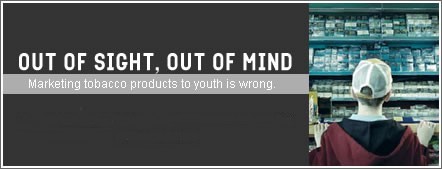
December 7, 2009 - Large cigarette displays in stores, known as "power walls," will be illegal across Newfoundland and Labrador beginning January 1, 2010.

Stores owners say they're getting ready for the new provincial law that will mean they can no longer display, promote or advertise cigarettes. It's all part of the province's plan to cut down the number of people lighting up. "We're going to do the simplest thing and put up a curtain," said Todd Seward, who owns two stores in Labrador City, western Labrador.

Seward doesn't expect the new law will affect tobacco sales. "Its not like buying a candy bar. Most people are loyal to a brand and they come in and ask for that without even looking," he said.

Some consumers are pleased with the change. "You walk into any convenience store and you go up to the cash and it's right in your face. So I think it's a great idea to just cover it up," said Zonya Crew, of Labrador City.

Closely related news brief: Canada - cigarettes have disappeared from stores, just about..

"Power Wall.."

Reference: N.L. tobacco 'power walls' coming down, CBC News, 12/4/2009.


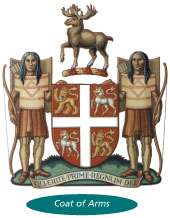
The Flag of Newfoundland and Labrador


Read more...

Bhutan - tobacco control bill endorsed..


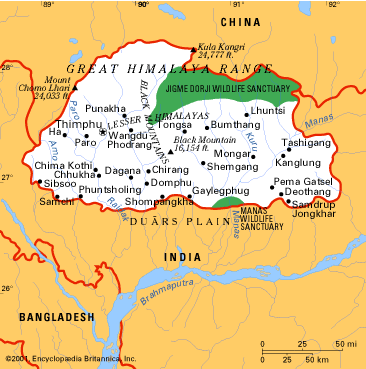
December 7, 2009 - THIMPHU: Under the watchful gaze of the giant Zhabdrung Ngawang Namgyal and Guru Rinpoche thongdroel, the National Assembly yesterday endorsed the Tobacco Control Bill of the Kingdom of Bhutan.

The endorsing of the bill, with amendments, assumed a special significance at the hall, considering that Zhabdrung endorsed the first tobacco control in the 17th century. Even before that, Guru Rinpoche, in his teachings, said that tobacco grew from the blood of a demoness, personified as a menstruating woman, who had wished for an intoxicant that would obstruct spiritual practice.

Friday, the 21st century democratic Bhutan’s members of parliament, respecting individual rights, didn’t completely ban smoking or chewing tobacco, but ensured that tobacco is scarce, non-users are protected and violators penalised accordingly.

No Bhutanese can sell or even buy tobacco, says the bill. Any Bhutanese “selling or buying tobacco” in any form will be fined as specified by the yet to be established tobacco control board from time to time and serve imprisonment term equivalent to the fine imposed if unable to pay it.

Non-smokers will be protected by law from inhaling second hand smoke. This will be done by strictly banning smoking in public places, like commercial and recreation centres, institutions, public gatherings/spaces and public transportation. A smoker violating the rule will be fined from time to time or, failing to pay the fine, detained. A person responsible for letting someone smoke in a public place will also be penalised.

However, respecting individual rights, the tobacco board will draft rules and regulations and specify a permissible limit of tobacco to be imported. The word ‘quota’ will be removed from the bill after members debated that, by providing quota, every smoker will import, which was as good as lifting the ban.

Bhutanese found smuggling tobacco shall be guilty of smuggling and shall be penalised as per the penal code. Film makers, who use scenes depicting tobacco use, including smoking, for domestic production of video, movies and cultural shows would be booked for petty misdemeanour and penalised as per the penal code, says the bill.

The Bill, however, will be sent to the National Council, which earlier amended it and lifted the ban on the sale of tobacco and tobacco products. If the council does not agree with the Assembly’s amendments, the bill will be put to the joint legislative committee of the two houses. A joint sitting would be needed to pass the bill, if the joint committee fails to resolve differences.

The health minister, Lyonpo Zanglay Dukpa, said that the bill was drafted after consultation with many relevant agencies. “The tobacco legislation should be made practical, user-friendly. It should be strict to deter people from getting into the illegal business, while not being too harsh to infringe on rights,” said the minister. He said that tobacco-related diseases are fast picking up and are a pressure on the health system.

Reference: Tobacco control bill endorsed, SanaNnews.com.pk, 12/6/2009.

Related news brief: Kingdom of Bhutan - assembly debating penalties for people that violate tobacco control bill..

Read more...

Turkey - cigarette producers sue to reduce size of graphic images..


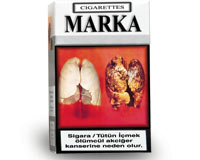
December 7, 2009 - The National Cigarette and Health Committee (SSUK) legal advisor Turgut Kazan has announced that tobacco manufacturers PhilSA, Philip MorrisSA and British American Tobacco (BAT) have filed a lawsuit with the Council of State (highest administrative court in the Republic of Turkey) to shrink the mandatory size of new graphic images which will be obligatory to print on cigarette packages starting on January 1, 2010. Previous news brief on Turkey - graphic/written warning labels starting January 1, 2010.

The companies complain that the requirement of putting images on the front of cigarette packages in an attempt to reduce tobacco consumption by exposing the adverse consequences of smoking will prevent competition in the sector. The images necessitated by the regulations must cover at least 65 percent of the packages, the companies note, arguing that this will make it virtually impossible to put their brand logos on the packages. The companies also argue that the new obligation infringes on their commercial freedoms as bestowed by international trade rules.

Kazan said the Thorax Association, which includes doctors who specialize in eye diseases within the SSUK, will be involved in the case as an interested party. “The tobacco companies have demanded a stay of execution before. The case is in the Council of State’s docket currently,” Kazan noted. He claimed that the regulations are not in conflict with rules of competition or any relevant international laws, adding that they had full confidence that the Council of State will settle the case accordingly.

SSUK President Elif Dağlı also argued that the graphic images covering 65 percent of the packages does not contradict EU standards, which she claimed allows these images to cover more than 50 percent of cigarette packages. “It would be unacceptable to deprive Turkey of its right to protect its public health while other countries are conducting similar campaigns without any obstacle,” she noted. She said selling tobacco products in embellished, attractive packages is very harmful. Currently, 22 million people in Turkey are smokers, she asserted, adding that $20 billion is spent on tobacco products. “This money is being completely burned away and lost. Not only is our money lost, but people’s health is also seriously harmed,” she said and added that another $30 billion is lost in terms of health expenditures to cure smoking-related diseases. Dağlı also rejected claims from tobacco companies that the images have no deterrent effect on smoking, saying, “All studies have proven that these images are very effective indeed and cause a nearly 5 percent decline in cigar cigarette consumption.

Reference: Cigarette producers sue to reduce size of graphic images, Today's Zamen, 12/7/2009.

Turkey - related news briefs:
WHO to unveil new 2009 tobacco epidemic report in Turkey..;
Turkey - graphic/written warning labels starting January 1, 2010..;
Turkey - with expansion of smoking ban cigarette sales drop..;
Turkey - smoking ban, cafes (teahouses) losing business, owners threaten to strike..;
Turkey - hundreds of cafe owners demonstrate against smoking ban..;
Turkey - small--scale retailers to demonstrate against smoking ban..;
Turkey - anti-smoking advocates happy with early results of smoking ban..; Turkey - smoker wounds manager and kills his friend when asked to stop smoking..
Turkey - cafe owners complain about smoking ban..;
Turkey - dangers of secondhand smoke media campaign..;
Turkish Government - makes major move to improve the health of its citizens..;
Turkey - smoking ban starting July 19th will be enforced - these guys are serious..;
Turkey - poll indicates employers, their employees and customers support smoking ban in cafes, bars and restaurants..;
Turkey - July 19th total smoking ban, will employees lose jobs..;
Turkey - on July 19, 2009 will mark the beginning of “100 percent smoke-free air” in this country..;
Turkey - national smoking ban starts July 19, 2009..;
Turkey - quit smoking photo displayed in İstanbul's Taksim Square..;
Turkey - data on tobacco usage - Turkish Statistics Institution..;
Turkey - smoking ban in all bars, restaurants and coffeehouses starting July 19, 2009..;
Smoking ban in Turkey lowers cigarette consumption..;
Turkey's ban on pubic smoking goes into effect on Monday, May 19, 2008..;
British American Tobacco (BAT) reported group volume sales up for first quarter 2008..;
More on the quick fix for outdoor smokers..;
BAT to Acquire Most of Denmark's ST..;
More on Philip Morris International of the Future..;
WHO Report on the Global Tobacco Epidemic 2008...
Read more...

Malaysia - about 368,000 teenager smokers in the country, 50-60 added per day..


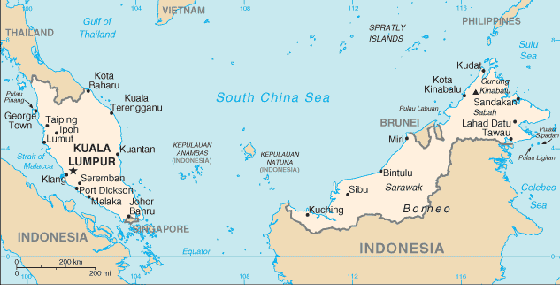
December 7, 2009 - Kota Kinabalu (formerly Jesselton, is the capital of Sabah state in Malaysia. It is also the capital of the West Coast Division of Sabah) -- About 368,000 teenagers in the country - almost the number who sit for the Sijil Pelajaran Malaysia (SPM) examination each year - have developed a penchant for smoking. And the number is growing with records showing 50 to 60 teenagers picking up the habit each day.

Malaysian Health Promotion Board (LKPM) Chief Executive Officer Dr Yahya Baba who disclosed this, Saturday, December 5th said what was worrying was that fatalities due to tobacco-related illnesses were also increasing.

Speaking at the Penampang secondary school level sketch competition themed "Anti-Smoking Campaign" here, he said overall there were 4.6 million smokers in the country, eight per cent of them being teenagers Seven secondary schools - SMK Limbanak, SMK Bahang, SMK Putatan, SMK Tansau, SM St Michael, SMK Taman Datuk Peter Mojuntin and SMK Taman Tun Fuad - competed in the event which was jointly organised by the Kota Kinabalu Cultural Art Society (PSBKK) and LKPM.

Yahya said the awareness-raising campaign was timely and hoped it would increase youngsters' awareness on the dangers of smoking and prevent them from developing the habit. Yahya said LKPM was ready to allocate grants to any society or non-governmental organisation (NGO) intending to hold programmes promoting a healthy lifestyle. Such programmes need to be expanded so that awareness about health care could be advanced, he added.

"It is very important since health is the main key to promoting healthy lifestyle in Malaysia especially to youngsters," said Yahya. He said the event was in line with the LPKM's objective to plan and implement health promotion activities for the benefit of the community by placing special concentration on youngsters. He said health programme need not have to be anti-smoking campaigns but also other issues faced by most people in the country such as diabetes, AIDS and heart disease.

Deputy State Speaker Datuk Johnny Mositun, who officiated at the competition, commended the effort by LPKM and PSBKK in organising the programme. He said by focusing on secondary school students the said organisations showed they were serious about wiping out the smoking culture among teenagers. Mositun also urged the authorities to inspect cyber caf}s in every district as he had received complaints from parents about some cyber caf}s frequented by problematic teenagers.

He said this is to prevent students, who frequent these Internet premises, from mingling with the problematic group who could introduce them to smoking, among others.

Meanwhile, SMK Tansau won the competition and received RM1,000, a trophy and certificates, while SMK Putatan and SM St Michael came second and third, respectively. SMK Putatan and SM St Michael received RM800 and RM500 respectively as well as certificates.

Also present was PSBKK President Zhamriee Gulam Rasul, who was also the organising chairman of the event.

Reference: 368,000 teens into smoking yearly, Daily Express, 12/6/2009.

Malaysia - related news briefs:
Malaysia - sale of cigarettes in packets of less than 20 prohibited as of June 1, 2010..;
Malaysia - stepping up efforts to curb the trade in illicit cigarettes..;
Malaysia - BAT plans to dispose of a parcel of industrial land..;
Malaysia - ban on cigarette sponsorship for sports will not be withdrawn..;
Malaysia - cigarette-shaped sweets packaged like cigarettes;
Malaysia - Penang consumer group ban cheap cigarettes and increase price on premium..;
Malaysia - Kelantin State Government may not promote staff who smoke..;
Malaysia - excise duty increased on tobacco - another increase could be coming this month..;
Malaysia - smoking limits your quality of life..;
Malaysia - smoking civil servants in Penang to receive free nicotine treatment..;
Malaysia - illicit cigarettes, BAT wants government to slow excise duty increases..;
Peninsular Malaysia - one of three cigarette packs is either contraband or fake..;
Komtar, Penang, Malaysia smoking ban strictly enforced..;
Malaysia student forced to smoke 40 cigarettes in two hours..
Malaysia - PSD and Cuepacs are at odds over the no-smoking rule at government de­­partments and agencies..;
Malaysia: Are tobacco control measures working? - WHO thinks so...;
Malaysia - slowdown in cigarette consumption..;
Malaysia - January 1, 2009 pictorial cigarette warnings..;
Malaysia to hike cigarette prices..;
Malaysia - 25% of all cigarettes sales are illegal...Peninsular Malaysia - one of three cigarette packs is either contraband or fake..;
Komtar, Penang, Malaysia smoking ban strictly enforced..;
Malaysia student forced to smoke 40 cigarettes in two hours..
Malaysia - PSD and Cuepacs are at odds over the no-smoking rule at government de­­partments and agencies..;
Malaysia: Are tobacco control measures working? - WHO thinks so...;
Malaysia - slowdown in cigarette consumption..;
Malaysia - January 1, 2009 pictorial cigarette warnings..;
Malaysia to hike cigarette prices..;
Malaysia - 25% of all cigarettes sales are illegal...

Read more...

Minnesota Court dismisses 'Lights' class action Altria and PM USA..


December 7, 2009 - Altria Group, Inc. (Altria) and Philip Morris USA (PM USA) said today that a Minnesota trial court has dismissed in its entirety a 'Lights' class action filed against the companies. The Curtis case had been scheduled for trial in October, 2010.

"We believe the court correctly applied Minnesota law in dismissing the case," said Murray Garnick, Altria Client Services senior vice president and associate general counsel, speaking on behalf of Altria and PM USA.

The case is Curtis v. Altria Group and Philip Morris USA, No. 27-CV-01-18042.

Altria directly or indirectly owns 100% of each of Philip Morris USA (PM USA), U.S. Smokeless Tobacco Company (USSTC), John Middleton Co. (Middleton), Ste. Michelle Wine Estates (SMWE), and Philip Morris Capital Corporation. In addition, Altria holds a continuing economic and voting interest in SABMiller plc.

Background: Minnesota Light Cigarette Litigation..

Reference: Minnesota Court Dismisses 'Lights' Class Action, Altria Media Press Release, 12/4/2009.
Read more...

Bulgaria - Bulgartabac Holding” will be privatized in 2010..


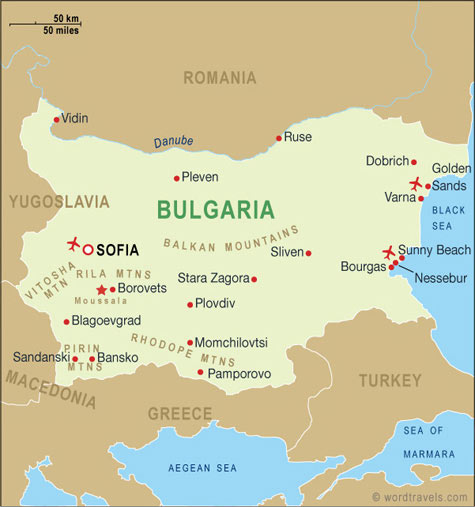
December 7, 2009 - Bulgaria's Economy and Energy Minister, Traicho Traikov, announced Friday that the State owned “Bulgartabac Holding” will be privatized in 2010. Back in August 2009 - we reported:Bulgaria - new government to speed-up Bulgartabac sale.. Map of Bulgaria..

Traikov further announced the conditions for the competition to select a consultant for the cigarette-maker's sale are ready and the competition itself will be announced in a matter of days.

“Bulgartabac” had a significant contribution to the country's public finance this year with the additional BGN 40 M going into the State budget,” Traikov is quoted as saying.

Reference: Bulgaria Tobacco Monopoly Bulgartabac to Be Privatized in 2010, Novinite.com (Sofia News Agency), 12/4/2009.

Bulgaria related news briefs:
Bulgaria - MPs Impose Hefty Fines on Cigarette Sales Violators..;
Bulgartabac Chief - cigarette tax increase as of January 1, 2010..;
Bulgaria Bulgartabac Holding Sells 23% of Shares to Mutual Funds..;
Bulgaria - more than 70% of smokers want to quit..;
Bulgaria - cigarette taxes going up each year except 2011..;
Bulgaria - chair of the economic committee in parliament disapproves of planned raise in excise duties on cigarettes..;
Bulgaria and others - smoking ban, increased cigarette taxes, smuggling..;
Bulgaria - Cigarette excise duties will be increased next year..;
Bulgaria - cigarette contraband, government loses BGN 920M yearly..;
Bulgaria - one third of the tobacco products sold are illicit..;
Bulgaria - new government to speed-up Bulgartabac sale..;
Bulgaria - Fake Victory Light cigarettes..;
Bulgaria's tobacco monopoly may be up for sale..;
Bulgarian lawmakers vote to ban smoking in all publc places from June 2010..; Bulgarian tobacco company Sofia-BT exports increase by 541 percent..;
Does Russia own Bulgaria's tobacco monopoly, Bulgartabac..;
EU percent of adults smokers -highest Greece 1 , Bulgaria 2.. - lowest Slovenia..;
Bulgaria - 1 in 3 youths smoke / half of pregnant women smoke..;
PMI training Bulgarian custom officers to stop cigarette smuggling..;
Philip Morris International (PMI) was truly happy they had been back in the Bulgarian cigarette market for a year and had already had 6.8% of market..;
WHO FCTC Protocol to Prevent Illicit Trade in Tobacco Products Won't Be Completed Until End of 2010..;
WHO Report on the Global Tobacco Epidemic 2008..;
Bulgaria Enters 2009 with Cigarette Prices Hike...
Bulgaria is marking Tuesday, November 10, 2009, the 20th year since the internal coup at the Bulgarian Communist Party which led to the crumbling of the communist regime.
Read more...

General Tobacco - last defendants dropped from cigarette antitrust suit..


December 7, 2009 - Cigarette manufacturer and distributor General Tobacco (GT) filed a lawsuit in the U.S. District Court in Louisville, Ky., against 52 U.S. attorneys general and 19 tobacco companies—including Philip Morris USA, R.J. Reynolds Tobacco Co., Reynolds American Inc. and Lorillard. GT alleges the defendants conspired to set up the Master Settlement Agreement (MSA), which was created in 1998, so later market entrants including GT, which began operations in 2000, would have to pay "substantially more" than other tobacco companies, in an effort to "drastically limit future competitors from fair market competition," the company stated. (General Tobacco Sues 52 U.S Attorneys General and 19 Tobacco Companies..)

Now General Tobacco has voluntarily dismissed the last two tobacco companies left in an antitrust suit it brought against the slew of cigarette makers and 52 attorneys general over a 1998 master settlement agreement it claims made it harder for smaller companies to break into the lucrative tobacco industry.

Mayodan, N.C.-based General Tobacco moved toGeneral Tobacco makes MSA payment in full dismiss defendants M/s Dhanraj International and Societe National D’Exploitation Industrielles des Tabacs et Allumettes from the lawsuit on Wednesday after they neglected to appear...

Reference: Last Defendants Dropped From Cigarette Antitrust Suit, Law360, 12/3/2009.

Some related news briefs: General Tobacco makes MSA payment in full....General Tobacco reaches deal with states on MSA; Judge dismisses General Tobacco challenge to tobacco settlement..; General Tobacco lays off nearly 25% of work force..; General Tobacco Sues 52 U.S Attorneys General and 19 Tobacco Companies..; N.C.'s General Tobacco Appoints New Sales Head..; General Tobacco completes move to Mayodan, N.C.. and General Tobacco (GT) could “potentially” come out with snus type product..
Read more...

Eygypt - cracking down on shisha use..


December 7, 2009 - In a country where smoking is cheap and often described as a "national habit", an Egyptian government crackdown on shisha (hookah, argileh nargile, hubble-bubble, water pipe, hooka, goza, meassel, sheesha), the popular flavoured tobacco-filled water pipe, is facing stiff resistance.

VIDEO - Egypt - Crackdown on shisha use..

Egyptian authorities have issued an ultimatum to the owners of cafes in several cities across the country to stop offering shisha or face hefty fines.

The crackdown comes as the government tries to enforce a two-year-old law banning smoking in public places.

But as Al Jazeera's Rawya Rageh reports, many say a total ban on shisha would have a damaging effect on Egypt's vital tourism industry.

Reference: Egypt attempts crackdown on shisha, Al Jazeera, 12/4/2009.

Some related news briefs:
Egypt, CAPMAS Study Graphic Photos on Cigarette Packs - NOT EFFECTIVE..;
Egypt - warning pictures on cigarette packs - INEFFECTIVE..;
Egypt's fledgling anti-tobacco program to place images and warnings on cigarette packs..;
Egypt Passes National Anti-Smoking Law..;
Read more...

World Chess Cup - grandmasters have to forfeit because they had been smoking..


December 7, 2009 - At the World Chess Cup, which is being held in Khanty Mansiysk, Russia, two top Chinese grandmasters, Wang Yue and Li Chao, showed up late for tie-breaker games in their third-round matches because they had been smoking. Under new World Chess Federation rules, they had to forfeit.

The forfeits cost Wang and Li their matches, and they had to go home. In an interview published on the tournament’s Web site, Wang said he understood the decision but thought it was unfair. He expressed remorse for what happened to Li, who started smoking only to keep him company during the tournament.

Asked if he would now give up the habit, Wang said: “I don’t think so. After such a shock, you only think to take a such a shock, you only think to take a long smoke.”

Reference: An Ill-Timed Cigarette Break Trips Up Two Grandmasters Turns out that smoking is not just bad for your health; it may be bad for your game. by DYLAN LOEB McCLAIN, The New York Times, 12/5/2009.
Read more...

OHIO - Employees of health care insurance company will pay a surcharge of $525 for tobacco use health benefits..


December 7, 2009 - DAYTON — Starting in 2010, Premier Health Partners will assess an annual $520 surcharge on health care benefits for employees who admit to smoking or chewing tobacco, lighting up cigars, or living in a household where others smoke.

It’s unclear how many of Premier’s more than 10,000 benefit-eligible employees will be subject to the tobacco-use surcharge. The Ohio Department of Health said 20 percent of Ohio adults smoked in 2008.

Premier will rely on employees who use tobacco or are subject to secondhand smoke to “self-identify,” said Bill Linesch, Premier’s vice president of human resources.
Those employees who don’t sign up for Premier’s tobacco-use policy but who are reported to use tobacco will be asked about their tobacco usage, but no formal reporting mechanism is in place, Linesch said. “We’re just asking people to be honest about it.”

Smoking is not permitted on the campuses of Premier hospitals, including Miami Valley and Good Samaritan hospitals and Atrium and Upper Valley medical centers. Linesch said the policy reflects Premier’s commitment to wellness and an effort to clamp down on health care expenses.

He said many of the priciest health care claims stem from tobacco-related illnesses.

While some employees would prefer that Premier butt out, others feel the surcharge for tobacco use is overdue, Linesch said.

The Cleveland Clinic stopped hiring smokers altogether on Sept. 1, 2007, and has rescinded 200 job offers due to the policy, a spokeswoman said. The hospital uses a urine test, which does not detect secondhand smoke.

Contact this reporter at (937) 225-7457 or bsutherly@DaytonDailyNews.com.

Reference: Premier workers who smoke face $500+ health care surcharge by Ben Sutherly, Staff Writer, Dayton Daily News, 11/17. 2009.
Read more...

New Hampshire - legislation to ban smoking on beaches filed..


December 7, 2009 - State Rep. Judith Day has filed legislation to ban smoking on beaches in New Hampshire's 23 state parks, an idea she got from neighboring Maine, which this year became the first state to ban smoking on its beaches.

The Maine law's sponsor, Sen. John Nutting, said a mother's complaint prompted the ban. "The 2-year-old daughter was playing at the beach and all of a sudden she realized that her daughter's cheeks looked like a chipmunk's cheeks, just as full and distended as you could get them," said Nutting, D-Leeds. "When she examined the reason for that, her little girl's mouth was plum full of cigarette butts that she'd picked up on the beach from people smoking and discarding."

Another seacoast Democrat, Susan Kepner of Hampton, has filed a similar bill -- but hers also proposes a ban on outdoor smoking in public areas of state parks, such as picnic areas. "So much of our economy is driven through and around with our state parks and being outside," Kepner said. "They're healthy things. This to me is just part of helping New Hampshire residents and guests be healthy."

New Hampshire would be the second state to enact a ban on smoking at state beaches. Puerto Rico also bans smoking on beaches, according to Bronson Frick of the Americans for Nonsmokers' Rights. Frick said almost 100 cities have smoke-free beaches and more than 1,000 cities and a handful of states have outdoor smoking policies ranging from bus stops to business doorways. Frick said reasons for the bans vary from concern over litter from the butts to keeping smoke out of adjacent buildings.

New Hampshire has laws banning indoor smoking in public buildings, grocery stores, public conveyances, hospitals, restaurants and bars. Businesses must segregate smokers from nonsmokers in workplaces with four or more employees.

State Parks Director Ted Austin believes in promoting a healthy lifestyle, but questions who would enforce the bans. Day's bill doesn't include enforcement, a penalty or even signs. Kepner's bill would let park rangers enforce the law. Violators face a fine of up to $50. Signs would be posted around picnic areas, playgrounds and other areas covered by the law. Campsites and hiking trails are exempt.

Reference: Lawmakers considering smoking ban at NH beaches by Norma Love, Associated Press Writer, 12/6/2009.

For more New Hampshire news briefs do a random search by entering the words: "New Hampshire."

Read more...

More - R.J. Reynolds offering buyouts to about 1,800 plant workers..


December 6, 2009 - On Friday, December 4th we reported that R.J. Reynolds Tobacco Co., is offering buyouts to about 1,800 workers.


Here's more..


Job cuts, potentially at a major level, appear on the horizon again for R.J. Reynolds Tobacco Co. Reynolds said yesterday that it is asking for volunteers among its 1,800 manufacturing employees to take a severance package as part of a business analysis.

The company has not set a job-cut goal, said Jan Smith, a senior director of communications for Reynolds. The offer will not affect plant employees "who do not express interest in leaving, nor any other Reynolds Tobacco employees," Smith said.

The last two times Reynolds conducted a business analysis, it resulted in major job cuts. It eliminated 2,600 jobs company wide, including 800 in manufacturing, in 2003-04. It is nearly done with a cut of 570 white-collar jobs that began in September 2008 and is scheduled to end in early 2010.

Reynolds did add between 800 and 1,200 local jobs as part of buying Brown & Williamson Corp. in July 2004.

Smith said that Reynolds has identified areas where it could improve productivity and cut costs. "The company's decisions on how many jobs are eliminated, and which jobs, will be driven by business needs to ensure the company has the staffing levels and skills sets it needs to continue operating effectively," Smith said. She said the last time manufacturing workers had the chance to volunteer for a severance package was September 2003.

That Reynolds is reducing its manufacturing work force is not surprising given lower demand for cigarettes nationwide, analysts said.

Contributing to the decline are higher excise taxes, more smoking bans, increasing social stigma regarding tobacco products, and reduction in Reynolds marketing. Reynolds said in November that its cigaretteshipment volume fell 11 percent in the third quarter to 20.6 billion cigarettes compared with a year ago. Reynolds said that the industry decline was 12.6 percent. Since 1983, Reynolds has eliminated 80 percent of its local work force through at least 16 job-cut announcements, going from 15,500 fulltime workers to 3,030 by early 2010.

In a recent conference call with investors, Ms. Ivey (Susan M. Ivey, Reynolds American, Inc. chairman, president and CEO) said she expects US cigarette demand to fall 8 percent to 9 percent per year and easing back to annual drops of 3 percent to 4 percent over the next few years. )Reynolds American Inc. - q3 2009 earnings results..
)

Employees who contacted the Winston-Salem Journal expressed concern that Reynolds may be preparing for either a major manufacturing reduction or a transfer of production to contract vendors in 2010. Such a restructuring could include the closing of its Whitaker Park plant, where production was reduced significantly in past efforts. Reynolds has 1,200 workers in Tobaccoville and 600 in Whitaker Park.

Analysts and economic officials question how many volunteers Reynolds will get given an 11.1 percent unemployment rate in the Triad, including a hard-hit local manufacturing sector.

Many of Reynolds' manufacturing employees make between $50,000 and $62,400 a year. By contrast, the average manufacturing employee in North Carolina makes $31,574 a year, according to the N.C. Employment Security Commission.

Michael Lord, an associate professor of management at Wake Forest University, said that the attractiveness of the severance package will depend on each employee's own situation. "In general, this very weak economy will cause more employees to hesitate or to even just automatically reject the offer," Lord said.

"If involuntary reductions do happen next year, there's no way to tell exactly what those might look like or how large they might be. There are too many uncertainties. "But the cuts could be substantial." Smith said that Reynolds expects the offer will be attractive because of a decision made in 2008 to reduce its overall severance package, beginning Jan. 1, 2009.

The severance package offered yesterday is the same as in September 2008 — two weeks of pay for every year of service, with a minimum of 13 weeks of pay regardless of years of service, and a maximum of 78 weeks, along with benefits and outplacement assistance. The new package still will include two weeks of pay for every year of service.

But it will be paid in a lump sum as soon as employment ends rather than a "salary continuation" period, Jan Smith said. Smith said that there are other changes "which are better aligned with what most companies our size offer, and better than what some of them offer."

Of the 570 jobs eliminated in the September 2008 restructuring, 320 were involuntary and 250 voluntary. Employees eligible for retirement and retiree health benefits represented 90 percent of the 250 who volunteered to leave, Smith said. "We think a significant number of our manufacturing employees may be interested in leaving if they have the opportunity to do so with a severance package," Smith said. "Many of our manufacturing employees are currently, or will soon be, eligible for retirement benefits as well."

Reynolds is not alone in cutting jobs. Philip Morris USA completed the closing of a cigarette-manufacturing plant in Concord in July, affecting 2,500 jobs. Several hundred jobs were transferred to its plant in Richmond.

The severance package "will give Reynolds' employees who have been thinking about retiring an opportunity to do so with enhanced benefits," said Gayle Anderson, the president and chief executive of the Winston-Salem Chamber of Commerce.

"Like so many of our manufacturing companies, demand is declining and productivity is increasing, with the inevitable result that their work force gets smaller," Anderson said.

Reference: Jobs on the line RJR offers severance deal to its plant workers by Richard Craver (rcraver@wsjournal.com), Winston-Salem Journal, 12/5/2009.


Read more...
Smokeless Tobacco - new study expands list of hazardous chemicals..


December 6, 2009 - We reported on this same study when the work was presented at the 238th National Meeting of the American Chemical Society in August 2009.

Smokeless Tobacco - new study expands list of hazardous chemicals..

PAPER: Analysis of 23 Polycyclic Aromatic Hydrocarbons in Smokeless Tobacco by Gas Chromatography−Mass Spectrometry, Irina Stepanov, Peter W. Villalta, Aleksandar Knezevich, Joni Jensen, Dorothy Hatsukami and Stephen S. Hecht, Chem. Res. Toxicol., Articles ASAP (As Soon As Publishable) Publication Date (Web): October 27, 2009, ABSTRACT..

Moist snuff, a form of smokeless tobacco, also consists astonishingly high levels of toxic and carcinogenic substances, a new American study. Researchers in Minnesota discovered that moist snuff is contaminated with polycyclic aromatic hydrocarbons (PAHs) that may cause cancer.

Irina Stepanov and colleagues found that the use of moist snuff surged nearly 80 times between 1986-2003, partly due to the belief that it is safer than smoking cigarettes. However, smokeless tobacco can cause precancerous oral lesions and oral, esophageal, and pancreatic cancer.

The team examined the PAHs in 23 moist snuff samples from the most popular American brands. They found 23 different PAHs in the samples out of which 9 were carcinogens.

Thus, it was established that PAHs are one of largest groups of cancer-causing substances in moist snuff. The findings render PAHs one of the most prevalent groups of carcinogens in smokeless tobacco.
next week.

The scientists write: "Urgent measures are required from the U.S. tobacco industry to modify manufacturing processes so that the levels of these toxicants and carcinogens in U.S. moist snuff are greatly reduced."

Reference: New study reveals smokeless tobacco products contain high levels of cancer-causing substances, Source: American Chemical Society, Medical News, 12/3/2009.
Read more...

R.J. Reynolds offering buyouts to about 1,800 workers..


December 4, 2009 - R.J. Reynolds Tobacco Co., maker of Camel cigarettes, said Friday it is offering buyouts to about 1,800 workers at its North Carolina factories to cut costs.

The company does not have a specific number of jobs it hopes to cut, spokeswoman Jan Smith said. There are other productivity improvements and cuts the company, based in Winston-Salem, N.C., could make in manufacturing, depending how many employees take the buyout, which includes severance pay, Smith said.

"This process will not result in job eliminations among anyone who doesn't raise their hand and say they're interested," Smith said.

The move comes as tax increases, health concerns, smoking bans and social stigma continue cutting into demand for cigarettes.

Parent company Reynolds American Inc., the nation's second-largest tobacco company, said it shipped 11 percent fewer cigarettes in this year's third quarter than last and estimated the industry's decline at 12.6 percent.

Altria Group Inc. - based in Richmond, Va., and owner of the nation's largest cigarette maker, Philip Morris USA, which makes Marlboros - closed its Cabarrus County, N.C., cigarette factory in July to bring its manufacturing capacity in line with falling demand.

Employees who elect to take the current Reynolds Tobacco buyout could begin leaving as early as January, Smith said, though the process may last until 2011.

Reference: Reynolds offers buyouts to manufacturing workers by MICHAEL FELBERBAUM, Associated Press, 12/4/2009.

Read more...

Indonesia - another protest rejecting the new cigarette excise tax..


December 3, 2009 - In another protest a group of at least 1,500 workers from cigarette companies in Kudus, Central Java, staged a protest Wednesday, December 2nd rejecting the new cigarette excise imposed by the government.

Report on previous protest: Indonesia - workers from small cigarette producers protest excise tax increase..

The demonstrators urged Finance Minister Sri Mulyani to resign for having issued the policy. "The finance minister does not support small cigarette firms," protester Eny Mariyanti said.

Ahmad Guntur, the chairman of the Indonesian Cigarette Industry Forum (Formasi), said small cigarette companies would see a 60 percent increase in their excise under the new policy. "It's too much for them," he said.

Reference: Hundreds of workers reject new cigarette excise, The Jakarta Post, 12/3/2009.

Indonesia related news briefs:
Indonesia - workers from small cigarette producers protest excise tax increase..;
Indonesia - cigarette industry has pledged to stage a demonstration to protest a government plan to increase excise tax.;
Indonesia - the last paradise for a puff in Southeast Asia..;
Indonesia - trade minister officials want to meet with US counterparts to discuss ban on clove cigarettes..;
Indonesia - PT BAT Indonesia to merge with PT Bentoel International Investama Terbuka..;
Indonesia - missing tobacco regulation in approved Health Law..;
Indonesia - section on tobacco in health bill disappears..;
Indonesia - Constitutional Court by close vote rules that tobacco ads can continue..;
Indonesia - parent smoking can negatively affect the nutrition of children..;
Indonesia - new council member suspect in cigarette fraud case..;
Indonesia - an NGO commission assists cigarettes must be banned in films..
Indonesia - a paradise for tobacco companies..
Indonesia - after buying cigarettes very little left for food..;
Indonesia - will they ratify the first world public health treaty..;
Indonesia - last paradise to smoke in public places in Southeast Asia..;
Indonesia - Industry minister to close tobacco to new foreign investment..;
Indonesia Finance Ministry to cap tax deductions for tobacco companies..;
Indonesia - Smoking hits poor families the hardest, making the poor even poorer..;
Indonesia - Cigarette makers defy crisis, grows stronger..;
Indonesia - government may raise cigarette excise tax next year..;
WHO - Indonesia is crying out for your help..;
Indonesia - dispute with U.S. over banning the use of clove in cigarettes..;
Indonesia 'cash cow' for Philip Morris International..;
Tobacco industry has long targeted young people as "replacement smokers";
Indonesia - district court dismisses request to ratify FCTC..;
Asean Countries - Tobacco Industry Blocking Global Treaty On Tobacco..; Indonesia - farmers hold rally protest tobacco controls..;
Indonesia - tobacco farmers reject Islamic council's edict..;
Indonesia - Ulema Council - debate results is split on smoking..;
Indonesia - Withdraw Sponsorhip of Another Rock Concert..;
Indonesia to increase tax on tobacco products..;
Semarang, Indonesia - Cigarette Smoking Areas to be Prepared..;
Jakarta, Indonesia - Malls help enforce non-smoking ban..;
Indonesia - federal anti-smoking laws in one year - MAYBE..;
Indonesia - NGO's (non-government organizations) Demand the Government Ratify WHO's FCTC.;
Indonesia to raise cigarette tax by 6 to 7% in 2009..;
Surabaya, Indonesia - anti-smoking bylaw 10/2009 - FOR REAL??
Indonesians smoking more than ever before..;
Indonesia further rise in the excise tax would hurt the cigarette industry..;
Alicia Keys - Jakarta Concert (July 31st) tobacco companies forced to withdraw sponsorship.. and
Most Indonesians support moves to ban tobacco advertisements...
Read more...

Lorillard responds to SAMHSA Report on use of menthol cigarettes..


December 4, 2009 - Lorillard Tobacco Company today, December 3rd issued the following statement with regard to the report from the National Survey on Drug Use and Health (NSDUH) about the use of menthol cigarettes, which was released today by the Substance Abuse and Mental Health Services Administration (SAMHSA).

"While we have not had the opportunity to review this report in depth, the most comprehensive government sponsored studies show that populations who use menthol have lower smoking rates across all age groups.

"Importantly, this report appears to ignore the chief finding of the survey -- that menthol use among underage smokers has leveled off in the last year. According to current data, adult smoking rates continue to decline, while youth rates are at historic lows and have been in decline for more than a decade.

"The current weight of scientific evidence does not support the conclusion that menthol cigarettes confer a greater health risk than non-menthol.

"Lorillard looks forward to cooperating with the FDA as it makes an objective science-based assessment in its review of menthol."

About Lorillard, Inc.
Lorillard, Inc. (NYSE: LO), based in Greensboro, is the third largest manufacturer of cigarettes in the United States. Lorillard was founded in 1760, and is the oldest continuously operating tobacco company in the U.S. The company's headquarters has been based in Greensboro since 1997, and it has maintained production, distribution and research and development operations in Greensboro since 1956. Newport®, Lorillard's flagship brand, is a menthol-flavored premium cigarette brand and the top selling menthol and second largest selling cigarette in the U.S. In addition to Newport, the Lorillard product line has five additional brand families marketed under the Kent®, True®, Maverick®, Old Gold® and Max® brand names. These six brands include 44 different product offerings which vary in price, taste, flavor, length and packaging. Lorillard's manufactures all of its products at its Greensboro, North Carolina facility and maintains its headquarters there. For more information, visit the Company's web site at www.lorillard.com.

Reference: Lorillard Tobacco Company Responds to SAMHSA Report on Use of Menthol Cigarettes, SOURCE Lorillard Tobacco Company, 12/3/2009.


Read more...

Japan - cigarette taxes increase may be less than expected..


December 4, 2009 - Back on November 23rd in an editorial Prime Minister Yukio Hatoyama told the Diet (the Japanese parliament is called the Diet) that an increase in the tobacco tax should be considered from the viewpoint of improving people's health. (Japan - prime minister calls for tobacco tax increase..)

Investors in Japan Tobacco (JT) were relieved by a report that the government would hike taxes on cigarettes by less than expected. Shares of Japan Tobacco (2914.T) gained the most in 13 months on Thursday, December 3rd.

The Japanese government plans to raise the tax on tobacco by a few yen per cigarette, Kyodo news agency reported, a much smaller increase than the 10-20 yen anticipated by some market participants. (Kyodo News Agency: The government is considering raising Japan's tobacco tax by around 3 yen per cigarette starting in fiscal 2010 to "improve public health," ruling party lawmakers said Thursday, December 3rd. "It's positive if the tax hike is only 2-3 yen per cigarette, as there have been concerns about a much heftier hike, like pushing up prices to 500 yen a pack or more," said Takeshi Osawa, senior fund manager at Norinchukin Zenkyoren Asset Management.

A pack of 20 cigarettes in Japan costs around 300 yen ($3.40), including a tobacco tax of about 175 yen or 58 percent.

While a higher tax on tobacco was not among the key campaign pledges by the Democratic Party, which took office in September, Prime Minister Yukio Hatoyama is advocating one to curb smoking. Some government officials have said tobacco prices in Japan are not high enough to discourage smoking compared with other developed countries, fuelling speculation about a large tax hike.

Cigarette taxes have been raised three times since 1998, but only by 1 yen per cigarette, ensuring that tax revenue stays around the 2 trillion yen mark. Tax revenue from cigarettes in fiscal 2007 stood at 2.27 trillion yen. They are currently taxed at 8.7 yen per cigarette. A government tax committee will finalize its outline for a reform of the tax system by December 11th. (Tax hike planned for cigarettes in Japan, The Mainichi Daily News, 12/3/2009)

JT controls 65 percent of the Japanese market and the government still owns half of the former state monopoly.

Reference: UPDATE 1-JT shares jump on report of smaller tax hike by Taiga Uranaka, Reuters, 12/3/2009; Japan Tobacco Rises After Report on Cigarette Taxes (Update1) by Junko Hayashi, Bloomberg.com, 12/3/2009.

Japan - some related news briefs:
Japan - prime minister calls for tobacco tax increase..;
Japan Tobacco growing popularity of its British cigarette brands..;
Japan - new government administration considering raising cigarette taxes..;
Japan - plaintiffs have slim chance of winning against big tobacco..;
Japan - convenience store sales fell in June 2009..;
Japan - tobacco control people upset with smoker-only cafes..;
Japan - Tokyo smoking cafes, people with children, those under 20 NOT allowed..;
Japan - Kanagawa - bans smoking in public places starting April 2010..;
Japan shelves tobacco tax hike for 2009..;
Japan - Ruling party plans tobacco tax hike in 2009..;
Japan Tobacco Starts Petition To Fight Tax Increase..;
How to get most smokers to quit?? - Keep On Raising The Price..;
Japanese lawmakers want to triple cigarette prices..;
Japanese tobacco giants focus on point-of-sales cigarette purchases..;
Japan - photos can be used to fool the age-verification cameras on some vending machines..;
Vending Machines - Japanese protecting their children from becoming life-long nicotine addicts...

Read more...

Israel - class-action lawsuit - actress smokes on stage..


Click on image to enlarge:
December 4, 2009 - To smoke, or not to smoke - onstage? That is the question for the Haifa District Court, which on Thursday morning, December 3rd received a request to certify as a class-action suit - reportedly the first in the world - a complaint filed against a theater for instructing an actress to smoke as part of her role.
The suit is being leveled against the Haifa Municipality Theater over ‘Hamakon Mimenu Bati,’ in which Orly Zilberschatz-Banai smokes onstage for half an hour. The theater is responsible for enforcing no-smoking laws in the city.

Israel also had the world's first class action lawsuit on behalf of people who developed lung cancer from smoking menthol cigarettes.

The request was filed by lawyer Amos Hausner, chairman of the National Council for the Prevention of Smoking, on behalf of fellow lawyer and frequent theatergoer Einav Avrahami, who objected to famous actress Orly Zilberschatz-Banai smoking for about half an hour onstage in the play.

Highly praised by Israeli critics, the play is based on the work of American playwright David Mamet. Titled in Hebrew Hamakom Mimenu Bati, it tells the story of an American Jewish man named Bobby Gold who abandons his wife and his home to return to the old Jewish neighborhood where he was raised. Zilberschatz-Banai plays his long-suffering sister and delivers a long monologue during which she smokes.

Hausner told the Post that lawsuits filed in the past by airline stewards and stewardesses - who were constantly exposed to deadly tobacco smoke when there was no legal ban in all sections of the world's airplanes - presented research showing that the stewards were 200 times more likely to develop lung cancer and other diseases due to smoke inhalation.

Hausner asked the court in this case to set the compensation for damages to the theater audience at NIS 1,000 1,000.00 (1,000 Israel New Shekels = 264.346 U.S. Dollars), or a total of NIS 4 million, as he calculated that some 3,800 spectators have seen or will see the play before the end of its run. Avrahami said she was fighting for a principle - that smoking in theaters has been illegal since 1983 and that the health not only of the audience but also of the actors who performed several times a day was at risk as they would be exposed to toxins. Because she was standing on principle, she said she personally was not asking for monetarycompensation.

Three years ago, the Supreme Court awarded NIS 1,000 to one woman exposed to smoke at Focaccetta, a Jerusalem restaurant sued by concerned citizen Irit Shemesh, who was also represented by Hausner. Since then, much higher awards have been handed down by courts, including one in which the lawsuit was certified as a class action against the smoke-filled Tel Aviv club Bella Shlomkins.

Avrahami, who attended the play in the middle of October, argued that the director could easily have given Zilberschatz-Banai a harmless and smokeless substitute. But the theater - a small one with only 158 seats - refused to relent, said Avrahami, who received a letter to that effect from a theater official. Avrahami noted that when a play presents a murder, nobody is murdered to make it look realistic.

Hausner declared that the play's text presents a character as smoking, it did not require the actress or actor to actually light up a cigarette. When no-smoking laws are violated, it is a proper mechanism for the concerned citizen to initiate a court action, including class actions, the lawyer argued.

The theater has not denied any of the allegations, but it claims that it should be exempted from observing the no-smoking provision due to its claim of "freedom of expression."

Reference: Theater sued for onstage smoking scene
by JUDY SIEGEL-ITZKOVICH, The Jerusalem Post, 12/4/2009.

Israel - related news briefs:
Israel - 10,000 die each year from smoking (8,664 smokers and approximately 1500 from secondhand smoke..;
Israel - may initiate a bill to bar smoking in vehicles with kids.. Do it for YURI..;
Israel bans electronic (e) cigarettes..;
Israel - first menthol-cigarette lawsuit in the world filed in Israel..;
Israel - sucking tobacco' illegally imported under ministries' noses..;
Read more...

Saskatchewan - proposed legislation to ban people from smoking in cars carrying kids plus..


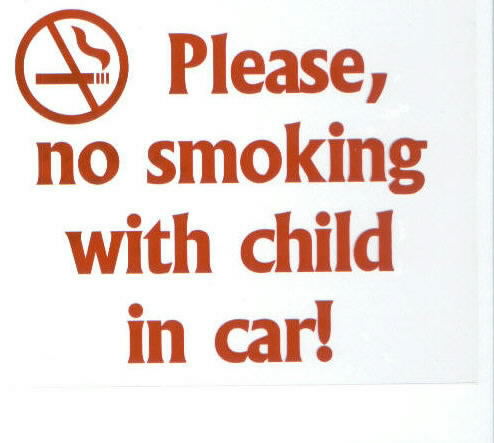
December 4, 2009 - REGINA, Saskatchewan Proposed new tobacco control legislation will ban people from smoking in vehicles carrying kids under 16 and prohibit cigarette sales in pharmacies.

Back on on Monday, October 26th Saskatchewan Health Minister Don McMorris said the government is looking at updating its no-smoking law with new anti-tobacco legislation expected to be introduced later this fall. THIS IS IT..

Proposed anti-tobacco legislation received first reading in the Saskatchewan legislature on Wednesday, December 2nd..

The law won't include a province-wide crackdown on smoking on restaurant and bar patios, an idea Health Minister Don McMorris said earlier this fall the Saskatchewan Party government was considering. "That doesn't mean that we won't move there in the future," McMorris said Wednesday, December 2nd. "But at this time we've introduced what we think is a pretty strong piece of legislation to help reduce tobacco use in the province."

McMorris said while there was positive support from some groups for a patio smoking ban he also heard a lot of negative feedback.

Municipalities can still choose to put in place rules that ban smoking in outdoor seating areas, as Saskatoon has done, said McMorris, who dismissed suggestions the province is passing the buck. "Any time you introduce tobacco legislation there are many supporters but there are also some detractors ... what would be wimping out would be not to introduce any tobacco legislation," he said.

The Saskatchewan Hotel and Hospitality Association has previously said a patio smoking ban would be a particular blow to many rural hoteliers that sunk money into building patios after taking a hit from the earlier ban on smoking inside.

In Saskatoon, Mayor Don Atchison said he thinks local restrictions on smoking on decks have caused few problems for businesses and are popular with the public. "Quite frankly, what we've done in Saskatoon is create a level playing field for everyone because some have patios and some aren't able to have them," he said Wednesday. He isn't concerned with the city being out of step with the rest of the province on the issue. "I guess perhaps we're just slightly ahead."

NDP Health critic Judy Junor said a progression of the province's smoking ban to include patios seems like the logical next step. "As far as we could tell the minister was going to bring that in. I'd be interested to know what caused him to remove it," Junor said.

While calling the decision not to include a patio smoking ban a disappointment, Saskatchewan health-related organizations welcomed the move to ban smoking in vehicles with children as well as the bill's other measures. "This is a very important day for public health. These initiatives we sought for long, long time and many of them we got today," said Donna Pasiechnik, tobacco control manager for the Canadian Cancer Society. "We had been behind many provinces and this brings us in line with what most provinces are doing," she said, adding the government continues to work with groups on a tobacco control strategy.

The legislation, which could take effect in late 2010, will also prohibit tobacco use on school grounds and in enclosed common spaces of apartment buildings, and stop the sale of flavoured little cigars. Outdoor signs that advertise tobacco, such as the ones sometimes seen outside of gas stations, will no longer be allowed.

Many pharmacies have already quit selling tobacco products but the new law will also restrict large stores, such as grocery stores, that have pharmacies in one area and sell cigarettes in another. McMorris said such stores may still be able to sell tobacco but could be required to set up a separate area to do so. Those details will be set out in regulations that will accompany the law.


The province joins Ontario and Nova Scotia and several American states that have similar bans in place. British Columbia has passed a ban on smoking in cars when children under 16 are present, but it is not yet in force. New Brunswick and Prince Edward Island (P.E.I.)are considering similar bans, with the P.E.I. legislature expected to take action this spring. The U.S. states of Maine, California, Arkansas and Louisiana have passed similar laws, as has Puerto Rico.

Reference: Saskatchewan proposing ban on smoking in vehicles carrying kids under 16 by Angela Hall, Regina Leader-Post - Division of Canwest Publishing Inc, 12/2/2009.
Read more...

Saskatchewan - stores mull options on tobacco law..


December 4, 2009 - The proposed new tobacco control legislation besides banning people from smoking in vehicles carrying kids under 16 will also prohibit cigarette sales in pharmacies. Many pharmacies have already quit selling tobacco products but the new law will also restrict large stores, such as grocery stores, that have pharmacies in one area and sell cigarettes in another. Saskatchewan Health Minister Don McMorris said such stores may still be able to sell tobacco but could be required to set up a separate area to do so. Those details will be set out in regulations that will accompany the law. Saskatchewan - a province in Canada..

Proposed anti-tobacco legislation received first reading in the Saskatchewan legislature on Wednesday, December 2nd..

A grocery chain and a pharmacy company say they're looking at pulling cigarettes from their shelves in light of a new law to crack down on tobacco sales. It would also put new restrictions on tobacco sales. If pharmacies and stores that have pharmacies inside — such as supermarkets — want to continue selling tobacco, they are going to have to build separate areas or kiosks, to which minors will not have access.

In response, some stores were saying Wednesday they would rather just stop selling tobacco altogether. John Graham, Canada Safeway's public affairs manager, said when similar legislation was introduced years ago in Ontario, Safeway decided to spend the money to revamp only two stores. In the rest, they pulled tobacco altogether, he said. "Kiosks, though we wouldn't rule them out, aren't most likely the path we would choose to take," Graham said.

Clint Mahlman, the senior vice-president of London Drugs, said his company won't be building kiosks either. He said the law won't help people quit smoking: people who can't get cigarettes at a drug store will get them elsewhere. On the other hand, a drug store is an appropriate place to sell tobacco, because it's where people can buy anti-smoking aids and receive advice from staff about them, Mahlman said.

"Targeting tobacco customers when they're purchasing tobacco is the most effective way to get our smoking cessation methods across to the tobacco user," he said. When a tobacco ban was implemented in Alberta earlier this year, London Drugs saw the sale of stop-smoking aids drop dramatically, he said.

Saskatchewan law currently prohibits smoking in workplaces and many public enclosed areas, including bars, restaurants and curling rinks.

The legislation, which could take effect in late 2010, will also prohibit tobacco use on school grounds and in enclosed common spaces of apartment buildings, and stop the sale of flavoured little cigars. Outdoor signs that advertise tobacco, such as the ones sometimes seen outside of gas stations, will no longer be allowed.The proposed law would also ban smoking on school grounds.

Reference: Stores mull options on tobacco law, CBC News, 12/3/2009.

Read more...

Bavarians force referendum on smoking ban next year..


December 4, 2009 - January 1, 2008 eight German states including Bavaria marked the New Year by introducing smoking bans in public places including restaurants and bars. In July 2009 smokers in Bavaria rejoiced as the state’s parliament loosened the regulations on a smoking ban instituted 18 months before. Then on Thursday, October 1, 2009 Germany’s high court in Karlsruhe ruled that Bavaria’s looser implementation of its smoking ban is constitutional.


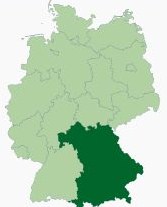
German State of Bavaria - dark green..
Bavaria is one step closer to a total smoking ban. Supporters of an anti-smoking petition are celebrating after successfully forcing the state to hold a referendum on the issue next year. A powerful anti-smoking lobby wants a total ban to be reinstated. The petition calling for a revision of the current law got more than the number of signatures required by a considerable margin.

At the latest count, nearly 1.3 million people signed the petition, well over the 940,000, or 10 percent of the Bavarian electorate, needed to force a referendum. The petition was instigated by the Ecological Democratic Party, supported by the Bavarian branch of the Social Democratic Party (SPD), the Green party as well as other ecological and sports organizations.

Unlike other European countries Germany delegated the ruling on its smoking ban to the individual states. Almost all German states have opted to allow exceptions to the ban on smoking in certain restaurants and bars, after originally imposing a total ban.

In Bavaria, a more liberal version of the law came into effect on August 1 this year, allowing smoking in pubs smaller than 75 square meters, as well as in designated separate side rooms. Organizers of the petition and authors of the proposed referendum proposal would like to roll back both of these concessions.

The Social Democratic Party (SDP) is casting the success of the petition as a defeat for the Bavarian center-right ruling coalition of the Christian Social Union (CSU) and the Free Democrat Party, but the head of the CSU group in parliament, Georg Schmid, welcomed the fact that the Bavarian people would have the final say.

All the same, Bavarian interior minister Joachim Herrmann said the state parliament would not, of its own accord, adopt the referendum's proposal in its current radical form.

The pro-smoking lobby remains stubborn on the issue despite the current defeat. The Association for the Preservation of Bavarian Tavern Culture (VEBWK) said it was disappointed in the petition results. VEBWK head Franz Bergmueller told local broadcaster Antenne Bayern, “A social division is looming,” reflecting the views of many die-hard smokers in Bavaria who see smoking as a right and a part of southern German culture.

Reference: Bavarians force referendum on smoking ban, Editor: Michael Lawton, DW-World.de, 12/3/2009.

Related news brief:
Bavaria - court rules, looser implementation of smoking ban constitutional..;
Germany - beer sales are down smoking ban maybe partial blame..;
Bavaria - state's parliament loosened regulation on smoking ban..;
WHO Report on the Global Tobacco Epidemic 2008..;
German sales rise in Germany amid moves to impose smoking ban..
Read more...

Kingdom of Bhutan - assembly debating penalties for people that violate tobacco control bill..


Bhutan Coat-of-Arms, click to enlarge:
December 3, 2009 - The tiny, Himalayan Kingdom of Bhutan became the world's first nonsmoking nation. Since December 17, 2004 it has been illegal to smoke in public or sell tobacco. Violators are fined the equivalent of $232—more than two months' salary in Bhutan. (Bhutan forbids all tobacco sales, BBC News, 12/17/2004)

The National Assembly is deliberating on penalties for people, who violate the tobacco control bill, after re-inserting the clause, which bans sale of tobacco products that was removed by the National Council in the summer session.
(The ne wdemocratic system comprises an upper and lower house, the latter based on political party affiliations. Elections for the upper house (National Council) were held on December 31, 2007, while elections for the lower house, the 47-seat National Assembly, were held on March 24, 2008.)

Discussing the bill for the third time in the Assembly, the house put back clause C under section 11 that bans “sale of tobacco and tobacco products”. With the clause, any person selling tobacco products is committing an offence, according to the bill.

A person smoking in public spaces and the person-in-charge of the public space will be punished twice with monetary fines and then be penalised, in accordance with the Penal Code of Bhutan 2004, on a third offence, according to the bill. For instance, if a person smokes in a restaurant, the restaurant owner will also be penalised. A public place is defined as any space where people gather.

Anybody, who cultivates, harvests, manufactures, supplies or distributes tobacco and tobacco products in the country, will be penalised according to the penal code. Tobacco smugglers would charged for smuggling.

Members debated, at length, on the severity of the penalties, with some even suggesting a mandatory imprisonment for six months. While some said that the title of the bill was “control,” banning sale of tobacco would be contravening legislation. Others suggested using “ban” on the title. “Imposing monetary fines on a violator, before charging him/her according to the Penal Code won’t work,” said an MP from Trashigang. “Many smokers won’t mind paying the fine. They should be put under police custody immediately,” she said.

With almost all the members presenting their case, the Assembly could not come to a decision yesterday. The discussion will continue today.

Reference: Tobacco bill’s third discussion Sale clause reinserted as parliament decides to get tough by Ugyen Penjore, Kuensel Newspaper, 12/3/2009.
Read more...

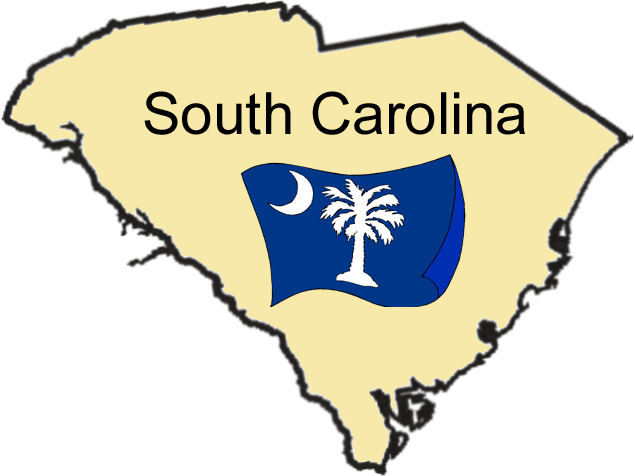
South Carolina - low cigarette pricing, smuggling, higher insurance premiums, etc..


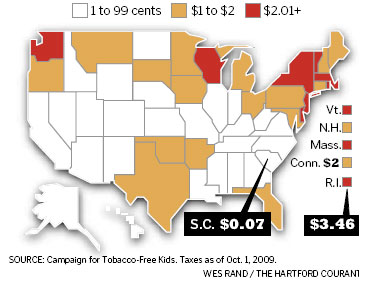
November 23, 2009 - South Carolina (SC) offers the cheapest smokes in the nation -- a fact federal officials say will make it a magnet for black market cigarette runners. In addition, the state has the shameful distinction of having the nation's lowest state cigarette tax, at 7 cents a pack, where it's been since 1977.

New York officials say the South Carolina already is the source of cigarettes smuggled illegally into that state. For example, the sales tax alone on a pack of cigarettes in New York City is $3 compared with 7 cents in South Carolina. Rhode Island has the highest state cigarette tax in the nation at $3.46 per pack - the national average is $1.34 a pack.

Smugglers make money by buying cigarettes in South Carolina -- or another low-tax state -- and reselling them in a high-tax state for a price lower than that state's prevailing price, including its taxes. So, the difference in cost from South Carolina to New York City -- almost $30,000 for, say, 1,000 cartons -- would leave plenty of room for a hefty profit, even with the cost of transporting the cigarettes

This ease of making hefty profits is attracting some of the nastiest elements of the criminal world, federal authorities say. The reasons are simple. Profit margins are huge, the risk of getting caught is minimal, and punishment can be mild compared with penalties for other crimes. Getting a handle on the scope of the bootlegging problem is difficult, but profits from smuggling rings run into the tens of millions, federal officials say.

"It's a safer way to make illegal money than typical drug trafficking," said Earl Woodham, a spokesman for the Charlotte office of the federal Bureau of Alcohol, Tobacco and Firearms. "And the profits can be just as good, if not better, than drugs."

As a result of the low tobacco tax SC generates only about $2 million a year in state taxes. Amy Barkley, who monitors the Mid-Atlantic region for the Campaign for Tobacco-Free Kids, called the level “ridiculously low” since pricing at the high end is the most proven method of discouraging people from starting to smoke. More than 5,500 teenagers younger than age 18 pick up the habit in South Carolina every year.

Smoking during pregnancy is associated with an increased in risks of preterm birth.
March of Dimes gives SC a failing grade when it comes to premature births.

Another shortcoming, Amy said, is the small commitment by the S.C. Legislature toward funding tobacco cessation and prevention efforts. Next year the state's package will run only about $2 million — far short of the $62 million the CDC says is needed to be effective.

Maybe in 2010 the state legislature will find a way to pass a hefty increase in the state tobacco tax that the governor will sign. SC General Assembly convenes second Tuesday in January of each year maybe things will be different this time.

Starting January 1, 2010 state workers will be charged a $25 monthly surcharge on the health insurance premiums if worker or any covered family members use tobacco products or have used tobacco products within the past six months. The proposal was the idea of Governor Mark Sanford, but he actually voted against the approved measure because he did not see why the increase couldn't be imposed before the planned start date of January 1, 2010. The state budget board has reported that tobacco-related illnesses are responsible for 7 percent of the $1.1 billion spent for public employees' health care.

South Carolina appears to be doing well with local municipal efforts to curb smoking in public places indoors like the workplace, and bars and restaurants, Amy said. On March 31, 2008, the South Carolina Supreme Court unanimously ruled that local governments have the right to enact and enforce smokefree laws. About 30 local governments in South Carolina have adopted a ban since May 2006, when Sullivan’s Island led the move to outlaw smoking in workplaces. (Cities/Counties South Carolina Smoking Bans, Latest Could Be Rock Hill)

Reference: State's anti-smoking approach draws criticism amid rising rates by Schuyler Kropf - The (Charleston) Post and Courier 11/22/2009 The Herald - Rock Hill, SC

Related news briefs:
Lexington County, South Carolina has a workplace smoking ban..;
South Carolina - governor disappears, maybe its time to slip through a cigarette tax..;
South Carolina - next legislative session starts June 16th..;
South Carolina - lawmakers may disappoint again on cigarette tax increase..;
SC tobacco tax increase - doubt exists maybe NOT this year..;
South Carolina - can we expect a tobacco tax increase this year??;
South Carolina a magnet for cigarette black market..;
South Carolina - legislators eager to pass cigarette tax increase - the odds are against them??;
South Carolina to spend NO money on tobacco prevention..;
South Carolina (SC) will NOT devote any resources to anti-smoking programs..;
In 2008 will the politicians do what's right for the State of South Carolina??;
South Carolina - Tobacco Tax Increase Killed - State House Fails to Override Governor's Veto..
Tobacco Tax Increase – What’s Wrong with South Carolina??


Read more...

Syria - tougher anti-smoking law in force early 2010..


Syria Coat-of-Arms, click to enlarge:
December 3, 2009 - A much tougher anti-smoking law in Syria, signed by President Bashar al-Assad and due to come into force in early 2010, will outlaw smoking in public places, including restaurants and bars, hospitals, sports halls and cinemas.

The law covers cigarettes and cigars, as well as traditional 'shisha' water pipes.

"The ban is timely," said Mahmoud Etah, a Syrian doctor. "Smoking, especially of water pipes, has become more prevalent among young people and we are yet to see the full health effects."

According to the Syrian Society for Countering Cancer, 60 percent of adult men and 23 percent of women smoke; 98 percent of people are said to be affected by passive smoking.

The more serious health effects which the measures hope to reduce include lung and mouth cancer, as well as respiratory diseases. The levels of these diseases are not documented in the country, but doctors report an increase in the number of people exhibiting symptoms associated with them. It is for this reason that the ban has been introduced now, said Bassam Abu al-Dahab, former head of the National Programme to Combat Smoking.

The World Health Organization (WHO) does not have any statistics on Syria, but in Egypt it attributes 90 percent of lung cancer deaths to tobacco use. Globally, tobacco-related cancers as a percentage of all cancers are on the rise.

Current trends show that by the year 2020 or 2030, tobacco is likely to be the world's leading cause of death and disability, killing more than 10 million people annually (70 percent of these deaths occurring in developing countries) and claiming more lives than HIV, tuberculosis, maternal mortality, motor vehicle accidents, suicide, and homicide combined. There are about 1.1 billion smokers in the world - about one-third of the global population aged I5 and over, according to WHO. [http://www.emro.who.int/tfi/Facts.htm]

The Syrian government has already passed several laws regulating the tobacco industry and smoking. A 1996 decree banned tobacco advertising and in 2006 Syria banned smoking in government offices and public transport. The new law envisages a 2,000 SYP (US$44) fine on those who break it.

Governmental and voluntary initiatives to raise awareness of the health risks of smoking have increased this year, say activists. "Smoking awareness days" have been held at private educational institutes such as Kalamoon University near Damascus, which has also introduced a ban on smoking in the university campus.

However, the effectiveness of the tougher legal framework is in doubt. Whilst people do not smoke in buses, it is common to see the current laws against smoking flouted in taxis and some government offices, and fines are rarely imposed, they say.

The stricter law will be even harder to enforce, say Syrian restaurant and bar owners, who have expressed dismay at the ban. Ahmad Kozoroch, the owner of Rawda, a famous coffee shop close to the Syrian parliament, said he would resist the ban in his establishment, pointing to the fact that most of his profit comes from water pipes. "The law will hurt my business," said Kozoroch. "I am not sure people will stop smoking. Instead they are likely to pay bribes to official inspectors to avoid the fines."

Related news briefs:
Syria - tobacco control measures to be implemented;
Syria - bans smoking in public places..;
Syrian - spends $600 million each year on tobacco despite ban..

Reference: SYRIA: Tough new law against killer tobacco, Source: IRIN (Integrated Regional Information Networks, acts as a news agency), Reuters and AlertNet, 12/3/2009; SYRIA: Tough new law against killer tobacco, IRINnews.org, 12/3/2009.

Read more...