 February 7, 2011 - Growing up poor increases a person's chances of health problems as an adult, but a new Cornell study shows that being raised in a tight-knit community can help offset this disadvantage of poverty. Poor adolescents who live in communities with more social cohesiveness are less likely to smoke and be obese, reports the study, published in January's Psychological Science journal.
PAPER: Loosening the Link Between Childhood Poverty and Adolescent Smoking and Obesity: The Protective Effects of Social Capital, Gary W. Evans and Rachel Kutcher, Psychological Science, January 2011; vol. 22, 1: pp. 3-7., first published on November 24, 2010, ABSTRACT..
Environmental psychologist Gary W. Evans, recruited 326 rural upstate New York children when they were about 9 years old and their mothers. About half of the children lived in or near poverty; the rest were from middle-income families. Periodically, Evans and co-author Rachel Kutcher visited the participants to measure their health and exposure to various risk factors.
When the participants were about 17 years old, they and their mothers filled out surveys that assessed how connected their communities were and how much social control they felt they had. For example, mothers were asked to say how much they agreed that "one of my neighbors would do something if they saw someone trying to sell drugs to a child or youth in plain sight"; the teenagers were asked whether they had adults whom they could ask for advice. The teens also completed surveys on behavior, including smoking, and had their height and weight measured.
"Youth from low-income backgrounds smoked more than those who grew up in more affluent homes," the study concludes. However, if they lived in connected communities, "the effects of early childhood poverty on adolescent smoking were minimal." Evans found similar results when assessing the teens' body-mass index, a standard measure of obesity.
Evans and Kutcher believe adolescents in communities with more so-called social capital (a measure of how connected a community is and how much social control there is) may have better role models or mentors; or perhaps in a more empowered community, where people feel comfortable stopping someone else's bad behavior, the young people feel less helpless as individuals. They might believe that "you have some control over what's going to happen to you," they suggested.
Still, the authors warned, social capital can help poor youths, but it is not a remedy for the health problems associated with impoverished living in childhood. Poor adolescents, even those in communities with more social capital, are still less healthy than their middle-income peers.
"It's not correct to conclude that, if you just improve social capital, then it would be okay to be poor," Evans says.
Reference: Having a Strong Community Protects Adolescents From Risky Health Behaviors, psychologicalscience.org, 2/2/2011.
Read more...
PAPER: Poor adolescents who live in communities with more social cohesiveness are less likely to smoke and be obese..
United Kingdom - tobacco companies warn tax increase will lead to an increase in cigarette smuggling..

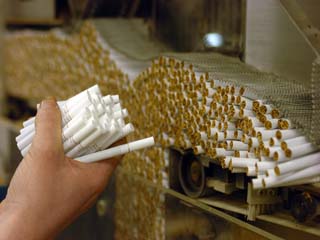 February 7, 2011 - The tobacco industry, dominated by Imperial Tobacco and Gallaher, claims the rate of smuggling and the volume of contraband sold on Britain's streets will raise when excise duty goes up. The tax on a packet of 20 cigarettes rose 34p last year and the budget is scheduled to bring the increase for 2011 to 39p a pack. This compares with the previous nine years of inflation-only duty rises, adding between six and 12 pence a year to the cost of a pack. (100pence(p) = 1 pound)
The average price of a pack of 20 cigarettes reached £6.29 (10.07 USD) in the UK last summer, compared with £2.80 (4.48 USD) in Spain and £1.57 (2.51 USD) in Poland, according to official European figures. While Customs officials have made good progress in curbing an explosion in smuggled tobacco sales in recent years, Chris Ogden, chief executive of the Tobacco Manufacturers' Association, warns their good work could be destroyed as organised criminal gangs target their tax evasion efforts on the UK.
Tobacco sales are a major contributor to Treasury coffers, with about 77% of the pack price going directly to the chancellor. VAT and duty already raises £11bn a year for the Treasury – more than the £7.6bn raised in corporation tax from the UK's financial sector. It is more than enough to pay for the entire costs of running the army, or about a third of the cost of general and acute hospitals.
Governments like to tax tobacco in a recession as it is regarded as one of the easiest ways of boosting Treasury coffers. The addictive nature of cigarettes means that consumers tend swallow the extra expense rather than cutting back on consumption as they might do with other heavily taxed products.
Health campaigners dispute assumptions that there is a necessary link between tobacco tax rates and smuggling. Deborah Arnott, chief executive of Action on Smoking and Health, said: "Tough law enforcement measures are the way to tackle tobacco smuggling. The tobacco industry is being disingenuous in claiming that tax increases will result in massive leaps in smuggling. This did occur in the UK in the 1990s but only because the tobacco industry allowed it to happen. (Canada tobacco firms admit aiding smuggling..)
"Since the government started cracking down on smuggling and new laws were put in place with the threat of heavy fines for manufacturers which allow their products to be smuggled, smuggling has reduced dramatically. Tobacco taxes have risen above inflation for the last two years and there has been no sign of an increase in smuggling."
Customs have been promised more resources to tackle the anticipated rise in smuggling and its work is expected to be co-ordinated by a newly appointed head of counter-smuggling activities.
Reference: Tobacco taxes set to boost smuggling • Higher rates of duty raise amount of contraband • Treasury gets about 77% of pack price of cigarettes, Simon Bowers, guardian.co.uk, 2/6/2011. (Britain, Brits)
Read more...

Malaysia - Study reveals Malaysian Indians are least likely to quit smoking compared to the Chinese or the Malays..
 February 7, 2011 - Malaysian Indians are least likely to quit smoking compared to the Chinese or the Malays a study has revealed.
The Chinese, if male, married and motivated, top the chart, according to the research. The Chinese male is four times more motivated than a Malay and six times more motivated than an Indian. Men have done better. Women are 'too emotionally attached to cigarettes', says the study.
Multi-racial Malaysia is home to majority Malays. The Chinese form about a quarter of the 28 million population, while ethnic Indians, estimated at 2.1 million, account for eight percent.
The research conducted by Universiti Malaya, University College London (UCL) and the health ministry was to find out why some smokers successfully quit while others couldn't. One in every two adult males in Malaysia is a smoker and puffs an average of more than 12 cigarettes a day, New Straits Times reported Sunday.
The success rate in getting people to quit smoking has been only 34 percent. The study was entitled 'Motivation process in smokers attending quit smoking clinics in Malaysia'.
'We want to understand why some smokers could quit and others couldn't because we cannot target intervention programmes if we do not understand,' said Awang Bulgiba Awang Mahmud, deputy dean (undergraduate and diploma programmes), Faculty of Medicine, Universiti Malaya.
The study included 200 smokers who attended five of the most active quit smoking clinics. Most of the respondents were around 35 years of age and educated professionals. 'The study found there was a higher chance of men quitting smoking than women. This is because women are more emotionally attached to their cigarettes,' said Awang.
The study also found that married smokers were more likely to successfully quit. 'If they are married, they are three times more likely to successfully quit than those who are single. But if the spouse of the smoker also smokes, then it will be more difficult,' he said.
According to the study, those who smoked to cope with stress were less likely to successfully quit. However, those who smoked to cope with boredom were more likely to succeed.
Reference: Malaysian Indians least likely to kick the butt: Study by Indo Asian News Service | IANS, 2/6/2011.
Malaysia - some related news briefs:
Malaysia - 8% drop in tobacco industry volume projected in 2011..;
Malacca, Malaysia - smoke free zones to be expanded..;
Malaysia - public are strongly advised not to purchase any e-cigarettee..;
Malaysia - sets minimum price for cigarettes..;
Malaysia - if you smoke you lose..;
Penang, Malaysia - specific areas for smoking..;
Malaysia - BAT wants gradual, moderate increases in the cigarette tax..:
Malaysia - horrific graphic warnings on cigarette packs, cartons..;
Malaysia - one out of three packets of cigarettes was smuggled;
Malaysia - doing a better job of seizing smuggled cigarettes..;
Malaysia - best way to get teenage girls to stop smoking is through education..;
Malaysia - ban on 14-stick cigarette packs delayed worry about increase in illicit cigarettes..;
Malaysia - slight decrease in illicit cigarettes; JTI Malaysia q1 2010 market share increases..;
Malaysia - Health Ministry's proposal to ban the sale of 14-stick cigarette packs beginning June 1, 2010..;
Malaysia - increase in number of women smoking..;
Malaysia - new strategy to penalize retailers who sell contraband cigarettes..;
Malaysia - youth and student smokers may not receive aid from government..;
Malaysia - two tobacco control regulations starting January 1, 2010..
Malaysia - about 368,000 teenager smokers in the country, 50-60 added per day..;
Malaysia - sale of cigarettes in packets of less than 20 prohibited as of June 1, 2010..;
Malaysia - stepping up efforts to curb the trade in illicit cigarettes..;
Malaysia - BAT plans to dispose of a parcel of industrial land..;
Malaysia - ban on cigarette sponsorship for sports will not be withdrawn..;
Malaysia - cigarette-shaped sweets packaged like cigarettes;
Malaysia - Penang consumer group ban cheap cigarettes and increase price on premium..;
Malaysia - Kelantin State Government may not promote staff who smoke..;
Malaysia - excise duty increased on tobacco - another increase could be coming this month..;
Malaysia - smoking limits your quality of life..;
Malaysia - smoking civil servants in Penang to receive free nicotine treatment..;
Malaysia - illicit cigarettes, BAT wants government to slow excise duty increases..;
Peninsular Malaysia - one of three cigarette packs is either contraband or fake..;
Komtar, Penang, Malaysia smoking ban strictly enforced..;
Malaysia student forced to smoke 40 cigarettes in two hours..
Malaysia - PSD and Cuepacs are at odds over the no-smoking rule at government departments and agencies..;
Malaysia: Are tobacco control measures working? - WHO thinks so...;
Malaysia - slowdown in cigarette consumption..;
Malaysia - January 1, 2009 pictorial cigarette warnings..;
Malaysia to hike cigarette prices..;
Malaysia - 25% of all cigarettes sales are illegal...Peninsular Malaysia - one of three cigarette packs is either contraband or fake..;
Komtar, Penang, Malaysia smoking ban strictly enforced..;
Malaysia student forced to smoke 40 cigarettes in two hours..
Malaysia - PSD and Cuepacs are at odds over the no-smoking rule at government departments and agencies..;
Malaysia: Are tobacco control measures working? - WHO thinks so...;
Malaysia - slowdown in cigarette consumption..;
Malaysia - January 1, 2009 pictorial cigarette warnings..;
Malaysia to hike cigarette prices..;
Malaysia - 25% of all cigarettes sales are illegal...
Read more...
Czech Republic - lower house of parliament approves tobacco tax increase in January 2012..

 February 7, 2011 - Czech lawmakers approved a government proposal to raise taxes on cigarettes and tobacco products as of January 2012 to boost state budget revenue, the lower house of parliament said today on its website.
The Prague-based Finance Ministry, which drafted the law amendment required to comply with European Union legislation, estimates the higher taxes to bring about 2.4 billion koruna ($136 million) in additional state-budget revenue in 2012. The taxes should rise again in 2014 to bring them in line with EU laws, the ministry said in an e-mailed statement.
The higher taxes may help the government of Prime Minister Petr Necas narrow the fiscal deficit as it seeks to cut the shortfall to less than the EU’s limit of 3 percent of economic output by 2013, from an estimated 4.8 percent last year.
The amended law will raise the tax on cigarettes to 1.12 koruna (0.0631042 USD) apiece, from 1.07 koruna (0.0602862 USD), while the levy on cigars and cigarillos will increase to 1.25 koruna apiece, from 1.15 koruna (0.0704278 USD), according to the Finance Ministry. The tax on tobacco will increase to 1,400 koruna (78.88 USD) per kilogram (2.2 pounds) from 1,340 koruna (75.50 USD).
The amended tax law still needs to be approved by the upper house of parliament, or the Senate, and signed by President Vaclav Klaus. The lower house has the power to override eventual vetoes of the Senate and Klaus.
Reference: Czech Lawmakers Pass Higher Tobacco Taxes to Boost State Income by Peter Laca (placa@bloomberg.net) Editor responsible for this story: Willy Morris at wmorris@bloomberg.net, Bloomberg.com, 2/4/2011.
Czech Republic - related news brief:
Czech Republic - smoking prohibited in shopping centres..;
Czech Republic - President Klaus claims methods EU proposing to reduce smoking are ludicrous..;
Czech Republic - cigarette sales down for 1st half of 2010 after price increases..;
Czech Republic - some restaurants go smoke free as of July 1, 2010..;
Czech Republic - Philip Morris decides not to pass on tax increase to smokers..;
Czech Republic - crackdown on tobacco use long way off..;
Czech Republic - new penal code weakens laws against illegal cigartte production..;
Czech Republic - pubs and restaurants allow smoking or Do NOT allow smoking..;
Czech children worst in cigarette smoking in world..;
Czech Republic - Philip Morris profits dropping 2-years in a row..
Read more...
New Jersey - more high school kids and adults smoking - preventive funding way down..
Governor Chris Christie..
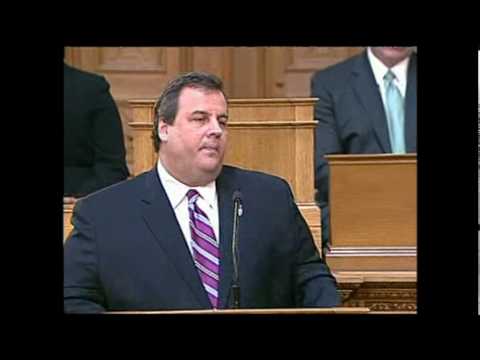
February 7, 2011 - After years of decline, smoking rates in New Jersey are on the rise again. In its recently released State of Tobacco Control report for 2010, the American Lung Association says the number of adults who smoke in New Jersey rose last year to 15.8 percent, up from 14.8 percent a year earlier. The report also showed the smoking rate among New Jersey high school students increasing to 17 percent, up from 14.3 percent. The data was culled from federal surveys through the U.S. Centers of Disease Control and Prevention that were done in 2009.
Directly related news brief:
New Jersey - governor has proposed eliminating state funding of tobacco control program..
Where's Senator Barbara Buono when you need her??
Such numbers would seemingly provide reason for the state to expand its anti-smoking and smoking cessation programs. But, because of the $11 billion deficit in the state budget last year, New Jersey slashed its funding for such programs in July from $7.6 million to just $600,000. The dramatic cuts came even though the state still brought in about $1 billion in 2010 from taxes on cigarettes and a 1998 legal settlement (Tobacco Master Settlement Agreement) with the big U.S. tobacco companies, and despite the state having a near total ban on indoor workplace smoking.
New Jersey started receiving payments from this settlement in 2000, it has received no less than $220 million a year and as much as $405 million. However, the master settlement agreement with the tobacco companies doesn't mandate how states must spend that money. In New Jersey's case, then-Gov. Jim McGreevey, for his 2004 state budget, borrowed against the cash New Jersey was to receive over 25 years to help plug a $5 billion deficit that year. So those funds are gone, dedicated to paying off debt.Those who are working to combat smoking in the Garden State are wondering what will happen to smoking rates in New Jersey in the years to come, as the tobacco companies continue to spend more than $200 million a year to market an expanding line of products here.
They also are wondering if state funding for effective anti-tobacco programs will ever be restored or even wiped out entirely. And they are wondering if the number of deaths tied directly to smoking in New Jersey — 11,201 last year — and the economic cost to the state — nearly $5.6 billion in 2010 — will rise.
"The bottom line is that despite an extraordinarily difficult budget situation, the Department of Health and Senior Services remains committed to tobacco prevention as a key public health issue, and that is why we have merged tobacco prevention efforts as part of an overall chronic disease strategy," said Donna Leusner, spokeswoman for the department.
Reference: Are anti-smoking efforts going up in smoke?, Written by MIKE DANIELS STAFF WRITER, Asbury Park Press, 2/4/2011.
New Jersey related news briefs:
New Jersey - governor has proposed eliminating state funding of tobacco control program..;
Somerset, NJ - high school participates in National Kick Butts Day..;
N.J. Assembly committee approves e-cigarette ban..;
New Jersey town bans smoking on beach, boardwalk, sidewalk..;
New Jersey - legislation proposed to prohibit sale of e-cigarettes..;
New Jersey assemblywoman wants to limit electronic (e) cigarettes..;
E-cigarettes need to establish efficacy and safety - FIRST...
New Jersey - Senator Buono bill would ban smoking in public parks and beaches..;
New Jersey bans flavored cigarettes..;
New Jersey May Ban Certain Flavored Cigarettes..;
Read more...
PAPER: Giving Up Smoking Linked To Greater Happiness And Elevated Mood..

 February 7, 2011 - It appears to be a myth that giving up smoking most likely makes you miserable. Brown University researchers found that those who were in the process of quitting smoking were never happier.
PAPER: Time-Varying Smoking Abstinence Predicts Lower Depressive Symptoms Following Smoking Cessation Treatment, Christopher W. Kahler (christopher_kahler@brown.edu), Nichea S. Spillane, Ph.D., Andrew M. Busch, Ph.D. and Adam M. Leventhal, Ph.D., Nicotine & Tobacco Research, Nicotine Tob Res (2010) doi: 10.1093/ntr/ntq213 ABSTRACT..
Kahler and team examined data on 236 male and female smokers who wanted to give up. They were also heavy social drinkers. They were all provided with smoking cessation counseling and nicotine patches and then set a date to give up smoking. A number of the participants were also given counseling on ways to cut down on their alcohol consumption.
The participants who failed straight away were still followed up throughout the study and were found to be the unhappiest of all the groups. The ones who managed to abstain throughout the study period had the highest levels of happiness, the authors wrote.
Kahler believes it is possible to extrapolate from this study and generalize over the whole population, even though his participants were relatively heavy drinkers. He refers to a 2002 study of smokers who had all experienced episodes of depression in their lives, but did not all drink.
The authors added that the link between happiness and smoking cessation was strong, regardless of whether the participant was drinking less or the same - the constant was successful smoking cessation. The researchers believe that giving up smoking relieves symptoms of depression and that it is a myth to believe smoking eases anxiety.
Reference: Giving Up Smoking Linked To Greater Happiness And Elevated Mood, written by Christian Nordqvist, Medical News Today, 12/5/2010.
Read more...
New York State - in budget governor includes $130 million in revenues from taxes on cigarettes sold by Indian merchants..
Former Governor Patterson
Current Governor Cuomo..

February 5, 2011 - New York State's Governor Gov. Andrew Cuomo’s intention to enforce taxation on Native-sold cigarettes is on paper. In the first state budget of his tenure, the governor accounted for $130 million in revenues from taxes on cigarettes sold by Native merchants.
“This is nothing new, and nothing has changed,” said Seneca Nation President Robert Odawi Porter in reaction to the state budget, which was released Tuesday. “We hope to have a chance to discuss these and other issues with the governor.”
Gov. Cuomo is the fifth state executive who will try to end tax-free cigarette sales by New York Indian tribes, an effort started nearly three decades ago by his father and former governor, Mario Cuomo. Several spending plans of the last four governors have all included expected revenues from Native-sold cigarette taxation — a move the state executives believed would bridge budget shortfalls.
Including revenues from Native-sold cigarette taxation in the 2011-12 state budget isn’t Gov. Cuomo’s first indication of plans to collect the taxes.
The following are statements from Seneca Nation of Indians President Robert Odawi Porter: From President Robert Odawi Porter: “This is nothing new, and nothing has changed. We hope to have a chance to discuss these and other issues with the governor. But the Seneca Nation will never be the state’s tax collector. We’ve said that repeatedly and nothing has changed in that regard. But we’re looking forward to talking with the governor and his staff about what divides us.” (Seneca Nation reacts to Cuomo's budget, posted by: Emily Lenihan, wivb.com, 2/32011)
Former Governor Patterson had plans that was suppose to start on Wednesday, September 1st the state will require wholesalers who supply Indian reservation stores to pay the $4.35 per-pack tax upfront and then collect it from the tribes. Tribes say they won’t pay any New York taxes and will sell their own brands instead. (Onondagas say they will stop selling national-brand cigarettes, Glenn Coin, The Post-Standard, 8/27/2010.)
Last year, the administration of then-Gov. David A. Paterson counted on collecting $160 million by ending tax-free sales, but court action halted that effort. The state and several Indian tribes are currently in a court battle over the provision of collecting the taxes from sale of cigarettes and tobacco products to non-tribal citizens. New York State - federal judge rules in favor of the state but still can't start collecting sales tax; no mediation..
References: State’s tax on Native cigarettes in budget by Christopher Michel, Olean Times Herald, 2/4/2011; Cuomo sees $130 million from tax on
cigarettes
But Senecas vow to press opposition by Tom Precious, NEWS ALBANY BUREAU, BuffaloNews.com, 2/2/2011.
Read more...
Kudus, Central Java, Indonesia - 75% of town employed in cigarette industry..




February 5, 2011 - Kudus ('Kota Kretek'' - Kretek City), strongly Islamic town and the birthplace of kretek (Indonesian clove cigarette) located in Central Java. About 75 per cent of Kudus's population of 800,000 are employed by the cigarette industry, and there are almost a quarter of a million workers - almost all of them women - who handroll kreteks, Indonesia's distinctive clove cigarette.
The women work in pairs, and with astonishing dexterity. Each pair typically makes more than 5000 cigarettes a day. The price reflects a concessionary tax regime that highlights the Indonesian government's controversial approach to regulating the industry, where the protection of the 6 million workers directly employed in the industry, and their extremely wealthy bosses, trumps health concerns.
Indonesia is one of the world's last bastions of laissez-faire regulation of tobacco use. Ads still run on TV; the football league is sponsored by a tobacco company, as are pop concerts, and cultural and sporting events, where young women often hand out free packets to anyone with a ticket. (Indonesia - paradise for smokers and paradise for tobacco companies..)
Rates of smoking are rising - up 26 per cent in the past 15 years as women and youngsters take up the habit. One in four boys aged between 13 and 15 now smoke and 70 per cent of men do. Just 5 per cent of women smoke, but that percentage has tripled in the past decade.
The health and economic effects are devastating. More than 400,000 a year die from health-related illnesses, according to the World Health Organisation. Another survey found that Indonesian households with smokers spend more on cigarettes than fish, meat, eggs and milk combined, and four times more than they outlay on education.
Tax from cigarettes brings in $6.2 billion for the government, about 8.5 percent of revenue, but, says Ruli Mustafa of the anti-smoking group Combat, the health costs each year are ''far bigger'', more than $21 billion by one estimate. In Kudus, though, where the streets are festooned with banners from smoking companies, many argue that kreteks, the choice of 88 per cent of smokers, are in fact healthy. Local legend has it that Camhari, the Kudus native who invented kretek, was cured of asthma after he added cloves to tobacco.
Kudus does have an anti-smoking campaigner, of a type. Bambang Kismanu is the head of the health department office in Kudus and has a budget of about $50,000 a year to encourage people to give up cigarettes. Each school in the regency now has no-smoking signs and teachers have mostly stopped lighting up in the playground, he says. Efforts are concentrated on fourth and fifth graders, amid alarming evidence of pre-teens taking up smoking.
"We are trying to get buildings to become non-smoking areas, but we have only two so far," Bambang says. ''That's here [at the health department office] and at the manpower ministry." As we talk I spy a dirty ashtray in his office. "'You smoke?"
"No, it is just for guests. I've given up,"' Bambang replies. We say our goodbyes, but I return a few minutes later to use the bathroom, surprising Bambang. The portly health chief is drawing deeply on a kretek, chatting away with a group of his staff, all of them smoking at their desks.
Reference: A nation of smokers that won't turn over new leaf, Tom Allard, The Sydney Morning Herald, 2/5/2011.
Indonesia some related news briefs:
Jakarta, Indonesia - lawyers mount bid to challenge city's anti-smoking decree..;
Indonesia - at least one court still debatng whether tobacco is addictive..;
Indonesia - by banning smoking inside buildings smokers could be considered criminals.;
Indonesia - govt to raise cigarette excise up to 10 percent starting January 2011..;
Indonesia - tobacco companies provide volcano rescue relief..;
Indonesia - health minister drafting regulation on tobacco advertising ban..;
Indonesia - police drop tobacco graft case, sparking suspicions..;
;
Indonesia - Australian bands (2) will they perform at tobacco sponsored musical festival??;
Indonesia - confusion regarding possible suspects regarding the missing clause from the health bill passed in September 2009..;
Indonesia - 2-year old kicks the habit - COLD Turkey..;
Indonesia - agrees to ratify the WHO FCTC public health treaty..;
WTO - US rejected call by Indonesia to rule on dispute on ban of clove cigarettes in the US..;
Indonesia - on June 22nd will ask WTO to rule on US ban on clove cigarettes..;
Indonesia - PT Djarum Tobacco to sponsor badminton events..;
Indonesia - CNN Video on 2-year old nicotine addict..;
Indonesia - more on the 2-year old addicted to nicotine..;
Indonesia - paradise for smokers and paradise for tobacco companies..;
Indonesia - House Finance and Banking Commission opposes govt plan to lower cigarette production..;
Jakarta, Indonesia - more on the Kelly Clarkson tobacco sponsored concert April 29th..;
Jakarta, Indonesia - Singer Kelly Clarkson will she perfom concert sponsored by major tobacco company..;
Indonesia - launches formal dispute with WTO over U.S, ban on clove cigarettes..;
Indonesia - parents encourage 4-year old boy to continue smoking habit..;
Hemoglobin obtained from pigs may be used in cigarette filters..;
Indonesia - government may raise cigarette tax and cut cigarette output..;
Indonesia - Muhammadiyah-owned university students demonstrate against edict against smoking..;
Indonesia - kretek cigarette maker Gudang Garam's 2009 net profit jumps 84 percent..;
Indonesia - persons accused of eliminating clause designating tobacco as addictive..;
Indonesia - second largest Muslim organization launched a fatwa against smoking..;
Indonesia - RATIFICATION OF FCTC MAY RAISE INDONESIA'S BARGAINING POWER.. ;
Indonesia - 18 tons of illegal cigarettes destroyed..;
Indonesia - Government to limit cigarette production..;
Indonesia - BAT, Bentoel shareholders approve planned merger..;
Indonesia - another protest rejecting the new cigarette excise tax..;
Indonesia - workers from small cigarette producers protest excise tax increase..;
Indonesia - cigarette industry has pledged to stage a demonstration to protest a government plan to increase excise tax.;
Indonesia - the last paradise for a puff in Southeast Asia..;
Indonesia - trade minister officials want to meet with US counterparts to discuss ban on clove cigarettes..;
Indonesia - PT BAT Indonesia to merge with PT Bentoel International Investama Terbuka..;
Indonesia - missing tobacco regulation in approved Health Law..;
Indonesia - section on tobacco in health bill disappears..;
Indonesia - Constitutional Court by close vote rules that tobacco ads can continue..;
Indonesia - parent smoking can negatively affect the nutrition of children..;
Indonesia - new council member suspect in cigarette fraud case..;
Indonesia - an NGO commission assists cigarettes must be banned in films..
Indonesia - a paradise for tobacco companies..
Indonesia - after buying cigarettes very little left for food..;
Indonesia - will they ratify the first world public health treaty..;
Indonesia - last paradise to smoke in public places in Southeast Asia..;
Indonesia - Industry minister to close tobacco to new foreign investment..;
Indonesia Finance Ministry to cap tax deductions for tobacco companies..;
Indonesia - Smoking hits poor families the hardest, making the poor even poorer..;
Indonesia - Cigarette makers defy crisis, grows stronger..;
Indonesia - government may raise cigarette excise tax next year..;
WHO - Indonesia is crying out for your help..;
Indonesia - dispute with U.S. over banning the use of clove in cigarettes..;
Indonesia 'cash cow' for Philip Morris International..;
Tobacco industry has long targeted young people as "replacement smokers";
Indonesia - district court dismisses request to ratify FCTC..;
Asean Countries - Tobacco Industry Blocking Global Treaty On Tobacco..; Indonesia - farmers hold rally protest tobacco controls..;
Indonesia - tobacco farmers reject Islamic council's edict..;
Indonesia - Ulema Council - debate results is split on smoking..;
Indonesia - Withdraw Sponsorhip of Another Rock Concert..;
Indonesia to increase tax on tobacco products..;
Semarang, Indonesia - Cigarette Smoking Areas to be Prepared..;
Jakarta, Indonesia - Malls help enforce non-smoking ban..;
Indonesia - federal anti-smoking laws in one year - MAYBE..;
Indonesia - NGO's (non-government organizations) Demand the Government Ratify WHO's FCTC.;
Indonesia to raise cigarette tax by 6 to 7% in 2009..;
Surabaya, Indonesia - anti-smoking bylaw 10/2009 - FOR REAL??
Indonesians smoking more than ever before..;
Indonesia further rise in the excise tax would hurt the cigarette industry..;
Alicia Keys - Jakarta Concert (July 31st) tobacco companies forced to withdraw sponsorship.. and
Most Indonesians support moves to ban tobacco advertisements..
Read more...
U.S. FDA for our children must limit the availability of menthol cigarettes..
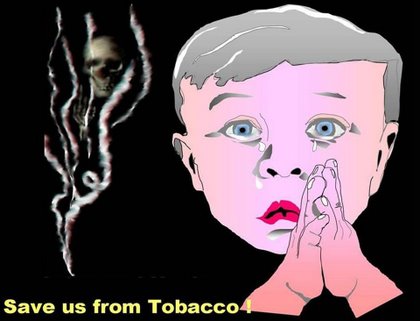 February 5, 2011 - Each day in the United States, approximately 3,900 persons aged 12--17 years smoke their first cigarette, and an estimated 1,000 adolescents become daily cigarette smokers. The vast majority of persons who begin smoking during adolescence are addicted to nicotine by age 20. (MMWR - Cigarette Smoking --- United States, 1965--2008..)
A national study finds that smokers who started recently are more likely than longer-term smokers to use menthol cigarettes. Menthol is an additive used in cigarettes that masks the harshness of cigarette smoke by giving the smoker the sensation of coolness in the mouth, pharynx, and lungs. By masking the harshness, menthol can make it easier for young people to start smoking. (Menthol Cigarettes - smokers who started recently more likely to smoke menthols..)
Menthol cigarettes are preferred by about 50 percent of teenager smokers and 80 percent of African-American smokers. These are the populations that may find the menthol cigarette habit hard to kick. SOURCES: Mendiondo MS et al. Addiction 2010 Dec; 105 Suppl 1:124-40, Penn State College of Medicine news release. (Menthol Cigarette Habit Harder to Kick, Submitted by Deborah Mitchell, EMAX Health, 12/21/2010)
Many more cigarettes are sold in the U.S. compared to cigars and smokeless tobacco. U.S. consumers spent an estimated $90 billion in 2006 on tobacco products.
* Approximately $83.6 billion was spent on cigarettes.
* Approximately $3.2 billion was spent on cigars.
* Approximately $2.6 billion was spent on smokeless tobacco (e.g., chewing tobacco and snuff). (Economic Facts About U.S. Tobacco Production and Use, CDC Smoking and Tobacco Use..
On June 22, 2009 President Barack Obama signed into law an anti-smoking bill (Family Smoking Prevention and Tobacco Control Act) that gives the FDA greater power to regulate tobacco. The president called this law the "Kids tobacco regulation bill to protect our kids."
Health care officials have longed complained that flavored cigarettes lure young people into a lifetime of nicotine addiction. So one of the first orders of business the FDA announced was a ban on cigarettes with flavors characterizing fruit, candy, or clove. Unfortunately, the tobacco industry really did not mind taking these flavored cigarettes off the market since these cigarettes were not even one percent of the market. (FDA - first steps in the role of tobacco regulation..)
Margaret A. Hamburg, M.D., 21st Commissioner of Food and Drugs administration (FDA): The flavored cigarettes are a gateway for many children and young adults to become regular smokers. "Flavored cigarettes attract and allure kids into lifetime addiction," said U.S. Department of Health and Human Services Assistant Secretary for Health Howard K. Koh, M.D., M.P.H. "FDA's ban on these cigarettes will break that cycle for the more than 3,600 young people who start smoking daily." Dr. Lawrence Deyton, Director of the Center for Tobacco Products at the FDA: Children are three times us likely as adults to smoke a flavored cigarettes. FDA - first steps in the role of tobacco regulation.. did not include menthol flavored cigarettes..
If the goal of the effort by the FDA's Center for Tobacco Products is to reduce the number of kids beginning to use tobacco products then they must reduce the availability of menthol cigarettes.
A few menthol related news briefs:
Lorillard Commissioned Study.. cigarette black market: Canada/New York State..;
Menthol cigarettes - easier to tolerate for the first time smoker - our kids..;
Series of papers on Mentholated Cigarettes - journal of Addiction..;
More on the defense of menthol - the Tobacco Industry..;
Menthol cigarettes - if banned, how can this be accomplished??;
For our children ban all flavored tobacco products...
Read more...
PAPER: Mexico - smoking ban no significant effect on restuarants' income, employees' wages and levels of employment..

 February 4, 2011 - Mexico City implemented smoke-free legislation April 2008. This study is the first to evaluate the economic impact of the law, using a detailed dataset and appropriate econometric techniques. The study provides timely information for tobacco control efforts in Mexico and adds to the scarce literature on the economic impact of smoke-free laws in low and middle-income countries.
PAPER: The economic impact of Mexico City's smoke-free law, Carlos Manuel Guerrero López, Jorge Alberto Jiménez Ruiz1, Luz Myriam Reynales Shigematsu1, Hugh R Waters (waters@rand.org), Tob Control doi:10.1136/tc.2010.036467, ABSTRACT/FULL TEXT
There is no statistically significant evidence that the Mexico City smoke-free law had a negative impact on restaurants' income, employees' wages and levels of employment. On the contrary, the results show a positive, though statistically non-significant, impact of the law on most of these outcomes. Mexico City's experience suggests that smoke-free laws in Mexico and elsewhere will not hurt economic productivity in the restaurant and bar industries.
Read more...
Some US cities that prohibit smoking in parks and other public spaces..
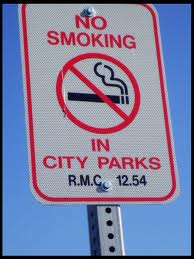 February 4, 2011 - New York City lawmakers voted Feb. 2 to ban smoking outdoors in public parks, public beaches, and even Times Square. (New York City Council votes to ban smoking in parks, beaches and other outdoor public places..) The Big Apple is the latest major US city to prohibit smoking in parks and other public spaces, adopting laws that are tougher than its home state's. Such laws are a boon to public health and reduce litter in urban parks, say supporters.
In all, almost 500 cities, counties, and towns have banned smoking in public parks.
Here are five big cities that have done so:
1. Chicago
The Chicago Park District, which manages Chicago’s parks and 26 miles of lakefront, banned smoking at beaches and playgrounds in 2007. Violators can be fined $500 if caught smoking in either of those venues. In part, the ban is intended to keep bacteria-bearing litter (i.e., cigarette butts) out of recreational waters so that swimming areas can remain open. The park district tests Lake Michigan water five times a week in summer and posts the results.
2. Los Angeles County
Smoking is prohibited at all parks in Los Angeles County, under a ban approved by the Board of Supervisors in September 2009. Exceptions are made for actors who are smoking during filming for a movie or during a theatrical production, and for models during a photo shoot – but only in consultation with a fire official and at the discretion of the park director.
Smoking may be permitted in contractor-operated facilities, such as county golf courses, in designated areas. Smoking is also banned from any part of a public beach, except the parking area, in unincorporated areas of Los Angeles County.
3. San Francisco
San Francisco bans smoking in public parks and, for that matter, in any public open space under the jurisdiction of a city department or the Recreation and Park Commission. When approved in 2004, the ban was one of the strictest to date. It applies to many public spaces: parks, squares, gardens, playing fields, piers, and farmers' markets. (Piers used for commercial purposes are not covered by the ban.)
Smoking is not allowed in playgrounds or "tot lot" sandbox areas, either, but that's by order of the California Health and Safety Code.
4. Salt Lake City
Salt Lake City, Utah's capital, bans smoking in its 126 parks and open spaces, covering nearly 2,000 acres.
According to city code, smokers in “city owned parks, public squares, ball diamonds, golf courses, soccer fields, and other recreation areas, Library Square, city owned cemeteries and trails” are included in the ban, but not areas specifically designated for smoking. Violators can be fined up to $25 but do not face the possibility of imprisonment.
5. Albuquerque, N.M.
In June 2007, then-Mayor Martin Chavez issued an executive order banning smoking on city property – including transit stops and parks. The order didn’t go through the city council or state legislature, though. Instead, the mayor asked citizens not to smoke in city parks, and he urged citizens and police officers to enforce the ban by confronting violators. The Albuquerque City Council opposed the executive order, calling it “unenforceable.”
According to the Albuquerque Open Space Program website, the ban applies to all city property except golf courses and sidewalks.
Reference: Which US cities ban smoking in public parks? Here are five, Leigh Montgomery, Staff writer, Geoff Johnson, Contributor, Christian Science Monitor, 2/3/2011.
Read more...
Philip Morris USA seizes more counterfeit Marlboro cigarettes in New City area..
 February 4, 2011 - In its continued fight against counterfeit cigarettes, Philip Morris USA has seized 290 packs of counterfeit Marlboro cigarettes from two retailers on the Poospatuck Reservation in Suffolk County, N.Y. The seizure was part of the company’s lawsuit against the retailers.
The move comes after a federal judge in New York approved PM USA’s request for emergency relief including the ability to search smoke shops for counterfeit Marlboros in New York. In total, the company has sued 48 retailers in the state for selling counterfeit cigarettes, including six other Poospatuck retailers.
Previous directly related news brief:
PM USA filed lawsuits in NYC against eight more retailers..
Reference: Philip Morris USA Seizes 290 Packs of Counterfeit Cigarettes, csnews.com, 2/3/2011.
Read more...
Norway - snuff posts only growth on declining Norwegian tobacco market..

February 4, 2011 - Norwegian food retailers sold 1.6 billion cigarettes last year, down by 54.4 million or 3.2 percent from the level of sales the previous year, according to an Esmerk Norwegian News story quoting statistics from Nielsen Norge.
Pipe and rolling tobacco turnover declined by 6.1 percent, while snuff turnover increased by 12.4 percent, a lower growth than was recorded in 2009.
Interesting report: Tobacco consumption among men and women 1927–2007 K E Lund, M Lund, A Bryhni, Tidsskr Nor Legeforen 2009; 129:1871-4.
Reference: Snuff posts only growth on declining Norwegian market, Tobacco Reporter, 2/4/2011.
Norway - some related news briefs:
Norway - directorate would like to raise the legal age for buying tobacco from 18 to 20..;
Norway - WHO wants govt to ban smoking in private home/gardens how about starting with cars when kids are present??;
Norway - the state of public health 2010 – new report published..;
Norway - health secretary no graphic warnings on snus boxes for now..;
Norway - Philip Morris announces lawsuit challenging tobacco product display ban..;
Norway - drops top cigarette makers from wealth fund..;
Norway - starting January 1, 2010 - tobacco no longer on display..;
Norway strict tobacco display ban by October 2009..
Read more...
New York State - AG files lawsuits against web site operators illegally selling cigarettes..

 February 4, 2011 - The state Attorney General’s Office has filed lawsuits (in the state Supreme Court in Manhattan) against six web site operators which the state says illegally sold cigarettes to New York State residents, part of a disturbing trend that provides teens easy access to tobacco, and encourages a loss of hundreds of millions of dollars in state revenues.
According to the Attorney General’s complaints, the named internet vendors accepted orders from New York State consumers and delivered the cigarettes to New York State addresses.
The six vendors are:
–Totally Tickled Limited, Inc. for discountcigarettesdomestic.com, Kentucky Smokes, and David White;
–Anton Limited for INeedSmoke.com, and Kyle Williams;
–Cigarettes-online.biz and John Sparkle;
–Best Products Solution Limited for http://cigoutlet.net/;
–Best Products Solution Limited for Smokin4free.com; and
–Best Products Solution Limited for cigoutlet.biz.
New York State Public Health Law Section § 1399-ll prohibits the shipment of cigarettes to any person in the state unless that person is licensed as a cigarette tax agent or wholesale dealer. Four of the complaints further charge that the internet vendors violated Executive Law section 63(12) by repeating these illegal sales on more than one occasion. The state is seeking fines of up to $5,000 for each violation and injunction against future sales.
How are tobacco products being delivered?? The main goal for passage of the PACT Act: to Protect Our Children - Make it illegal to use the U.S. Postal Service to deliver any form of tobacco product.. FedEx, UPS and DSL — have bowed to state pressure and have refused to ship tobacco products. (U.S. PACT Law takes effect June 29, 2010..)
The Centers for Disease Control and Prevention report that 24,100 children under the age of 18 become new daily (EACH DAY) smokers each year. An estimated 389,000 kids now under the age of 18 in New York will die prematurely from smoking.
In addition to the health effects, the fiscal impact of low-cost cigarettes is staggering, according to the AG’s office. The New York State Department of Health reported that in 2004, the state lost between $436 million and $576 million from the sale of low price, mainly untaxed cigarettes. Of that loss, between $106 million and $122 million derived from online tobacco sales. Aside from the lost revenue, avoiding the cigarette tax helps smokers avoid quitting: if all smokers paid the average retail price for cigarettes, there would be between 51,026 and 76,539 fewer adult smokers in New York.
Internet tobacco prices are much lower than those in regular brick-and-mortar retail outlets because they almost never include the taxes charged by retail stores. The low-cost cigarettes make internet tobacco products attractive to both adult and underage smokers, and help boost overall smoking levels. There is little to prevent underage online purchases as youth smokers can simply provide false identification to avoid their “age verification” procedures – which is not possible in face-to-face purchases.
Big Tobacco benefits the most from online cigarette sales because they can sell their high-demand, high-priced premium brands cheaply, as these sales are made tax-free. In fact, many sites advertise that they do not report their sales to any government entity. This practice is entirely illegal since federal law requires that internet vendors report all sales to the tax departments of the states into which they are selling. 2-3-11
The New York State Attorney General’s Office has long been active in trying to stop the sales of cigarettes over the internet. In 2005, it entered into agreements with the major credit card companies in which they agreed not to permit their credit cards to be used for the sale of tobacco products over the internet. In addition, the Office entered into agreements with three of the largest shippers to stop the delivery of cigarettes to individual consumers anywhere in the country. In recognition of these and other efforts, the Office’s Tobacco Compliance Bureau was given the “Champions of 2010″ award by Reality Check, a statewide youth program whose goal is to educate teens about the manipulative marketing practices used by the tobacco industry to get teens to smoke.
These cases are being handled by Assistant Attorney General Marc Konowitz under the supervision of Tobacco Compliance Bureau Chief Dana Biberman.
References: AG Sues Web Sites Selling Cigarettes, North County Gazette, 2/3/2011; Schneiderman Sues Tobacco Retailers For Illegally Selling Cigarettes Online Amid Teen Smoking Epidemic, NewsLI.com, 2/3/2011.
A few related news briefs:
Australia - govt health minister to introduce bill to prevent tobacco Internet sales..;
Israel - Health Ministry to target web smoking ads..;
Internet, Flavors everywhere - snuff being marketed to kids as hip, cool and healthy..;
Social networking sites marketing tobacco products to youngsters..;
Internet - kids being exposed to messages on tobacco use..;
Collect Tax on Phone and Online Tobacco Sales, More Money for State Health Care Programs...
Read more...
Reynolds American Inc. highlights business report q4 and entire 2010..

February 4, 2011 -
Reynolds American Inc. (RAI) consist of the following:
* R.J. Reynolds Tobacco Company is the second-largest U.S. tobacco company. The company's brands include six of the 10 best-selling cigarettes in the United States: Camel, Pall Mall, Winston, Kool, Doral and Salem.
* American Snuff Company, LLC is the nation's second-largest manufacturer of smokeless tobacco products. Its leading brands are Kodiak, Grizzly and Levi Garrett.
* Santa Fe Natural Tobacco Company, Inc. manufactures Natural American Spirit cigarettes and other additive-free tobacco products, and manages and markets other super-premium brands.
* Niconovum AB markets innovative nicotine replacement therapy products in Sweden and Denmark under the Zonnic brand name.
RAI's, President and CEO, Susan Ivey - will be retiring on February 28th after 6 1/2 years - this will be her last earnings call. Dan Delen, RAI’s President and CEO-elect, will take over on March 1st.. (Reynolds American Inc - Susan Ivey, Ms. Everything, to retire..)
Question: outlook for the cigarette industry, in terms of volume and also your expectations for state excise taxes? Dan Delen - I think for 2011 we really would see the industry cigarette volume to be very similar to 2010, down around 4%, and in moist snuff as well, I think similar to 2010 we would see an increase there in the 6 to 7% range. I think really when we look across both categories, pretty steady as she goes. I think that’s extremely positive, and a positive backdrop to our business looking forward.
Key brands deliver additional 4Q10 volume and share gains
o Camel market share up 0.6 points
o Pall Mall market share up 2.3 points
o Grizzly share of shipments up 0.8 points
Ivey said that RAI’s Santa Fe Natural Tobacco Company, Inc. subsidiary continued to deliver robust growth in 2010, with double-digit volume and earnings gains.
Ivey noted RAI’s announcement on Jan. 14 that it plans to sell its Lane, Limited subsidiary, which manufactures a variety of tobacco products, to Scandinavian Tobacco Group A/S. (Scandinavian Tobacco Group A/S (STG) plans for the future..) “This will allow RAI’s operating companies to devote their energy and resources to the primary growth categories within their businesses,” Ivey said.
R.J. Reynolds has reduced product offerings by more than 80 percent, ending 2010 with less than 150 SKUs.
The number of cigarettes the Winston-Salem, N.C., company sold fell 5.1 per cent to 19 billion cigarettes during the quarter, compared with its industry estimate of 4.7 per cent.
Continuing strong market-share gains from its Pall Mall cigarette and Grizzly moist-snuff brands lifted R.J. Reynolds’ cigarette growth brands continued to post strong gains in line with the company’s defined brand-portfolio strategy. These gains are significantly offsetting declines on the company’s other cigarette brands. Those declines were driven by private label brands that the company has been de-emphasizing and delisting to reduce complexity and streamline its product offerings.
The company’s total fourth-quarter cigarette market share of 28.3 percent was down 0.2 percentage points from the prior-year quarter. However, excluding the private label brands, R.J. Reynolds’ total cigarette market share was up 1.0 percentage point to 28.1 percent. For the full year, total cigarette market share was 28.1 percent, down 0.2 points from the prior year period, but its market share was up 0.7 points at 27.5 percent excluding private label brands. R.J. Reynolds’ fourth-quarter cigarette shipment volume was down 5.1 percent from the prior year
quarter, but down just 1.9 percent excluding private label brands. By comparison,
fourth-quarter industry volume declined 4.7 percent. For the full year, R.J. Reynolds’ cigarette shipment volume was also down 5.1 percent from the prior-year period. Excluding private-label brands, volume was down 2.1 percent compared to the industry decline of 3.8 percent.
Both of the company’s growth brands, Camel and Pall Mall, again delivered higher market share and volume. For the fourth quarter, combined growth-brand market share of 16.2 percent was up 2.9 percentage points from the prior-year quarter.
Pall Mall’s continued rise in popularity as a lower-cost cigarette option has helped it overtake Camel as not only the top Reynolds brand, but also the third largest U.S. brand. Pall Mall’s market share was 8.3 percent, up from 7.8 percent in the third quarter and 6 percent in the fourth quarter of 2009. By comparison, Camel’s market share was 8 percent, unchanged from the third quarter and up from 7.4 percent a year ago.
Cigarettes sold by Pall Mall grew 19 per cent during the quarter as the company continues to promote the brand as a longer-lasting and more affordable cigarette as smokers weather the weak economy and high unemployment. Its share of the U.S. market grew 2.3 points to 8.3 per cent in the quarter. Camel sold 8.5 per cent more cigarettes during the period, while its U.S. market share grew 0.6 points to 8 per cent.
Smokeless Tobacco
Reynolds American said it sold 8.2 per cent more of its Kodiak and Grizzly smokeless tobacco products in the fourth quarter. Its smokeless market share grew 0.5 points to 29.9 per cent of the U.S. market. Reynolds American's larger competitor, Altria Group Inc., parent company of Marlboro maker Philip Morris USA, said last week that raising prices and cutting costs helped its third-quarter net income climb nearly 27 per cent. The number of cigarettes it shipped fell 7 per cent.
Camel SNUS, the brand’s first modern smoke-free product, continues to perform well, with its two new styles — Robust and Winterchill — adding to that performance. These two larger pouch styles were introduced in the third quarter, and offer adult tobacco consumers a richer, more full-bodied tobacco taste, as well as smoke-free, spit-free convenience. On a moist snuff equivalent basis, Camel SNUS had a 4.5 percent share in the fourth quarter.
R.J. Reynolds is making product and packaging upgrades to Camel’s new line of innovative dissolvable tobacco products — Orbs, Sticks and Strips — which will be introduced in two new lead markets in March.
Industry moist-snuff shipments were up 5.5 percent in the fourth quarter, and up 8.1 percent for the year. On a consumer off-take basis, moist-snuff volume increased about 6 percent for the year. Grizzly, the company’s flagship brand, has delivered solid growth this year, following a challenging first quarter. The brand benefitted from American Snuff’s focus on equity building, which included the packaging upgrade to embossed metal lids in the second quarter. The brand also benefited from the third-quarter expansion of R.J. Reynolds’ field trade-marketing organization to serve American Snuff. The brand set a new record-high marketplace performance in the fourth quarter. Share of shipments gained 0.8 percentage points to 26.1 percent, while on a consumer off-take basis
as measured by AC Nielsen, Grizzly was up 1.1 percentage points from the prior-year
quarter, at 27.2 percent. Grizzly’s fourth-quarter shipment volume increased by 9.9 percent, and was up 6.8 percent for the year. The brand further strengthened its position in the rapidly growing pouch segment, which now represents almost 9 percent of total moist-snuff category sales. Grizzly captured 24.3 percent of all pouch sales in the fourth quarter and has the number one Wintergreen pouch
style in the market.
Question to Dan Delen: what do you think could happen to volumes if there was an actual menthol ban? Well, let me start by saying this. I don’t believe a menthol ban is imminent. I think the TPSAC (Tobacco Products Scientific Advisory Committee) office is going to make its recommendations here at the back end of March 2010, but just to remind everybody that that is just a recommendation at this stage, and then we’ll need to see what the FDA actually decides to do, based on whatever recommendation comes out to the advisory committee. So I think that we don’t have a specific direction from the FDA how they might want to act, I think it’s a little bit premature to speculate as to how sort of competitive positions or volumes in different segments might settle in in the marketplace.
References: RAI: Key-brands momentum drives strong 2010 results, SOURCE: RAI, Inc. 2/3/2011; Reynolds American CEO Discusses Q4 2010 Results - Earnings Call Transcript, 2/3/2011; Reynolds American CEO Discusses Q4 2010 Results - Earnings Call Transcript - Questions and Answers, Seeking Alpha, 2/3/2011.
RAI - news briefs 2010 1st 3-quarters:
Highlights - Reynolds American - earnings q1 2010..;
Highlights RAI q2 2010 Earnings Report..;
RAI - highlights q3 2010 earnings report... Read more...
India - 80% of teenagers in metropolitan cities are addicted to smoking cigarettes..
 February 3, 2011 - Survey finds nearly 80 percent of teenagers between the age of 14 to 19 in the metropolitan cities, are addicted to smoking cigarettes. The survey conducted by Assocham (Associated Chambers of Commerce and Industry of India) survey saw participations of over 3,000 teenagers of age group of 14 to 19 from all over the schools and college in metropolitan cities from November to January 2011. Of the teenagers that are addicted to cigarettes, one out of five is smoking an alarming 13 to 15 cigarettes every single day, it reveals.
The major cities in which respondents were interviewed include Mumbai, Goa, Cochin, Chennai, Hyderabad, Indore, Patna, Pune, Delhi, Chandigarh and Dehradun. Interestingly, it is observed that consumption of cigarettes is more in fashion in Delhi-NCR, followed Mumbai, Bangalore, Pune, Chandigarh, Chennai and Hyderabad.
The survey highlights the fact that consumption of cigarettes among teenagers has increased due to smoking by parents, availability and price of tobacco, lack of parent involvement, approval of smoking by siblings and lower self-esteem among teenagers.
It reveals that majority of children, aged 14 to 16 have tried smoking in their schools. Every single day, close to 600 teenagers begin to smoke cigarettes, it says.
Of these teenagers smoking, about 20 percent of the males are addicted to smoking and close to 6-10 percent of the females are smoking regularly.
The majority of teenagers nearly spend Rs 3,500-4,500 (77.04 USD-99.05 USD) on an annual basis. The survey reveals that fact that nearly 94 percent of teen smokers have never been asked for proof of age when buying cigarettes in a store.
Interestingly, 80 percent teens were allowed for buying cigarettes even though the retailer was aware they were under the age of 18.
"Parents are the biggest influence and do have the power to introduce their children to the dangers of smoking," Assocham Secretary General D S Rawat says. With combined efforts from adults, teenagers could be able to get the necessary education and make the decision to not smoke, Mr Rawat says.
The most dramatic increase in regular smoking occurs at about age 15 for both boys and girls.
India makes critical decision on education that will help convince children not to use tobacco. The government on Thursday, April 1st brought into force a new law that makes education free and compulsory for every child from age 6 to 14—the latest government initiative aimed at harnessing the economic potential of its young population. About a third of India's 1.2 billion people are under the age of 14, one of the highest ratios in the world. (Joining hands in the interest of children, Kapil Sibal, The Hindu, 1/31/2010)
Reference: 80 percent teenagers in metros addicted to smoking cigarettes: Survey, United News of India (UNI), newKerala.com, 1/30/2011.
India - some related news briefs:
*India - despite govt ban, sale and advertising of tobacco products is rampant around educational institutions..;
*India - foreign cigarette companies could soon find it harder to sell their products..;
*Maharashtra, India - collecting fines from anti-tobacco drive..;
*India - health ministry formulating policy that is smokeless tobacco specific..;
*India - celebs shy away from endorsing tobacco and liquor..;
*Mumbai, India - students campaign to spread word on the dangers of tobacco products..;
*India - cigarette/bidis companies resume tobacco production..;
*India - will delay for a year the use of scarier pictorial warnings on cigarette and bidi packs..;
*India - cigarettes and bidis manufacturers halt production seek clarification on pictorial health warnings..;
*India - Tobacco Board warns farmers against planting unauthorized crop..;
*India - revised pictorial warnings on tobacco products will be implemented from December 1, 2010..;
*India - captions with pictorial warnings should use local languages..:
*India - pictorial warning will appear on every tobacco pack sold from June 1, 2010..;
*India - government set to ban foreign direct investment in tobacco..;
*India - despite tobacco control measure in place - tobacco sales increase..;
*India - still confusion pictorial warnings on cigarette packs..;
*Mumbai, India - NGO activists want closure of hookah bars..;
*India - gutkha and bidi companies NOT pictorial warnings..;
*India - cigarette packs with pictorial warnings are here..; *India - NO graphic pictorial warnings yet..;
*India - Still no pictorial warnings on cigarette packs..;
*India - pictorial warning on cigarettes and tobacco products effective May 31, 2009..;
*India - pictorial warning on cigarettes and tobacco products will be implemented from May 31 - no doubts about it..;
*India - will pictorial or graphic health warnings be implemented from May 30, 2009..;
*India - placing pictorial warnings on tobacco products delayed again...
Read more...
Indiana - again state smoking ban passes the House what's going to happen in the Senate this time..
Rep Charlie Brown.. February 3, 2011 - A federal report released evinces that Indiana hosts the second-largest percentage of adult smokers in the United States.
Rep. Charlie Brown brought more than words to work Monday, January 31st, as he pitched his proposal for a statewide public smoking ban in Indiana. Brown urged his colleagues to protect people from being exposed to smoke while they're at work.
Lawmakers voted on his House Bill 1018 - the measure passed, 68-31, making it eligible for a hearing in the Senate. H.B. 1018 would outlaw smoking in all public places in the state except for casinos and other gambling facilities, bars that admit only those who are at least 21 years old, veterans halls and fraternal clubs, and nursing homes.
Brown introduced the bill as a comprehensive ban, but representatives added the exemptions. Rep. Milo Smith, R-Columbus, said he would like to see senators make the bill comprehensive again. “I've been told not to say this on the floor,” Smith said on the House floor, “but we're going to hopefully rely on the Senate to remove some of the exemptions, so we can have a true smoking ban in the state of Indiana.”
Lat year on February 5, 2010 we reported that a bill to ban smoking in public places passed the house 73 to 26 earlier this week-but the Senate President Pro-tem David Long said the senate isn't ready to consider a ban. (Indiana - no statewide smoking ban this year for, "The ash tray of the Midwest"..)
Here are some of the Indiana smoking statistics researchers found (Indiana - PENN State study on Smoking Cessation: the Economic Benefits..):
» Each year, tobacco use kills 9,700 people in Indiana.
» Smoking results in annual costs to the Indiana economy of more than $7.7 billion. This includes workplace productivity losses of $2 billion, costs of premature death at $3 billion and direct medical expenses of $2.6 billion.
» Retail cost of a pack of cigarettes is $5.13, but the real cost to society and the state's economy is $15.90 per pack.
» By providing smoking- cessation treatments, Indiana can annually save $5 million in direct health-care expenditures and $9.8 million in workplace productivity losses.
Reference: Smoking ban passes Indiana House Advocates hope Senate removes exemptions. by KEVIN ALLEN, Staff Writer, SouthBendTribune.com, 2/1/2011.
A few Indiana related news briefs:
Indiana - PENN State study on Smoking Cessation: the Economic Benefits..;
Indiana - again statewide smoking ban passes house but ban still in doubt..;
Indiana - no statewide smoking ban this year for, "The ash tray of the Midwest"..;
Indiana - weak statewide smoke ban being considered..;
Indianapolis, Indiana - tobacco control people are furious - city used as test market again..;
Elkhart, Indiana - smoking ban stands no exemption for bars..;
Indiana - fire-safe cigarettes - July 1, 2009..;
Children in Indiana starting to use smokeless tobacco products..;
Congratulations to the Great State of Indiana..;
Read more...
Vermont - Anti-smoking group proposes tax increase, public survey agrees..
 February 3, 2011 - Vermont’s anti-tobacco forces are pressing lawmakers to boost the state’s per-pack tax — now $2.24 — in hopes of offsetting planned budget cuts to anti-tobacco efforts, raising more money for the state and discouraging people from lighting up.
A new survey shows strong public support for an 81-cent increase in Vermont's tax on a pack of cigarettes -- a finding the Coalition for a Tobacco-Free Vermont is using to support its drive for the tax change, reported the Burlington Free Press. The poll showed even stronger support -- 88 percent -- for raising taxes on other tobacco products such as cigars and chewing tobacco, according to the report.
Representatives of the Coalition for a Tobacco Free Vermont joined Tuesday, February 1st with officials of the American Lung Association, the American Heart Association and the Vermont Low Income Advocacy Council to propose the increase, which they say would raise $10.2 million in new revenue for state government, drive some smokers to quit and save millions in health-care costs. A coalition of 45 health and consumer groups is backing the cigarette tax increase. They say the tax hike is needed to restore several million dollars to smoking prevention programs and to discourage young people from buying cigarettes. Under the plan, Vermont's cigarette tax would rise to $3.24 a pack.
Gov. Peter Shumlin has proposed a $2.1 million cut in the state’s tobacco control efforts. The anti-tobacco lobby says nearly five times that amount could be raised — and some tobacco-control programs spared — by slapping $1 more onto Vermont’s per-pack tax. (Increase Vermont’s cigarette tax from $2.24 to $3.24.)
The increase would prompt 2,000 smokers to quit and prevent 3,600 children from taking it up, according to the Coalition for a Tobacco Free Vermont. It would raise money for the state, which is facing a budget shortfall of about $176 million for the fiscal year starting July 1, and reduce Medicaid expenditures, said coalition coordinator Tina Zuk of Colchester.
State Rep. George Till, D-Chittenden, a physician who’s among the bill’s sponsors, says using tobacco is the single most preventable cause of death and disease in Vermont.
Cigarettes sell for about $6.50 a pack in Vermont, and about 17 percent of adults smoke.
Governor Shumlin opposes the tax increase. He says Vermont is getting more money than it expected from the tax this year because neighboring states have increased their tax rates. Vermont state government has reaped about $4.9 million more in cigarette-tax revenues in this fiscal year than it forecast, mainly because of price-conscious smokers from neighboring New York who head east to buy for less, Agency of Human Services Secretary Doug Racine said. In New York, the state tax on a pack is more than $4.
Shumlin says the state's smoking prevention programs can still be effective with the cuts that he's proposed.
The Vermont Grocers’ Association opposes the increase, which it contends will drive smokers to buy somewhere else, not quit. “No one wants to see increased smoking,” said Jim Harrison, president. “We want to see decreases. However, just changing the tax rate — it has other unintended consequences. We’ve seen it time and time again, especially when small geographic states like Vermont increase the rate. It shifts sales to neighboring states, the Internet, Indian reservations.
Vermont is dealing with a $176 million deficit. The measure will now be reviewed by several different committees in the House.
VIDEOs:
Cigarette tax increase, part 3.
References: Anti-smoking group proposes Vermont tax increase by John Curran, The Associated Press, Burlington Free Press, 2/2/2011; Cigarette Tax Advocates Face Uphill Battle, Bob Kinzel - Montpelier, Vt., Vermont Public Radio (VPR), 2/2/2011; n Vermont, Cigarette Tax Increase Has Public Support, Convenience Store News, 2/3/2011.
Vermont - related news briefs:
Vermont - cigarette smoking cost Vermont $652 million a year..;
Vermont - Green Up Day - 40th Anniversary - major culprit cigarette butts..;
Vermont - judge rules against R.J. Reynolds Tobacco..;
U.S. - Cash-strapped states cut smoking-prevention funds..;
Vermont - will tighten current smoking ban..;
Vermont's Cigarette Tax Increase To $1.99 a pack...
Read more...


To Provide Public Awareness
Purpose
About Us
Contact Us
2008 HIGHLIGHTS
TOPIX PAPERS - 2008 & 2009..