 February 7, 2010 - The number of smokers in Saudi Arabia has increased to six million, including 600,000 women. There are also 772,000 teenage smokers, including intermediate and secondary school students.
Saudi Arabia - anti-smoking regulations approved in August 2003 not yet implemented??
According to Dr Mohammed Al Baddah, supervisor of an anti-smoking programme at the health ministry, cigarette smoking in the kingdom was growing at an alarming rate.
Saudi Arabia is the fourth largest importer of cigarettes in the world. Thousands of workers die annually as a result of inhaling the smoke of fellow smokers during working hours. According to statistics published by the Saudi Charitable Society to Combat Smoking on its website, cigarette smoking was the main reason behind the death of 13,544 people in Saudi Arabia in 2008.
Dr Ashraf Abdul Gayoom Amir, a consultant, said the number of smokers was likely to increase to 10 million due to lack of proper education and counselling about the bad effects of cigarette smoking.
A recent poll, which included smokers and nonsmokers, revealed that an estimated 98 percent would like to ban smoking at their work environments.
According to Amir, a vast majority of smokers are in desperate need of aid and of medical support, hence the role of doctors in supporting the desire (of smokers) to succeed in quitting the habit is very important. He said that a doctor’s advice could help five percent of smokers quit the habit of smoking.
Reference: Alarming Rise in Number of Saudi Smokers, habib@khaleejtimes.com, Khaleej Times Online, 2/7/2010.
Saudi Arabia - some related news briefs:
Hajj (Pilgrimage to Mecca and Medina) - possible healthier environment this year..;
Saudi Arabia - anti-smoking regulations approved in August 2003 not yet implemented..;
Saudi Arabia - rid country of public smoking zones..;
Saudi Arabia - bans use of cessation drugs Champix and Zyban..;
Saudi Arabia - banning sales of electronic (e) cigarettes..;
Saudi Arabia - smokers to pay higher health insurance premium..;
50 lashes for smoker on Saudia Arabian Airlines..;
Saudi court set to hear tobacco compensation case..;
Saudis to sue tobacco firms for more than $2.7 billion Ryadh, Saudi Arabia..
Read more...
Saudi Arabia - number of smokers has increased..
Turkey - smoking still major problem despite countrywide ban..

 February 7, 2010 - A ban on smoking in all indoor places in Turkey was a hot topic of debate about two years ago, but despite resistance coming from many business groups, the government was determined to implement the ban.
The prime minister has been instrumental in this major move to improve the health of the citizens of Turkey. He is to be congratulated.. There is still work to be done.. The World Health Organization (WHO) Report on the Global Tobacco Epidemic, 2009 was unveiled in İstanbul, Turkey due to its successful implementation of a smoking ban in July 2009.
 Turkish Prime Minister Recep Tayyip Erdoğan said the smoking ban is supported by a great majority of Turks and that his government is determined to continue its battle against smoking. Speaking on Thursday, February 4th at a meeting of Yeşilay, an organization devoted to reducing alcohol and cigarette consumption, Erdoğan said nearly 17 million Turks smoke and noted that the law is currently supported by 95 percent of the people. “If many shops have been closed, even more have opened up,” Erdoğan added, underlining that cigarette sales have been falling since July 2009.
Many experts believe Turkey is the best example for the world as it embarked on a two-year journey to enact and successfully implement its ban on smoking. But even though Turkey’s smoking ban caused a decrease in the consumption of tobacco products, smoking remains a crucial problem in the country, experts say.
Professor Mustafa Erelel, a specialist on chest disease, said he wants the government to continue its work to prevent people from smoking because the smoking ban has brought positive results. Speaking to Sunday’s Zaman, Erelel said he thinks there are three ways to get people to stop smoking.
One way is to increase tobacco product prices; however, this is not very effective because increased prices lead to more smuggled cigarettes entering the country. The second way is to ban smoking cigarettes, and the third is to restrict tobacco product advertising, the aim of which is to attract more people to use the products.
“The smoking ban has affected Turkey positively in terms of the health of both passive and active smokers because all indoor areas are now smoke-free. That said, smoking remains a major problem in Turkey. I went abroad last year to participate in a meeting and saw a signboard informing visitors ‘Do not smoke here, balconies included.’ I am grateful for the government’s first step to ban smoking, but I think it should make the ban even stricter and make Turkey 100 percent smoke-free -- just as Italy, New York and Ireland have done,” Erelel said.
Developing countries are the main battlegrounds in the fight against smoking, Erelel said. “Unfortunately, people start to smoke at the age of 12. They see smoking cigarettes as a game rather than as something that endangers their health. The main cause of lung cancer is smoking cigarettes,” he said.
Sevgi Aksu, president of the Anti-Smoking Foundation (SSV), said cigarette consumption decreased by 5 percent after the smoking ban went partially into effect in May 2008. The SSV is trying to solve Turkey’s smoking problem through encouraging people, especially young people, not to smoke; it finds the smoking ban a good approach. Aksu, speaking to Sunday’s Zaman, noted that Turkey’s fight with smoking started to show positive results in 2000, but they were not significant enough. “Cigarettes are more addictive than heroin or cocaine; however, a ban on indoor smoking will continue to cut tobacco consumption. We expect further drops in cigarette use with the increased prices of tobacco products. Smoking is such a significant problem that it can no longer be ignored. Everyone has the chance to stop smoking before it’s too late,” Aksu pointed out, underlining that every individual is responsible for encouraging smokers to quit.
The first phase of the law came into force on May 19, 2008. It prohibited smoking tobacco products in state buildings, including hallways and corridors, in all enclosed areas of educational, health, production, commercial, social, cultural and sports facilities and in public transportation vehicles, including taxis, buses, ferries and airplanes. As of July 19, 2009, the law went into full effect, with restaurants, coffeehouses, cafeterias and bars also designated smoke-free areas.
Coffeehouse owners and other businessman did not support the law because they thought the law would prevent customers from coming to their coffeehouses, resulting in a negative impact on their business. The majority of the Turkish public, however, saw the ban as a revolutionary step in the fight against smoking. The ban led many to quit smoking.
İlker Sezgin is one smoker who chose to quit after the smoking ban was put in place. The 28-year-old said he knew smoking was harmful to health, but he nevertheless continued to smoke for about 15 years. “It is difficult to quit smoking in our country because people think smoking is a good thing. What they don’t realize is that smoking kills. I started to smoke at 12 because my friends smoked,” Sezgin said, emphasizing that one’s social circle plays an important role in the matter.
Determined to quit one day, he said: “I told myself I was strong willed and would not continue to live with this poison. I put my cigarette pack in my pants pocket every day but did not even touch it. A week later I realized that I had started to breathe more easily and that food tasted better,” Sezgin said, advising smokers to stop smoking before it was too late.
PM Erdoğan: Turkey won’t change smoking ban
Many demonstrations took place after the smoking ban went into full effect in July 2009, especially by coffeehouse owners. Due to the indoor ban on smoking, coffeehouses could not go on as usual. Despite this, many polls taken immediately after the ban went into effect showed that 81 percent were in favor of the ban. Large numbers of people said it is nice to now be able to go out and enjoy restaurants and bars without breathing in tobacco smoke.
Reference: Smoking still major problem despite countrywide ban, ELİF AKDENİZ İSTANBUL, Sunday's Zaman, 2/7/2010.
Turkey - related news briefs:
Turkey - state tobacco monopoly sold workers still want jobs..;
Turkey - overall, smoking ban is working..;
Turkey - court overrules TAPDK on tobacco labels..;
Turkey - cigarette producers sue to reduce size of graphic images..;
WHO to unveil new 2009 tobacco epidemic report in Turkey..;
Turkey - graphic/written warning labels starting January 1, 2010..;
Turkey - with expansion of smoking ban cigarette sales drop..;
Turkey - smoking ban, cafes (teahouses) losing business, owners threaten to strike..;
Turkey - hundreds of cafe owners demonstrate against smoking ban..;
Turkey - small--scale retailers to demonstrate against smoking ban..;
Turkey - anti-smoking advocates happy with early results of smoking ban..; Turkey - smoker wounds manager and kills his friend when asked to stop smoking..
Turkey - cafe owners complain about smoking ban..;
Turkey - dangers of secondhand smoke media campaign..;
Turkish Government - makes major move to improve the health of its citizens..;
Turkey - smoking ban starting July 19th will be enforced - these guys are serious..;
Turkey - poll indicates employers, their employees and customers support smoking ban in cafes, bars and restaurants..;
Turkey - July 19th total smoking ban, will employees lose jobs..;
Turkey - on July 19, 2009 will mark the beginning of “100 percent smoke-free air” in this country..;
Turkey - national smoking ban starts July 19, 2009..;
Turkey - quit smoking photo displayed in İstanbul's Taksim Square..;
Turkey - data on tobacco usage - Turkish Statistics Institution..;
Turkey - smoking ban in all bars, restaurants and coffeehouses starting July 19, 2009..;
Smoking ban in Turkey lowers cigarette consumption..;
Turkey's ban on pubic smoking goes into effect on Monday, May 19, 2008..;
British American Tobacco (BAT) reported group volume sales up for first quarter 2008..;
More on the quick fix for outdoor smokers..;
BAT to Acquire Most of Denmark's ST..;
More on Philip Morris International of the Future..;
WHO Report on the Global Tobacco Epidemic 2008...
Read more...
University of Kansas (KU) bans sale of tobacco starting July 1, 2010..
 February 6, 2010 - LAWRENCE - The University of Kansas has announced that as of July 1, 2010 it will no longer allow the sales of cigarettes or other tobacco products on its campuses.
Chancellor Bernadette Gray-Little says in a news release that selling tobacco products is inconsistent with university values and the health research conducted there. While she acknowledges that students and employees can buy cigarettes elsewhere, she says the university does not encourage the use of tobacco.
KU Medical Center already prohibits the sale of tobacco on its campuses, and smoking is not allowed in any University of Kansas buildings, including residence halls.
Let's ban sales of tobacco on all college campuses..
Reference: KU bans sales of smokes on campus starting July 1, KansasCity.com - The Associated Press, 2/5/2010.
Read more...
"smoking Smarties" - mimics cigarette smoking..
 February 6, 2010 - Today's Oregonian features a story about middle school students in Hillsboro "smoking Smarties," which involves sucking the sugar dust of the tablet-like candies and blowing it out like smoke.
Related news brief: Smarties - a candy cigarette of a new generation..
While health experts said it was unlikely to cause any adverse health problems, they did worry about it's potential to mimic cigarette smoking. The students I talked with who said they had tried the fad vowed to never smoke cigarettes. But I have to wonder. They gave in to peer pressure involving the candy.
So far, nearly everyone who has commented on the story has reprimanded Brown Middle School for being overly attentive to its students. No one appears concerned about the potential for smoking Smarties leading to smoking cigarettes.
In 2008, nearly 9 percent of Oregon's eighth-grade students and 16 percent of its 11th graders reported smoking cigarettes in the past 30 days, according to the Oregon Healthy Teens Survey - Oregon Tabacco Facts and Laws - April 2009.
Reference: Could "smoking Smarties" lead to cigarettes? by Wendy Owen, The Oregonian, 2/3/2010.
Read more...
United Kingdom - cigarette makers oppose plain packaging..
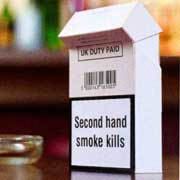 February 6, 2010 - Included in Health Secretary Andy Burnham's pledge to help half of Britain's smokers quit by 2020 involves a ban on branded cigarette packaging.
Imperial Tobacco, Philip Morris and British American Tobacco have all said they strongly oppose plain packaging both on business grounds and on the encouragement plain packs would give to counterfeiters.
The government has said that it would "carefully consider" the case for plain tobacco packaging as part of its plans to halve the number of smokers in the UK in the next 10 years. United Kingdom - halve the number of smokers by end of decade..)
The revival of the plain packaging argument came as Imperial Tobacco posted a trading update which revealed that cigarette sales in the UK grew by 1% in 2009, to 45.5bn cigarettes - first rise in cigarette consumption for four years. (Imperial Tobacco Group - Interim Management Statement..)
The fine cut tobacco market, meanwhile, grew 21% to 4,650 tonnes in the year to December. The increases are reported to be the first annual rises for almost 40 years.
Two recession-related factors are thought to be behind the increases: people staying in the UK rather than going on foreign holidays, as well as an switch to cheaper roll-up cigarettes.
The tobacco industry has retorted that plain packs would do nothing to stop young people taking up smoking. Imperial Tobacco chief executive Gareth Davies said: "There is no credible evidence that young people start smoking or adult smokers continue to smoke because of tobacco packaging. "Making all tobacco products available in the same generic plain packaging will further fuel the growth in illicit trade and undermine the government's plans to increase investment in tackling smuggling and counterfeiting."
British American Tobacco said in a statement that the government's decision to consider the case for plain packaging "plays right into the hands of the very criminals they seek to clamp down on". "Plain packs would require no complicated logos, colours or designs to be copied - making it far easier and cheaper for criminals to flood the market with mass produced fake products for sale on street corners.
Philip Morris, meanwhile, has recently launched a website, www.plain-packaging.com, designed to campaign against the imposition of plain packaging by arguing that it would do nothing to cut smoking rates.
Reference: Row over plain cigarette packs amid first sales hike in four decades, Josh Brooks, packagingnews.co.uk, 2/3/2010.
Some related news briefs:
UK - NICE endorses harm reduction for only those that refuse to quit..;
United Kingdom - halve the number of smokers by end of decade..;
United Kingdom - govt cabinet business secretary has reservations about new anti-smoking strategy..;
United Kingdom - aggressive anti-smoking campaign to protect children..;
United Kingdom - public smoking ban does not lead to more smoking at home..;
UK - NHS Trust - smoking your body takes a beating film..;
United Kingdom - Packaging people - tobacco display ban - Counterfeit cigarettes could thrive..;
UK - Retailer tells small shops to ignore tobacco industry 'scare tactics'..;
UK - Association of Convenience Stores (ACS) unhappy with tobacco displays ban..;
United Kingdom - House of Commons - ban cigarette displays a step closer/vending machine ban even closer..;
Ireland - people responding well to the ban on cigaretet displays..;
JTI attacks UK government for plan to ban tobacco displays..
United Kingdom - 3rd reading of Public Health Bill including ban on tobacco displays..
United Kingdom - limiting access to cigarette vending machines not possible..;
Updated - England - tabacco display ban - the Lords got it right..;
Fewer Britons support the ban on smoking in pubs than in other public places..
"Glasgow effect" - prevalence of cigarette smoking impact on poor health..;
Scotland - tobacco industry will try to stop attempts to curb sales to young people..;
Scotland - cigarette vending machines removal..;
Scottish politicians most have the courage to protect the health of their constituents..;
England, House of Lords votes to ban shop tobacco dislays and restrict vending machine use..;
Northern Ireland - assembly approves ban on display of tobacco items..;
Scotland to ban cigarette displays and outlaw cigarette vending machines..;
England, Wales to ban tobacco displays in shops..;
UK - Strategies to be implemented to prevent underage tobacco use...
Read more...
PMI - launches website to campaign against plain packaging..
 February 6, 2010 - Philip Morris International Management S.A. (PMIMSA) is opposed to legislation mandating plain packaging of tobacco products. We support effective regulation of tobacco based on the principle of harm reduction but plain packaging is an extreme measure unproven to have any effect in reducing smoking. We believe that adult smokers should be able to see, identify and select the brands they prefer.
A website has recently been launched, www.plain-packaging.com, designed to campaign against the imposition of plain packaging by arguing that it would do nothing to cut smoking rates.
Read more...
General Tobacco - Arkansas court denies AG's notice delisting its cigarette brands..

 February 6, 2010 - On January 27th General Tobacco (GT) said it will comply with recent notices regarding the removal of its cigarette brands from certain state directories of approved brands for sale. General Tobacco products are on its way to being barred from selling its cigarette products in 18 states over its failure to make payments under the multistate Master Settlement Agreement (MSA), which was created in 1998. Master Settlement Agreement (MSA)..
General Tobacco has announced that an Arkansas court has denied the Arkansas Attorney General's (AG) motion to remove General Tobacco's cigarette brands from the directory of approved brands to sell in that state and ordered the AG to arbitrate the dispute ordered in 2006, holding that GT's cigarette brands may continue to be sold lawfully in Arkansas, General Tobacco said. Since the Arkansas AG served as the identical voice for the other 42 attorneys general, they may now be legally bound to the Arkansas order. General Tobacco said it believes that the order, issued by the Circuit Court of Pulaski County on Jan. 26, 2010, should prevent not only Arkansas but any other state that is part of the Master Settlement Agreement (MSA) from delisting General Tobacco's brands. Arkansas is the only state that has brought a court action to determine whether the delisting of General Tobacco's cigarette brands is proper. None of the states that have announced the delisting of GT's brands sought any court's permission to do so. Now that a court has ruled that delisting of the brands may not proceed, General Tobacco has asked all of the states in the MSA to comply with that court's order.
While General Tobacco is hopeful that delisting issues with various states will be resolved promptly and in compliance with the Arkansas court's order, the company has requested that its customers continue to respect the delisting dates that were previously announced by certain states until those states confirm whether or not they will follow the court's order that General Tobacco's brands not be delisted.
Vibo Corporation operates Mayodan, N.C.-based General Tobacco as its sole holding and was founded by nonsmoking businessman Vidal Suriel in 1997. General Tobacco is the sixth largest tobacco company in the nation with approximately $300 million in annual sales, is a full participating member of the MSA. The company began its operation in 2000 distributing its own cigarette brand, GT One. The company now distributes Bronco, Silver, Vaquero Little Cigars, and their new premium menthol cigarette, 32 Degrees.
Reference: Ark. Court Denies Delisting Strengthens General Tobacco's position, company says, CSP (Convenience Stores/Petroleum) Daily News, 2/2/2010.
Some related news briefs:
General Tobacco - will remove cigarette brands from certain states..;
General Tobacco - owes states $285 million..;
General Tobacco - last defendants dropped from cigarette antitrust suit..;
General Tobacco makes MSA payment in full..;
General Tobacco reaches deal with states on MSA;
Judge dismisses General Tobacco challenge to tobacco settlement..; General Tobacco lays off nearly 25% of work force..;
General Tobacco Sues 52 U.S Attorneys General and 19 Tobacco Companies..; N.C.'s General Tobacco Appoints New Sales Head..;
General Tobacco completes move to Mayodan, N.C..;
General Tobacco (GT) could “potentially” come out with snus type product..;
Read more...
Israel - Professor Connolly advises completely bar smoking in public places..


 February 5, 2010 - One of the world’s leading anti-tobacco fighters, Prof. Gregory Connolly of the Harvard School of Public Health, advises Israel to abandon its policy of optional “smoking rooms” in public places and to completely bar lighting up in such locations instead. Connolly: "Every country that went to partial enforcement failed to make a significant impact."
In an exclusive interview with The Jerusalem Post on Monday, February 1st during his second visit to the country, the director of Harvard’s division of public health practice and a member of the scientific advisory board to the US Food and Drug Administration (FDA) on the regulation of tobacco products said that the existence of smoking rooms leads around the world to violations of no-smoking laws.
Just a few days ago, Tel Aviv University public health expert Dr. Leah Rosen published a study showing that owners of Tel Aviv bars and pubs consistently fail to enforce laws when they inform one another that municipal inspectors are on the prowl for violators; although full of smoke, few of them are caught with lit cigarettes in the public areas. (TAU researcher: Enforcement of no-smoking laws ineffective It is interesting to note: since the 2007 expanded no-smoking law went into effect, pub smoking down 70% in Jerusalem but only 10% in Tel Aviv. As early as 1983, Israel passed a law banning smoking in public places.)
More - Tel Aviv - despite laws prohibiting smoking in public places, in cafes, bars and nightclubs enforcement is lax. (No smoking...! by EMILY HOCHBERG,
The Jerusalem Post, 1/23/2010)
Bars, Connolly said, function as “schools for smoking” by introducing young people to the dangerous practice. He was here to speak at a Tel Aviv University (TAU) symposium organized by Rosen on how to significantly reduce the current Israeli adult smoking rate of 24 percent.
While the smoking rate even increased a bit here in the past year, Connolly said that he saw positive changes since his last visit four years ago. “The air in general is much cleaner, and there is no smoking in hotel lobbies and some other public places,” he said. “But Israel’s partial ban is unenforceable,” Connolly continued. “If an inspector walks into a public place and nobody’s smoking but it stinks like hell,” the law is not working. Every country in world that went to partial enforcement by allowing smoking rooms failed to make a significant impact.”
In countries with a smoking culture in entertainment places that completely barred smoking such as France, Scotland, Ireland, Cyprus and Italy, violations are rare, he declared. “You have to create a social environment that supports quitting and not starting.”
But governments must not only completely prohibit smoking in public places, said Connolly. “They must have serious enforcement programs and use the media to get the message across so everyone is aware of the new law. You’ll get compliance if you make the investment and prepare the population for the enforcement of the new law. Israel today is at the tipping point. Even if the health minister is a politician – as in Israel – rather than a health professional, he can be persuaded about the huge health and economic costs of smoking.”
Asked about Israelis’ tendency to ignore laws and regulations, Connolly said, “That is claimed in almost every country, but if done properly, people will respect the law.”
Connolly, who trained as a dentist before going into public health, also advocates banning smoking in some outdoor public places where people assemble, such on queues for transportation, and in cars where people – especially children – are being slowly poisoned without their consent.
As for smoking cessation, the Harvard expert said, “You can’t separate treatment from what society does. You can’t just give smokers a nicotine patch, give them counselling and send them to a restaurant where it is considered ‘normal’ to smoke. You have to create an atmosphere that it is wrong and dangerous to smoke.”
Thanks to a law passed by the US Congress last summer, the FDA now has the power to regulate tobacco but not to prohibit its sale.
“We will study what the tobacco companies are putting in, like sugar, licorice, menthol and chocolate that make them more desirable to smokers. They reinforce the ‘nicotine reward’ and mask the odor and bitter taste. It takes a dangerous product and makes it even more dangerous. Cigarettes labeled as ‘lite’ [now illegal in Israel] make smokers feel safer, even though they are not,” Connolly said. “Cigarettes must become less addictive. The tobacco companies figure out what additives make it easy to smoke so that more victims become addicted. Regulation by the FDA will enable the removal of such ingredients.”
The FDA advisory board will set standards for tobacco products that will make them so undesirable to users that they will lose much of their market, he explained.
There were 100 million deaths from smoking in the 20th century. If nothing is done, there will be a billion casualties in the 21st, predicted Connolly. “If we drop below a 10% smoking rate, it could be regarded as almost having been wiped out,” he said. The US rate is currently 22% and around 17% or 18% for daily smokers.
He believes that the rate in Israel – a country he “cares about, because Irish Catholics and Jews have a special bond” – will drop to 20% in five years, and he is providing public health experts with advice on how to reach that goal.
Reference: 'Israel should completely bar smoking in public' by JUDY SIEGEL-ITZKOVICH, The Jerusalem Post, 2/3/2010.
Read more...
Indiana - no statewide smoking ban this year for, "The ash tray of the Midwest"..


February 5, 2010 - A bill to ban smoking in public places passed the house 73 to 26 earlier this week-but that bill is going nowhere in the senate. Senate President Pro-tem David Long says that economic times are tough and a statewide ban could hurt business. Long says the senate isn't ready to consider a ban at this time.
Previous news brief: Indiana - weak statewide smoke ban being considered..
"Well the President of the Senate and the Speaker of the House are the two bosses so to speak and they make the calls," said Ind. Sen. Jim Arnold, (D) LaPorte. "That's a power that's awarded to the party in the majority and that's his call and I respect that."
Still, some insist that Indiana's reluctance to approve a statewide smoking ban is earning it a new nickname. "The ash tray of the Midwest, unfortunately, but that is what we have been termed," said Jill Sabo with Tobacco Free St. Joe County.
It's an alleged reputation Indiana isn't likely to lose anytime soon, despite Sabo's willingness to do so. "Michigan, Ohio, Illinois, Wisconsin have all gone tobacco free, comprehensively, and I think that we're ready."
Senator Arnold agrees. "I would like to address it, let's put it to rest one way or another, and then let's move on to other issues and quit spending time every session on certain issues that seem to raise their ugly head every session."
Senator Arnold discounts the contention that economic conditions should derail the debate. "I know that all surveys show Indiana is the second largest smoking state in the country, next to West Virginia. It can call it economy if they want, if they chose to do so, they probably have their facts and figures to support that, but sooner or later we've got to start looking at medical costs-what it's costing for second hand smoke. How much money we're spending, Indiana spends about $2 billion a year in smoke related medical issues in this state."
Sen. Arnold does see one advantage to waiting until next year to address a possible ban. Next year's session is a 'long' one, while this year's session is short-slated to end in mid March.
Reference: Smoking ban debate over in Indiana, Reporter Mark Peterson (mpeterson@wndu.com), WNDU.com, 2/4/2010.
A few Indiana related news briefs:
Indiana - weak statewide smoke ban being considered..;
Indianapolis, Indiana - tobacco control people are furious - city used as test market again..;
Elkhart, Indiana - smoking ban stands no exemption for bars..;
Indiana - fire-safe cigarettes - July 1, 2009..;
Children in Indiana starting to use smokless tobacco products..;
Congratulations to the Great State of Indiana..;
Read more...
Altria - will host a webcast of presentation on February 18th..
 February 5, 2010 - The Altria Group will host a webcast of its business presentation to the annual Consumer Analyst Group of New York (CAGNY) conference at Boca Raton, Florida, starting at about 09.15 hours Eastern Time on February 18.
The webcast, which will be in listen-only mode, will feature a presentation by Michael E. Szymanczyk, chairman and CEO, and David R. Beran, executive vice president and CFO.
Pre-event registration is necessary at www.altria.com, where an archived copy of the webcast will be available until 17.00 hours on March 19.
Read more...
PMI - webcast q4 and full year financial results..
February 5, 2010 - Philip Morris International Inc. to host live audio webcast at www.pmintl.com on Thursday, February 11, 2010 at 1:00 p.m. ET to discuss 2009 fourth-quarter and full-year results, which will be issued mid-morning the same day.
During the webcast, Louis C. Camilleri, Chairman and Chief Executive Officer, and Hermann Waldemer, Chief Financial Officer, will discuss the company's 2009 fourth-quarter and full-year results and answer questions from the investment community and news media. The webcast will be in a listen-only mode.
An archived copy of the webcast will be available until 5:00 p.m. ET on Friday, March 12, 2010.
Reference: Philip Morris International Inc. to Host Webcast of 2009 Fourth-Quarter and Full-Year Results, SOURCE: Philip Morris International Inc., 2/4/2010.
Read more...
RAI - Camel menthols with menthol capusle in filter - March 2010..
 February 5, 2010 - Susan Ivey, Reynolds American Inc. (RAI), Chairman of the Board and Chief Executive Officer in the Q4 2009 Earnings Call Transcript stated that company expects further growth from the recent expansion of its innovative capsule technology (found in Camel Crush) to Camel’s two core menthol styles and next month (March 2010) the company will add exciting new packaging to further raise awareness and competitive trial on these menthol styles.
Starting March 1, 2010. That's the official launch date of the latest line extension from R.J. Reynolds Tobacco Co.'s Camel brand: menthol cigarettes containing a menthol burst capsule that enhances menthol flavor when squeezed.
The new cigarette supplanted Camel Menthol cigarettes in August 2009 and evolved from the "wonderful success" of Camel Crush (launched September 2008), according to Brian Stebbins, senior marketing director for Camel cigarettes. Crush also contains the menthol capsule, but squeezing it turns that cigarette from nonmenthol to menthol. "Whenever we launch something new, we try to find out who's interacting with it, who likes it, who doesn't like it and who has an idea of how to make it even better," Stebbins told CSP Daily News.
"We identified that there's a pretty large group of adult menthol smokers who are interested in the capsule technology, but they want to see us use it differently," Stebbins said, adding that they want to use it to use it to make menthol cigarettes "even fresher and even cooler at the moment of their choosing, or on demand."
The soft launch in August included "very minimal communication on packs and on the website for those who were interested." Stebbins added, "And the idea there was to let those smokers who already choose Camel Menthol have an opportunity to experience the innovation first, let them experience the product first, let them let us know what they think and the response has been very positive."
As for March 1, Stebbins said, "That is where we actually go out and try and tell the story to a broader audience about the innovation on Camel menthol." The launch will mean a new look for the packaging, retail communications, retail merchandising and a "very solid" launch promotion program—including direct mail, emails and person-to-person engagements in bars, nightclubs and festivals.
Stebbins described the new packaging as having "a fresher, cooler color pallet that menthol smokers respond very nicely to" and said it will also "tell the story of the product within," using the Camel mascot. Stebbins also said the name of Camel Menthol Lights will change to Camel Menthol Silver; Camel Menthol will keep the same name. He added, "We will still have a couple of menthol products that are in the market that will not have capsules in them, but they are not a primary marketing emphasis.... That really just kind of depends upon the business opportunity in those markets and retailer choice about what they carry."
He said the product's demographics are wide ranging. "Our testing indicates that the adult smokers who are interested span different age groups, they span different brands that they buy from today and it's male/female. It's a very broad opportunity, and I think that's mostly because it's a provocative innovation. We're talking about a category, menthol cigarettes, where there's a lot of sameness, and Camel cigarettes is the exact opposite of that."
According to a January 17, 1997 New York Times article, Reynolds briefly tested a menthol version of Camel in 1966, but never sold it nationally. Camel Menthols were nationally launched in 1997.
I think the 'new news' here is menthol is growing considerably in the category, and to be frank, until we had introduced Camel Crush, Camel wasn't getting its fair share of that growth," Stebbins said.
Although menthol is "expressly permitted" under the recent flavored cigarette ban, there has been concern in the industry. David Howard, an R.J. Reynolds spokesperson, told CSP Daily News, "Obviously, as [U.S. Food & Drug Administration (FDA)] regulations take effect, one of the things is that there will be a committee looking into menthol.... And certainly, whatever information is needed from us, we're going to cooperate for any information that they need or assistance that we can provide in that study. But at this time, menthol is specifically not part of the flavored bans and permitted by FDA regulations.... And certainly, we believe it's a viable product category, obviously; it's a very large and growing category with adult smokers."
According to the National Survey on Drug Use & Health Report, published by the Office of Applied Studies, Substance Abuse & Mental Health Services Administration, on Nov. 19, 2009, among past-month smokers, the rate of smoking menthol cigarettes increased from 31% in 2004 to 33.9% in 2008. Past-month smoking of menthol cigarettes was more likely among those who were recent smoking initiates (i.e., began smoking in the past year) than among those who were longer-term smokers (i.e., initiated use more than a year ago) (44.6% vs. 31.8% respectively).
Reference: Menthol March Camel menthol cigarettes with additional flavor capsule to officially launch March 1 by Linda Abu-Shalback Zid, CSP (Convenience Store/Petroleum) Daily News, 2/5/2010.
Read more...

SIDs - lower levels of serotonin found, nicotine affects serotonin levels..
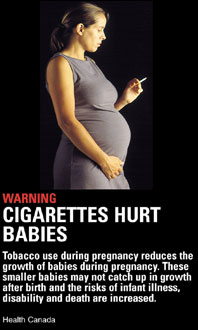 February 4, 2010 - An Australian-led study has confirmed a lack of serotonin was a common factor with babies who die from Sudden Infant Death Syndrome (SIDS). The breakthrough offers a "much clearer direction" in the search for a cure for the mysterious syndrome, which still claims one in 2,000 apparently healthy children.
Researcher Dr Jhodie Duncan, of the Melbourne-based Florey Neuroscience Institutes, studied cases of infant deaths from confirmed SIDS and other causes. The SIDS babies were found to have lower levels of serotonin, a neurotransmitter which regulates the body's basic life-sustaining functions. "Things like heart rate, blood pressure, sleep cycles, respiration, serotonin plays a very important role in all these things that you need to stay alive," Dr Duncan told the Australian Associated Press (AAP).
"Our study has proven that in infants dying of SIDS there is lower TPH2 (a related enzyme) levels and reduced serotonin production." Exposure to nicotine was also known to affect serotonin levels in the body, Dr Duncan said.
Earlier research had indicated serotonin production may play a role in SIDS deaths though scientists were yet to determine whether it was more, less or the same as unaffected children.
PAPER: Brainstem Serotonergic Deficiency in Sudden Infant Death Syndrome, Jhodie R. Duncan, PhD; David S. Paterson, PhD; Jill M. Hoffman, BS; David J. Mokler, PhD; Natalia S. Borenstein, MS; Richard A. Belliveau, BA; Henry F. Krous, MD; Elisabeth A. Haas, BA; Christina Stanley, MD; Eugene E. Nattie, MD; Felicia L. Trachtenberg, PhD; Hannah C. Kinney, MD, JAMA. 2010;303(5):430-437, ABSTRACT..
Reference: Aussie experts confirm SIDS breakthrough, DANNY ROSE, The Sydney Morning Herald, 2/3/2010.
SIDs - related news briefs:
A third of SIDs deaths could be avoided by quitting smoking..;
Victoria, Australia - 4 in 10 smokers still light up around children..;
Smoking mothers can impair a baby's ability to respond to external stimuli may increase risk of SIDS..;
Pregnant women who quit smoking before the 15th week reduce risk of premature birth and small babies..;
U.S. - Children Remain Especially Vulnerable to Secondhand Smoke..;
Vehicles Most Dangerous Space for Second-Hand Smoke Levels..;
Read more...
New York City - VIDEO: starting March 1, 2010 stores, anti-smoking signs..
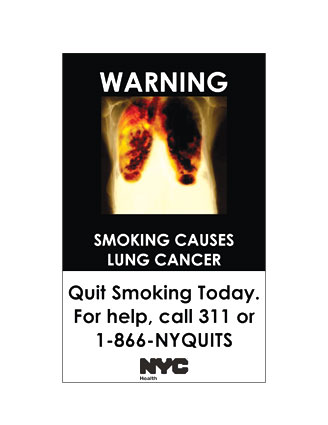 February 4, 2010 - NY City health officials are requiring stores that sell tobacco products to display graphic anti-smoking signs by March 1, but some experts and other New Yorkers question the effectiveness of the ad campaigns.
Starting March 1, any city shops that sell cigarettes and other tobacco products that do not display these arresting anti-smoking signs risk fines of up to $2,000.
VIDEO..
The Department of Health (DOH) has also released a series of anti-smoking television ads, but not everyone is certain the ad blitzes work.
Martin Lindstrom, a marketing expert and author of the book "Buyology," conducted his own research and scanned smokers' brains to see how they responded to anti-smoking warnings. "What we learned was shocking. We learned that it has the opposite effect," said Lindstrom. "In fact, when people see those health warnings, they are turned on and they want to smoke even more."
DOH officials say there is much research to back up their approach. Cigarette packs already carry health warnings, but Anne Pearson, a DOH official, said those messages reach customers too late. "You only get that warning after you've bought the pack. We thought it was really important to have that health message come the moment when you're thinking about buying it," said Pearson.
Whether they love or hate the ads, New Yorkers can expect to see even more of them in the coming weeks, as business owners do their best to avoid the city's fines.
Reference: New Yorkers Divided Over Graphic Anti-Smoking Ads In Stores by Grace Rauh, NY1.com, 1/30/2010.
NYC directly related:
NYC Lawsuit against Online Cigarette Vendor Dismissed..;
NY City - smokers kicking the addiction and living longer than ever..;
NY City Council not backing down as US Smokeless Tobacco files lawsuit against city..;
New York City - ban on flavored tobacco products becomes law..;
New York City bans the sale of flavored tobacco products..;
New York City - Mayor Bloomberg pushing ahead to ban smoking in city parks and beaches..;
New York City - all retailers selling tobacco will be required to post warning signs..;
New York City - to ask public opinion - smoking graphic warning signs; New York City - proposed pictorial warning signs to show the sickness and suffering caused by tobacco use.;
New York City - may ban smoking in parks and beaches..;
New York City - can't sue Internet cigarette retailers for lost taxes..;
New CDC Chief Thomas R. Frieden, MD, MPH..;
New York City Council ban candy-flavored tobacco, smoking outside of hospitals..;
New York - city and state officials back off plans to crack down on cigarette black market..;
New York City - nonsmokers exposed to cigarette smoke..;
New York City - cigarettes more than $10- a- pack..;
NYC can move forward with reservation cigarette lawsuit..;
Michael Rubens Bloomberg - ELF Award winner 2008;
NYC sues reservation smoke shops over bootlegging..;
NYC Fights Smoking With Reality Images in Matchbooks..;
NY City Can Proceed With Lawsuits Against 10 Online Cigarette Vendors..;
NYC Warns Parents of Smoking Lawsuits...
Read more...
Missouri - state wide smoking ban proposed..
Click to enlarge..

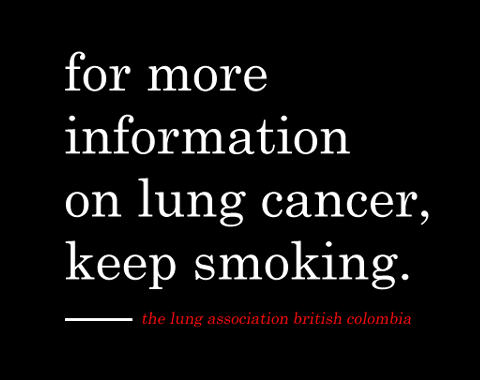 February 4, 2010 - Two St. Louis-area legislators proposed legislation to ban smoking in many public places statewide. The bill, which has not yet been assigned to a committee, would ban smoking in restaurants, bars, shopping malls and gambling facilities, among other public places.
Critics of the legislation, including Senate leadership, say the proposal is unlikely to pick up much steam. Last year, Sen. Joan Bray, D-St. Louis, sponsored a smoking ban bill, but it received little support from other lawmakers and was never heard in committee.Missouri has NO smoking ban and has resisted any increase in the cigarette tax last increased in 1993. The tax on a pack of cigarettes stands at 17 cents the second lowest in the nation and Missouri has the 4th highest smoking rate.
Three of Missouri's largest cities — Kansas City, Springfield and Columbia — already have some form of indoor smoking ban. Last November 2009, St. Louis County voters approved an anti-smoking measure that will trigger a ban in the city of St. Louis as well. Both the St. Louis and St. Louis County bans take effect next year. (St. Louis City and County - voters approve smoking ban but NOT effective until January 2, 2011..; Missouri - some cities becoming smoke free but NOT the state..)
The state measure would contain fewer exemptions, which helped it garner the support of groups such as the American Cancer Society, which did not endorse the county and city bans.
More Smoke Free Missouri..
VIDEO - Youth-Show-Me-Smoke-Free News Broadcast..
Reference: Bill calls for statewide smoking ban in Missouri by Juana Summers, ST. LOUIS POST-DISPATCH, 2/2/2010.
Missouri - related news briefs:
St. Louis City and County - voters approve smoking ban but NOT effective unitl January 2, 2011..;
Missouri - 2nd lowest cigarette tax and 4th highest smoking rate..;
Missouri - fire-safe cigarettes delayed until January 2011..;
St. Louis County - joint statement;
Premium Cigar Store Owners Unite to Fight Proposed St. Louis County Smoking Ban Vote..;
Missouri - some cities becoming smoke free but NOT the state..;
West Saint (St.) Louis County - NO Smoking - firefighters or EMS personnel...
Read more...
World Cancer Day - February 4, 2010..

February 4, 2010 - World Cancer Day 2010, led by International Union Against Cancer (UICC) organized the first World Cancer Day in 2006. UICC, its members and with the support of the World Health Organization (WHO), will raise awareness of cancer prevention.
THEME for 2010:: 2010 Campaign: "Cancer can be prevented too".. About the world cancer campaign..
Each year, over 12 million people receive a cancer diagnosis and 7.6 million die of the disease.
The good news is that approximately 40% of cancers are potentially preventable. UICC invites you to join in marking World Cancer Day on 4 February by promoting the exciting new campaign and spreading the message that cancer can be prevented too.
UICC is focusing on how the risk of developing cancer can significantly be reduced through simple measures:
* Stop tobacco use and avoid exposure to second-hand smoke
* Limit alcohol consumption
* Avoid excessive sun exposure
* Maintain a healthy weight, through eating healthily and exercising regularly
* Protect against cancer-causing infections
Special on World Cancer Day: 4 February 2010: Tobacco Control is the Most Cost-Effective Way to Prevent Cancer by Professor Rama Kant, New Blaze, 2/4/2010.
Reference: World Cancer Day: February 4, 2010 by R.C. Johnson, associatedcontent.com, 1/24/2010.
Read more...
Swedish Match's Nicotine-free Onico launches a new portion snus..

February 4, 2010 - Back in May 2008 we reported on Swedish Match's Onico, a tobacco- and nicotine-free snus like product, may cause cavities..
Onico launches portion snus infused with ginseng and guarana. The new Onico+ is infused with extracts from Ginseng & Guarana. Onico+ also provide a completely unique and refreshing flavor with hints of tropical fruits that are reminiscent of delicious Amazonian flora.
Onico Ginseng Guarana: “A modern, tobacco and nicotine-free portion snus that is seasoned with ancient ingredients is an attractive combination for all users of snus who are looking for a new and exciting way to reduce their nicotine consumption,” says Robert Lundgren Product Manager for Onico.
Guarana is a climbing plant that is native to the Amazonian rainforest. The plant’s fruit contains naturally caffeine-rich seeds. Ginseng is a perennial herb which grows mainly in Asia. Ginseng root has been used by eastern cultures for millennia and has over time gained great popularity in the western parts of the world.
Each Onico+ Ginseng & Guarana portion contains about 5 milligrams of natural caffeine from guarana and about 0.1 milligrams of ginsenosides, the active ingredient in ginseng root. Onico+ Ginseng & Guarana will be available throughout Sweden as of February 1. While retailers are free to set their own price, the retail price will be about SEK 30 per can. Onico recommends an age limit of 18.
In August 2007 Onico launched Juniper Berry.
Reference: Onico launches portion snus infused with ginseng and guarana, Swedish Match, 2/2/2010.
Read more...
U.S. - federal appeals court, import of e-cigarettes on hold again..
 February 4, 2010 - A federal appeals court has put on hold a lower court ruling allowing electronic cigarettes to be imported. The U.S. Court of Appeals for the District of Columbia Circuit stayed a lower court order banning the U.S. Food and Drug Administration (FDA) from seizing the devices when they enter the country.
A panel of three appeals court judges temporarily stayed the lower court ruling in order to give them more time to consider the FDA's arguments that it should overturn Leon's injunction. The agency also said that last year's federal law giving it the power to regulate tobacco products did not prevent it from regulating drug devices that deliver nicotine.
Directly related news brief: U.S. FDA appealing a federal judge's ruling on e-cigarettes..
Electronic cigarettes, also known as "e-cigarettes," are devices that heat and vaporize small amounts of nicotine, the addictive substance in tobacco. They contain no tobacco, however.
The FDA had seized shipments of e-cigarettes beginning in 2008 as illegal drug-delivery devices. The FDA maintains that such devices are illegal because -- unlike other products which administer nicotine such as gums, patches, inhalers, and sprays -- e-cigarettes have not been submitted to the FDA with proof they are safe and effective.
The importers, Smoking Everywhere Inc. and Sottera Inc., had argued that the FDA lacked the authority to do so because of a 2000 Supreme Court ruling that the FDA lacked the power to regulate cigarettes and tobacco as drugs or devices.
The lower court judge, Richard J. Leon of the U.S. District Court in Washington, granted a preliminary injunction last month barring the FDA from stopping e-cigarette imports. Leon said he did not see an immediate threat to public health from the e-cigarettes. In appealing Leon's injunction, the FDA noted that nicotine is addictive and toxic.
References: Electronic cigarette imports on hold [Richmond Times-Dispatch, Va.], David Ress (dress@timesdispatch.com), Richmond Times-Dispatch, 2/3/2010; Appeals Court Stays E-Cigarette Ruling // Leaves FDA Free to Block Imports Again, PR-Inside.com, 2/2/2010.
Read more...
U.S. FDA - concerned that dissolvable tobacco products could draw in children and teenagers..
 February 3, 2010 - U.S. health officials are seeking more information about the possible attraction and addiction of flavored, dissolvable tobacco products that regulators worry look too much like candy and can entice children. The products, made by Reynolds American Inc's R.J. Reynolds Tobacco Co and by Star Scientific Inc, contain powdered "smokeless" tobacco and are brightly colored, with flavors such as coffee and mint. R.J. Reynolds Tobacco Co to promote these products at the test market c-stores distributes sampler packs of Camel Dissolvables.
Companies have argued that the products, which include dissolvable tablets, are aimed at adults who must deal with a growing number of smoking bans in public places as well as those looking to stop smoking.
But the U.S. Food and Drug Administration, in letters to Reynolds and Star Scientific released late Tuesday, said it was concerned that the products could draw in children and teenagers. Use of the products could lead to nicotine addiction and could even cause health problems from the ingestion of too much nicotine, the FDA said. (C-store update - let's ban all flavored tobacco products..)
While laws vary among the U.S. states, most limit tobacco purchase to those 18 and older.
FDA is "concerned that children and adolescents may find dissolvable tobacco products particularly appealing, given the brightly colored packaging, candy-like appearance and easily concealable size of many of these products," Lawrence Deyton, head of the FDA's Center for Tobacco Products, wrote February 1, 2010.
The letters come as the FDA prepares to hold its first public meeting on tobacco issues later this year. Agency officials have quickly moved to flex their new oversight of tobacco products after a new law granted them the power last year.
Any move by the FDA to further regulate or even remove dissolvable tobacco products from the U.S. market would be a huge blow to Star Scientific. The one-time cigarette manufacturer has shifted its focus to making products it says expose consumers to lower levels of toxins.
Sara Troy Machir, a spokeswoman for Star Scientific, said the company was not surprised by the letter and would cooperate fully. "We're happy to share information with them," Machir said, adding that Star's smokeless products -- Ariva and Stonewall -- have been on the market for 10 years.
Representatives for R.J. Reynolds did not immediately respond to requests for comment. R.J. Reynolds markets three types of similar products under its Camel brand that deliver dissolvable nicotine in tablet, mouth strip and small matchstick-like forms.
The two companies have been embroiled in a patent dispute over some of the technology behind the dissolvable products. (Star Scientific denied new trial in patent infringement - files appeal..)
While FDA in its letters to the two companies acknowledged the products are marketed to adults, it nonetheless asked both manufacturers for extensive information on research and marketing practices for the products. Star Scientific and Reynolds have two months to respond.
The FDA Letter to Industry on Dissolvable Smokeless Tobacco Products:
R.J. Reynolds Tobacco Company..
Star Scientific, Inc
Reference: FDA probes candy-like tobacco products, Reporting by Susan Heavey, editing by Gerald E. McCormick, Reuters, 2/3/2010.
Read more...
Imperial Tobacco Group - Interim Management Statement..
 February 3, 2010 - Imperial Tobacco Group plc is the world's fourth largest international tobacco company, Number one in Britain with a market share of approximately 46% and Number 2 in Europe.
Imperial Tobacco Group Plc : said it made a “good start” to the financial year to 30 September 2010. Business has been “in line” with company expectations, despite the weak economic climate, Chief Executive Officer Gareth Davis said.
Imperial Tobacco Group PLC Interim Management Statement, February 2, 2010.
Imperial Tobacco Group Plc, the maker of West and JPS cigarettes, said sales this fiscal year are meeting its expectations as the French and U.K. markets expand. France consumed 55 billion cigarettes in 2009, 3 percent more than the prior year, while the U.K. duty-paid cigarette market expanded 1 percent to 45.5 billion, the Bristol, England- based company said today in a Regulatory News Service statement.
“We have made a good start to the year with trading in line with our expectations despite the weak economic environment,” Chief Executive Officer Gareth Davis said in the statement. Imperial has raised prices in the U.K., Spain and France since the end of its fiscal year in September, he added.
The amount of cigarettes sold in Germany declined 2 percent to 85.5 billion in the 12 months through December, and Spanish volumes dropped 10 percent, the company said. Altria Group Inc., the largest U.S. tobacco company, last week said cigarette shipments fell 11 percent in the fourth quarter.
Davis will be succeeded by Alison Cooper when he steps down in May 2010, the company said in November 2009. Under Davis, Imperial bought Altadis SA, the Spanish maker of the Gauloises brand, and Commonwealth Brands, the fourth-largest U.S. cigarette maker.
The company said today it reached a “framework agreement” for its U.S. cigar business to cooperate with China Tobacco Chuanyu Industrial Corp., without giving any further details.
Reference: Imperial Tobacco Says French, U.K. Cigarette Markets Expanded by Tom Mulier (tmulier@bloomberg.net), Bloomberg.com, 2/2/2010.
Read more...
Italy - more people smoking more as a result of the poor economy..
Click to enlarge..
 February 3, 2010 - Italians are so worried about the state of their economy that they are returning in droves to their favourite vice – cigarettes. More than two million people have started smoking again since the country’s authorities imposed a UK-style ban in 2005. (Italy was the fourth country in Europe to introduce comprehensive smoking bans in public places on the January 10, 2005.)
The law, which made smoking in all indoor public places illegal, bore results at first, with loyal customers choosing not to place owners of their favourite bars and restaurants at risk of massive fines. (Italy's 2005 smoking ban has led to a sharp fall in heart attacks..)
But an initial 12 percent drop in cigarette sales has been reversed, with the latest shock figures revealing that Italy now boasts a record 13 million smokers. In 2009 alone, four ex-smokers in every 100 took up the habit again.
Unlike the UK, there are more male smokers in Italy than female ones – 7.1 million, compared with 5.9 million women.
Last night experts blamed the recession, claiming that the added stress had caused ex-smokers to relapse, while unemployment and boredom were encouraging the young to take up smoking for the first time.
Pier Giorgio Zuccaro, of the health department’s alcohol, drugs and smoking institute, said: “The increase in the number of ex-smokers returning to the cigarette is partly linked to the economic crisis.” The pressure of being out of work, the anxiety of finding a new job and the increase in free time were all factors drawing back people who kicked the habit, he added. Lung specialist Dr Roberto Buffi agreed. “It is much easier for those with freer schedules to take up the little infernal cylinder,” he said.
Italy’s treasury is not even reaping the benefits of higher prices. Customs officials have seen a rise in bootleg cigarettes as their fellow countrymen go in search of a cheaper smoke. In the first few months of 2009, the number of smokers increased by 3.4 per cent while over-the-counter tobacco sales went down by three per cent. Official figures show that customs officers seized more than 170 tonnes of illegal tobacco, a 45 per increase over the previous year. Most of the contraband comes from Eastern Europe – particularly neighbouring Slovenia – and the biggest busts have happened in border towns and ports like Genoa, Trieste and Naples.
Reference: ITALY'S 2MILLION NEW SMOKERS by Marco Giannangeli, EXPRESS.co.uk, 1/31/2010.
Italy - some related news briefs:
Italy - car smoking ban weighed..;
Italy - could ban smoking while driving..;
Italian resort town fines kids that smoke..;
Italy - smoking ban results in sharp fall in heart attacks..
Read more...

NATO - urging retailers to call their U.S.Senators to get the PACT Act passed..
 February 3, 2010 - The National Association of Tobacco Outlets (NATO) is urging tobacco retailers, wholesalers and manufacturers to call their two U.S. senators and urge them to bring Senate Bill S.1147 up for a final vote by the full U.S. Senate. Senate Bill S.1147, referred to as the Prevent All Cigarette Trafficking Act (PACT Act), is a bill that will have a significant impact on reducing the illegal sale of tobacco products over the Internet, according to NATO. It also will aid in preventing underage youth from having access to cigarettes and smokeless tobacco products.
Background:
Protect Our Children - Make it illegal to use the U.S. Postal Service to deliver any form of tobacco product..
H.R. 1676, the Prevent All Cigarette Trafficking Act (the PACT Act) of 2009, was passed 397-11 by the House of Representatives on Thursday, 5/21/2009. On November 19th the U.S. Senate Judiciary Committee unanimously approved legislation and placed on the Senate calendar (Calendar No. 216) under General Orders.
Bill just needs the priority to come before the Senate to be discussed and then voted upon.
U.S. PACT (PREVENT ALL CIGARETTE TRAFFICKING ACT OF 2009) - This legislation is extremely important, it will effectively end Internet and telephone tobacco sales by stopping shipments of cigarettes and smokeless tobacco.
NATO, Minneapolis, supports the PACT Act because it would enact the following provisions into law:
* Require payment of state and local cigarette and tobacco taxes on Internet sales.
* Regulate delivery methods, including age verification of the person at a residence.
* Prohibit the U.S. Postal Service from delivering cigarettes and smokeless tobacco products to consumers through the U.S. Mail.
* Give the Federal Bureau of Alcohol, Tobacco, Firearms and Explosives (ATF) the authority to inspect records and inventories of Internet tobacco sellers.
* Increase the penalty for violating federal tobacco regulatory laws from a misdemeanor to a felony.
For its part, NATO is also faxing a personalized letter to all 100 U.S. senators urging them to take a final vote on S.1147. See reference: then click the Download Now button at bottom to view a copy of NATO's letter.
Reference: Pushing the PACT Act NATO urges retailers to call their U.S. senators, Convenience Stores/Petroleum (CSP) Daily News, 2/1/2010.
Some PACT related news briefs:
U.S. let's get the PACT bill passed by congress and then signed into law..;
NY State - Seneca Indians - lobbying against the PACT act.;
U.S. - Senate Judiciary Committee Approves PACT ACT..;
U.S. - Senate Committee scheduled to vote on PACT..;
Web-Based Companies must stop selling flavored cigarettes..;
Internet, Flavors everywhere - snuff being marketed to kids as hip, cool and healthy..;
U.S. customs officials bar imports bearing the Philip Morris USA trademark..;
Let's Get It Passed - Prevent All Tobacco Trafficking Act of 2009..;
U.S - PACT legislation passed by House..;
U.S. - PACT Legislation to be considered by House this month..;
We must get the United States Postal Service (USPS) out of the tobacco delivery business..;
PACT Legislation now in the U.S. Senate Judiciary Committee..;
U.S. House Passes Bill to Prevent Tobacco Delivery By Mail..;
We must get the United States Postal Service (USPS) out of the tobacco delivery business..
Protect Our Children - Make it illegal to use the U.S. Postal Service to deliver any form of tobacco product...
Read more...
U.S. FDA appealing a federal judge's ruling on e-cigarettes.
February 2, 2010 - The Food and Drug Administration is appealing a federal judge's ruling that the agency doesn't have the authority to regulate electronic cigarettes.
The FDA on Monday night, February 1st asked a federal appeals court in Washington to immediately stay an order that prevented the agency from blocking electronic cigarettes from entering the country.
Directly related news brief: FDA - judges ruling regarding e-cigaretes must be apppealed - ASAP..
The FDA said it does have the authority to regulate some products containing nicotine as though they are drugs and devices, such as nicotine patches and nicotine lollipops. The agency said the judge was "quite wrong to believe that no injury would result from the use of these harmful and addictive products."
The case is testing the reach of FDA's regulatory powers, and the agency and public health advocates have said it could have severe public health implications.
In January, U.S. District Judge Richard J. Leon sided with electronic-cigarette makers Smoking Everywhere Inc. and NJoy in finding that the FDA has no authority to regulate the products and can't stop them from entering the country. His opinion came with a preliminary injunction that allowed Smoking Everywhere and NJoy to continue importing their products into the country.
The FDA has seized shipments of electronic cigarettes, which contain nicotine and look and taste like cigarettes but don't contain tar, amid concerns the products were being marketed as safer alternatives to traditional tobacco. The FDA asserted its power by saying the electronic cigarettes were essentially drugs or devices that were being imported without FDA approval. Regulating the products as drugs or devices means the companies would have to conduct extensive clinical safety testing and apply for formal FDA approval.
Smoking Everywhere and NJoy are trying to avoid that. The companies say their products are used for recreation and, unlike nicotine patches, aren't used as smoking cessation aids.
Judge Leon's decision was based on a Supreme Court case decided in 2000 called FDA v. Brown & Williamson Tobacco Corp. In that case, the court decided that allowing cigarettes and smokeless tobacco products to be marketed as drugs or devices would result in their being banned from the market.
The FDA said in its appeal that the Supreme Court decision doesn't preclude the agency from regulating tobacco products as though they are drugs or devices. The FDA said Judge Leon also "mistakenly" concluded that electronic cigarettes could be regulated under new tobacco powers signed into law in 2009.
The FDA said those laws preclude the FDA from regulating drugs or devices as tobacco products.
Reference: FDA Appeals Electronic Cigarette Ruling, by JARED A. FAVOLE (jared.favole@dowjones.com), The Wall Street Journal, 2/2/2010.
Read more...
Bulgaria - sale of Bulgartabac coming - selection of a consultant....
February 2, 2010 - 

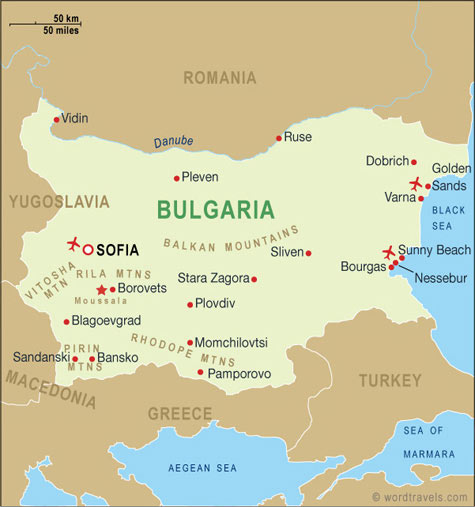
We reported back on December 7, 2090 that Bulgaria's Economy and Energy Minister, Traicho Traikov, that the State owned “Bulgartabac Holding” will be privatized in 2010. (Bulgaria - Bulgartabac Holding” will be privatized in 2010... Traikov further announced the conditions for the competition to select a consultant for the cigarette-maker's sale are ready and the competition itself will be announced in a matter of days. In August 2009 - we reported:Bulgaria - new government to speed-up Bulgartabac sale.. Map of Bulgaria..
Now as of February 3rd, four companies have submitted bids to advise the sell-off of Bulgaria's state-run tobacco producer Bulgartabac Holding, the privatization agency announced on Tuesday. Citigroup Global Markets Limited, tie-in between KBC Securities and Tokushev & Co, Raiffeisen investments- Kamburov and Renaissance Securities have submitted documents before the deadline expired on Monday.
Six years ago the Bulgarian Privatization Agency picked Morgan Stanley to advise the sell-off of the nation’s state-run tobacco producer. Aside of Morgan Stanley, the 2004 competition drew SG Corporate Finance Advisory, JP Morgan, Credit Suisse First Boston and UBS.
This time however the holding company owns only two instead of nine factories and is worth around BGN 80 million, according to the Ministry of Economy.
The application forms for the applicants for consultant cost BGN 2 000, and could be purchased within 35 days after the publication of the tender decision in the State Gazette. The deposit for participation in the tender was set at BGN 5 000, and had to be transferred to the Privatization Agency account.
The eligible candidates should be international investment banks which are in the top 20 of the League Tables of Financial Advisers in 2007-2009 published by Merger Market or Thomson Reuters. The candidates must be a leading a consultant of at least one privatization deal of a tobacco company in the last three years, and to have experience with privatization deals.
In addition, they should be familiar with Bulgarian law, should have a team of proper legal and economics specialists, should not be in a legal dispute with the Bulgarian state, and should not be in liquidation.
Reference: 4 Bids for Bulgaria's Cigarette Monopoly Sell-off Consultant, Novinite.com (Sofia News Agency), 2/2/2010.
Bulgaria related news briefs:
Greek Farmers Renew Bulgaria Border Blockade..;
Bulgaria - leadership of tobacco fund to be replaced..;
Bulgaria - illegal trade in cigarettes will reach 40% of total trade in 2010..;
Bulgaria - limits on personal imports of tobacco products from outside the EU..;
Bulgaria - European Commission authorizes payment to tobacco producers for 2009 crop..;
Bulgaria -two cigarette smuggling attempts busted on Serbian border..;
Bulgaria - price of cigarettes increases..;
Bulgaria - Bulgartabac stays in the economy ministry, sold by middle of 2010, starting price 100,000,000 euro..;
Bulgaria - tobacco producers propose Bulgartabac transfer..;
Bulgaria - government, tobacco growers reach subsidy agreement..;
Bulgaria - start of steps leading to the privatization of the state-owned cigarette monopoly Bulgartabac..;
Bulgaria - police hold smoking protest over lack of bonuses..;
Bulgaria - police busts major cigarette contraband ring..;
Bulgaria - Bulgartabac Holding” will be privatized in 2010..;
Bulgaria - MPs Impose Hefty Fines on Cigarette Sales Violators..;
Bulgartabac Chief - cigarette tax increase as of January 1, 2010..;
Bulgaria Bulgartabac Holding Sells 23% of Shares to Mutual Funds..;
Bulgaria - more than 70% of smokers want to quit..;
Bulgaria - cigarette taxes going up each year except 2011..;
Bulgaria - chair of the economic committee in parliament disapproves of planned raise in excise duties on cigarettes..;
Bulgaria and others - smoking ban, increased cigarette taxes, smuggling..;
Bulgaria - Cigarette excise duties will be increased next year..;
Bulgaria - cigarette contraband, government loses BGN 920M yearly..;
Bulgaria - one third of the tobacco products sold are illicit..;
Bulgaria - new government to speed-up Bulgartabac sale..;
Bulgaria - Fake Victory Light cigarettes..;
Bulgaria's tobacco monopoly may be up for sale..;
Bulgarian lawmakers vote to ban smoking in all publc places from June 2010..; Bulgarian tobacco company Sofia-BT exports increase by 541 percent..;
Does Russia own Bulgaria's tobacco monopoly, Bulgartabac..;
EU percent of adults smokers -highest Greece 1 , Bulgaria 2.. - lowest Slovenia..;
Bulgaria - 1 in 3 youths smoke / half of pregnant women smoke..;
PMI training Bulgarian custom officers to stop cigarette smuggling..;
Philip Morris International (PMI) was truly happy they had been back in the Bulgarian cigarette market for a year and had already had 6.8% of market..;
WHO FCTC Protocol to Prevent Illicit Trade in Tobacco Products Won't Be Completed Until End of 2010..;
WHO Report on the Global Tobacco Epidemic 2008..;
Bulgaria Enters 2009 with Cigarette Prices Hike...
Bulgaria is marking Tuesday, November 10, 2009, the 20th year since the internal coup at the Bulgarian Communist Party which led to the crumbling of the communist regime..
Read more...


To Provide Public Awareness
Purpose
About Us
Contact Us
2008 HIGHLIGHTS
TOPIX PAPERS - 2008 & 2009..