

 July 7, 2010 - A new study from Cancer Council’s behavioural research centre in Newcastle reveals that nine out of 10 New South Wales (NSW) smokers are snared by the temptation of cigarettes being available within walking distance of their daily routine. (The study was conducted by CHeRP, a behavioural research centre jointly funded by Cancer Council NSW and the University of Newcastle.)
Smokers say these traps prevent them from quitting, with nearly a third signalling that they would flick the addiction or at least cut down on how often they lit-up if cigarettes were less available.
The difficulty of avoiding tobacco traps is exemplified by a study in the Hunter (Hunter Region of New South Wales), where more than 1200 outlets sell cigarettes, the equivalent of one shop for every 77 smokers. By comparison, the same region has just 150 post offices, making it easier to buy cigarettes than a stamp.
Regional programs coordinator from Cancer Council’s Coffs Harbour office Vanessa Crossley said the study confirmed the need for licensing to be introduced for any business wanting to sell tobacco – just like alcohol. “Smokers want to quit, they have good intentions to quit, but tobacco traps torment them every day, killing their chances of success,” she said.
“The solution is simple and possible; introduce tobacco licensing to discourage sellers, reduce the accessibility of cigarettes, and help thousands of smokers to quit one of the toughest addictions around.”
Cancer Council NSW recently released Saving life; why wouldn’t you?, a report calling for tobacco licensing to be introduced in NSW, with four other cancer control steps for NSW politicians to support before next year’s state election.
“The NSW Government has set itself a goal of reducing smoking, and spends over $40m per year to drive down smoking rates. These efforts would be much more effective if it was not so easy to buy tobacco,” Vanessa added.
“Tobacco licensing could save lives, and with 91 percent of the community agreeing that it should be introduced, we ask all politicians why wouldn’t you?”
Reference: Easy access traps smokers in cycle says cancer council, Myall Coast Nota, 7/7/2010.
Read more...
Australia - opportunity to buy cigarettes too readily available..
South Korea - rate of male smokers probably higher than any other OECD country..
July 7, 2010 -
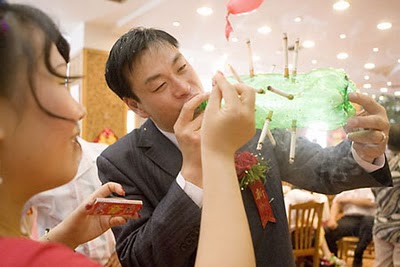 The rate of male smokers here has fallen over the past six months, but still remains far above any other Organisation for Economic Co-operation and Development (OECD) member state, the Ministry of Health and Welfare said Wednesday, July 7th. OECD Member states..
According to a Ministry of Health and Welfare survey of 3,000 adult males and females nationwide in June, the smoking rate for males was 42.6 percent, about a 0.5 percentage point fall from last December. The decrease is the first in two years after it peaked at 43.1 percent last December. Still, it is very high, possibly the highest, among OECD member states, the researchers said, as their average was 28.4 percent in 2007.
The average smoker starts smoking at the age of 21 and becomes a regular puffer within a year. About 61.7 percent said they smoke out of habit, with stress being the second reason. About 59.4 percent of the smokers wanted to quit smoking because of health risks, for the well being of their families, and related reasons. Most expressed wanting to quit within a year.
Most respondents said expanding non-smoking zones was the most effective way to induce people to quit smoking. Raising the price of cigarettes and imposing heavier punishment on smokers at smoking-free zones were other possible incentives.
Those surveyed said the price of a packet of cigarettes would have to soar to an average 8,510 (7.03649 USD). "Smoking is a disease that needs treatment. We will consider raising the cigarette tax as well as other policies to encourage a smoke-free atmosphere," a ministry official said.
The health authorities initially planned to lower the smoking rate to below 30 percent by the end of the year, but researchers said it is quite unlikely since the actual number of people who smoke may be higher than surveyed ― more people might be smokers but they could have lied lied out of embarrassment, they said.
Reference: Smoking rate still way above OECD average by Bae Ji-sook, Staff reporter, Korean Times, 7/7/2010.
South Korea - some related news briefs:
South Korea - BAT to further invest in Sacheon factory..;
South Korea - a look at KT&G Corporation with 63% of the market..;
South Korea - streets and parks of Seoul City could be designated as non-smoking areas..;
PMI - slide presentation South Korean Cigarette Market..;
South Korea - KT&G forms alliance with Imperial Tobacco Group..;
South Korea - more smokers in 2009 than in 2008..;
South Korea - remote island going smoke-free, car-free and night lights-free..;
South Korea - Stressed-out Koreans smoking more..;
South Korea - to ban smoking in public places from 2011..;
Korea - BAT - winning the hearts and minds of customers based on tactics tailored to local tastes..;
Korea - sets target to reduce smoking 10% in 5-years..;
Korea - stricter regulation of the tobacco industry coming..;
South Korea - tobacco imports surge 396-fold over 10-years..;
Korea - slight increase in men smoking.. ;
South Korea - anti-tobacco campaign - body painting..;
Korea - smoking ban just about everywhere by end of 2009..;
Tobacco marketing in South Korea has been deliberately aimed at girls and young women..;
Korea - smoking rates fall for men and women...
Read more...
Philippines - tobacco industry has obtained temporary relief from placing graphic warnings on cigarette packs..
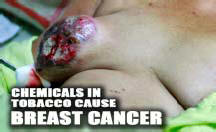
 July 7, 2010 - The tobacco industry has obtained temporary relief from the implementation of a Department of Health (DoH) order imposing graphic warning on cigarette packs. Jose Antonio Blanco of the Office of the Solicitor General said that the decision issued last July 1 barred the Health department from implementing Administrative Order 13, which required the printing of pictures showing diseases acquired from smoking in addition to the existing health risk information.
The order, issued last May 24, also prohibited the use of descriptors in cigarette products such as "light" and "mild."Background:
Fortune Tobacco Corp., one of the two major local tobacco companies, has challenged the order before the sala of Judge Felix P. Reyes of Marikina Regional Trial Court Branch 272 before its implementation. It filed last June 3 a petition for declaratory relief with the issuance of a temporary restraining order and/or preliminary injunction against the directive.
April 6, 2010 - The Philippines Department of Health (DoH) has expressed confidence that the government could require tobacco firms to place pictorial warnings on cigarette packs sold to the public. DoH was “crafting an administrative order” covering such warnings against tobacco use. (Philippines - DoH pushes for picture warnings on cigarette packs..)
May 24, 2010 - The Department of Health (DoH) has stepped up the pressure on tobacco companies, ordering them to start printing in 90 days, explicit warnings on cigarette packs that would illustrate the ill effects of smoking. DoH Secretary Esperanza Cabral said tobacco companies should comply with Administrative Order 13 which the health department issued on May 12. (Philippines - Department of Health wants health warnings on cigarette packs within 90 days..)
June 3, 2010 - June 4, 2010 - The Philippine Tobacco Institute (PTI) said an order requiring tobacco companies to print graphic health warnings on cigarette packs is contrary to law. Complying with the health department’s administrative order 2010-13 will be a violation of Republic Act 9211 or the Tobacco Regulation Act (TRA) of 2003, the group said in a statement. The law prohibits the printing of any other health warning on cigarette packs other than those specified by law, the group said.
In granting the petition, Mr. Reyes required Fortune Tobacco to post a bond of P5 million (107,596.30 USD). The P5 million is to answer for any damage that the DoH may incur if it is later proven that Fortune Tobacco [will not be hurt] by the administrative order," Mr. Blanco, who served as DoH counsel during the court hearings, said in a phone interview. Mr. Blanco said "we will assail [to attack with arguments, criticism]" the court decision. For her part, Dr. Maricar B. Limpin, executive director of the Framework Convention on Tobacco Alliance Philippines (FCAP), said the court had given "more leeway to lure more people to smoke." "This is not for the people," she said in a separate interview.
FCAP is a member of the Inter-Agency Committee on Tobacco created to administer Republic Act 9211 or the Comprehensive Tobacco Regulation Act, which advocates tobacco control, and a smoke-free society. The World Health Organization (WHO) and DoH are among FCAP’s partners.
Reference: Cigarette pack graphic labeling halted, Prinz P. Magtulis, BusinessWorld, 7/8/2010.
Philippines - some related news briefs:
Philippines - govt agencies and employees barred from unnessary interaction with tobacco industry..;
Philippines - Filipino Muslims forbidden to smoke, trade cigarettes..;
Philippine congress proclaims Aquino 15th president..;
Philippines - tobacco firms claim graphic warnings on cigarette packs are illegal..;
Philippines - new president smokes but this should not slow tobacco prevention activities..:
Philippines - Department of Health wants health warnings on cigarette packs within 90 days..;
Philippines - health groups want more protection from the dangers of tobacco..;
Philippines - DOH warns government agencies to avoid partnerships or accepting donations from tobacco manufacturers..;
Philip Morris Philippines..;
Philippines - DoH pushes for picture warnings on cigarette packs..;
Philippines - PMI - FTC merger may lead smokers continuing to smoke and lure children into a life of nicotine addiction..;
Philippines - PMI and Fortune Tobacco Corp. form new company called PMFTC..;
Philippines - Tanauan City names street Philip Morris..;
Philippines - DOH campaign for 100% smoke-free workplaces..;
Philippines - total tobacco industry could be down 10% to 15% this year..;
Philippines - 2003 ban on advertising and skirting the ban..;
Philippines - June is annually observed as 'No Smoking' Month..;
Philippines may be losing the war against smoking..;
http://snus-news.blogspot.com/2008/11/philippines-thai-cigarette-import-rules.html;
Philip Morris won't postpone Philippines Eraserheads Concert..;
Philip Morris could be criminally liable for its sponsorship of the event .in the Philippines..;
STOP PMI Sponsoring Concert in Philippines..;
Philippines - Smoker to be deported...
Read more...
Canada - tobacco products readily available on Native reservations.

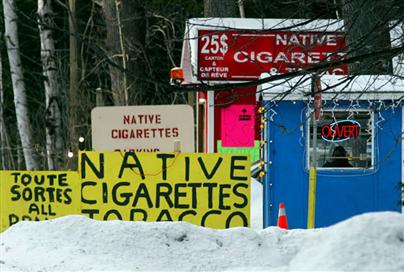 July 7, 2010 - To mark the coming into force today, July 5th of Bill C-32, which prohibits the sale of small flavoured cigarillos in Canada's 23,500 convenience stores, the Canadian Convenience Stores Association (CCSA) has released new irrefutable evidence that illustrates the alarming extent of the irresponsible sale of tobacco and flavoured cigarillos on native reservations in Quebec and Ontario.
(The bill is known as the Bill C-32 - Cracking Down on Tobacco Marketing Aimed at Youth Act.)
This evidence shows smoke shacks on Native reserves operating above the law and in many cases, selling industrial quantities of cigarettes, even to minors, without collecting or paying any taxes.
"For the first time, we are showing Canadians that the irresponsible large-scale selling of contraband tobacco on Native reservations is nothing but a national disgrace caused and tolerated by the federal government," said Michel Gadbois, senior vice-president of the CCSA. "With Bill C-32, Health Minister Leona Aglukkaq just makes things worse by giving smugglers and criminals a monopoly on little flavoured cigarillos."
The seven-minute video entitled 'Inside Smoke Shacks' was produced last week using a hidden camera. A private investigator commissioned by the CCSA visited and filmed inside 10 tobacco shacks chosen at random on the Kahnawake and Kanesatake reservations in Quebec. One can easily see tobacco products on the shelves (not hidden), a very broad selection (native or imitation commercial brands, and in bags) at widely varying prices (as little as $11 for a carton of cigarettes, compared with $75 on average at convenience stores), an enormous inventory and, especially, a range of flavoured cigarillos at a third or half their legal price.
View VIDEO - Inside Smoke Shacks..
In addition, the CCSA has released a second video, 'Irresponsable sale on Six Nations', which shows results of a first sting operation on the Six Nations reservation in Ontario. A 15-year-old girl visited 10 tobacco shacks to try and buy flavoured cigarillos. In eight smoke shacks, she was able to buy tobacco products with no difficulty, without being asked her age or to produce ID, which shows the lack of responsibility on Native reservations and band councils that tolerate similar set-ups on their territory.
View VIDEO - Irresponsible tobacco sale on Six Nations reserve (Ontario)..
"If she really has the kid's health at heart, Minister Aglukkaq's top priority should be the fight against contraband tobacco and nothing else, and that, until the situation is rectified," Mr. Gadbois concluded.
Reference: Irresponsible sale of tobacco on Native reservations - C-store industry shows Canadians the real extent of the contraband tobacco scourge and Bill C-32 impact, CCSA, CanadaNewswire.com, 7/5/2010.
Canada - cigarillo news briefs:
Canada - loophole flavored cigarettes, cigarillos banned, manufactures may start making larger flavored cigars..;
Canada - ban on flavored tobacco products comes into effect July 2010..);
Canada - youth survey finds levels of cigarillo use persist, but users don't consider themselves 'smokers'..;
Canada - bill to ban flavored tobacco products gets final approval - Burley Tobacco..;
Canadian bill to ban flavored tobacco products worries Kentucky burley growers..;
Canadian Tobacco Use Monitoring Survey - 2008..;
Canadian House of Commons passes bill to prevent production of mini-cigars or cigarillos..;
Canada - Bill C-32 to amend Tobacco Products Control Act..;
Canada - federal government introduces legislation to ban flavored tobacco products..;
Quebec - Teens Switch from Cigarettes to Cigarillos..;
Canada - little cigar/cigarillos smoking declined from 2007 - 2008..;
Canadian Cancer Society calls for federal ban on flavored cigars..;
Ontario to outlaw candy flavored cigars..;
Ontario poised to ban flavored cigarillos..;
Canada: a bill introduced to snuff out drive to recruit young smokers..;
Still sucking our youngsters in...
Read more...
Russia - health warnings on cigarette packs..
 July 7, 2010 - Russia slapped "smoking kills" warnings on cigarette packages from Saturday, June 26th in an effort to crack down on an addiction that kills up to 500,000 people a year and is on the rise.
According to World Health Organisation statistics, 60 percent of Russian men smoke and the number of smokers, particularly among young women, has been growing since the collapse of the Soviet Union in 1991. (Russsia - 73 percent of boys and 65 percent of girls smoke..)
As many as 350,000 to half a million of Russians die each year of smoking-related causes, clouding the country's already gloomy demographic. The United Nations warns that the population may shrink from to 116 million by 2050 from 142 million now.
Adopting standards similar to those in the European Union, the Ministry of Health and Social Development requires the anti-smoking message to cover no less than 30 percent of the front of a package and another warning takes half of the back.
The messages range from warnings of lung cancer through wrinkles to impotence and will also come with information on the amount of nicotine and resins.
"Introduction of the new technical regulations of tobacco production is one of the steps in the path to limit the use and spread of tobacco production in Russia," the ministry said in a statement.
But the fight against smoking is a tough one in a nicotine-addicted nation where in 1990 a shortage of domestic cigarettes led to a "tobacco rebellion" on the streets of Russia's three biggest cities, forcing then-president Mikhail Gorbachev to appeal for an international emergency shipment.
Some 409 billion cigarettes were produced in the country last year (2009), according to data from the Association of Tobacco Producers, or about 2,900 cigarettes per capita.
Russia remains one of the top tobacco clients, with the domestic market almost completely taken by three global players: Japan Tobacco Inc., Philip Morris International and British American Tobacco PLC. "The number of tobacco producers in Russia is not increasing, not even by one," the paper Komsomolskaya Pravda cited on Saturday Gennady Onishchenko, the head of Russia's consumer protection watchdog Rospotrebnadzor as saying.
Public awareness campaigns also have been increasing, with messages becoming less subtle. Billboards two years ago showing a model wearing a dress made of cigarettes have given way to pictures of a sleeping infant with a cigarette placed on its back and the message: "Smoking in child's presence is a much bigger torture for him."
But cigarettes remain affordable and available, with most priced at around 1 euro ($1.34) for 20, and unfiltered selling for much less. Some coffee chains have become smoke-free this year, but many restaurants are filled with fumes and patrons who object get the least prestigious tables.
In June, Russia's Finance Ministry said it plans to increase the excise tax from the current 250 roubles ($8.05) per 1,000 filtered cigarettes by 44 percent to 360 roubles next year, eventually more than doubling it to 590 roubles in 2013. (Russia - Finance Ministry skeptical about raising taxes on tobacco..)
But next year's increase is a fraction of what the Duma, the Lower House of Parliament, proposed in December, when it called for a quadrupling, which would double the price of cigarettes.
WHO Framework Convention on Tobacco Control (FCTC) Treaty.

Related news brief: Russian State Duma (Parliament) ratified the framework convention of the World Health Organization (WHO) on tobacco control..
Reference: Russia adopts "smoking kills" cigarette warnings by Lidia Kelly (Editing by Michael Roddy), Thomson Reuters Foundation, 6/26/2010.
Russia related news briefs:
Russsia - 73 percent of boys and 65 percent of girls smoke..;
Russia - Finance Ministry skeptical about raising taxes on tobacco..;
Russia - tax on tobacco may be quadrupled..;
Russia - tobacco epidemic with no solution in site..;
Russia - public health official discusses tobacco control..;
Russia - making it more difficult for servicemen to smoke..;
Russia - draft tobacco law being considered by Duma..;
Russia among top-10 smoking nations..;
Russian lawmakers discuss smoking ban for restaurants and bars..;
Russia passes new restrictions on tobacco..;
British American Tobacco (BAT) Misleading Russian Consumers..;
Russian State Duma (Parliament) ratified the framework convention of the World Health Organization (WHO) on tobacco control...
Read more...
Malaysia - doing a better job of seizing smuggled cigarettes..

 July 7, 2010 - The value of smuggled cigarettes seized in the first five months of this year was more than RM43 million (13.4 million USD) 56 per cent higher than the value of the seized contraband for the corresponding period last year, the (House of Representatives is the lower house of the Parliament of Malaysia) was told Monday, July 5th. Deputy Finance Minister Datuk Donald Lim said 1,486 arrests were made in association with cigarettes smuggled into the country between January and May this year (2010), compared with 1,123 and 1,799 during the whole of 2008 and 2009, respectively.
"The value of smuggled cigarettes seized in the first five months of this year was RM43,593,379 while the value of the contraband seized in the whole of 2008 was RM58,167,561.89 and in the whole of 2009, RM70,902,558.52," he said when replying to a question from Mohsin Fadzli Samuri (IND-Bagan Serai).
Lim said the measures to check smuggling of cigarettes included inspections of premises or stores, raids, road blocks, land and sea patrols as well as scanning of merchandise for the contraband. "Besides, we also conduct intelligence activity, campaigns and publicity to raise awareness in the public, and use security ink and stamp duty," he added.
Reference: Dewan Rakyat: More Seizures Of Smuggled Cigarettes This Year, BERNAMA.com, 7/5/2010.
Malaysia - some related news briefs:
Malaysia - best way to get teenage girls to stop smoking is through education..;
Malaysia - ban on 14-stick cigarette packs delayed worry about increase in illicit cigarettes..;
Malaysia - slight decrease in illicit cigarettes; JTI Malaysia q1 2010 market share increases..;
Malaysia - Health Ministry's proposal to ban the sale of 14-stick cigarette packs beginning June 1, 2010..;
Malaysia - increase in number of women smoking..;
Malaysia - new strategy to penalize retailers who sell contraband cigarettes..;
Malaysia - youth and student smokers may not receive aid from government..;
Malaysia - two tobacco control regulations starting January 1, 2010..
Malaysia - about 368,000 teenager smokers in the country, 50-60 added per day..;
Malaysia - sale of cigarettes in packets of less than 20 prohibited as of June 1, 2010..;
Malaysia - stepping up efforts to curb the trade in illicit cigarettes..;
Malaysia - BAT plans to dispose of a parcel of industrial land..;
Malaysia - ban on cigarette sponsorship for sports will not be withdrawn..;
Malaysia - cigarette-shaped sweets packaged like cigarettes;
Malaysia - Penang consumer group ban cheap cigarettes and increase price on premium..;
Malaysia - Kelantin State Government may not promote staff who smoke..;
Malaysia - excise duty increased on tobacco - another increase could be coming this month..;
Malaysia - smoking limits your quality of life..;
Malaysia - smoking civil servants in Penang to receive free nicotine treatment..;
Malaysia - illicit cigarettes, BAT wants government to slow excise duty increases..;
Peninsular Malaysia - one of three cigarette packs is either contraband or fake..;
Komtar, Penang, Malaysia smoking ban strictly enforced..;
Malaysia student forced to smoke 40 cigarettes in two hours..
Malaysia - PSD and Cuepacs are at odds over the no-smoking rule at government departments and agencies..;
Malaysia: Are tobacco control measures working? - WHO thinks so...;
Malaysia - slowdown in cigarette consumption..;
Malaysia - January 1, 2009 pictorial cigarette warnings..;
Malaysia to hike cigarette prices..;
Malaysia - 25% of all cigarettes sales are illegal...Peninsular Malaysia - one of three cigarette packs is either contraband or fake..;
Komtar, Penang, Malaysia smoking ban strictly enforced..;
Malaysia student forced to smoke 40 cigarettes in two hours..
Malaysia - PSD and Cuepacs are at odds over the no-smoking rule at government departments and agencies..;
Malaysia: Are tobacco control measures working? - WHO thinks so...;
Malaysia - slowdown in cigarette consumption..;
Malaysia - January 1, 2009 pictorial cigarette warnings..;
Malaysia to hike cigarette prices..;
Malaysia - 25% of all cigarettes sales are illegal...
Read more...
New York City - Mayor Bloomberg still considering smoking ban in parks and beaches.. - Get It Done Already!!


July 7, 2010 - Mayor Michael R. Bloomberg said on Tuesday, July 6th that he was leaning toward seeking a ban on smoking at city parks and beaches. (See Background below on October 1, 2009 the mayor indicated he was pushing ahead to get this done)
Mr. Bloomberg said the ban made sense because it would cut the health risks of secondhand smoke and reduce littering by smokers.
“We’re talking about banning smoking on beaches and in parks, and it’s partially because you can breathe the air,” Mr. Bloomberg said when he was asked about a ban. “It’s in the open air, but the air wafts in your direction. But it is also because people take their cigarette butts and the packages and just throw them away.” “When you ask people in our parks and beaches,” he added, “they say they just don’t want smokers there.”
Background:The city’s health commissioner, Dr. Thomas A. Farley, said Tuesday that smoking was the leading preventable cause of death among residents, killing 7,500 New Yorkers per year, more than AIDS, drugs, homicide and suicide combined.
September 14, 2009 - The city’s health commissioner, Dr. Thomas A. Farley, announced on Monday, September 14, 2009 that the Bloomberg administration would seek to ban smoking in city parks and beaches. (New York City - may ban smoking in parks and beaches...
October 1, 2009 - The mayor initially hedged when Health Commissioner Thomas Farley proposed the ban last month, saying enforcement would be difficult. But now Mayor Bloomberg says he's pushing ahead with a controversial plan to ban smoking at city parks and beaches, after earlier saying it needed more study. (New York City - Mayor Bloomberg pushing ahead to ban smoking in city parks and beaches..)
He said a smoking ban would be the equivalent of bans on loud radios and glass bottles on beaches, and could save millions of dollars in trash cleanup.
Dr. Farley cited a health department study, published online in the journal Nicotine and Tobacco Research in April 2009, that found that 57 percent of nonsmoking adult New Yorkers had elevated levels of cotinine, a marker for smoking, in their blood, compared with 45 percent nationally. The researchers, who sampled New Yorkers in 2004, a year after the city’s ban on smoking in most indoor working and public spaces took effect, said the density of city living might be to blame. (More Than 2.5 Million Non-Smoking New Yorkers Have Residue from Toxic Second-Hand Smoke in their Blood, Press Release, New York City Department of Health and Mental Hygiene, 48/2009)
References; Mayor Leans Toward a Smoking Ban at Parks and Beaches by ANEMONA HARTOCOLLIS, The New York Times, 7/6/2010; Stop turning the beach into a 'giant ashtray,' cigarette smokers told by Mark Morales and Katie Nelson, NY Daily News, 7/6/2010.
NYC directly related:
Big tobacco companies file lawsuit contesting NY City's anti-smoking signs..;
New York City - federal judge rejects plaintiffs attempt to stop the law that blocks the sale of flavored tobacco products..;
New York City - moving closer to closing a nighclub that flouted smoking ban..;
New York City - VIDEO: starting March 1, 2010 stores, anti-smoking signs..;
NYC Lawsuit against Online Cigarette Vendor Dismissed..;
NY City - smokers kicking the addiction and living longer than ever..;
NY City Council not backing down as US Smokeless Tobacco files lawsuit against city..;
New York City - ban on flavored tobacco products becomes law..;
New York City bans the sale of flavored tobacco products..;
New York City - Mayor Bloomberg pushing ahead to ban smoking in city parks and beaches..;
New York City - all retailers selling tobacco will be required to post warning signs..;
New York City - to ask public opinion - smoking graphic warning signs; New York City - proposed pictorial warning signs to show the sickness and suffering caused by tobacco use.;
New York City - may ban smoking in parks and beaches..;
New York City - can't sue Internet cigarette retailers for lost taxes..;
New CDC Chief Thomas R. Frieden, MD, MPH..;
New York City Council ban candy-flavored tobacco, smoking outside of hospitals..;
New York - city and state officials back off plans to crack down on cigarette black market..;
New York City - nonsmokers exposed to cigarette smoke..;
New York City - cigarettes more than $10- a- pack..;
NYC can move forward with reservation cigarette lawsuit..;
Michael Rubens Bloomberg - ELF Award winner 2008;
NYC sues reservation smoke shops over bootlegging..;
NYC Fights Smoking With Reality Images in Matchbooks..;
NY City Can Proceed With Lawsuits Against 10 Online Cigarette Vendors..;
NYC Warns Parents of Smoking Lawsuits...
Read more...
Netherlands - legislation to abolish smoking ban for small cafes/bars with no staff..
 July 6, 2010 - In our news brief entitled, Netherlands - bars defy two-year old smoking ban.., we reported the centre-right liberal VVD, which won parliamentary elections on June 9, wants bars with no staff to determine their own smoking policies.
Now we find the new 31-strong Liberal MP grouping is planning to introduce its own legislation to abolish the smoking ban for small cafes and bars. The anti-Islam PVV and Socialist party back the proposal, meaning it can count on the support of 71 out of 150 MPs.
'The smoking ban was introduced because Europe wants to protect workers against smoke. But you do not have to protect bar owners if they have no staff,' MP Halbe Zijlstra said.
Ten days ago, the ban on smoking in small bars was reinstated after a court ruling.
Reference: Liberal MPs act to scrap smoking ban in small bars, DutchNews.nl, 6/28/2010.
Netherlands - related news briefs:
Netherlands - bars defy two-year old smoking ban..;
Netherlands - small bars can continue to ignore smoking ban..;
Dutch government will change law to keep bars smoke free..;
Netherlands - lifted smoking ban for bars with no employees..;
Holland - smoking ban temporarily halted for smaller cafes run by their owners alone..;
Netherlands - spot checks on smoking in small cafes suspended temporarily..;
Dutch bar owners without staff when victory against smoking ban..;
Netherlands - Marijuana /Tobacco Cigarettes - Confusion..;
Netherlands - small bars/cafes with no staff could be exempt from smoking ban..;
Court spares small Dutch cafe over smoking ban..;
Netherlands - 1st court case for flouting smoking ban..;
Netherlands - ban on smoking in bars and restaurants NOT enforced..; Netherlands - ban on smoking in bars and restaurants NOT enforced..; Netherlands the smoking ban must be enforced - Ab Klink, Health Minister...;
Congratulations are in order: Netherlands, Romania & Alberta...
(Holland, Dutch)
Read more...
Canada - loophole flavored cigarettes, cigarillos banned, manufactures may start making larger flavored cigars..


July 6, 2010 - Manufacturers and retailers may be adhering to the letter of the law concerning the federal government's amendment to the Tobacco Act, which makes it illegal to sell flavoured "small cigars" -- cigarillos and cigarettes -- they certainly aren't adhering to the spirit of the law.
Ontario Health Promotion Minister Margarett Best warned that some tobacco companies seem to be intent on manoeuvring around our health protection laws. The ban that took effect on July 1, 2010 prohibits the sale and distribution of flavoured cigarillos, with the exception of menthol flavour. The province also is requiring unflavoured cigarillos to be sold in packages of at least 20, the same as cigarettes, in an effort to make the little cigars unaffordable for young people. (Canada - ban on flavored tobacco products comes into effect July 2010..)
The amendment actually became law in the fall but included a transition period for retailers and manufacturers to adjust. The nine-month transition period was too long and allowed manufacturers to find loopholes in the law.
Since the regulation applies only to items Health Canada believed were being geared toward youngsters, irresponsible manufacturers started making flavoured, larger cigars and they have replaced the smaller cigarillos on some tobacco shelves in Nanaimo. A spokesman with Health Canada said the agency will be carefully monitoring the marketing and sale of the flavoured cigars to ensure young people are not the target market for them. If not young people, then who? Health Canada already is saying it may have to alter the amended Tobacco Act if it finds flavoured cigars are popular among youngsters.
Is it true that flavoured cigars are illegal for sale in Canada after July 2010?
Reference: Loophole in Tobacco Act being exploited, Canada.com Daily News, 7/6/2010.
Canada - cigarillo news briefs:
Canada - ban on flavored tobacco products comes into effect July 2010..);
Canada - youth survey finds levels of cigarillo use persist, but users don't consider themselves 'smokers'..;
Canada - bill to ban flavored tobacco products gets final approval - Burley Tobacco..;
Canadian bill to ban flavored tobacco products worries Kentucky burley growers..;
Canadian Tobacco Use Monitoring Survey - 2008..;
Canadian House of Commons passes bill to prevent production of mini-cigars or cigarillos..;
Canada - Bill C-32 to amend Tobacco Products Control Act..;
Canada - federal government introduces legislation to ban flavored tobacco products..;
Quebec - Teens Switch from Cigarettes to Cigarillos..;
Canada - little cigar/cigarillos smoking declined from 2007 - 2008..;
Canadian Cancer Society calls for federal ban on flavored cigars..;
Ontario to outlaw candy flavored cigars..;
Ontario poised to ban flavored cigarillos..;
Canada: a bill introduced to snuff out drive to recruit young smokers..;
Still sucking our youngsters in...
Read more...
Pennsylvania - no state tax on cigars and smokeless tobacco products..
 July 6, 2010 - Gov. Ed Rendell got some of what he was looking for in the $28.05 billion budget
but for the second year running, the Democratic governor was denied one of his key goals — bringing Pennsylvania into the ranks of 49 other states that impose a tax on cigars and smokeless tobacco products. He will leave office in January without having obtained it. (September 16, 2009 - Pennsylvania - Republican legislators still refuse to tax tobacco products other than cigarettes..)
"It's unfathomable," Rendell said recently of legislative opposition to the new taxes that, along with a planned dime-a-pack increase in cigarette taxes, would have been used to help close a $1.2 billion budget hole.
"Pennsylvania remains the only state in the nation without a tax on smokeless tobacco. It and Florida don't tax cigars. That makes public health a loser under the budget, said Melinda Little, a regional director for Washington D.C.-based Tobacco Free Kids. '"We know that higher taxes on these products prevent usage, especially with kids," Little said. The organization's figures show 12.9 percent of high school boys in Pennsylvania use snuff, 17.7 percent smoke cigars and 18 percent smoke cigarettes.' " (Winners and sore losers in the PA cigar tax defeat)The distributors, Famous Smoke Shop in Forks Township, Cigars International in Bethlehem and tobacco giant the Altria Group, which has a presence in suburban Philadelphia, used one of Harrisburg's most time-honored levers — the threat of lost jobs — to build their case.
"We did our part to let our local state representatives and senators know that this type of tax would be detrimental to our business," said Michael Vandenstockt, marketing director for Famous Smoke Shop. Famous Smoke Shop, which does both mail-order and retail business, made it clear if the legislators passed the tax the company with its 70 jobs would move to another state. Many lawmakers — Democrats included — were also seemingly pathologically averse to passing tax hikes this budget season didn't hurt either.
Altria, the parent company of Montgomery County-based cigar and pipe tobacco manufacturer John Middleton Co., spent more than $125,000 on lobbying expenses during the first quarter of the year, state records showed. Altria spokesman David Sutton said the tobacco giant was pleased with the Legislature's decision to pass over the taxes this year.
Backers had hoped to raise as much as $104 million a year from the new taxes on cigars and smokeless tobacco products and the boosted cigarette tax. Deborah P. Brown, acting CEO of the American Lung Association of the Mid-Atlantic, said she was "extremely disappointed" that lawmakers had passed on the chance to raise $100 million when layoffs for state employees are looming.
Reference: Pennsylvania snuffs tobacco taxes for second straight year by John L. Micek, MORNING CALL HARRISBURG BUREAU, 7/5/2010.
Related news briefs:
Pennsylvania - Republican legislators still refuse to tax tobacco products other than cigarettes..;
Pennsylvania - September 11th, one year after smoking ban took effect..;
More evidence - Casino workers face greater chance of disease..;
Pennsylvania may begin to tax OTPs - do it by Weight..;
Pennsylvania - Judge rules Camel Ads Violated Ban On Cartoons..;
Pennsylvania Smoking Ban - Lots of Exceptions..;
Pennsylvania - Cigarette Vending Machines NO Longer Wanted..;
Finally Pennsylvania's Smoking Ban Takes Effect Today..;
Ed Rendell, governor of Pennsylvania wants to pay for providing health insurance;
Pennsylvania Governor Ed Rendell is proposing an excise tax on tobacco...
Read more...
ALA Report - more likely to smoke lesbian, gay, bisexual, transgender individuals..
 July 6, 2010 - A growing body of evidence indicates that lesbian, gay, bisexual and transgender (LGBT) individuals are considerably more likely to use tobacco than the general population, with some studies estimating smoking rates as much as double the national average. Although it's difficult to verify, it's estimated that lesbian, gay, bisexual and transgender (LGBT) individuals represent roughly 3 percent of the total population of the United States.
New report from the American Lung Assocaition (ALA): Smoking Out a Deadly Threat Tobacco Use in the LGBT Community, Disparities in Lung Health Series..
Researchers combed through more than 40 separate analyses to determine that LGBT people are more likely to use tobacco. Specifically, gay men are nearly two and a half times more likely to develop a smoking habit than straight men. Lesbians are twice as likely compared to straight women, and people who are bisexual appear to have the highest risk of all.
To be clear, no one within the LGBT community is more prone to smoking because they're gay. The elevated risks are the result of common factors that are magnified within the LGBT community, namely stress and aggressive marketing techniques by tobacco companies.
The tobacco industry has been a prevalent advertiser in the LGBT community for decades, with a heavy presence in bars, clubs, and newspapers that cater to that population. While tobacco advertisements have nearly disappeared from most mainstream publications, the American Lung Association says that's not the case for LGBT newspapers and magazines. They also argue that direct marketing of tobacco products seems to happen more frequently within LGBT bars and clubs
Enough information exists already to show that LGBT people should be treated as a priority population for tobacco control, similar to those racial and ethnic groups disproportionately affected by smoking. Specific interventions targeted to LGBT people are needed in order to help reduce the impact of tobacco use in this population.
Reference: Report: Smoking rate within LGBT community nearly double general population, the Chart - CNN Health, 7/2/2010.

Read more...
Hong Kong - smokers defy smoking ban, no penalty for owners of venues..
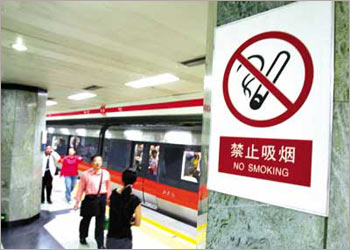
July 5, 2010 - Hong Kong smokers are continuing to defy a ban on smoking in bars, restaurants and other public venues one year after tougher anti-smoking laws were introduced, a media report said Friday, July 2nd.
Current legislation only targets the smokers themselves, not the owner of the venue were people are caught lighting up, creating a loophole, the South China Morning Post quoted University of Hong Kong professor Sophia Chan as saying.
Background:
January 1, 2007 - The Hong Kong (population 6.9 million) smoking ban in public places came into effect on January 1, 2007. The ban covers most public areas, including restaurants, offices and karaoke lounges. It also extends to outside areas with swimming pools, beaches and the larger parts of public parks now designated as smoke-free. (Hong Kong - public smoking ban - smoking rooms??)
July 1, 2009 - Full enforcement of the ban on smoking in public areas came into effect on July 1, meaning people now have to butt out, at bars, nightclubs, bathhouses, massage establishments and mahjong/tin kau parlors. No one is allowed to smoke in public venues of any description, since universal enforcement of the law. (Hong Kong - total smoking ban in full force no exceptions..)
September 5, 2009 - Hong Kong - Is the fixed-penalty fine for smoking offenses effective?.
For more background information see past news briefs below..
Professor Sophia Chan: "If you fine the owners, they will certainly make the most effort to stop customers from smoking on their properties. But under the current policy they would not suffer any consequences," she said.
James Middleton, chairman of the Clean the Air anti-tobacco committee, said he thought the failure to include venue owners was deliberate. "The government really doesn't want a smoking ban; it earns too much from the tax on the sale of cigarettes," he said.
Initially smoking was banned in all indoor areas except entertainment venues from January 1, 2007 but the ban was extended on July 1 last year to cover bars, night clubs, private clubs, mahjong parlours and other entertainment venues.
Until the end of May the Tobacco Control Office had received 6,900 complaints and made 10,200 inspections. More than 3,000 people had been issued penalty tickets, which carry a 1,500-Hong-Kong-dollar (192-US-dollar) fine.
Reference: Smokers defy tough ban one year on, EarthTimes, 7/2/2010.
Hong Kong related news briefs:
China - can they learn tobacco control from Hong Kong??;
Hong Kong - 50% increase in tax on tobacco products approved..;
Hong Kong - cigarettes too cheap, tax only 61 and 66 percent of retail price..;
Hong Kong study - further proof, women have a harder time quitting cigarettes..;
Hong Kong - as of November 1st no tobacco advertising at newsstands - now display boxes..;
Member states of WHO's Western Pacific region agree to new tobacco control action plan..;
Hong Kong - Is the fixed-penalty fine for smoking offenses effective?;
Hong Kong - more unions are starting to enforce extended smoking ban..
Hong Kong - unions refuse to hand out penalty tickets for smoking..
Hong Kong - tobacco smokers may be prone to developing life-threatening complications from swine flu..;
Hong Kong - total smoking ban in full force no exceptions..
Hong Kong - total smoking ban in effect - Wednesday, July 1, 2009..;
Hong Kong - smoking statistics..;
Hong Kong - movie poster woman smoking - NOT ALLOWED..;
Hong Kong - bar owners an employees march to protest smoking ban starting July 1, 2009..;
Hong Kong - attempt to delay July 1, 2009 smoking ban fails..;
Hong Kong - cigarette smuggling soars after tax increase..;
Hong Kong - Tax on cigarettes pushed up by 50 percent..;
Honk Kong - smoking increase raise tobacco duties??;
Hong Kong - temporary smoking ban exemption ends July 1, 2009..;
Hong Kong - after smoking ban cigarette consumption up 14 percent..;
Hong Kong - public smoking ban - smoking rooms??;
Shanghai Tobacco's Golden Deer Cigarettes - Hong Kong..;
More on Philip Morris International of the Future...
Read more...
Bavaria, Germany - Oktoberfest to be smokefree but not this year..
 July 5, 2010 - Back in February 2010 we reported that the Bavarian government says it will hold a referendum on smoking in cafés and beer halls. More than 9 million voters in the southern German state will be allowed to cast their ballots on July 4, 2010. (Germany - Bavaria referendum on smoking in cafés and beer halls on July 4, 2010..)
The Oktoberfest beer festival in Munich(Bavarian capital in Upper Bavaria) is to become smoke-free after voters in a referendum in the southern German state of Bavaria opted for a total smoking ban.
However, the ban will not come into effect for this year's 200th anniversary of the beer-guzzling festival.
With ballots counted in all 96 districts from the Sunday referendum, the anti-smoking camp had 61 per cent of the vote although turnout was a low 37.7 per cent. A simple majority was needed for victory.
The result will lead to new rules that will ban smoking in all pubs, restaurants and beer tents, without exception. Existing laws allow smokers to light up in beer tents and pubs with special smoking rooms.
The referendum, in which about 9.4 million people were eligible to vote, sparked a furious debate with those in favour of a total ban arguing on emotive health grounds and those against putting forward arguments about freedom of choice.
Those in favour of stamping out smoking hope a ban in Bavaria will lead to stricter rules across the country where various loopholes in smoking legislation have led to existing rules being only weakly enforced.
According to local media, authorities have already announced any potential ban would not be in force for this year's festival, which last year attracted 5.7 million visitors from all around the world.
Reference: Last gasp for beer fest as Munich votes to ban smoking, Agence France-Presse (AFP),7/4/2010.
Related news briefs:
Study - the more teens see cigarette ads, the greater the risk of taking a puff..;
Germany - Bavaria referendum on smoking in cafés and beer halls on July 4, 2010..;
Germany - losing billions as smokers find cheaper places to buy cigarettes..;
Germany - smokers smoking less but it's costing more..;
Bavarians force referendum on smoking ban next year..;
Bavaria - court rules, looser implementation of smoking ban constitutional..;
Germany - beer sales are down smoking ban maybe partial blame..;
Bavaria - state's parliament loosened regulation on smoking ban..;
WHO Report on the Global Tobacco Epidemic 2008..;
German sales rise in Germany amid moves to impose smoking ban..
Read more...
Seneca cigarette sellers get temporary reprieve from law to block mail delivery of cigarettes..
 July 4, 2010 - Another 140 Seneca Nation cigarette sellers received a temporary reprieve Friday from a federal law that stops the U. S. Postal Service from making commercial deliveries of cigarettes.
U. S. District Judge Richard J. Arcara issued another temporary restraining order, directing federal officials not to enforce the law against businesses associated with the Seneca Fair Trade Association.
The trade association lists several prominent Seneca business people — including Ross John, Richard Jemison, Sally Snow and Maxine Jimerson, a sister of Seneca Nation President Barry E. Snyder Sr. — among its directors and board members.
The group, which says it has about 140 members, asked Arcara on Thursday, July 1st to declare as unconstitutional the Prevent All Cigarette Trafficking Act, commonly known as the PACT Act.What's the final word..
Can Seneca tobacco businesses sell tax-free cigarettes to non-Indians on reservations?? New York law requires that cigarettes sold to non-Indians must be taxed, there is no law that says they must be taxed by Indians, and the tribes say as sovereign nations they are not required to act as tax collectors for the state.
Can Seneca tobacco businesses engage in Internet (online) and phone sales of cigarettes and other tobacco products without the collection of taxes??
Sen. Charles E. Schumer, D-N. Y. has said, “If the Senecas have a really good and transparent way to prevent sales to minors — not using the PACT Act — I’d welcome it.” (NY State - Seneca Indians against U.S. Senator Gillibrand's support of bill to ban mailing of cigarettes..)
Daniel B. Moar, a lawyer for the group, contended that it is illegal and unconstitutional to prevent the Postal Service from delivering cigarettes for businesses. He claims Seneca owned businesses will lose more than 3,000 jobs if the PACT Act is enforced.
At this point, members of the Seneca Fair Trade Association and Aaron Pierce, a Seneca businessman who received another temporary restraining order from Arcara earlier this week, are the only businesses in America that are exempt from the law.
Arcara will hear legal arguments Wednesday, July 6th between attorneys for the Seneca businesses and the U. S. Justice Department.
The law, designed to shut down the nation’s mail order cigarette industry and to stop cigarette businesses from ducking tax payments, took effect Tuesday. It was signed into law by President Obama in late March, after Congress passed it by a wide margin.
Federal officials insist that the PACT Act is constitutional.
Another problem with Indians.. One in two cigarettes smoked in Ontario is illegal (illicit, smuggling, black market), robbing provincial and federal coffers of more than $2 billion a year and raising concerns about children gaining easy access to tobacco. The majority of contraband tobacco seized by the Royal Canadian Mounted Police from Britsh Columbia to Newfoundland come from the American side of Mohawk Indian reservation in New York State. (Canada, Ontario and Quebec - illegal cigarettes greater than 40% of consumption..)
Related news briefs:
Authority to regulate Internet cigarette sales made from an American Indian reservation in another state was upheld in a ruling by the Oregon Court of Appeals.;
NY State - Seneca Indians - lobbying against the PACT act..;
Collect Tax on Phone and Online Tobacco Sales, More Money for State Health Care Programs..
Reference: Seneca cigarette sellers get reprieve from law by Dan Herbeck (dherbeck@buffnews.com), STAFF REPORTER, The Buffalo News, 7/3/2010.
Read more...
United Kingdom - govt coalition no plans to review smoking ban..
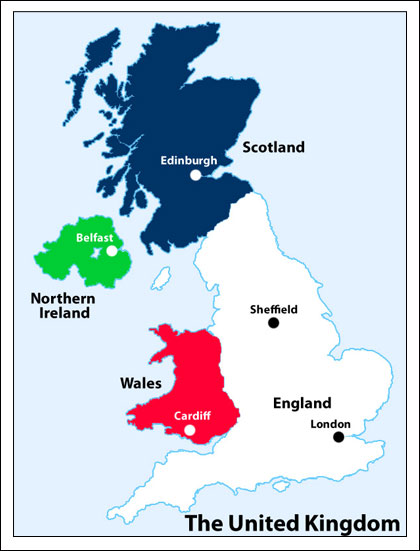

July 4, 2010 - Smoke-free legislation was enforce across the UK by July 2007 (England - July 1, 2007, Scotland - March 26, 2006, Wales - April 2, 2007, Northern Ireland - April 30, 2007). It outlaws smoking in enclosed public places, such as offices, bingo halls, pubs, restaurants and cafes.
The previous Labour administration had promised it would be looked at again in autumn 2010, but the coalition says it has "no plans" to do so.
Publicans - who feared a review would extend the ban into beer gardens and doorways, damaging trade - backed a campaign to partially lift the ban.
Calls for the ban to be reversed are among the most popular suggestions on a new government website, Your Freedom, which asks the public for ideas on which existing laws and regulations should be repealed.
But a Department of Health spokeswoman told the BBC: "We currently have no plans for a review."
Directly related news brief: United Kingdom - smokers want smoking ban extended for kids in play areas and in cars..
Reference: 'No plans' for smoking ban review, BBC News, 7/1/2010.
Some related news briefs:
United Kingdom - cigarette makers oppose plain packaging..;
UK - NICE endorses harm reduction for only those that refuse to quit..;
United Kingdom - halve the number of smokers by end of decade..;
United Kingdom - govt cabinet business secretary has reservations about new anti-smoking strategy..;
United Kingdom - aggressive anti-smoking campaign to protect children..;
United Kingdom - public smoking ban does not lead to more smoking at home..;
UK - NHS Trust - smoking your body takes a beating film..;
United Kingdom - Packaging people - tobacco display ban - Counterfeit cigarettes could thrive..;
UK - Retailer tells small shops to ignore tobacco industry 'scare tactics'..;
UK - Association of Convenience Stores (ACS) unhappy with tobacco displays ban..;
United Kingdom - House of Commons - ban cigarette displays a step closer/vending machine ban even closer..;
Ireland - people responding well to the ban on cigaretet displays..;
JTI attacks UK government for plan to ban tobacco displays..
United Kingdom - 3rd reading of Public Health Bill including ban on tobacco displays..
United Kingdom - limiting access to cigarette vending machines not possible..;
Updated - England - tabacco display ban - the Lords got it right..;
Fewer Britons support the ban on smoking in pubs than in other public places..
"Glasgow effect" - prevalence of cigarette smoking impact on poor health..;
Scotland - tobacco industry will try to stop attempts to curb sales to young people..;
Scotland - cigarette vending machines removal..;
Scottish politicians most have the courage to protect the health of their constituents..;
England, House of Lords votes to ban shop tobacco dislays and restrict vending machine use..;
Northern Ireland - assembly approves ban on display of tobacco items..;
Scotland to ban cigarette displays and outlaw cigarette vending machines..;
England, Wales to ban tobacco displays in shops..;
UK - Strategies to be implemented to prevent underage tobacco use...
(UK, Britain, Empire)
Read more...
Wisconsin - statewide smoking ban starts Monday, July 5, 2010..
 July 4, 2010 - On July 5, Wisconsin will become the 39th state to institute a comprehensive smoking ban law. Signed by Gov. Jim Doyle in May 2009, the Smoke-Free Wisconsin Act prohibits smoking in most public places in Wisconsin, including restaurants, bars, workplaces and any place open to the public or where the public may be invited.
Background
In May of 2009, Governor Jim Doyle today signed legislation to make public places, including restaurants, taverns, and other indoor workplaces, smoke free.
* SB 181, a comprehensive smoking ban, prohibits smoking in all workplaces in Wisconsin after July 5, 2010.
* Cigar bars and specialty tobacco shops are grandfathered in and are not required to abide by the ban, but cigar bars or specialty tobacco shops that open after the bill’s effective date would be required to be smoke free.
* Any person who attempts to violate the ban is issued a first-time warning and will be subject to a $100-250 fine for each subsequent violation.
* Businesses can establish an outdoor smoking area that cannot be regulated by local governments.
* Thirty-seven Wisconsin communities have local smoking bans which will remain in place until the statewide ban takes effect.
Wisconsin Smoking Ban Fast Facts about the Wisconsin Smoking Ban by Carrie Trousil, About.com Guide
Officials have admitted that enforcement responsibility remains unclear. The Wisconsin Department of Justice sent out information to the media on Friday detailing how the ban will be enforced.
The ban does not include private homes, rooms in assisted living facilities where people in them agree to allow smoking, and retail tobacco stores or tobacco bars that existed before June 3, 2009, where only the smoking of cigars and pipes is allowed.
Nearly 8,000 people die every year in Wisconsin because of smoking-related causes, according to a new study called The Burden of Tobacco. The study, released on the eve of the statewide smoking ban, was conducted by the University of Wisconsin Tobacco Surveillance and Evaluation Program, the American Cancer Society, and the Wisconsin Division of Public Health's Tobacco Prevention and Control program.
Milwaukee has one of the highest proportions of smokers, with almost one in four people in the city smoking, compared with about one in five, or 19.6%, for the state as a whole. In nearby Ozaukee County, one in seven people smokes.
"There is still a major problem with tobacco in the state of Wisconsin," said Maureen Busalacchi, executive director of SmokeFree Wisconsin.

The habit is costing the city about $300 million in health care costs, according to the study. People who are ill or die early because of smoking-related diseases cost the city an additional $174 million dollars in lost productivity. To put that in perspective, that's as if every man, woman, and child in the city was paying $500 to offset the costs of smoking every year.
Tom Bachhuber, a doctor at the Sixteenth Street Community Health Center in Milwaukee, sees the effects of smoking every day. He can't wait for the ban to take effect. "A lot of our patients are restaurant workers, and they're dancing," Bachhuber said. "I just see roses here, it's going to be good for everybody."
References: Smoking ban becomes effective July 5 Westby Times, 6/30/2010; Smoking causes 8,000 deaths yearly in Wisconsin, study says Figures released on eve of statewide ban by Tia Ghose of the Milwaukee Wisconsin Journal Sentinel, 7/2/2010;
Wisconsin related news briefs:
Wisconsin - with smoking ban coming tavern league selling discounted e-cigarettes - is this legal??;
Wisconsin - will July 5th smoking ban lead to more cigarette litter..;
Wisconsin - preparing residents for a more complete smoking ban starting in July 2010..;
Appleton, Wisconsin - will city get grant to fight dissolvable tobacco products seen as a threat to children..;
Wisconsin - lawmakers defeat plan to eventually eliminate candy-flavored tobacco..;
Wisconsin - almost last state to require fire-safe cigarettes..;
Wisconsin - government anti-smoking programs cut from $15.3 million a year to $6.9 million..;
Wisconsin - tobacco taxes to go up tomorrow, Tuesday, September 1, 2009..;
U.S. - Midwest States smoking bans do not hurt business..;
Wisconsin Governor Doyle signs smoking ban..;
Wisconsin - legislature passes smoking ban in restaurants, bars and other businesses..;
Count Wisconsin as the 26th state to ban smoking..;
Wisconsin may be the 26th state to ban smoking in all bars and restaurants..;
Wisconsin - Increased Sales Tax Decrease in Smoking..;
Wisconsin's achieves the lowest adult smoking prevalence ever..;
The primary reason to increase the tax on tobacco is to get smokers to quit and dissuade kids from starting..;
Wisconsin cigarette tax and tax on other tobacco products to increase January 1, 2008..;
Wisconsin to Increase Tax on All Tobacco Products..;
Wisconsin voters overwhelmingly (2-to-1) favor upping cigarette taxes by $1.25 a pack..
Read more...
California - tobacco tax increase could be on ballot in 2012..

 July 2, 2010 - Mayoral candidate and former state Senate President Pro Tem Don Perata and other backers of a $1-per-pack tobacco tax to fund cancer research said they submitted more than enough petition signatures Wednesday, June 30th to put their measure on the ballot in 2012.
Perata, said the California Cancer Research Act's supporters hope the high voter turnout of a presidential election year will help the measure, even as it's attacked by the tobacco industry and anti-tax groups. "We're going to be in a big fight," he acknowledged. "In that sense, getting the signatures was really the easy part."
California has not had a tobacco tax increase since 1999.
California Cigarette Tax Rate History
Cents Per Pack Tax
July 1, 1959 – July 31, 1967 3
August 1, 1967 – September 30, 1967 7
October 1, 1967 – December 31, 1988 10
January 1, 1989 – December 31, 1993 35
January 1, 1994 – December 31, 1998 37
January 1, 1999 – Present 87
Source: Orzechowski & Walker
Money raised would go into a trust fund, with 60 cents of every dollar to fund research on causes, prevention and treatment of cancer and other smoking-related illnesses; 20 cents to fund smoking cessation and tobacco use prevention programs; 15 cents to fund research facilities and equipment; 3 cents to fund anti-tobacco and anti-smuggling enforcement; and no more than 2 cents per dollar for administrative costs.
Perata estimated the tax will raise about $855 million per year at first, although that figure will decline as smoking wanes.
Backing the measure are the American Heart Association, American Cancer Society, American Lung Association and the Campaign for Tobacco-Free Kids. Perata said LIVESTRONG, cyclist Lance Armstrong's anti-cancer foundation, formally endorsed
the measure Tuesday.
Jane Warner, chief executive of the American Lung Association in California, said the measure makes good fiscal sense, as tobacco costs the state $15.8 billion in health-care costs and lost productivity every year.
Reference: Perata and friends move to put tobacco tax on 2012 ballot by Josh Richman, Oakland Tribune, 6/30/2010.
California - some related news briefs:
California - court of appeal rules against R.J. Reynolds for running ad in Rolling Stones Magazine in 2007..;
California - state tobacco control program working for adolescents..;
California - governor vetoes propose ban on smoking at state beaches and parks..;
California - will governor sign bill to ban smoking on state-run beaches and parks on Earth Day..;
California - State Assembly approves smoking ban at state parks and beaches..;
California - vote tomorrow, nation's most far-reaching smoking ban in state parks..;
California - “The No Smoking at State Parks and Beaches Act..”;
Read more...
Thailand - more measures put in place to protect non-smokers..

 July 2, 2010 - More measures have been put in place to protect non-smokers from tobacco-related health hazards at workplaces and in public areas.
Smoking is now prohibited at health-related venues, primary and secondary schools, public transport outlets and religious centres. Smoking will be allowed at government offices, universities, petrol stations and international airports, but Public Health Minister Jurin Laksanavisit said smoking areas must be located outside. (Thailand - number of no-smoking zones expanded..)
Thailand has about 13 million smokers - about one-fifth of the population. "We believe that non-smoking Thais will be protected from second-hand smoke [after the ban is enforced]," Mr Jurin said. All public places are required to carry signs with the message "smoke-free area".
Smokers violating the ban and proprietors who do not put up warning signs could face a fine of up to 2,000 baht (61.75 USD). Those who do not provide smoking areas as required by the public health announcement could face a fine of up to 20,000 baht (617.485 USD), he said.
Operators of public places will have 180 days to prepare smoking areas in compliance with the legislation, said Churit Tengtrisorn, director of the Public Health Ministry's Office of Tobacco Control Committee. Hotlines at 1422 and 1555 will provide details of the new public health announcement, he said.
Public Health Ministry figures show tobacco kills 1.2 million people in Asia and 5.4 millions worldwide every year - more than HIV/Aids, malaria and tuberculosis combined.
The figures show up to half of all smokers will die of a tobacco-related disease such as lung or mouth cancer, stroke, or heart or lung disease. Second-hand smoke also harms those who are exposed to it, the ministry said.
Thailand has long been considered as exercising some of the toughest tobacco controls in the world. The country banned smoking inside cinemas and on public buses in 1976 and the number of areas where smoking is banned has increased steadily.
Graphic warnings on tobacco packages are among the mandatory measures.
Laws to prevent the advertising of cigarettes at shops and in the media have existed for more than a decade.
Reference: Smoke signals go up in lightsWriter: Apiradee Treerutkuarkul, Reporter, Bangkok Post, 6/29/2010.
Some other Thailand news briefs:
Thailand - number of no-smoking zones expanded..;
Thailand - PMI likely breached the Foreign Business Act..;
Thai Tobacco Monopoly withdraws products from Tabinfo Asia 2009..;
Thailand - organizer of international tobacco exhibition fined..;
Thailand - hand-rolled cigarettes more popular and other matters..;
WTO - "DS 371" Philippines versus Thailand on cigarette customs valuation..;
Thailand - Tobacco Expo organizers and guests must obey all tobacco control laws..;
Thailand unit of Philip Morris International faces charges that it violated custom tax rules..;
Thailand - hosting major tobacco promotion event in November 2009..;
Thailand Tobacco Monoploly - union concerned about privatization..;
Thailand - monks sickly from tobacco smoking and/or smoke exposure..;
Philippines - Thai cigarette import rules..;
Thailand - cigarette and liquor prices are expected to rise once new measures for calculating excise taxes take effect..;
Congratulations.. Thailand Joins Developed World With Total Ban On Smoking..;
Discouraging Tobacco Use - Horrific Images on the Packaging.. - Thailand is a member of Southeast Asia Tobacco Control Alliance (SEATCA)..
Read more...


To Provide Public Awareness
Purpose
About Us
Contact Us
2008 HIGHLIGHTS
TOPIX PAPERS - 2008 & 2009..