 April 7, 2010 - On August 1, 2005, North Dakota's smoke-free law went into effect. The law prohibits smoking in all enclosed areas of public places and places of employment, with some exceptions. (North Dakota's Smoke-Free Law) Lawmakers have declined to extend the ban to bars and truck stops, but local governments may approve stricter anti-smoking laws.
The Grand Forks City Council has approved extending the city's workplace smoking ban to bars, truck stops and casinos. The ban begins August 15, 2010. The council voted 4-3 on Monday, April 5th to approve the new rules. Mayor Mike Brown cast the tie-breaking vote.
The cities of Fargo and West Fargo have had similar bans for almost two years.
Reference: Grand Forks City Council extends smoking ban, by: Grand Forks Herald, INFORUM, 4/6/2010.
North Dakota - some related news briefs:
North Dakota's Comprehensive State Plan to Prevent and Reduce Tobacco Use 2009-2014..;
North Dakota - statewide anti-tobacco plan to be released in July 2009..;
Read more...
Great Forks, North Dakota - extends smoking ban to bars and truck stops..
Hemoglobin obtained from pigs may be used in cigarette filters..
 April 7, 2010 - In a claim likely to cause consternation from Muslim smokers, a Dutch author has published a book that claims that pig blood is used to make cigarette filters. Pig 05049, written by Christien Meindertsma, lists 185 different ways that pigs’ body parts can be used, including in the manufacture of sweets, shampoo, bread, beer and bullets.
Pig hemoglobin is, according to the book, used to filter harmful chemicals in cigarettes.
See our directly related news brief: Pig hemoglobin used in cigarette filter to trap harmful chemicals..
The Indonesian Consumer Protection Foundation (YLKI) called on authorities to investigate the claims. “If the claim is true then the National Food and Drug Monitoring Agency (BPOM), the Ministry of Health and the Indonesian Ulema Council’s (MUI) Food and Drug Analysis Agency (LPPOM) should immediately conduct a sampling test,” Tulus Abadi, chairman of the YLKI, told the Jakarta Globe. (Indonesian Ulema Council - Indonesia’s top Muslim clerical body)
Tulus said that Indonesian cigarette producers were using imported filters because they are not produced locally. If the claims are true, Tulus said, the government has a stronger case to take a stand against tobacco. “As the most populous Muslim country, we should be really careful, most smokers in Indonesia are Muslims. How would they feel if they found out that the cigarettes they smoke were made using pig hemoglobin?” he said.
MUI chairman Amidhan said that MUI would not comment on the matter and would not conduct any certification test unless there was a request from the cigarette industry or the importer.
“Smoking is offensive and for now that’s our stance. However this information should be regarded as a warning for smokers to be more aware,” he said.
The Jewish and Muslim community refrain from pork consumption due to religious beliefs, and the same can be said about a large majority of vegetarians too who practice the diet because of strict religious beliefs.
Reference: Claims of Pig Blood in Cigarette Filters Coughs Up a Cloud of Controversy, Dessy Sagita, The Jakarta Globe, 4/2/2010.
Read more...
Tobacco Control Legal Consortium: A “Commercial Speech” Factsheet for State and Local Governments (2010)..
 April 7, 2010 -
Elisa P. Laird-Metke, Tobacco Control Legal Consortium, Regulating Tobacco Marketing: A “Commercial Speech” Factsheet for State and Local Governments (2010), Tobacco Control Legal Consortium (www.tobaccolawcenter.org)
Tobacco Control Legal Consortium related news briefs:
Tobacco Control Legal Consortium - facts sheets provided to help understand the "Family Smoking Prevention and Tobacco Control Act"..;
Legal Consortium files amicus (friend of the court) brief in first impression tobacco-free pharmacy case..
Read more...
Israel - Knesset member bill eliminate nicotine from cigarettes..

 April 7, 2010 - Kadima (political party) MK (Member of Knesset (Israeli Parliament)) Yoel Hasson tabled a private member’s bill on Monday that, if passed, would be the world’s first law barring the sale of tobacco products containing addictive substances such as nicotine, or other substances, such as menthol and ammonia, that make nicotine more addictive, The Jerusalem Post has learned.
This article from the Jerusalem Post was reported on March 16, 2010.. Israel - Knesset member bill eliminate nicotine from cigarettes..
Read more...
Philippines - DoH pushes for picture warnings on cigarette packs..
Philippines Dept. of Health..

 April 7, 2010 - In countries like Thailand, Brazil and Canada, graphic “picture-based health warnings” on cigarette packs have increased public knowledge on the ill-effects of smoking, as well as motivated an undisclosed number of smokers to quit the habit. (Graphic Warnings cigarette packs: Canada revising warnings, U.S. pictorial warnings within 4-years..)
The Philippines the Department of Health (DoH) has expressed confidence that the government could do the same by requiring tobacco firms to print similar warnings on cigarette packs sold to the public. DOH Secretary Esperanza Cabral on Tuesday, April 6th told the INQUIRER they were “crafting an administrative order” covering such warnings against tobacco use.
The directive is “in accordance with the Framework Convention on Tobacco Control,” or FCTC, which was signed in 2003 by over 160 countries, including the Philippines.
The FCTC “has been ratified (by the Senate) and is now part of the law of the land,” Cabral noted.
Ninety-six percent of Filipino smokers said graphic health warnings would most likely make them quit compared to bland text warnings, according to a recent study of the Council on Tobacco for Health and Air of the Philippine College of Chest Physicians. (Graphic health warnings may make smokers quit, says study by Jocelyn Uy, Philippine Daily Inquirer, 8/14/2008)
Like Cabral, both the Philippine College of Chest Physicians (PCCP) and the Framework Convention on Tobacco Control Alliance-Philippines (FCAP) strongly believe picture-based health warnings would be a “more effective strategy” over text warnings against tobacco use.
Dr. Sylvia Banal-Yang, PCCP president, told a recent health forum “a picture speaks a thousand words. When smokers see what tobacco use could do to their health, then they will have second thoughts about buying cigarettes again.” For her part, FCAP executive director Maricar Limpin said such warnings printed on cigarette packs would most likely “convince the smoking public, especially the youth, that smoking is really bad for the health.”

 Cigarette smoking is one of the lung health issues cited in Proclamation No. 2001, issued recently by Philippine President Gloria Macapagal-Arroyo, declaring 2010 as the “Year of the Lung.” In her directive, Arroyo stressed the need for “preventive measures through a more intensified advocacy campaign and effective strategies to curb the epidemic causing serious and debilitating lung disorders.”
According to Cabral, the DOH would “continue our advocacy against cigarette smoking.”
Aside from the imposition of higher taxes on cigarettes, among other “sin products,” both the PCCP and FCAP favor a total ban on tobacco use in the country.
Cabral, however, said otherwise. “It impinges on the rights of human beings to choose to die or not to die from diseases caused by smoking. All we can do is tell them the facts and this is what we would do if we were you and we hope you'll do the same thing,” she explained.
Reference: DoH pushes for picture warnings on cigarette packs by Jerry E. Esplanada, Philippine Daily Inquirer, 4/6/2010.
Philippines - some related news briefs:
Philippines - PMI - FTC merger may lead smokers continuing to smoke and lure children into a life of nicotine addiction..;
Philippines - PMI and Fortune Tobacco Corp. form new company called PMFTC..;
Philippines - Tanauan City names street Philip Morris..;
Philippines - DOH campaign for 100% smoke-free workplaces..;
Philippines - total tobacco industry could be down 10% to 15% this year..;
Philippines - 2003 ban on advertising and skirting the ban..;
Philippines - June is annually observed as 'No Smoking' Month..;
Philippines may be losing the war against smoking..;
http://snus-news.blogspot.com/2008/11/philippines-thai-cigarette-import-rules.html;
Philip Morris won't postpone Philippines Eraserheads Concert..;
Philip Morris could be criminally liable for its sponsorship of the event .in the Philippines..;
STOP PMI Sponsoring Concert in Philippines..;
Philippines - Smoker to be deported...
Read more...
Rhode Island - bill before state senate to raise age to purchase tobacco products to 21..


April 7, 2010 - A bill currently being considered in the Rhode Island Senate proposes to raise the purchase age for tobacco products to 21, from the current legal age of 18. The bill, introduced in January by Senators Rhoda Perry P’91, D-Providence, and V. Susan Sosnowski, D–New Shoreham and South Kingston, replaces each mention of age 18 in the current law with the proposed age of 21 and changes nothing else.
Current Rhode Island law prohibits anyone under the age of 18 from purchasing tobacco products and outlaws the selling or delivery of tobacco to minors.
Perry said that this bill is based on the public health benefits of restricting tobacco use during a time when many young people form lifelong habits. She said the bill is not an attempt to force her beliefs on others.
Steven Brown, executive director of the Rhode Island Affiliate of the American Civil Liberties Union, said that while smoking is unhealthy, this bill does not make sense given the other legal rights afforded to 18-year-olds. “Eighteen is the age of majority,” Brown said. “An 18-year-old is legally an adult and can marry, enter into contracts and serve in the military, so he or she should be able to smoke cigarettes.” Brown added that this bill is an attempt to protect individuals who he believes are old enough to be making decisions on their own. “It is a discrimination against young adults solely on the basis of their age,” Brown said. “It’s a protective measure that refuses to recognize that 18-year-olds are adults and should generally be treated as such.”
Despite Perry’s claim that research validates the bill, she does not believe it will pass this year. She predicted that the influence of special interests and political pressure to avoid measures that might further depress Rhode Island’s struggling economy would prevent the bill from passing in the near future.
Both Brown and Perry noted that smoking is harmful, but each had a different approach to how it should be handled from a legal perspective. “Smoking is a stupid thing to do, but it’s stupid at any age,” Brown said.
Perry said that while consumption of alcohol in moderate amounts can have social benefits — and even potential health benefits — a cigarette represents “an ill wind that blows no good.”
She said that raising the age at which an individual can obtain tobacco would simply be one of the most effective ways to discourage young people from smoking. “These days we’re looking at what researchers say works, which is keeping young people from starting cigarette smoking,” Perry said. “Studies have revealed that the longer a young person is kept from smoking, the less likely he or she is to start.”
Dr. Judith Mackay - a World Health Organization senior policy adviser has recently stated, "If you can get kids by the age of 19, they don't start smoking hardly after that." (In May 2007, Time Magazine named Judith Mackay, M.D. one of the "most influential people in the world" in recognition of her role as a leading campaigner for stricter tobacco control measures and vigilant critic of tobacco industry practices. Dr Judith Mackay named one of the "most influential people in the world
Reference: Bill would raise tobacco age to 21 by Mark Raymond, Staff Writer, The Brown Daily Herald, 4/6/2010.
Rhode Island - some related news briefs:
U.S. - states cracking down on cigarette smuggling..;
Rhode Island - c-store, another case of selling cigarettes that lack state tax stamp..;
Rhode Island retailers finding ways to avoid paying tobacco tax..;
Rhode Island state cigarette tax highest in nation - $3.46/pack..;
Besides federal tax increase - several states want to do the same..;
Read more...
New Hampshire - high school students smoking less but smokeless tobacco and cigars use UP..


April 7, 2010 - CONCORD, NH - A survey released by state health officials shows that smoking rates have gone down among New Hampshire high school students.
2007 - 2009 NH YOUTH TOBACCO STATEWIDE SURVEY INCLUDING COMPARISON WITH 2001 - 2004.., New Hampshire Department of Health and Human Services, Division of Public Health Services, Bureau of Prevention Services, Tobacco Prevention and Control Program
The Youth Tobacco Survey showed that 16 percent of high-schoolers reported smoking cigarettes in 2009, compared to 25.3 percent in 2001. But the use of chewing tobacco increased to 7.4 percent, compared to 4.5 percent in 2001. Cigar use also climbed to 14.5 percent in 2009, compared to 11.8 percent in 2001.
"We are making progress and seeing a reduction in the use of some tobacco products, such as cigarettes," said Dr. Jose Montero, director of public health at the Department of Health and Human Services. "Still, there are concerns that young people may be increasing their use of other tobacco products, such as smokeless tobacco, which opens the door to nicotine addiction and future smoking."
Tobacco use was higher among boys, with 30.5 percent reporting that they currently use some form of tobacco, compared to 19.5 percent of girls. But there was no significant difference in cigarette smoking prevalence between boys and girls, with 16.5 percent of boys and 15.8 percent of girls reporting that they smoke cigarettes.
The report showed that the most common way for high-schoolers to get cigarettes was to have someone else buy them or bumming them off of other smokers.
The survey also indicated that the proportion of students who have been exposed to secondhand smoke in a room or car with a smoker has declined significantly from 72 percent in 2001 to 54.2 percent in 2009.
Reference: Survey Shows Decline In Teen Smoking Rates Some Other Forms Of Tobacco Gaining In Popularity, WMUR-9, 4/6/2010.
New Hampshire - some related news briefs:
New Hampshire - legislation to ban smoking on beaches filed..;
New Hampshire Cigarette Tax Goes Up By 25 Cents A Pack..;
New Hampshire - cigarette tax increase - ON HOLD..;
Massachusetts cigarette tax jumps $1 per pack..;
uly 1, 2007 - as of 7/1/2007 Smokers in five states will take a hit to their wallets as the tax increase..;
Read more...
Indonesia - government may raise cigarette tax and cut cigarette output..

 April 6, 2010 - Indonesia plans to raise the cigarette excise tax, a senior industry ministry official said on Thursday, April 1st to offset lower production and further discourage smoking in the world's fifth-largest tobacco market.
Indonesia is considered the lastparadise for smoking in public places in Southeast Asia and a paradise for tobacco companies.
Indonesia is the fifth largest cigarette market by volume in the world and the home of the kretek - clove cigarettes. Around 57% of the adult male population of Indonesia smoke and some 5% of the adult female population, which means a smoking population of around 43 million,total population around 240 million).
The tobacco industry plays an important role in Southeast Asia's biggest economy, as it provides millions of jobs while excise taxes on cigarettes account for about 10 percent of government revenue. The big cigarette companies, including PT Hanjaya Mandala Sampoerna owned by Philip Morris International and PT Gudang Garam, have traditionally been regarded by investors as a play on domestic consumption. (Indonesia 'cash cow' for Philip Morris International..)
Indonesia set a target of 57 trillion rupiah ($6.27 billion) for revenue from cigarette excise in 2010, up from 54 trillion rupiah in 2009, reflecting the increase in excise, said Benny Wahyudi, director general for Agriculture and Chemical Industries at the Industry Ministry.
The government aims to lower cigarette production to 240 billion sticks this year, from 245 billion sticks in 2009. "The plan to lower production is part of the cigarette industry's road map to control cigarette output for health," Wahyudi said. "Efforts to lower cigarette production are by increasing cigarette excise, limiting smoking areas, banning cigarette advertising, and awareness on the impact of smoking for health," he said.
Indonesian cigarettes are among the cheapest in the world, priced at around $1 a pack.
The excise tax ranges from 65 rupiah (0.007 USD) per stick to a maximum of 320 rupiah (0.035 USD) per stick, depending on the type of cigarette and whether it is hand-rolled or machine-rolled.
If the government goes ahead with plans to increase excise and cut cigarette output, it is likely to reduce sales and profits for cigarette companies, said Yohan Setio, an analyst at PT Mandiri Sekuritas. "If it happens, cigarette firms may raise their selling price but it will be done cautiously because they need to maintain their market share," Setio said.
Some cities in Indonesia, including Jakarta, have banned smoking in public places, but the rules are widely ignored. Smoking in most public places is banned in the capital, Jakarta, but the three-year-old law is rarely enforced.
Reference: Indonesia to hike cigarette excise, cut production, reporting by Yayat Supriatna and Janeman Latul; writing by Fitri Wulandari; editing by Sara Webb, Asia News - Reuters, 4/2/2010.
Indonesia related news briefs:
Indonesia - Muhammadiyah-owned university students demonstrate against edict against smoking..;
Indonesia - kretek cigarette maker Gudang Garam's 2009 net profit jumps 84 percent..;
Indonesia - persons accused of eliminating clause designating tobacco as addictive..;
Indonesia - second largest Muslim organization launched a fatwa against smoking..;
Indonesia - RATIFICATION OF FCTC MAY RAISE INDONESIA'S BARGAINING POWER.. ;
Indonesia - 18 tons of illegal cigarettes destroyed..;
Indonesia - Government to limit cigarette production..;
Indonesia - BAT, Bentoel shareholders approve planned merger..;
Indonesia - another protest rejecting the new cigarette excise tax..;
Indonesia - workers from small cigarette producers protest excise tax increase..;
Indonesia - cigarette industry has pledged to stage a demonstration to protest a government plan to increase excise tax.;
Indonesia - the last paradise for a puff in Southeast Asia..;
Indonesia - trade minister officials want to meet with US counterparts to discuss ban on clove cigarettes..;
Indonesia - PT BAT Indonesia to merge with PT Bentoel International Investama Terbuka..;
Indonesia - missing tobacco regulation in approved Health Law..;
Indonesia - section on tobacco in health bill disappears..;
Indonesia - Constitutional Court by close vote rules that tobacco ads can continue..;
Indonesia - parent smoking can negatively affect the nutrition of children..;
Indonesia - new council member suspect in cigarette fraud case..;
Indonesia - an NGO commission assists cigarettes must be banned in films..
Indonesia - a paradise for tobacco companies..
Indonesia - after buying cigarettes very little left for food..;
Indonesia - will they ratify the first world public health treaty..;
Indonesia - last paradise to smoke in public places in Southeast Asia..;
Indonesia - Industry minister to close tobacco to new foreign investment..;
Indonesia Finance Ministry to cap tax deductions for tobacco companies..;
Indonesia - Smoking hits poor families the hardest, making the poor even poorer..;
Indonesia - Cigarette makers defy crisis, grows stronger..;
Indonesia - government may raise cigarette excise tax next year..;
WHO - Indonesia is crying out for your help..;
Indonesia - dispute with U.S. over banning the use of clove in cigarettes..;
Indonesia 'cash cow' for Philip Morris International..;
Tobacco industry has long targeted young people as "replacement smokers";
Indonesia - district court dismisses request to ratify FCTC..;
Asean Countries - Tobacco Industry Blocking Global Treaty On Tobacco..; Indonesia - farmers hold rally protest tobacco controls..;
Indonesia - tobacco farmers reject Islamic council's edict..;
Indonesia - Ulema Council - debate results is split on smoking..;
Indonesia - Withdraw Sponsorhip of Another Rock Concert..;
Indonesia to increase tax on tobacco products..;
Semarang, Indonesia - Cigarette Smoking Areas to be Prepared..;
Jakarta, Indonesia - Malls help enforce non-smoking ban..;
Indonesia - federal anti-smoking laws in one year - MAYBE..;
Indonesia - NGO's (non-government organizations) Demand the Government Ratify WHO's FCTC.;
Indonesia to raise cigarette tax by 6 to 7% in 2009..;
Surabaya, Indonesia - anti-smoking bylaw 10/2009 - FOR REAL??
Indonesians smoking more than ever before..;
Indonesia further rise in the excise tax would hurt the cigarette industry..;
Alicia Keys - Jakarta Concert (July 31st) tobacco companies forced to withdraw sponsorship.. and
Most Indonesians support moves to ban tobacco advertisements...
Read more...
Turkey - smoking ban compliance excellent and cigarette sales drop 15 percent..


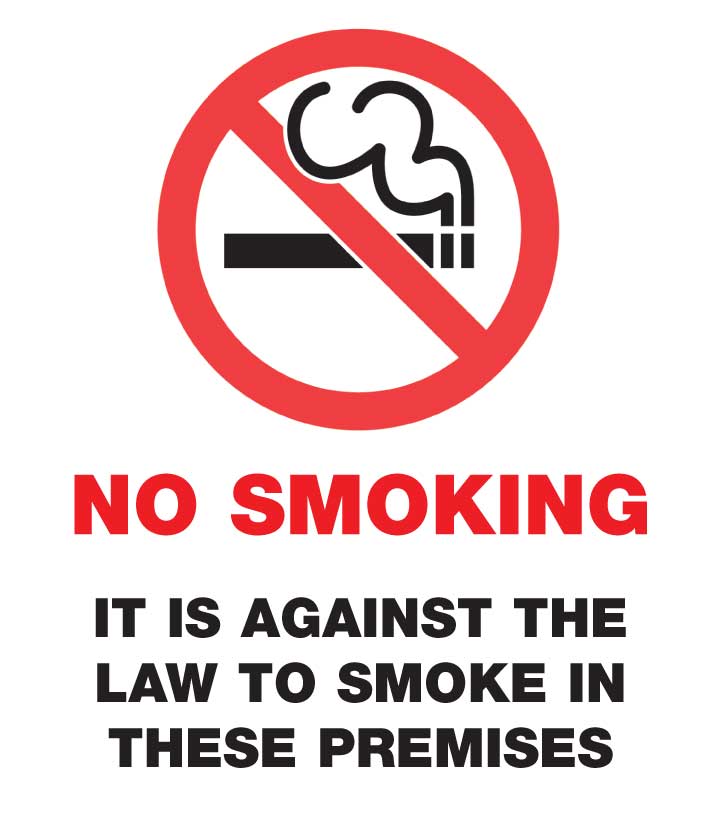 April 6, 2010 - Officials announced on Monday, March 29th that 97 percent of businesses are in compliance with a smoking ban that was instituted on July 19 of last year and which has led to a 15 percent drop in cigarette sales since its implementation.
Turkey has moved into 14th place on a list of countries levying the highest taxes worldwide on tobacco products, with a recent rise in the private consumption tax (ÖTV) on cigarettes, which is anticipated to reduce the number of smokers by more than half a million this year. (Turkey 14th among countries with highest taxes on tobacco, TODAY’S ZAMAN ANKARA, 3/2/2010)
Speaking at a press conference yesterday, National Cigarette and Health Committee (SSUK) President Elif Dağlı said most complaints in İstanbul came from the districts of Beşiktaş, Şişli, Kadıköy and Beyoğlu. Dağlı added that businesses in Sancaktepe, Beykoz and Avcılar were the most compliant with the ban.
Since the ban went into effect, 800 inspectors have fined 1,780 businesses out of more than the 52,000 businesses they inspected. In excess of 1,000 people who did not comply with the ban were also fined. Turgut Ekmekçi, who worked to ensure compliance in Sarıyer, said most complaints came from competing businesses.
Also speaking at the press conference, İstanbul Deputy Governor Ahmet Aydın and İstanbul Health Authority Assistant Manager Macit Alemdar said inspectors would provide businesses with information on the harmful effects of smoking. Turkey has close to 22 million smokers and around 50 million non-smokers, 10 million of whom suffer from lung and cardiovascular disease. Dağlı said $50 billion a year was spent to combat illnesses contracted from smoke.
Reference: Cigarette sales drop 15 percent with smoking ban, YASEMIN BUDAK İSTANBUL, Today's Zaman, 3/30/2010.
Turkey - related news briefs:
Turkey - two television stations successfuly challenge fines..;
Turkey - two TV stations fined for airing shows featuring smokers..;
Turkey - smoking still major problem despite countrywide ban..;
Turkey - state tobacco monopoly sold workers still want jobs..;
Turkey - overall, smoking ban is working..;
Turkey - court overrules TAPDK on tobacco labels..;
Turkey - cigarette producers sue to reduce size of graphic images..;
WHO to unveil new 2009 tobacco epidemic report in Turkey..;
Turkey - graphic/written warning labels starting January 1, 2010..;
Turkey - with expansion of smoking ban cigarette sales drop..;
Turkey - smoking ban, cafes (teahouses) losing business, owners threaten to strike..;
Turkey - hundreds of cafe owners demonstrate against smoking ban..;
Turkey - small--scale retailers to demonstrate against smoking ban..;
Turkey - anti-smoking advocates happy with early results of smoking ban..; Turkey - smoker wounds manager and kills his friend when asked to stop smoking..
Turkey - cafe owners complain about smoking ban..;
Turkey - dangers of secondhand smoke media campaign..;
Turkish Government - makes major move to improve the health of its citizens..;
Turkey - smoking ban starting July 19th will be enforced - these guys are serious..;
Turkey - poll indicates employers, their employees and customers support smoking ban in cafes, bars and restaurants..;
Turkey - July 19th total smoking ban, will employees lose jobs..;
Turkey - on July 19, 2009 will mark the beginning of “100 percent smoke-free air” in this country..;
Turkey - national smoking ban starts July 19, 2009..;
Turkey - quit smoking photo displayed in İstanbul's Taksim Square..;
Turkey - data on tobacco usage - Turkish Statistics Institution..;
Turkey - smoking ban in all bars, restaurants and coffeehouses starting July 19, 2009..;
Smoking ban in Turkey lowers cigarette consumption..;
Turkey's ban on pubic smoking goes into effect on Monday, May 19, 2008..;
British American Tobacco (BAT) reported group volume sales up for first quarter 2008..;
More on the quick fix for outdoor smokers..;
BAT to Acquire Most of Denmark's ST..;
More on Philip Morris International of the Future..;
WHO Report on the Global Tobacco Epidemic 2008...
Read more...
Cambodia - may miss deadline to ban tobacco advertising..
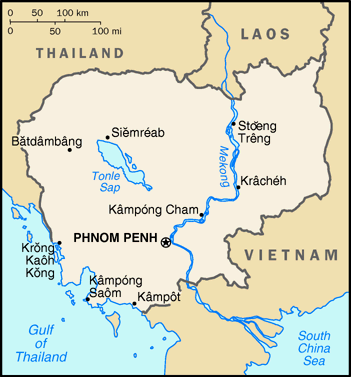 April 6, 2010 - Health experts on Thursday, April 1st warned that the government is in danger of missing an internationally mandated deadline to ban tobacco advertising.
The deadline is mandated by Article 13 of the World Health Organization (WHO) Framework Convention on Tobacco Control, to which Cambodia is party, and must come into effect by February 2011, officials from the WHO and the NGO Cambodian Movement for Health said at a joint press conference.
The article states: “Each Party shall, in accordance with its constitution or constitutional principles, undertake a comprehensive ban of all tobacco advertising, promotion and sponsorship.”
Cambodia signed the convention in 2004. Dr Mom Kong, executive director of Cambodia Movement for Health, said Thursday that Cambodia was the only party to the convention in Southeast Asia that had no regulations on tobacco advertising.
Malaysia, Thailand, Singapore, Vietnam and the Philippines have all completely banned tobacco advertising, whereas Laos has a partial ban in place, he said.
Dr Sung Vinntak, deputy director of the Health Ministry’s National Centre for Health Promotion, said by phone Thursday afternoon that the government did plan to eventually ban tobacco advertising, but said he could not provide any details or a prediction for when the ban might be implemented.
“We do not have any policy or law relating to this – we plan to have this but don’t yet,” he said. “We have to comply with the Framework Convention on Tobacco Control, but we cannot predict when we will create the law.”
Kun Lim, head of corporate and regulatory affairs for British American Tobacco Cambodia, part of an international company whose brands include Dunhill, Kent, Lucky Strike and Pall Mall, said via email that the government had consulted with companies that would be affected by a ban, and praised officials for their “commitment to listen” and to ensure that “no unnecessary burdens are placed on businesses”.
He said the company, which recorded profits of US$1.75 billion in Southeast Asia last year, opposed “a complete total advertising ban in Cambodia”, but that there is “an urgent need for regulation restricting/banning mass media tobacco advertising” – including ads appearing on television, the radio, billboards and in print media. He added that British American Tobacco had since 2001 limited itself to “advertising on some smaller size billboards at appropriate locations”.
Effective Implementation of the WHO Framework Convention on Tobacco Control through the MPOWER Policy Package Tobacco Cessation Services in the South-East Asia Region., WHO, volume 2 number 2, 2009..
Reference: Govt urged to ban tobacco ads, 04/02/10, Chhay Channyda and Brooke Lewis, Phnom Penh Post, 4/5/2010.
Cambodia - Related News Briefs:
Cambodia - agreement greater tobacco control measures needed..;
Cambodia - 2-day seminar, strategies for controlling tobacco use..;
SEATCA - Gates funding for research on improving tobacco control tax systems..;
Cambodia - text only cigarette warnings starting July 2010..;
Cambodia - now favors text only warnings on cigarette packs..;
Cambodia - graphic warnings soon to be on cigarette packs..;
Asean Countries - Tobacco Industry Blocking Global Treaty On Tobacco..; - Cambodia is a member of Southeast Asia Tobacco Control Alliance (SEATCA)..
Read more...
Cambodia - agreement greater tobacco control measures needed..
 April 6, 2010 - THIS SEEMS LIKE THE SAME 2-DAY SEMINAR WE REPORTED ON MARCH 8, 2010.. Cambodia - 2-day seminar, strategies for controlling tobacco use..
Adventist Development and Relief Agency (ADRA) has been working to increase tobacco control in Cambodia since 1996, to raise awareness of the dangers of tobacco consumption and reduce smoking prevalence throughout the country.
In early March, representatives from the National Assembly, the Council of Ministers, the Cambodian Inter-Ministerial Committee for Tobacco Control, and other key leaders met with ADRA and partnering non-governmental organizations during an ADRA-sponsored two-day event to discuss a draft law on tobacco control. During the meetings, participants agreed to work toward the creation of six key strategies that once implemented will enable effective tobacco control throughout the country.
These recommendations, which are expected to be distributed among key government stakeholders, would fulfill the commitment to the World Health Organization (WHO) Framework Convention on Tobacco Control, which the Cambodian government ratified in 2005, and include policies that will establish laws and legitimate standardized documents to reduce tobacco consumption in the country, strengthen existing tobacco control mechanisms and methods, and install a comprehensive ban on tobacco advertising.
According to ADRA Cambodia, these recommendations and the resulting commitment to them by government parties signify a “pivotal” point in the progress of tobacco control law in Cambodia. “We are very proud to see the Cambodian government and the National Assembly commit to these strategies,” said Mark Schwisow, country director for ADRA Cambodia. “We and our partners have worked very hard to push for the tobacco control law to pass, and we are happy to have the Council of Ministers and other influential lawmakers calling for greater tobacco control measures themselves.”
The meetings, held in the Cambodian capital of Phnom Penh, were designed to increase awareness and the support for a stronger anti-smoking law in a country where nearly half of all men and more than 20 percent of women use tobacco products, according to a 2005 ADRA-WHO national prevalence survey. It also aimed to encourage representatives from the Council of Ministers to support the current draft law on tobacco control, leading to ratification by the National Parliament, which has faced numerous delays and obstacles in recent years.
“ADRA Cambodia has been working for more than 10 years to reduce tobacco consumption within Cambodia,” added Schwisow. “However, additional political will is needed from key government officials in order to pass a comprehensive national law on tobacco control in Cambodia.”
ADRA organized the event through a partnership with MEDiCAM, a membership organization of non-governmental organizations in Cambodia’s Health Sector, and Cambodia Movement for Health (CMH), with technical support provided by the World Health Organization (WHO).
Reference: Cambodia: ADRA and Key Policymakers Call for Greater Tobacco Control, ADRA International, 3/30/2010.
Cambodia - Related News Briefs:
Cambodia - 2-day seminar, strategies for controlling tobacco use..;
SEATCA - Gates funding for research on improving tobacco control tax systems..;
Cambodia - text only cigarette warnings starting July 2010..;
Cambodia - now favors text only warnings on cigarette packs..;
Cambodia - graphic warnings soon to be on cigarette packs..;
Asean Countries - Tobacco Industry Blocking Global Treaty On Tobacco..; - Cambodia is a member of Southeast Asia Tobacco Control Alliance (SEATCA)..
Read more...
R.J. Reynolds submits information on Camel Dissolvables to FDA as requested..

 April 5, 2010 - R.J. Reynolds Tobacco Co. said yesterday that it has complied with a federal request for information about three innovative dissolvable smokeless products.
The company had until yesterday to provide research information regarding Camel Orbs, Camel Sticks and Camel Strips to the Tobacco Products Scientific Advisory Committee of the Food and Drug Administration. (Star Scientific and Reynolds hade two months to respond.)
The FDA in its letters to the two companies, RJR and Star Scientific, asked both manufacturers for extensive information on research and marketing practices for the products. Both companies had to respond. (U.S. FDA - concerned that dissolvable tobacco products could draw in children and teenagers..)
U.S. FDA Center for Tobacco Products seeking opinions on dissolvable products by September 18, 2010..
Earlier this week, the same committee began its initial review of the use of menthol flavoring in cigarettes.
Reynolds said that the flavored, finely milled tobacco products serve as an alternative to cigarettes, giving adults a discreet option in venues where smoking is not convenient or is banned out of concern for secondhand smoke exposure.
The products are being sold in three test markets, none in North Carolina.
In February, the committee sent a letter to Reynolds and Star Scientific Inc., another producer of smokeless products containing nicotine.
The FDA acknowledged that Reynolds is marketing the products to adult consumers.
Dr. Lawrence Deyton, the director of the FDA's Center for Tobacco Products, wrote in his letter of the center's concern that "brightly colored" packaging and "candy-like appearance" of the products may appeal to children. He also is concerned about whether the nicotine content in the products "may facilitate initiation of tobacco use, nicotine dependence and addiction in adolescents, and may serve as a mechanism for inadvertent toxicity in children."
The results of the committee's review could play a role in determining how well can Reynolds live down -- and learn from -- its past in its quest to be a "total tobacco company," according to Susan Ivey, the company's top executive. "We provided both summary results and underlying data related to our product and consumer testing to date on Camel dissolvables, including consumer feedback and results of scientific testing of the products," said Maura Payne, a spokeswoman for Reynolds.
Payne said that complying with the request required providing "confidential commercial information and trade secrets, which are exempt from public disclosure under several sections of the Food, Drug and Cosmetic Act."
"Therefore, Reynolds requested its response be treated as confidential by the agency."
The direction of the FDA committee's concerns appears obscure, said Brad Rodu, the chairman of the Tobacco Harm Reduction Research University at the University of Louisville. He said that describing the products as resembling candy is inaccurate considering dissolvable tobacco does not contain candy or other nutritive ingredients. He said he doesn't consider the packaging as brightly colored or easy to open by children.Dr. Rodu, a dentist with training in oral pathology, is a professor of medicine and the first holder of the endowed chair in Tobacco Harm Reduction Research The endowed chair and accompanying research fund were created by tobacco companies U.S. Smokeless Tobacco Co. and Swedish Match AB, who committed nearly $3.4 million. It has been pointed out that much of the research on the relative health impact of smokeless tobacco has been funded by the tobacco industry (Smokeless Tobacco Poses Challenge for Stop-Smoking Advocates, Join Together, 9/20/2006). (see snus.biz)
"These features make the risk of accidental nicotine toxicity through use of dissolvable tobacco products extremely unlikely," Rodu said. He said he does not believe any complaints have been filed regarding marketing prohibitions in the Master Settlement Agreement.
Reference: RJR gives requested data on products to FDA panel by Richard Craver (rcraver@wsjournal.com), Winston-Salem Journal, 4/2/2010.
Read more...
Massachusetts - jury rejects condo owner 's lawsuit that realtor did not inform that neighbor smoked..
 April 5, 2010 - Real estate brokers in Massachusetts heaved a collective sigh of relief recently. A Suffolk County, Maassachusetts jury rejected a Boston condominium owner's lawsuit in which she contended that tobacco fumes from a downstairs neighbor amounted to a health hazard, and that her agent knew the neighbor smoked but hid that information from her.
The plaintiff in the suit, Alyssa Burrage, claimed that tobacco fumes from the condo unit beneath the one she purchased in Boston's South End for more than $400,000 in 2006 aggravated her asthma. She filed claims against the owner of the downstairs unit and his roommate, the condominium trustees, her real estate agent and the brokerage firm that employed him.
With the other defendants settling out of court the day before the trial, the agent, Joseph DeAngelo, and the brokerage, Gibson Sotheby's International Realty, were left as the sole respondents, defended by Jay S. Gregory, a shareholder in LeClairRyan's Boston office who focuses his practice on construction defect litigation and the defense of malpractice actions brought against professionals and real estate brokers. After deliberating for less than an hour, the 14-member jury found for DeAngelo and Gibson Sotheby's.
"What really piqued everyone's interest in this case was the idea of the condominium owner seeking, in effect, to exert control over somebody else's lawful behavior (smoking) in their own residence," Gregory explained. "The plaintiff asked the court to take judicial notice of the dangers of secondhand smoke and the U.S. Surgeon General's conclusions regarding exposure to secondhand smoke. All the defendants involved objected to the request for judicial notice. The plaintiff's team was looking for a per se argument that, if successful, would have changed things for plaintiffs across the Commonwealth. They were trying to position the presence of a smoker in nearby proximity as something requiring automatic disclosure, effectively creating a new burden for real estate agents."
Reference:
Jury Reaches Quick Verdict in Favor of Real Estate Broker in Secondhand Smoke Suit
LeClairRyan attorney successfully defends against 'failure to disclose' charge, SOURCE LeClairRyan, PR Newswire, 3/30/2010.
Read more...
Poland - attempt to introduce smoking ban in public places fails..

 April 5, 2010 - An attempt to impose a complete ban on smoking in public places in Poland failed on Friday 26 March, when its Senate approved a bill that will allow smoking in bars and restaurants that have more than one room, as long as a no smoking room is provided, and in hotels and student accommodation.
Back on February 15, 2010 we were disappointed when the full parliament sent smoking ban bill back to committee to weaken the bill.
Lukasz Balwicki, of the Department of Public Health and Social Medicine at the Medical University of Gdask, expressed regret at the failure to introduce a full smoking ban. He said that the tobacco lobby had worked hard against a comprehensive ban on smoking in public. "The tobacco industry tried to convince [the government] that new stronger regulations would lower revenue coming from tobacco taxes. In times of a financial downturn this is a strong argument," Dr Balwicki said
The situation has been made worse by the fact that the country’s health minister, Ewa Kopacz, a paediatrician, is a smoker and a strong opponent of a complete ban.
Dr Balwicki expressed relief, however, that the Senate’s bill was not as retrogressive (move backward) as one passed earlier in March by the Sejm, Poland’s lower chamber.
The two chambers must now haggle over specifics to try to hammer out a single version of the bill, which would become law if signed by the Polish president.
Dr Balwicki, who is a member of the Polish Society for Health Programmes, said he thought that the Sejm would agree to the Senate version, as both houses are controlled by the same party, the centre right Civic Platform. The Senate version was approved only after consultation with Sejm colleagues, he added.
Dorota Sienkiewicz, policy officer at the European Public Health Alliance in Brussels, said that Poland had ratified the World Health Organization’s Framework Convention on Tobacco Control in 2006 and for the past three years had been debating a more comprehensive public smoking ban.
The process seemed to be progressing smoothly, with strong political support in both chambers for a comprehensive smoking ban. "Nearly all politicians were in favour," she said. "But in the two weeks before the [Sejm] vote, everything changed."
On 4 March the Sejm approved a bill that would allow smoking in separate rooms in almost all public places, including in hospitals, schools, kindergartens, and workplaces. The bill would also allow separate smoking rooms in pubs and restaurants over 100 square metres. In smaller venues the owner would be given the right to choose to be either a 100% smoking or non-smoking establishment.
The Sejm’s bill was a step backward from current Polish law approved in 1995, which bans smoking in hospitals, schools, and workplaces, Ms Sienkiewicz said, adding that the 1995 law was "very progressive" when it was approved.
She agreed with Dr Balwicki that the tobacco lobby has been active in working against a comprehensive public smoking ban.
The Senate bill completely bans smoking in hospitals, schools, and workplaces, as well as in one room pubs and restaurants. "The Senate showed better understanding of the problem and repaired most of the mistakes made by the lower chamber," Dr Balwicki said, but he added that smoke free advocates would have preferred a complete ban..
Reference: Poland: Attempt to introduce smoking ban in public places fails, ASH, Source: BMJ, 30 March 2010, 4/1/2010.
Poland - related news briefs:
Poland - lower house weakens smoking ban..;
Poland - disappointment , full parliament sends smoking ban bill back to committee to weaken bill..;
Poland - pubs and restaurants fear bankruptcy if smoking ban becomes law..;
Poland - lower house of parliament (Sejm) will vote Friday, February 12th on smoking ban..;
Poland - son suing Philip Morris Polska and Zakłady Przemysłu Tytoniowego over death of his mother..;
Poland to ban smoking in indoor public places, in passenger cars if children present and prohibit display of cigarettes..;
Read more...
Comments on the CBS News 60 Minutes story on smokeless tobacco..
VIDEO - CBS - 60 Minutes Newsclip: Going Smokeless.., Sunday, April 4, 2010. April 5, 2010 - Dipping tobacco, also known as moist snuff or spit tobacco is a form of smokeless tobacco. This form of smokeless tobacco (the Hill Billy stuff) is not going away, in fact, the growth of smokeless tobacco is a result of more people dipping not as a result of using Swedish type moist snuff - SNUS. (Where's The Growth in Smokeless Tobacco Products..)
In fact, one of the best moves Reynolds American Inc., where Susan Ivey is Chairman of the Board, President and CEO made was when on May 31, 2006 completed its $3.5 billion acquisition of Conwood, the nation's second largest manufacturer of smokeless tobacco products. (Conwood Company changed its name back to American Snuff Company effective January 1, 2010.) Conwood's Grizzly, the nations number one moist snuff brand, expanded its market share to 25.5 percent, up 2.2 percentage points. (Reynolds American Inc. Q2 2009 Earnings..) Tobacco harm reduction policies aim to reduce the prevalence of tobacco-related harm by encouraging smokers who are unable or unwilling to quit to adopt less harmful ways of obtaining nicotine, such as pharmaceutical nicotine and oral tobacco snuff. At one time the use of harm reduction tobacco products like SNUS was for use specifically by the pool of inveterate (hard-nosed, long established, deep-rooted) cigarette smokers that refuse to consider trying to quit smoking tobacco. For example, supporters of harm reduction such as Brad Rodu, DDS and William T. Godshall, MPH authored a paper in the December 2006 issue of the Harm Reduction Journal entitled, "Tobacco Harm Reduction: An Alternate Cessation Strategy for Inveterate Smokers," and Dr. Coral Gartner and colleagues paper in the June 16, 2007 issue of The Lancet concluded that SNUS could produce a net health benefit in inveterate smokers.
If we can limit the distribution of these harm reduction tobacco products to inveterate smokers then we are for use of these products. Even Joel Nitzkin, M.D., MPH, Chair AAPHP Tobacco Control Task Force, American Association of Public Health Physicians was in agreement (with us) if harm reduction products like SNUS could be limited to inveterate tobacco smokers then we would have no problem.
But this is impossible to limit the distribution of these products. As pointed out by John Britton, MD, Chair of the Royal Royal College of Physicians Tobacco Advisory Group, a proponent of the use of harm reduction therapy, "It's tobacco companies job to sell as much tobacco as possible, so they will be targeting non-smokers rather than current ones, that's the worry."
Just looking at R.J. Reynolds (RJR) Tobacco there's no limitation on targeting a particular group of smokers, everybody is fair game. This has been seen with Camel SNUS and now with the different dosage forms of dissolvable products.
RJR has tried just about everything: from providing coupons, to stationing people at bars and c-stores, to running ads in various publications. Where has this got them - surely they've given away more cans of Camel SNUS than have been paid for. Now based on information from a c-store owner the RJR salesperson for the last 3-weeks has given him at no charge 25-cans of Camel Snus Frost and asked for him to pass them out to those people that may be interested in giving it a try. Well - the owner can't even give the stuff away, even to dippers. Finally (he tells us) someone came into to the store and asked for Camel SNUS Original flavor and when asked was willing to take a bunch of the free cans. Lots of news briefs in support of our point of view in the archive, here are a couple: C-store+ update..Camel SNUS, Camel ORBS and other news..; C-Store Update - How bad are Camel SNUS sales??) The flooding of the market with free cans of Camel SNUS doesn't seem to work. How's SNUS doing in the U.S. - will Susan Ivey tell us the truth??
The few people that use the stuff in the U.S. are young adults and kids that want to be young adults. There is an art to SNUSing - if the bag is not placed in the proper place (and kept there without movement for like 25 minutes) the flow of saliva is increased and the user has the urge to spit.
Fortunately sales of SNUS have failed just about everywhere in the world it has been marketed except in Sweden and Norway. In Sweden snus has been used for over 200 years; it's a tradition - part of their culture. According to Dr. Karl E. Lund, research director at the Norwegian Institute for Alcohol and Drug Research in Norway (not an EU country) over the past decade, daily use of snus has tripled among teens and young adults. Swedish Match, makes what Dr. Lund calls "starter kits." "This is SNUS sold in glamorous metal boxes…where the snus is seasoned with different kinds of fruit flavors," he explains. "[They are] easy to use for SNUS novices." (NCI Cancer Bulletin, Feb 20, 2007 vol 4 number 8) The people that learn how to SNUS are young adults and kids that want to be young adults NOT inveterate smokers.
Even in Sweden the number of men using smokeless wet snuff (‘snus’) tobacco has fallen from 22 to 19 percent, while SNUS use among women has remained stable over the last five years at about 3 to 4 percent. These data comes from the annual survey carried out by the the Swedish National Institute of Public Health (Folkhälsoinstitutet) and presented in an article in the Dagens Nyheter (DN) newspaper. The national public health survey has roughly 50,000 participants between the ages of 16 and 84-years-old.
Comments of Dr. John Spangler, M.D., MPH is one of the world's leading experts in tobacco epidemiology. He founded the first physician-run tobacco-cessation clinic at Wake Forest University, School of Medicine. Smokeless tobacco contains at least three known carcinogenic agents: N-nitrosamines, polycyclic aromatic hydrocarbons and radioactive polonium 210. It increases the threat of various oral cancers. It also has been associated with esophageal, pancreatic, prostate and kidney cancer, possibly even heart disease. And when it does kill, it can do so with a vengeance. Even for those who survive, it can leave behind scars and disfigurement, including the removal of all or part of the jaw and the loss of the ability to chew, smile, swallow or kiss. Further, it already appeals to young people. According to the National Cancer Institute, smokeless tobacco use already is most common among adults ages 18 to 25. Promoting it as a safe alternative could encourage even more use by young people. (Some facts for smokers to consider before considering smokeless tobacco..)
The 60-minutes newsclip mentioned the cost of SNUS is around $4 per can. This is not true at least in Raleigh, North Carolina where both Camel SNUS (12-pouches) and Marlboro SNUS (6-pouches) are $1.99. Marlboro SNUS has sold for 99 cents in the Phoenix, AZ area.
Reynolds American Inc. completed the acquisition of Niconovum AB, a Swedish-based nicotine replacement therapy company, purchasing all outstanding shares of the company for 310 million Swedish kronor,or approximately $44 million. Niconovum markets innovative nicotine replacement therapy (NRT) products under the Zonnic brand name in Sweden and Denmark. Its nicotine gum, mouth spray and pouches use proprietary technology for nicotine delivery. Niconovum will be a separate operating company of Reynolds American. Karl Fagerström, a clinical psychologist, interviewed on 60-minutes actually works for Reynolds American. Fagerstrom formed Niconovum in 2000. (Reynolds American Inc. plans to buy Niconovum AB..)
Dr. Fagerström did state that addiction in general is a "unnatural state" and use of SNUS leads to a greater chance of pancreatic cancer - the most lethal of all cancers.. Camel Dissolvable Tobacco Products..
Take a look and see if you agree with us that these products must be removed from the market. C-Store Update - Camel Dissolvable Tobacco Sampler and etc..
Here are a couple news briefs: STOP the Release of Dissolvable Tobacco Products... Camel Dissolvables - can they be considered candy-like..
Much more to come on this topic..
Read more...


PMI nominates Baidu CFO to board of directors..

 April 4, 2010 - Cigarette maker Philip Morris International Inc. (PMI) is nominating the finance chief of the largest Internet search engine in China for a seat on its board of directors. Jennifer Li, 42, will be one of only a handful of Chinese-born executives ever to be appointed to the board of a Standard & Poor's 500 index company. The Financial Times reported she would be the first Chinese-born woman to hold such a seat.
 Li has served as chief financial officer of Baidu Inc. since March 2008 after spending several years in various finance positions at General Motors companies in China, Singapore, the U.S. and Canada.
Li's strong financial expertise, experience in high-tech business and Asian background will help strengthen the board's depth and global perspective, the company said in its proxy statement filed with the Securities and Exchange Commission. (PMI's Future: From Remarks by Louis C. Camilleri, Chairman and CEO-elect and Andre Calantzopoulos, Chief Operating Officer-elect after the spin-off of..)
Shareholders will vote on the nomination at the company's annual meeting on May 12 in New York.
Reference: Philip Morris Int'l nominates Baidu CFO to board of directors, The China Post, 4/3/2010.
Related news brief: October 2008 - China National Tobacco Corp. and Switzerland-based Philip Morris International have established a partnership..
Read more...
Guam - Video, increase in tobacco taxes takes effect April 6, 2010..
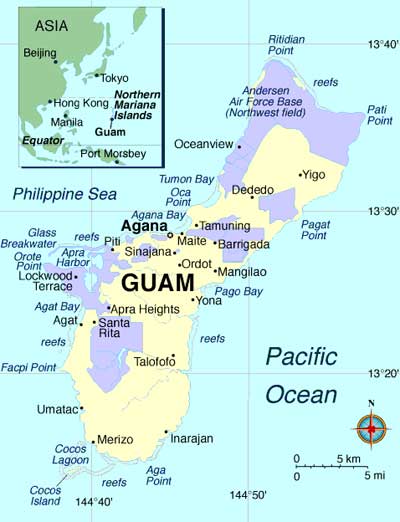
 April 1,2010 - Governor Felix Camacho officially signed bill 150 or the tobacco tax law into effect on February 5, 2010. In about 60 days (April 6, 2010) from signing cigarettes and other tobacco products will be taxed at $15 dollars per 100 sticks.
VIDEO - New cigarette tax to take effect on April 6th
The current $1 tax on cigarettes will climb to $3 (200 percent increase) and the current $3.50 tax on a pound of snuff will climb to $14. Cigars will be taxed at .40 cents per mini cigar, .44 cents per regular sized cigar, and .50 cents per large cigar. Chewing tobacco will also cost an additional dollar per can.
A significant amount of revenue generated from the tax increase will be deposited into the newly created Guam Cancer Trust Fund to be used by programs that support cancer screenings, treatment, and support services.
Guam, a territory of the United States, had the highest overall prevalence of smoking, at 31.1%. of any U.S. state or territory; United States Male 38.3% and Female 23.1% - Guam: Smoking Rates for Adults by Sex, 2007. Guam..
Tobacco products are a leading cause of lung cancer and lung cancer is the most common cause of death on Guam, according to Pacific Daily News files.
References: Smokers Gripe About Cigarette Tax Hikeby Mana Silva Taijeron, Pacific News Center, 4/1/2010; Tobacco tax could reap $27.2M by Steve Limtiaco, Pacific Daily News, 3/8/2010; Governor of Guam Signs Tobacco Tax into Law, Cigarette Reviews, 2/5/2010.
Guam related news briefs:
Guam - vote this week on an increase in the tobacco tax..;
Guam - medical professionals send strong message about tobacco's ill efects..
Guam trying to increase the tax on tobacco to save lives..;
U.S. - smoking prevalence not falling fast enough...
Read more...
Seattle - parks limit smoking..
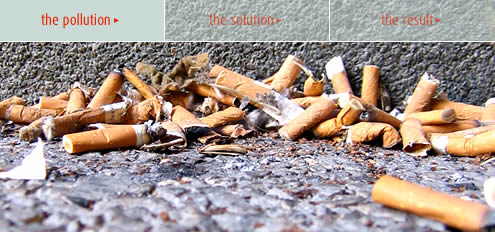 April 4, 2010 - SEATTLE, April 2 (UPI) -- Non-smoking visitors to Seattle parks will no longer encounter cigarette or tobacco smoke, city officials say. New rules require smokers to stay at least 25 feet away from other park visitors, The Seattle Times reported Friday.
The rules even apply to people chewing tobacco.
Anyone cited for breaking the rules will be banned from the park for 24 hours. If violators return before their time is up, they can be charged with criminal trespass.
Another rule bans possession of glass containers at athletic fields, beaches or children's playgrounds. Also banned are explosives, acids or anything capable of causing serious harm to others.
Just one day after announced that a ban on smoking in Seattle city parks would take effect April 1, the city's parks superintendent has relaxed that ban. Superintendent Timothy Gallagher said the revised rule will only prohibit "smoking, chewing or other tobacco use" within 25 feet of other park patrons. The 25-foot rule is what the Board of Park Commissioners had recommended. Gallagher said he's decided that a gradual approach to a smoking ban is more reasonable.
Reference: Seattle parks limit smoking, UPI.com, 4/2/2010; After outcry, Seattle parks smoking ban is relaxed, SFGate.com, 2/18/2010.
Read more...
Illinois - hopes to snuff out e-cigarette sales..

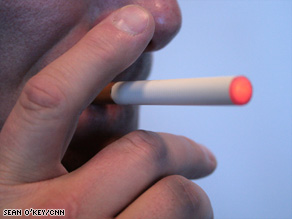 April 4, 2010 - Illinois lawmakers and anti-smoking groups are trying to ban the sale of e-cigarettes, citing the federal Food and Drug Administration's (FDA) lack of approval.
The ban recently sailed through the Illinois Senate on a 49-4 vote and is now under consideration in the House. While the measure would prevent convenience stores, tobacco shops and mall kiosks from selling e-cigarettes, a big loophole remains — there's no way to stop smokers from buying them online.
James Watt, vice chairman of the Electronic Cigarette Association, acknowledged that some of the more than 100 U.S. suppliers embellish the product's potential health benefits.
Reference: State hopes to snuff out e-cigarette sales Lawmakers, anti-smoking groups cite FDA’s lack of approval of smokeless devices,by Michelle Manchir, Chicago Tribune Reporter, 4/3/2010.
FDA - e-cigarette news briefs:
U.S. e-cigarette imports banned indefinitely - ASH..;
THIS MUST STOP - e-cigarette company asking active duty soldiers to buy their product..;
Electronic cigarettes - study finds not an effective nicotine delivery system..;
U.S. - federal appeals court, import of e-cigarettes on hold again..;
U.S. FDA appealing a federal judge's ruling on e-cigarettes..;
U.S. FDA - judges ruling regarding e-cigarettes must be appealed - ASAP..;
California - attorney general thinks e-cigarette distributor is targeting minors..;
E-cigarettes - scientists want more safety studies before use..;
In Process: US. Federal District court judge makes serious error regarding the import of e-cigarettes..;
New Jersey assemblywoman wants to limit electronic (e) cigarettes..;
"Smoking Everywhere", an electronic cigarettes retailer sued..;
Dubai, UAE customs blocks e-cigarette shipment..;
Connecticut AG Blumnethal wants to ban e-cigarettes..;
Orgeon - files lawsuit against e-cigarette company..;
Saudi Arabia - banning sales of electronic (e) cigarettes..;
Smoking Everywhere - e-cigarette distributor..;
Oregon - electronic (e) cigarettes sales prohibited until approved by FDA..;
Israel bans electronic (e) cigarettes..;
New Zealand - 1st trial ever of e-cigarettes..;
FDA: Electronic cigarettes contain toxic chemicals..;
e-cigarettes - Company sues FDA for blocking imports of product..;
e-cigarettes - FDA approval needed prior to marketing..;
E-cigarettes need to establish efficacy and safety - FIRST..;
Some news briefs - Illinois related:
Illinois - underage smokers face stiff penalities..;
USA - Will County IL - Nov. 2008 Free from Smoking Classes..;
More Public Housing Units Going Smoke-Free..;
More communities adopting their own anti-smoking ordinances to include the outdoors..;
Illinois Goes Smoke Free on January 1, 2008..;
Governor of Illinois, Rod Blagojevich, signed legislation that will ban smoking in public places as of 1 January 2008..;
Read more...
Utah - governor does not prevent tobacco tax increase from becoming law..


April 3, 2010 - Governor Gary R. Herbert allowed a cigarette tax increase of one dollar ($1) to float across his desk and become law without giving it a yea or nay. Yesterday, March 31st, was the Governor's last opportunity to veto the cigarette tax increase, but instead of doing so he took the passive approach and let the tax increase become law without his action. Herbert has repeatedly said he opposes increasing taxes, but the tobacco tax was built into the budget agreed to by him and legislative leaders.
The Legislature had built the $44 million in anticipated tobacco tax revenue into the budget, and Herbert said a veto would undo that balance. Herbert said in a statement that it would be fiscally irresponsible for him to veto the tobacco tax. He said a veto would create an imbalance in the state budget, particularly in the areas of public and higher education.
State lawmakers incorporated the tax into a budget bill that contains many programs that Herbert -- who has pledged not to support any new taxes -- favors. "Politics is the art of compromise," Herbert said. "Public education is my No. 1 priority. Am I going to come down on the side of education or am I going to veto the tobacco tax? I can't do both." Maybe this same approach should be used in South Carolina where Governor Sanford is poised to veto a tobacco tax increase - once again.
A pack of cigarettes will cost $1 more. The tax on cigars will increase from 35 percent to 86 percent of the manufacturer's sale price. And the tax on moist snuff, or dipping tobacco, will rise from 75 cents to $1.83 per ounce.
The tax takes effect July 1.
References: Utah Governor Gary Herbert Allows a Tax Increase: Not an April Fool's Joke, Nathan Pick, Americans for Tax Reform (ATR), 4/1/2010; Despite no-tax stance, Herbert OK with $1 per pack hike on cigarettes by Robert Gehrke, Salt Lake Tribune, 3/12/2010; , Utah gov lets tobacco tax pass without signature, Associated Press, 3/31/2010.
Other Utah news briefs:
Provo, Utah - county warns about dangers of dissolvable tobacco products..;
Utah - lawmakers approve one dollar increase in tax on a pack of cigarettes - now measure goes to governor..;
Utah - increase tobacco excise tax by $1.00 - we doubt it will happen..;
Proposal to increase Utah cigarette tax falters..;
Utah - philanthropist Jon Huntsman Sr., supports big boost in tobacco tax..;
Utah Bars Go Smokefree January 1, 2009..;
Utah moves from a tax based on the percentage of sales price to one based on the weight - independent of price of smokeless tobacco product..
Read more...

U.S. e-cigarette imports banned indefinitely - ASH..
April 3, 2010 -  The importation of e-cigarettes will be banned indefinitely as the result of a unanimous ruling by the U.S. Court of Appeals which provides strong support for the FDA's position. (U.S. - federal appeals court, import of e-cigarettes on hold again..)
The court agreed to permit their continued import ban while it considered an appeal from a lower court ruling which had prohibited the Food and Drug Administration [FDA] from stopping the imports of this new product, reports public interest law professor John Banzhaf of Action on Smoking and Health (ASH), who participated in the legal proceeding.
The court went out of its way in its brief ruling to suggest that the FDA was correct in declaring the product illegal, noting that "appellants [FDA] have satisfied the stringent standards required for a stay pending appeal." These standards require that the party seeking the stay show that it has made a "strong showing that it is likely to prevail on the merits of its appeal" -- in other words, that it is likely correct on the law, and will be the victor when a final decision is announced.
The FDA had warned that e-cig use poses "acute health risks," that "the dangers posed by their toxic chemicals . . . cannot seriously be questioned," and that they have caused a wide variety of potentially serious symptoms "including racing pulse, dizziness, slurred speech, mouth ulcers, heartburn, coughing, diarrhea, and sore throat." (E-cigarettes - scientists want more safety studies before use..FDA had found that samples it tested contained detectable levels of known carcinogens and toxic chemicals to which users could be exposed. The FDA said the toxic chemicals included diethylene glycol, “an ingredient used in antifreeze, [which] is toxic to humans”; “certain tobacco-specific nitrosamines which are human carcinogens”; and that “tobacco-specific impurities suspected of being harmful to humans -- anabasine, myosmine, and B-nicotyrine -- were detected in a majority of the samples tested.” The FDA does not currently monitor or license e-cigs, and indeed considers them "illegal."
E-cigarette use is banned in no-smoking areas in New Jersey, Virginia, and Suffolk County, NY, and several states -- as well as a few attorneys general -- are pushing to ban their sale to children or otherwise restrict them. E-cigarettes have already been banned in Australia, Brazil, Canada, Israel, Mexico, Panama, and Singapore, and restricted in Denmark, Finland, Malaysia, Netherlands, and New Zealand, and the UK is poised to begin regulating them as drugs.
At least two attorneys general have filed law suits to stop the sale of e-cigarettes until they are approved by the FDA, they are being challenged in a class action law suit, and a number of states are also considering restrictions on the sale or use of the novel and unregulated products. (e-cigarettes - FDA approval needed prior to marketing..)
Reference: E-Cigarette Imports Banned Indefinitely, Says Action on Smoking and Health (ASH), PROFESSOR JOHN F. BANZHAF III, Executive Director and Chief Counsel, Action on Smoking and Health (ASH), 4/1/2010.
FDA - e-cigarette news briefs:
THIS MUST STOP - e-cigarette company asking active duty soldiers to buy their product..;
Electronic cigarettes - study finds not an effective nicotine delivery system..;
U.S. - federal appeals court, import of e-cigarettes on hold again..;
U.S. FDA appealing a federal judge's ruling on e-cigarettes..;
U.S. FDA - judges ruling regarding e-cigarettes must be appealed - ASAP..;
California - attorney general thinks e-cigarette distributor is targeting minors..;
E-cigarettes - scientists want more safety studies before use..;
In Process: US. Federal District court judge makes serious error regarding the import of e-cigarettes..;
New Jersey assemblywoman wants to limit electronic (e) cigarettes..;
"Smoking Everywhere", an electronic cigarettes retailer sued..;
Dubai, UAE customs blocks e-cigarette shipment..;
Connecticut AG Blumnethal wants to ban e-cigarettes..;
Orgeon - files lawsuit against e-cigarette company..;
Saudi Arabia - banning sales of electronic (e) cigarettes..;
Smoking Everywhere - e-cigarette distributor..;
Oregon - electronic (e) cigarettes sales prohibited until approved by FDA..;
Israel bans electronic (e) cigarettes..;
New Zealand - 1st trial ever of e-cigarettes..;
FDA: Electronic cigarettes contain toxic chemicals..;
e-cigarettes - Company sues FDA for blocking imports of product..;
e-cigarettes - FDA approval needed prior to marketing..;
E-cigarettes need to establish efficacy and safety - FIRST..;
Read more...


To Provide Public Awareness
Purpose
About Us
Contact Us
2008 HIGHLIGHTS
TOPIX PAPERS - 2008 & 2009..